

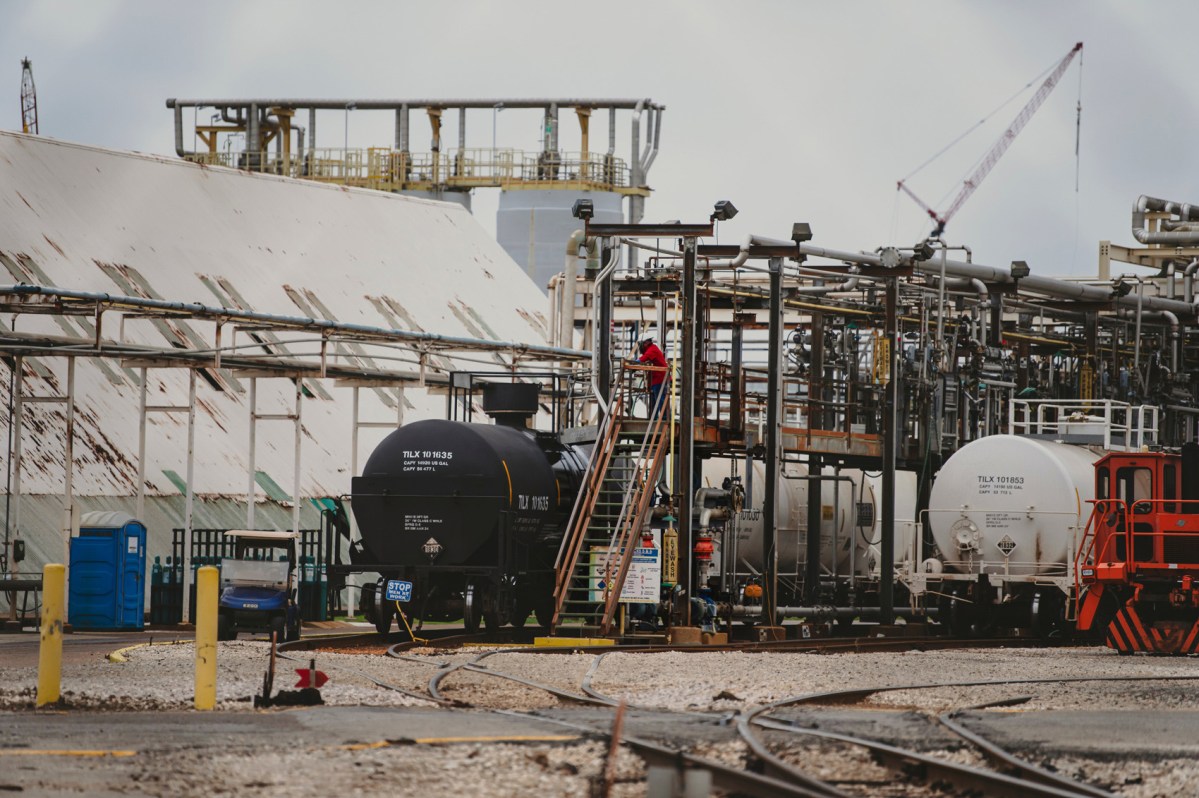
Harris County and three other municipalities this year failed to meet federal standards for fine particulate matter emissions, according to the executive director of Texas’ environmental agency.
And Harris County had the worst air quality in the state, the director said.
Kelly Keel, the executive director for the Texas Commission on Environmental Quality, also known as TCEQ, concluded that of the 12 counties with high levels of pollution, four of them did not meet the National Ambient Air Quality Standards, or NAAQS, that describe a location’s air quality status. Any number above an EPA-designated value is considered non-attainment, meaning it does not meet the national standards for fine particulate matter.
The TCEQ has excused all remaining counties due to bad air monitoring data, such as with Fort Bend, Brazoria and Montgomery Counties – areas that altogether make up 2 million people – or because of the impact of exceptional air quality events, such as wildfires or fireworks, or international emissions from Mexico and Africa – leaving these municipalities with little to no accountability.
Critics have long highlighted flaws in how Texas tracks national standards for particulate matter, from the lack of county air quality monitors to excuses around pollution sources. Despite Harris County’s placement on the non-attainment list, experts, advocates and officials have highlighted the bigger problems that are the loopholes in the system that let counties off the hook from more stringent regulations in air quality.
“The TCEQ is taking the unusual step of saying that eight of the twelve counties with air monitors above the national standard shouldn’t be counted as non-attainment,” said Daniel Cohan, a professor of civil and environmental engineering at Rice University. “It’s a very unconventional approach to so radically restrict which counties are considered in attainment to the standard.”
If a county does not meet the national standard, it’s required to find ways to reduce air pollution, such as emission controls for industrial facilities and more stringent regulations for construction activities. However, if the TCEQ can prove that the pollution is caused by events out of county control or if they do not have properly functioning air quality monitors, it can get a pass on attainment.
After more than 600 pages of public comment, including from the Texas Department of Transportation and American Electric Power, TCEQ’s executive director removed eight counties from the list – much to the dismay of many environmental groups across the state.
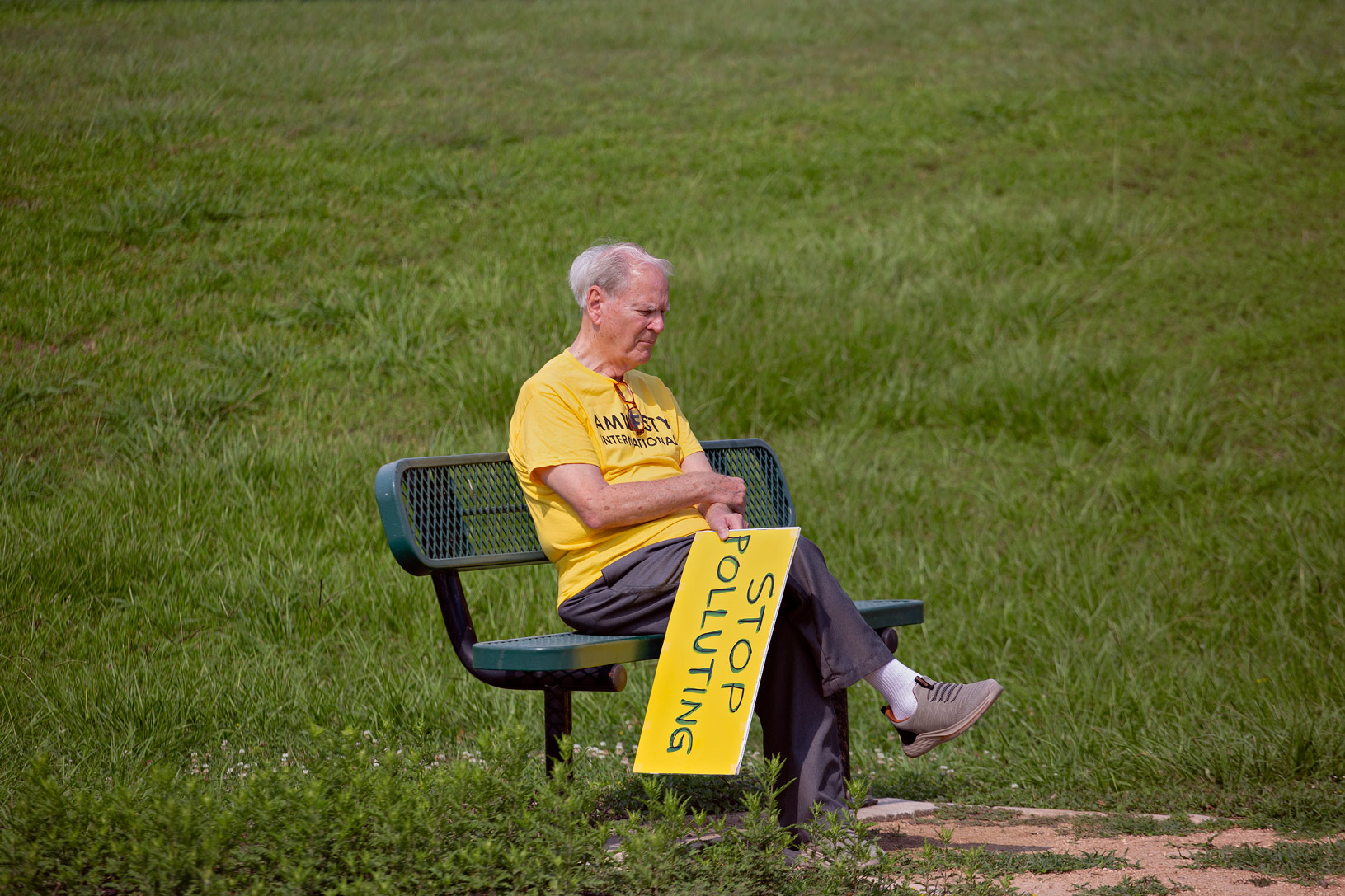
Those counties in non-attainment, which include Harris, Bowie, Dallas and Tarrant, will be sent to the three commissioners at the TCEQ for final approval on December 18. The designations will then go to Texas Governor Greg Abbott and finally to the Environmental Protection Agency by February 7, 2025.
There, the EPA under the new Trump administration will approve or deny the TCEQ’s plan – another concerning element for Cohan and other experts.
“I would expect the Biden or Harris administration would not have approved such a radical proposal for these regions,” Cohan said. “But it’s possible that the EPA under Trump might give way to (TCEQ’s recommendation).”
What’s the deal with particulate matter?
Particulate matter, or PM, are fine inhalable particles in the air. These tiny pieces are classified by the EPA as either PM2.5 or PM10 – meaning the size of the diameter in micrometers. So PM2.5 is any particulate matter that is 2.5 micrometers or less.
In comparison, a single human hair is on average about 70 micrometers.
The smaller the particles, the worse it can be for human health. PM2.5 reaches deep into the lungs and even the bloodstream, causing severe conditions like asthma, chronic bronchitis or heart disease.
PM2.5 and PM10 can come from a variety of sources, such as construction sites, industrial facilities or forest fires. The particles are made of all types of chemicals, but most in the atmosphere right now are from sulfur dioxide and nitrogen oxides coming from power plants and cars.
The EPA has been regulating fine particulate matter for more than two decades. To protect residents from health risks, the agency created standards under the Clean Air Act to keep cities in check. Originally, the national standard was 12 micrograms per cubic meter (µg/m3) of particles, but after the EPA’s Science Advisory Board reviewed its standards, they decided 12 was not protective enough and they tightened it to 9 µg/m3 last year.
“What that meant was that after Texas counties had always attained the previous air quality standards, now violated that new standard,” Cohan said. “In particular, 12 counties, including Harris County, were now above 9.”
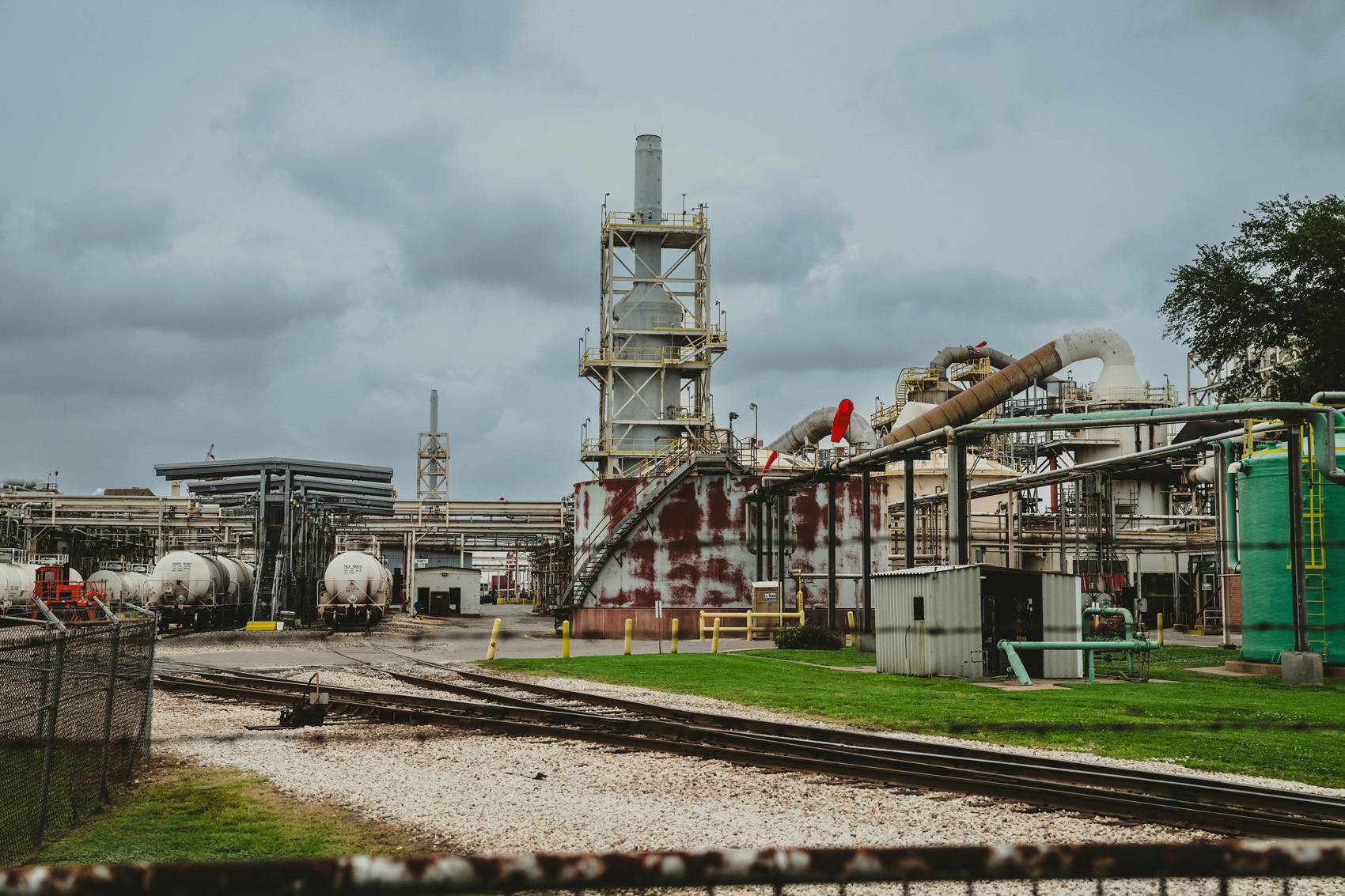
This shift in PM2.5 levels occurred in February 2024, giving the governor of each state a year to submit the designations for those counties in non-attainment. Every county used its monitoring data from 2022 through 2024 to determine the levels.
Harris County has the worst air quality in the state with 12.5 µg/m3, followed by Cameron County at 11 and Bowie County at 10.3.
Cameron County, which sits right at the border of Mexico near Matamoros and South Padre Island, was pulled off the list, and Travis County – home to the state capital – is not in non-attainment while it is well above the standard at 9.6 µg/m3.
In an email to the Houston Landing, the TCEQ said, “Following further evaluation, it was determined the other six counties (of the original 10 staff recommended) have regulatory monitors that would meet the revised standard if not for international emissions and/or exceptional events and should be designated attainment.”
Issues with air monitors
There are more than 200 air quality monitors all over the state of Texas that collect data on pollutants, such as PM2.5, sulfur dioxide and other contaminants that are harmful to human health. These air monitors help determine if Texas is meeting federal air quality standards through an annual monitoring network plan – which must be approved by the EPA every year.
However, Jennifer Hadayia, executive director of the nonprofit Air Alliance Houston, said the review is flawed and exclusionary. The TCEQ can pick and choose which monitors it wants to use for measuring attainment.
TCEQ plans to remove a monitor in Austin North Interstate 35 from analysis because “it is not representative of the area-wide air quality.” While the TCEQ used this exception in its decision to leave Travis County off the non-attainment list, the TCEQ’s monitoring network plan has not yet been approved by the EPA.
The TCEQ can also designate counties as “unclassifiable” or in “attainment” if they do not have high-quality air monitoring information or no monitors at all. Regulatory air monitors can cost upwards of $20,000 or more.
“There are a majority of counties in Texas that are basically left untouched in attainment for PM2.5 because there is no regulatory monitoring,” Hadayia said. “Because there’s no monitor, the TCEQ has no way to determine what the county’s PM level is and if it’s a major polluter. The TCEQ just assumes that everything is fine.”
Hadayia said a big concern for her is Fort Bend County, where there are no air monitors linked to the state’s plan. Fort Bend is home to the WA Parish coal plant – one of the worst polluters of sulfur dioxide in the United States. The county is also expected to double in size by the year 2050. The county will be classified as “unclassifiable” or in “attainment” because it doesn’t have a monitor.
In an email to Houston Landing, the TCEQ said that their air monitoring network uses population trends, reported emissions inventory data, local meteorological data and existing air monitoring data to determine the location of air monitors. And while there are currently no air monitors in Fort Bend County, there are several monitors in adjacent counties that provide air quality information across the Houston-The Woodlands-Sugar Land area.

Hadayia doesn’t think that’s a great argument. The air quality standard goes by county, not region. Because of this, the TCEQ couldn’t make attainment designations for any county except for Harris.
“That’s not how the TCEQ is applying the attainment definitions,” Hadayia said. “If they were doing it by region, then Fort Bend would be out of attainment as well, right? Sugar Land is in Fort Bend County, not Harris County.”
At the same time, if a county has air quality monitors but has not produced quality information for the TCEQ, then it’ll be designated “unclassifiable.” This includes Brazoria and Montgomery counties.
During public comment, Harris County attorney Christian Menefee submitted a written argument that Montgomery County has a preliminary annual value over 9 µg/m3 and could be contributing to Harris County’s nonattainment, or could be in the future.
“If this is the case, these counties should also be designated non-attainment,” Menefee wrote. “The Harris County Attorney’s Office asks TCEQ to place additional air monitors in both Brazoria and Montgomery counties to ensure more accurate data is made available.”
Exceptions to the rule
Adrian Shelley, the Texas director of the nonprofit Public Citizen, said for years counties in Texas have used international pollution and exceptional events as a way to wiggle out of non-attainment, according to Shelley.
When calculating its air quality standard, the TCEQ will propose days that may have had high levels of PM2.5 due to events out of their control. This can include pollution wafting over the border from Mexico or a day when Saharan Dust, which blows over from Africa, was high. If the TCEQ deems these days as real exceptions, the county can knock the day off its average.
“The exceptional events strategy has been used in the past by the TCEQ during the last particulate matter designation,” Shelley said. “TCEQ even designated Harris County as being in attainment because it tossed out about three or five days due to agricultural fires and Saharan Dust. Without those days, the county went just under 12 and met attainment.”
In the TCEQ’s 2024 recommendation, there were 25 days between April 2021 and June 2023 that were excluded for Harrison County and Travis County due to exceptional events. These included high winds and fireworks, prescribed fires and African Dust.
Saharan Dust blows across the entire Atlantic Ocean and can settle in regions of Texas, including Houston, where it can cause higher levels of PM2.5 air pollution. However, Shelley isn’t convinced that’s so rare.
“Saharan Dust from Africa is seasonal, it’s foreseeable, it’s normal so it doesn’t seem appropriate to be excluding these things as exceptional events,” Shelley said. “The Clean Air Act is supposed to be about public health first, right? Gaming the regulatory system is just not in that spirit.”
For the counties along Mexican-American border, such as Cameron, Hidalgo, Kleberg and Webb, the TCEQ said its analysis showed that a “significant percentage of the trajectories of pollution were from the southerly and/or southeasterly direction, indicating significant international impact.”
Harrison and Travis County, which are much further from the border, also cited fires from Mexico or Central America as a reason for high PM days. In an analysis conducted by Ramboll – a global engineering consultancy – for TCEQ public comment found that 70 percent of the fires in Mexico were human-caused, meaning they wouldn’t be a normal occurrence and therefore an exception.
Ramboll did not respond to the Houston Landing’s email requests for comment.
However, Cohan said where the pollutants stem from isn’t the point.
“When the EPA set this standard, they wanted people to not be exposed to these unhealthful levels of particulate matter no matter where it came from,” Cohan said. “No one can count on no pollution blowing from neighboring places. We don’t have perfectly clean air coming across our border, but we still need to clean up what we can.”

