

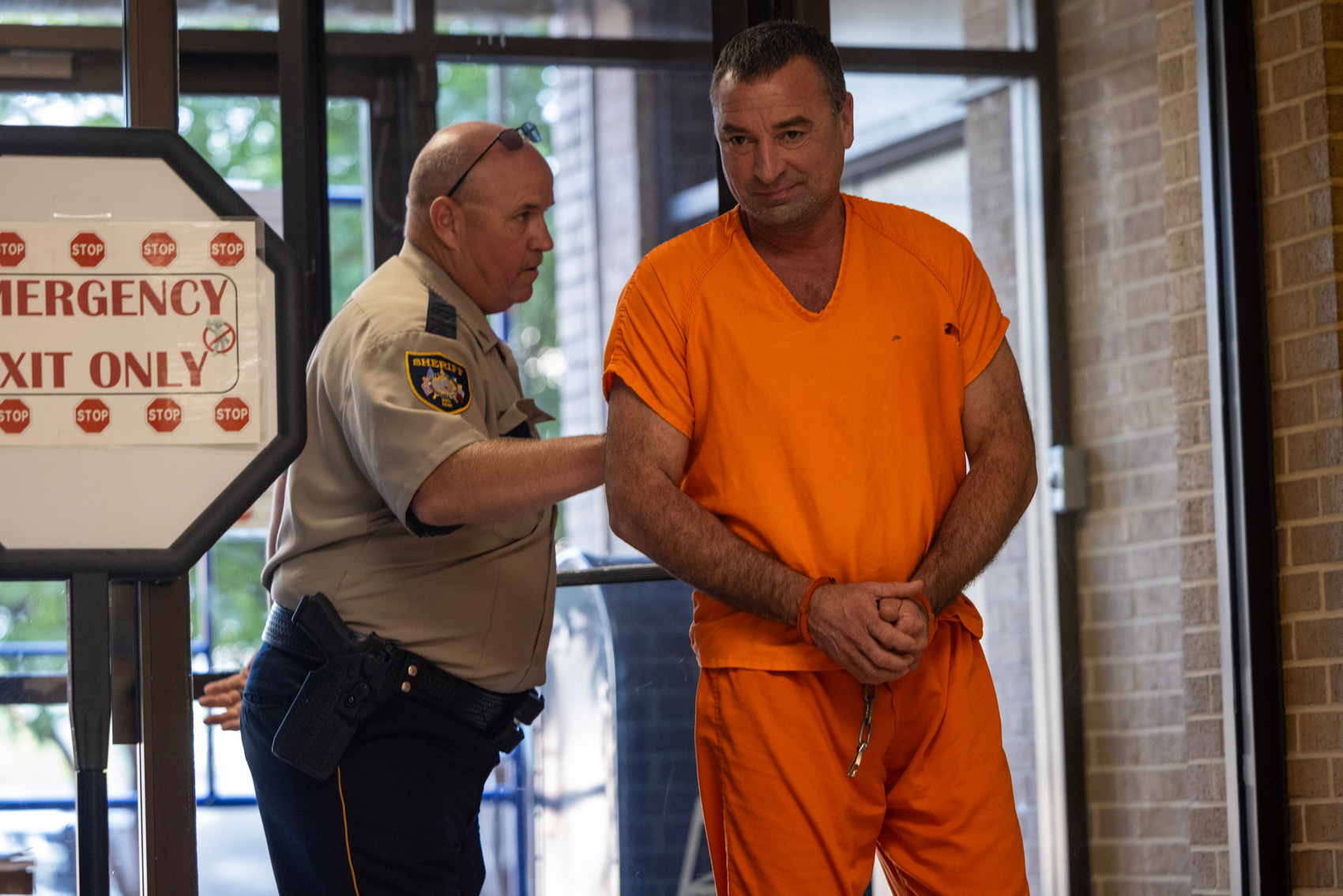
After two arrests for driving with a blood-alcohol content nearly four times the legal limit, prominent land developer William “Trey” Harris III received a 45-day jail sentence earlier this year in Walker County, just north of Conroe.
But Harris, one half of the team behind Greater Houston’s sprawling, controversial Colony Ridge development, would only serve half of that sentence — the beneficiary of uncommon treatment given by longtime Walker County Sheriff Clint McRae.
A Houston Landing investigation found that McRae granted a rare reprieve in June to Harris, allowing him to leave jail early while dozens of other incarcerated people served their full sentences in recent months.
The finding is based on an analysis of county jail records that show Harris is the only one of nearly three dozen people released early while serving time for a drunken-driving conviction from January 2023 to July.
And it’s backed by McRae’s own jail administrator, Capt. John Davila, who told the Landing that Harris is the only person in the Walker County Jail in the past several months to benefit from “good conduct credit,” which allows well-behaving incarcerated people to cut time off their sentence. Davila said McRae, Walker County’s sheriff of nearly 20 years, must approve all good conduct credit.
“I’ve been here since November, and that’s the only one I can remember,” Davila said. Roughly 100 people are sentenced to jail each year in Walker County, according to state data.
Harris and his brother, John, have developed Colony Ridge into a massive enclave that’s home to tens of thousands of people, mainly of Latino descent, in northeast Greater Houston. Colony Ridge Inc. and its subsidiaries face federal and state civil lawsuits that accuse the companies of predatory lending and false advertising — allegations that the Harrises deny. Harris owns at least a 30 percent interest in Colony Ridge Inc., according to public records.

related to Colony ridge
Read the Landing’s extensive coverage of Colony Ridge and its impact on Greater Houston
by Houston Landing staff
In multiple interviews over the past several weeks, McRae defended his decision to release Harris early and said he was unaware of the developer’s standing in the region when he approved the good conduct credit. McRae said Harris earned an early release because of his good behavior in jail.
“That’s all I know him for,” McRae said. “I don’t know him for anything other than that.”
McRae added his decision came after two judges — both of whom he declined to name — contacted him to encourage an early reprieve. The sheriff said Harris’ criminal defense lawyer, family, and friends did not ask for leniency.
“I have absolutely no shame. I would do it exactly the same way if the situation were to occur again,” McRae said. “I will also do that for someone that meets the criteria in the future.”
Asked why Harris got an early release while dozens of others served full sentences, McRae said he didn’t have a good explanation.
“I couldn’t even tell you. Honestly, I really couldn’t,” McRae said. “I’m assuming that either somebody in (jail) administration did not feel like there was anyone else who was eligible for it, or something else along those lines.”
McRae noted that it’s common for months to go by without an incarcerated person getting an early release.
Art Rascon, a spokesperson for Colony Ridge, said in a statement that questions about Harris’ case should be directed to the judge who handled Harris’ drunken driving cases and the sheriff. He did not provide any additional comment.
A pair of DUIs
Harris’ troubles in criminal court began in November 2023, one month before federal prosecutors filed their lawsuit against Colony Ridge in the Southern District of Texas.
Police in Huntsville, the Walker County seat, arrested Harris on a misdemeanor charge of driving while impaired. Harris had a blood-alcohol content of 0.30, nearly four times the legal limit of 0.08 in Texas when police stopped him after he left a restaurant where staff members reported him drinking heavily, officers wrote in an arrest report.
Then, in February, Huntsville police arrested Harris again after he crashed his white Ford F-150 pickup truck into a state highway median. His blood-alcohol content registered at 0.31, police said.
Harris pleaded guilty in late May to the two misdemeanor charges, receiving 14 days of credit for time already served on his 45-day jail sentence.
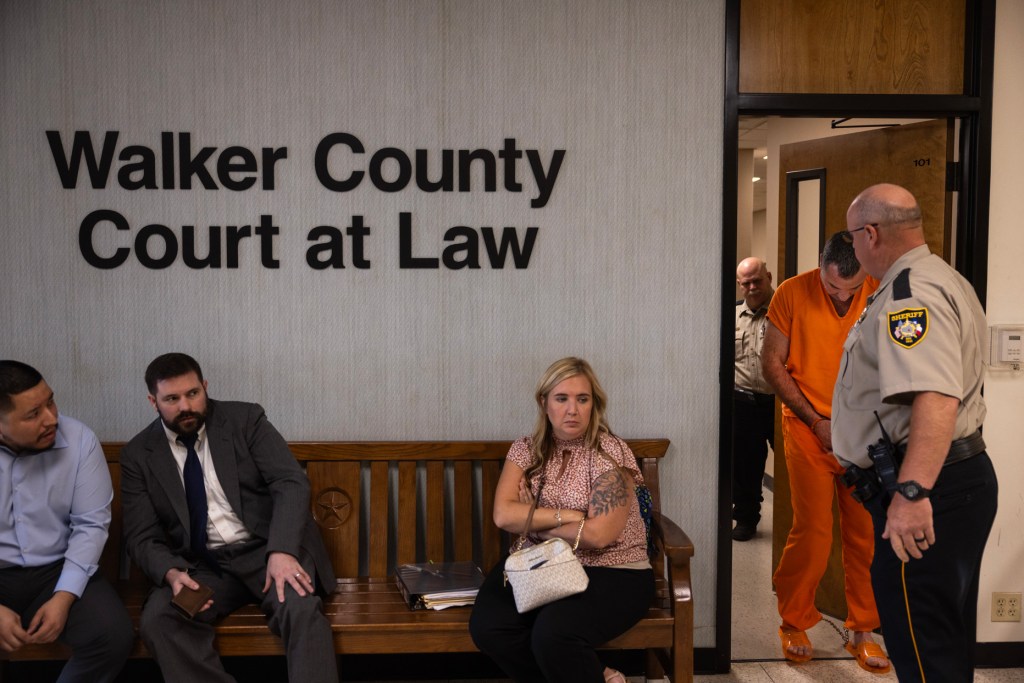
In Texas, sheriffs hold the power to reduce an incarcerated person’s original sentence for good behavior. There is no process or criteria sheriffs must follow when deciding on cutting short sentences, and they are not required to keep data on early release for incarcerated people.
In Harris County, the sheriff shaves off up to two days from the sentence for each day served by most well-behaving defendants convicted of misdemeanors, Senior Deputy Thomas Gilliland said. Neighboring Montgomery County cuts one day for each day served by most misdemeanor offenders, according to Lt. Scott Spencer.
McRae said Walker County jail administrators typically notify him about people in jail who might deserve an early release. Some imprisoned people also reach out to him directly, telling him that their family or job status could suffer due to their incarceration.
“I will check into it a little bit to just confirm that it would be justifiable and that the crime itself would not be something that would leave bad indigestion on myself,” McRae said
A moving account
Paxton Adams, a criminal defense attorney who has practiced law in Walker County for about as long as McRae has been sheriff, said most people in the Walker County Jail serve their full sentence and good conduct credit is the exception to the rule.
“A lot of lawyers don’t even ask the sheriff for good conduct consideration, and that’s kind of sad in my opinion,” said Adams, whose practice includes representing clients charged with driving while intoxicated.
McRae said no member of the public or his jail staff reached out to him to ask about granting an incarcerated person an early release over the past 10 months, except for the two judges in Harris’ case.
But McRae has offered shifting and incomplete accounts of those conversations with the unnamed judges.
In an early July interview, McRae said the judges approached him about giving Harris “2-for-1,” meaning two days of jail time credit for one day of actual time served.

related to colony ridge
Colony Ridge: Watch the Houston-area development’s growth from 2016 to now
by Céilí Doyle and Adriana Rezal / Staff Writer
When asked to name the judges, McRae said: “I cannot reveal that. What I can do is just say when they contacted me, they just wanted me to consider it.” When asked if the judges came from Montgomery, Liberty or Harris counties, McRae said, “No, Walker.”
But in a follow-up interview in late August, McRae said he “never did mention that they were Walker County judges,” adding that it “wouldn’t matter whatsoever” if a judge reached out to him.
McRae’s comment came after the Landing told him that it had contacted the seven judges and justices of the peace in Walker County, all of whom denied contacting McRae, declined to comment, or didn’t respond to a request for comment.
Ultimately, McRae dismissed the importance of the judges on his decision and questioned the Landing’s interest in his handling of Harris’ case.
“I’ve been doing this for 36 years, and it just seems like there’s an astronomical amount of time being spent on what I view as being a really small issue,” McRae said.


