


It was after 1 a.m. and the car speeding south in the northbound lanes of Highway 360 near Dallas-Fort Worth was running out of roadway.
But as the car approached the intersection where the highway ends in Mansfield, the driver kept going straight – crashing into a natural gas pipeline station that had little protection from vehicles despite its proximity to the highway.
Its only barrier: A wood fence.
The collision in March 2022 sparked an explosion and pillar of fire that streamed into the night sky, killing the driver and forcing the evacuation of about 300 homes.
In the wake of the Sept. 16 SUV crash that caused a massive pipeline explosion in Deer Park, a Houston Landing review of federal pipeline safety records has found there have been at least 36 incidents nationwide – 12 in Texas – since 2019 of vehicles crashing into above-ground transmission pipelines carrying potentially flammable gas and hazardous liquids.
The crashes had a common theme: pipelines with little protection against drivers that slammed into them.
Regulations require pipeline operators to protect their transmission lines from damage, and the rules for gas pipelines specify vehicles as a source of damage that requires locating pipeline structures a safe distance from traffic or the use of barricades. But rules leave it up to pipeline operators to decide what’s a safe distance or an effective barricade.
The Landing found pipelines damaged in collision incidents often had just chain link or wooden fences as barriers against nearby traffic. And even after a pipeline exploded or burned from a vehicle crash, some pipeline operators have been slow to install equipment to protect against future collisions.

In the Mansfield pipeline explosion in 2022, state pipeline regulators at the Texas Railroad Commission wrote in their reports that the wooden fence Atmos Pipeline-Texas used around the site was “inadequate protection for the accidental damage by vehicular traffic that may be anticipated at a highway intersection location.” Atmos media relations did not answer repeated questions about the incident, saying generally the company has a “commitment to be the safest provider of natural gas services.”
Yet five months after the crash, the company still hadn’t protected the pipeline from the nearby traffic, records show. A state inspector wrote there were “no new barricades, no new piping to place a safe distance from traffic, no new other protections had been constructed at the temporary meter station.”
Bollards were eventually put in place around the pipeline station, according to a Google Street View image of the site from May 2023.
In Louisiana, a small above-ground pipeline structure in Washington Parish – the site of a fiery and fatal vehicle crash in October 2020 – didn’t have any protective barrier until after Houston Landing started asking questions this month.
That pipeline structure – operated by Houston-based Gulf South Pipeline Company, LLC – was rebuilt after a midday traffic accident between a car that ran a stop sign and the 18-wheeler Freightliner log truck that hit it. The collision caused the truck to roll over and crash into a utility pole and the pipeline structure.
The leaking gas ignited and engulfed the truck in flames, according to a state police report of the accident. While the truck driver escaped his vehicle with minor injuries, the 17-year-old driver of the car died at the scene from the impact of the truck crashing into her vehicle.
At the time of the accident, the above-ground pipes were protected with guard rails, according to the federal pipeline incident report and Google images from before the crash. But for years after the crash, no barriers were installed around the pipeline structure – not even the kind it had before the accident, Google Street View images through last month show.
The day after Houston Landing asked the company about the missing barriers, the company went out and installed some. Gulf South Pipeline spokesperson Jillian Kirkconnell sent an email with photos showing the barrier installed on Dec. 4. She did not respond to questions about why the safety barrier wasn’t installed four years ago.
While vehicle collisions with pipelines have the potential to cause catastrophic damage, pipeline industry and fire safety groups note that crashes are rare compared to other kinds of pipeline incidents, caused by factors ranging from corrosion to unauthorized digging in areas where pipes are buried.
“While there is a risk it’s not a huge risk,” said Phil Oakes, pipeline training coordinator for the National Association of State Fire Marshals.
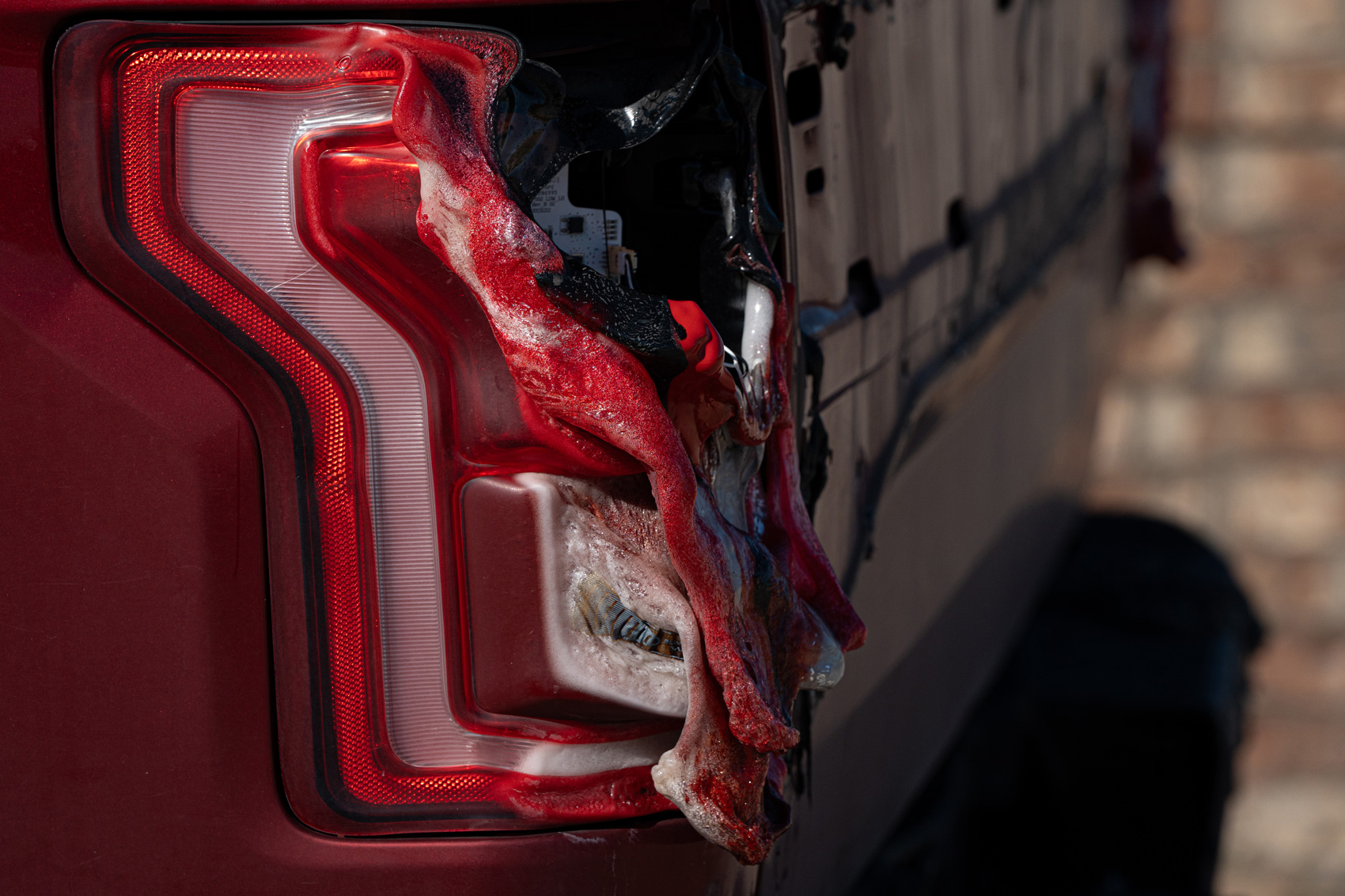
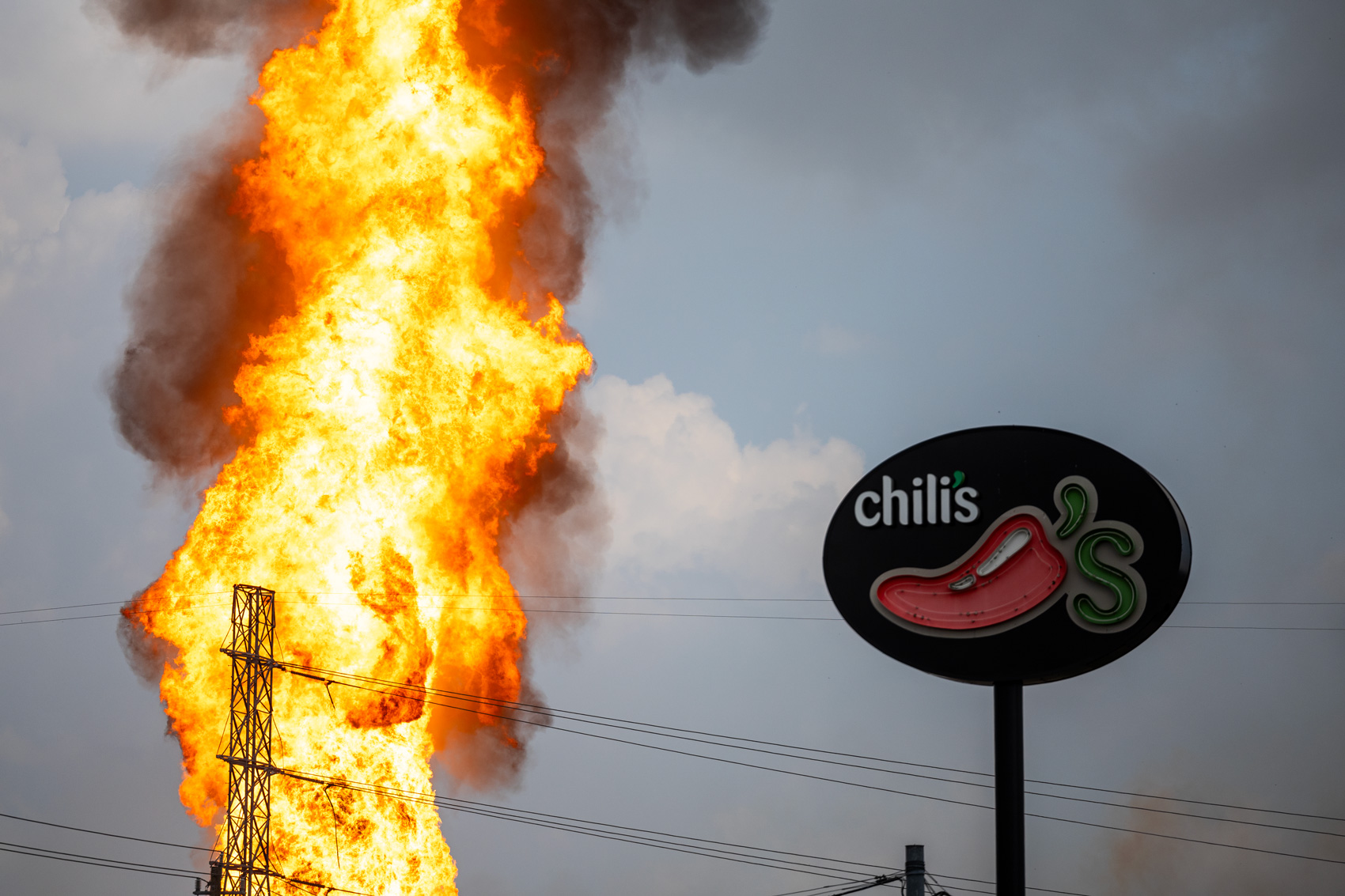
It’s unclear how many above ground structures for hazardous liquid and gas transmission pipelines are near roadways and busy parking lots in Texas and across the country. Yet even if crashes happen infrequently, pipeline collisions can cause significant harm, said Bill Caram, executive director of the Pipeline Safety Trust, a national safety advocacy group.
“When the public sees something like this awful tragedy in Deer Park and what’s happened to the community afterwards, this is exactly why much of the public is so resistant to having pipelines in their community and living on a right-of-way,” Caram said.
Collisions cause gas leaks, oil spills, fires, explosions
When vehicles crash into pipelines, the consequences can vary significantly, the Landing’s examination of dozens of incidents in Texas and across the country found.

Sometimes the collisions caused pipelines to blow up in deadly and spectacular fashion – as happened this fall in Deer Park and in the 2022 crash in Mansfield. Other times there isn’t any explosion, even when the pipeline had little protection.
In Florence, S.C., federal pipeline incident records show a “wooden fence” was the barrier between a natural gas regulating station and traffic at a nearby intersection when a car veered off the pavement and crashed into it in October 2022. The collision resulted in the entire station being “sheared off at the risers and natural gas began blowing to the atmosphere,” the incident report says. But the gas didn’t ignite and the driver wasn’t injured.
A “dirt berm” protected a natural gas transmission pipeline near American Falls, Idaho, when a small truck crashed into it in February 2022, according to the incident report the pipeline company filed with federal regulators. The crash caused a gas leak and about $530,000 in property damage, but there was no fire.
“Following that incident, we took additional measures, including surrounding the site with large concrete barriers to mitigate future risks,” a spokesperson for Northwest Pipeline LLC, the pipeline’s operator, said in a statement. The company said the Idaho site also had a “protective fence” at the time of the incident that isn’t mentioned in the federal incident report.
Even when concrete barriers are used, pipelines may still not be completely protected.
In Middletown, Ohio, a speeding car crossed the center line of a road, left the pavement, then crashed into concrete barriers protecting a natural gas transmission pipeline structure outside an industrial gas supply firm.
The vehicle apparently went airborne, striking the pipeline, which ignited when it ruptured, according to a federal report of the May 2020 collision, as well as local news coverage of the fiery crash. An occupant of the vehicle suffered second- and third-degree burns, but survived.
Speed, poor judgment and alcohol contribute to pipeline crashes
The reasons drivers crash into pipelines range from inattention to drivers misjudging a curve and crashing into pipelines near roadways.
Last summer, just before midnight on July 7, a Nebraska State Patrol trooper smashed into an above-ground pipeline valve near a food processing plant in Dakota City, injuring the trooper and causing about $195,000 in property damage.
The trooper was following a speeding vehicle in preparation to make a traffic stop, when he failed to see a curve in the road, drove into the grass and struck the above-ground pipeline structure, said state patrol spokesman Cody Thomas.
The pipeline’s operator, Northern Natural Gas, said the metal guard rails around the structure were “deemed adequate” for the location. “In this instance, it appears the vehicle flipped over the barrier and struck the facility,” the company said in an emailed statement.
Sometimes alcohol is a factor, as records say was the case when a driver going twice the posted 25 mph speed limit, smashed his car into a natural gas pipeline located at the intersection of a heavily traveled bridge and a highway in White Salmon, Wash.
The impact around 11:30 p.m. punctured the pipeline structure, which began releasing gas, prompting authorities to go door-to-door and use a reverse 911 system to warn residents to stay away from the area and shelter in place. While the gas ultimately didn’t ignite and the driver had only minor injuries, the surrounding community “was greatly affected” by the Dec. 20, 2020 collision, which left many homes without natural gas for heating, cooking and other uses, according to a federal report of the incident.
Before the crash, the pipeline had no protections in place to prevent damage from vehicles, according to the incident report. The pipeline was operated by Northwest Pipeline LLC, which has administrative and operational offices in Houston and Salt Lake City.
In an emailed statement, the company’s media office said: “Despite the facility being several feet above grade and set-back from the road at an intersection, the speed and trajectory of the vehicle allowed it to reach the site.” After the crash, the company said it installed protective concrete barriers and vertical reflectors to increase driver awareness.
The accident was estimated to have caused more than $1.3 million in damages, including about $100,000 in emergency response costs, federal incident records show.
Medical emergencies can send drivers into pipelines
Federal and state pipeline incident reports don’t always explain why a driver veered off a roadway and into a pipeline. But sometimes it’s because the drivers suffered medical emergencies.
In December 2022, a man driving a Ford F-250 pickup truck around 8 a.m. along a road in a sparsely populated area in Midland County, Texas struck a pipeline after suffering a “medical episode” and losing control of his vehicle, according to incident reports.
The truck initially drifted into a pasture, where it hit a fence, then continued another 400 feet parallel to the roadway until it crashed through the chain link fence that surrounded a crude oil pipeline junction station, a Texas Railroad Commission investigation found.
The impact broke components of the pipeline, causing it to leak about 300 barrels of oil, which the company said it cleaned up, the reports say. The driver was taken to a hospital.
After the incident, the pipeline’s operator, Houston-based Plains Pipeline, L.P., told regulators the company was “evaluating the installation of additional protective equipment that could withstand vehicle force,” according to a state investigation report.
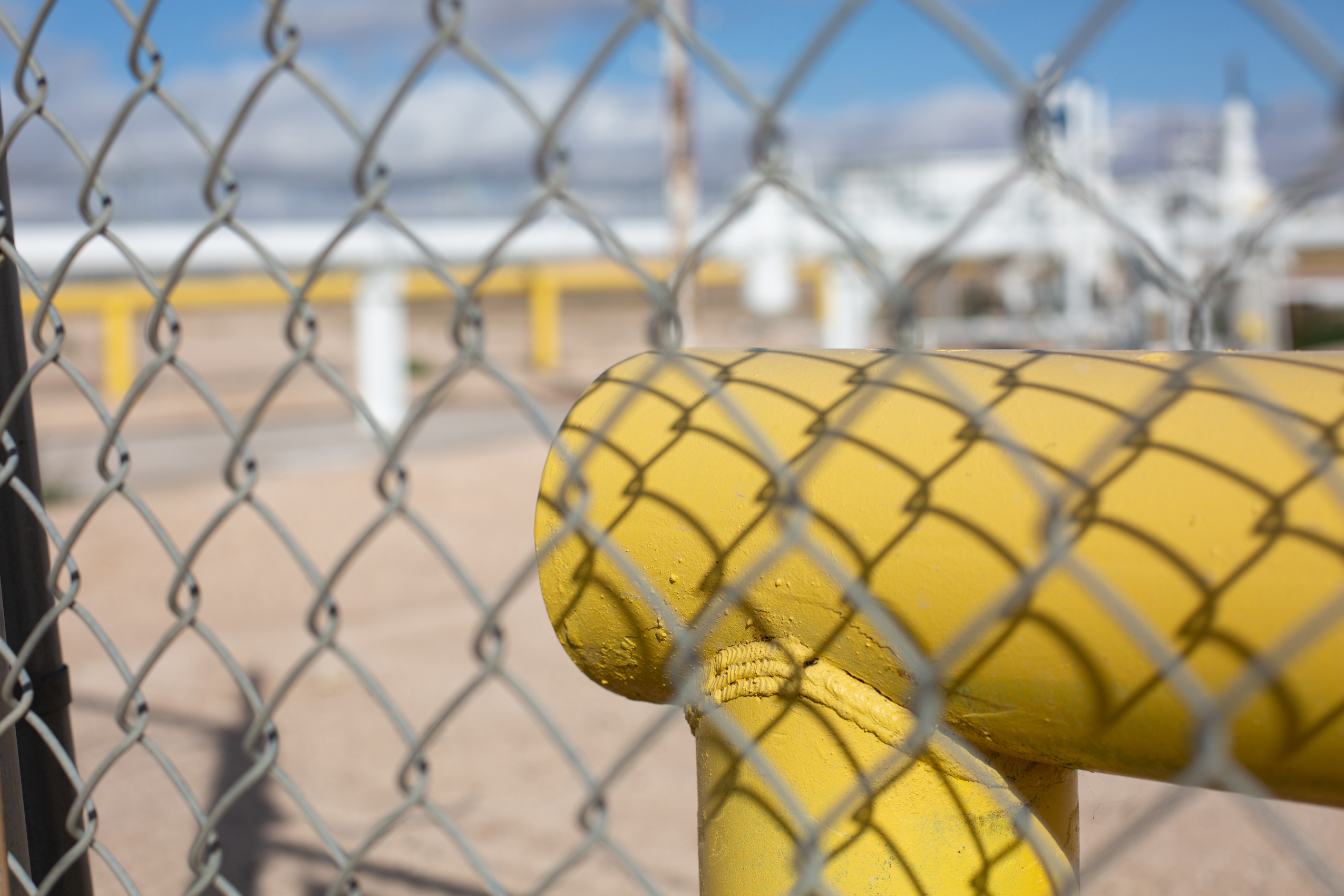
Yet eight months after the accident, in August 2023, a Google Street View image of the site showed the pipeline protected at that time with chain link fencing. On a visit to the pipeline site Tuesday, Houston Landing observed that substantial yellow barriers have been added behind the fence. The pipeline company wouldn’t answer questions about the incident and barriers. “At this time, we decline to participate in this story,” Plains spokesperson Morgan Ash said in an email.

The family of Jonathan McEvoy, Sr., the SUV driver who died in the Deer Park pipeline explosion in September, has said they suspect he had a seizure before the crash. McEvoy had experienced occasional seizure episodes in recent years, they said.
Yet recent comments from city and emergency response officials have indicated skepticism that McEvoy’s SUV could travel its path out of a paved Walmart parking lot, across an expanse of open grassy field and happen to hit the Energy Transfer pipeline by chance while having a medical crisis.
“You don’t just accidentally end up where that car ended up at. It wasn’t an accident,” Deer Park Mayor Jerry Mouton, Jr., recently told the Landing. A spokesperson later said the mayor “was trying to state” that the crash “would have had to have been a medical emergency or an intentional criminal act.” Police are still investigating.
Delma McEvoy, who was married to Jonathan McEvoy, Sr. for about 28 years before an amicable divorce, expressed frustration that investigators haven’t seemed open to the possibility the crash was caused by a seizure – even as other motorists have managed to accidentally crash into pipelines in other communities across the country.
Jonathan McEvoy, Sr. left no note and there was nothing unusual in his behavior in the days and hours before the crash. He had even asked his roommate if she wanted to go shopping with him at the Walmart that morning, Delma McEvoy said.
She wonders whether the explosion might have been prevented if Energy Transfer had installed concrete barriers around its pipeline before the crash, instead of adding them recently during repair work. The fire burned so hot, emergency teams couldn’t get close to the pipeline or the SUV that crashed into it.
“Why was that not protected?” Delma McEvoy asked. “Traveling at that fast a pace, he may not have survived [the impact], but at least they wouldn’t have let him burn for four days.”
Marina Petric contributed to this report.
Help Houston Landing investigate pipeline safety: Are there above-ground pipelines near where you live that may not be adequately protected from vehicle crashes? Tell us about them. Send an email to Associate Editor-Investigations Alison Young with the location of the pipeline, information about why you are concerned, and if possible, a photo of the pipeline. You can reach her at alison@houstonlanding.org or by calling 346-554-0323.

