


Aldine ISD is phasing out a costly but largely successful campus turnaround model at two elementary schools, a winddown that will test whether the schools can sustain their high performance without big investments by the district.
District leaders plan to end Accelerating Campus Excellence, or ACE, a state-backed approach to overhauling long-struggling schools, over the next two years at Goodman and Worsham elementary schools. The two campuses, which ranked among the district’s lowest-rated schools throughout the 2010s, earned some of Aldine’s top scores on state standardized tests in 2023 and 2024.
Aldine administrators did not directly respond to questions from the Houston Landing about why they are ending ACE at Goodman and Worsham.
“The systems and structures built at Goodman and Worsham Elementary are in place, and we are dedicated to maintaining the progress made at these campuses,” Aldine Director of External Communications Ashley Brown said in a statement. District administrators did not grant an interview request for this article.
In recent years, several Texas school districts deploying ACE have scaled back on the program due to cost. In Aldine, the district spent hundreds of thousands of dollars annually at each ACE campus, much of which went to raising educator salaries by $10,000 to $15,000.
While Aldine benefited from state grant funding in the first two years of ACE at the two schools, the district has pulled money from its regular operating budget and federal funds for the past three years. Aldine faces a projected $65 million deficit headed into the upcoming school year, even after the district’s school board voted in February to close six schools this summer.

Aldine leaders plan to continue the ACE model at the only other school using it, Eisenhower Ninth Grade School, which adopted the approach in fall 2023.
Texas education leaders and Aldine administrators have promoted ACE as a proven turnaround model for low-performing schools, while critics argue it’s an expensive system that dramatically disrupts schools without producing long-term results.
Under the system, school leaders typically replace teachers with higher-rated educators; pay staff members higher salaries; extend the school day; and invest more in social-emotional learning, parent and community engagement, and facility upgrades.
In 2023, researchers from the National Bureau of Economic Research found the original ACE model, implemented at several elementary and middle schools in Dallas ISD, led to “large immediate improvements in academic achievement” in the mid-2010s.
But districts using ACE have struggled to maintain the large investments needed to run the model. The researchers examining Dallas schools found “turnover jumped among the most effective teachers and test scores fell substantially” when the district took away higher pay from educators.
State leaders have backed the ACE model by providing short-term grant funding to schools adopting the system. Still, only 30 of the state’s 1,200 public school districts have participated.
“It’s quite costly,” said Courtney Isaak Pichon, chief partnerships officer at Good Reason Houston, an education nonprofit that has worked with Aldine to implement ACE since 2019. “It requires changes in staffing and curriculum, and it requires commitment and determination from the top to see it through.”
A successful fix
When Aldine Superintendent LaTonya Goffney took the job in 2018, the district’s roughly 40 elementary schools were performing poorly. About 75 percent of them rated at a C, D, or F level under the state’s academic accountability system.
Inspired by the success of ACE in Dallas and Fort Worth ISDs, Goffney’s administration set out to first address two elementary schools: Goodman, a C-rated campus in 2019, and Worsham, a D-rated school at the time. The two campuses combined to enroll about 1,100 students in first through fifth grades, about 90 percent of whom were Hispanic and economically disadvantaged, and both struggled to attract highly rated teachers.
District leaders made several major changes at each campus. Principals replaced educators with highly rated teachers from across the district. The schools stayed open until 6 p.m., with after-school activities, dinner and transportation services available. Students received more help through group tutoring on campus. And both schools set up house systems, similar to “Harry Potter,” that connected students across campus.
“Aldine really felt like the ACE model was something that was compatible with their vision and approach for expanding choices and opportunities for all students, which was a tagline for their first strategic plan,” Pichon said.

The district received financial support from the state’s School Action Fund, which offered districts up to $2 million to address low-performing campuses through programs like ACE, to turn around Goodman and Worsham elementary schools.
The pandemic delayed the full rollout of ACE and presented unique challenges, such as the transition to and from online learning.
Over the past few years, however, the two schools have seen some significant improvement.
In 2019, roughly 30 percent of students at the two schools were reading and doing math on grade level, well below the state average, according to state standardized tests. In 2024, about half scored on grade level in the two subjects, on par with the average Texas student. (Most other Aldine schools continue to trail far behind the state.)
In addition, the two campuses are now filled with experienced teachers. Prior to ACE, about 40 percent of teachers at Goodman and Worsham had less than five years of experience. Last school year, it was about 15 percent at Goodman and 20 percent at Worsham.
Alice Ramirez, parent of a fourth grader at Worsham Elementary School, says she finds that teachers take a slower paced approach at the school. Last year, her son attended Orange Grove Elementary School, where she felt as if the curriculum was too fast for him.
“One week he’d be learning one thing, and then the following week they would be thrown into a new subject,” Ramirez said. “He wasn’t learning too well.”
After a recommendation from her mother, Ramirez relocated her son to Worsham. Since August, she has noticed teachers placing more emphasis on engaging with her through more meetings and providing more information on paper.
An affordability gap
In districts already grappling with tight budgets, the ACE program is expensive. Educators at ACE schools typically earn some of the highest salaries in their district, and keeping schools open longer comes with a cost.
Aldine administrators didn’t respond to questions from the Houston Landing about the cost to keep ACE at Goodman and Worsham, though a grant request document from 2019 shows the district planned to spend nearly $900,000 on ACE expenses at Worsham alone.
In 2019, Aldine ISD received a pair of two-year grants for Goodman and Worsham through the state’s School Action Fund, which supports districts through restarting a struggling school, creating a new school, reassigning students to a higher-performing school or redesigning a whole school. Good Reason Houston also provided no-cost consulting services to the district for starting up ACE.
For the past three years, however, Aldine has “taken on the financial responsibility to continue the work initiated through the ACE program,” district administrators said in a statement.
Aldine could afford the costs, in part because federal officials flooded schools with pandemic stimulus money, but the district is now grappling with the end of stimulus funding and lower revenue tied to declining enrollment.
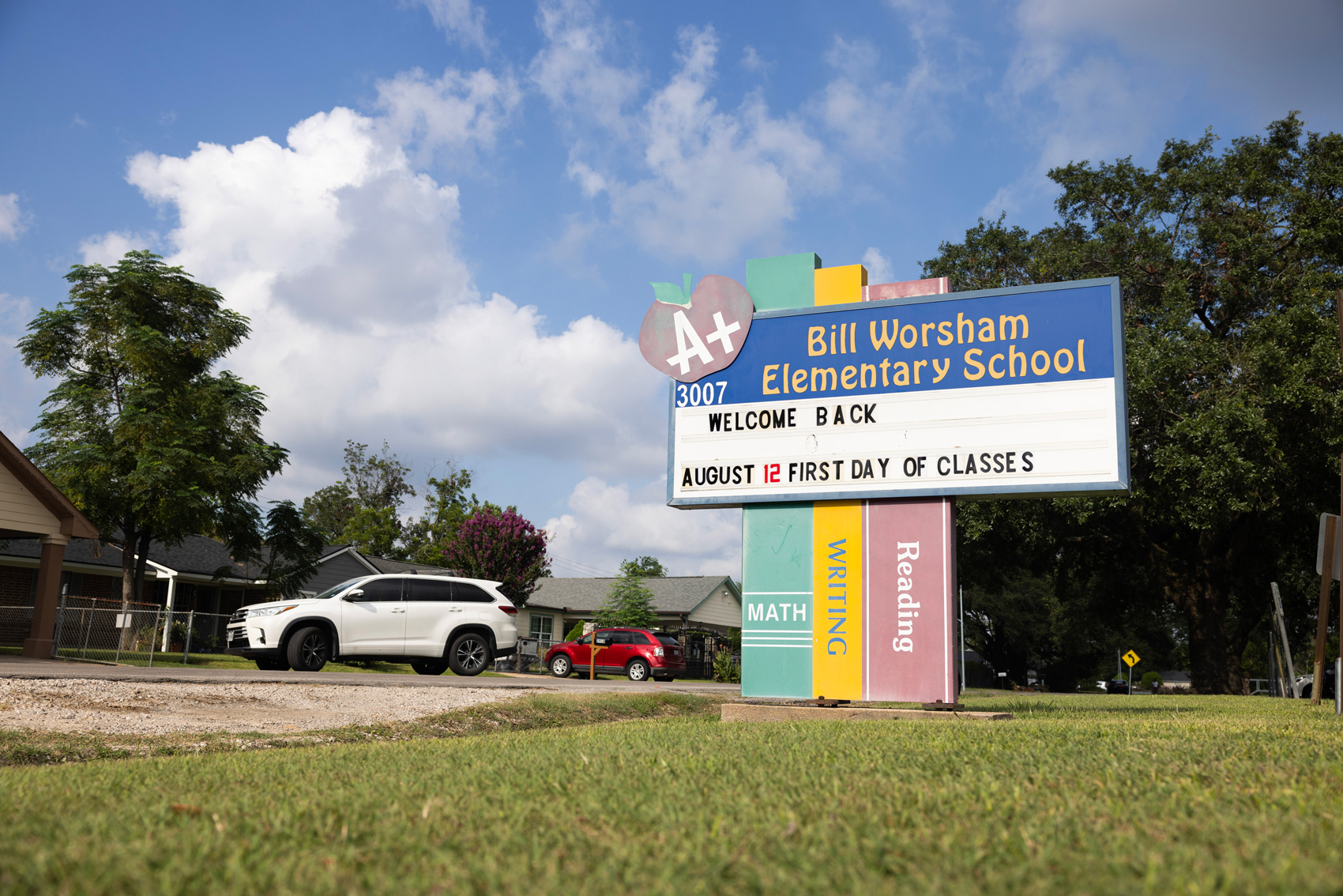
Through the School Action Fund, the TEA has supported at least 30 districts implementing the ACE model. Districts must do the major pillars of the model to receive funding, which doesn’t always cover the full cost of ACE.
State law also provides additional funding to historically low-rated schools that adopt ACE, extend their school year, adopt a teacher pay-for-performance system and employ only teachers with three-plus years of experience. Texas lawmakers are proposing slight changes to those requirements this session in the Legislature’s main school funding bill, which hasn’t reached the House or Senate floors for a vote yet.
Pichon said funding remains one of the biggest challenges for districts looking to add and maintain ACE programs. In the meantime, she advised districts to set budgeting strategies early on to sustain the work long-term.
“It’s something that we are interested in expanding, because there’s no doubt, there’s no question in my mind, that ACE gets positive results for students,” Pichon said. “So when districts deploy it, we see positive results for kids, and would certainly like to see more of that.”
Angelica Perez is a general assignment reporter for the Landing’s education team. Find her @byangelicaperez on Instagram and X, or reach her directly at angelica@houstonlanding.org.