

Each week, “Answer Key” aims to help families by responding to an important question about education and schools in Greater Houston. If you have a question for us to answer, please email us at education@houstonlanding.org or fill out the form at the end of this article.

This week’s question:
Would my family be able to receive school vouchers under the Texas Legislature’s first proposal?
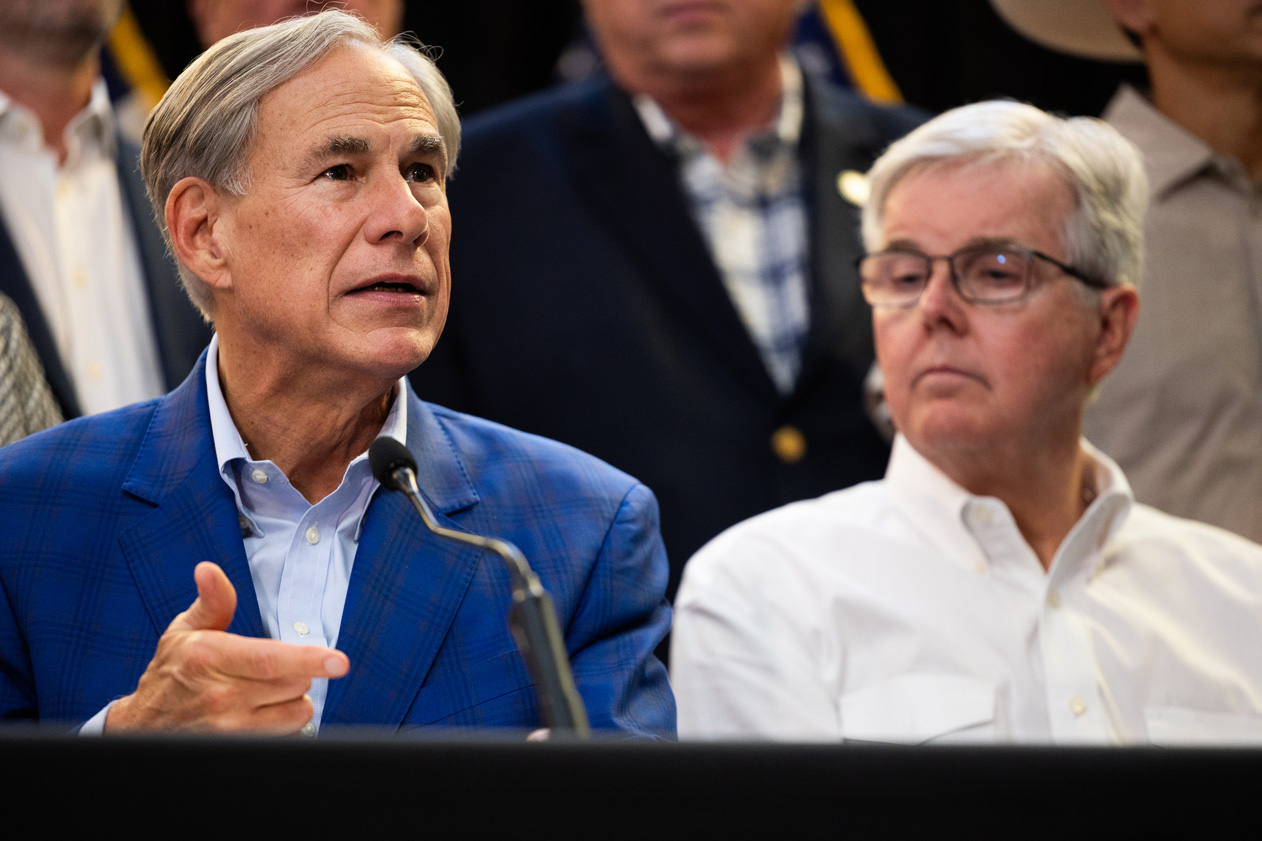
Some of the Houston area’s 1 million-plus students may soon have the option to trade their public school classroom for a private school experience — in part on state taxpayers’ dime.
Texas Gov. Greg Abbott has made passing school vouchers a top priority this spring, fast-tracking a proposal that would allow tens of thousands of families to attend private schools by using state funds to cover tuition and various other educational costs. The Texas Senate passed its proposal this week, while the House is expected to take up legislation in the coming weeks.
The measure has generated massive attention, partially because a group of rural Republicans stymied a similar plan during the last legislative session in 2023. Supporters say families should have options beyond local public schools, especially in areas where those schools struggle. But critics argue the plan would further strain public school district budgets, which are tied to student enrollment, and break the separation of church and state.
Policy questions aside, many families undoubtedly wonder whether the plan might include their children in the first place. We break down your questions here, including who will be eligible, how families could spend the money and the timeline for the program possibly going into effect.
Who would be able to use the school vouchers?
Under the Senate’s proposal, any child in grades kindergarten through 12 whose family is zoned to a Texas public school — including those who attend private school — would be eligible to access the money. Children who qualify for enrollment in public prekindergarten classes, such as kids who qualify for free or reduced lunch, also are eligible.
Each child would be able to receive up to $10,000 annually, or $11,500 if the student has a disability. Lawmakers are expected to put $1 billion toward the program, the level both chambers set out in their initial spending plans, meaning close to 100,000 children across Texas could likely access funds.
About 5.5 million children attended Texas public schools in 2023-24. An estimated 327,000 students attended Texas private schools in 2021, the most recent year with available data, according to the National Center for Education Statistics.
If more people apply than the number of spaces available, program administrators would give preference to children with disabilities and those from families earning up to five times the federal poverty level, roughly $160,000 per year for a family of four.
Up to 80 percent of slots would go to children in those two groups, with the rest going to children without disabilities from more affluent families. All selections would be decided using a lottery.
Families that homeschool would be able to access $2,000 per child each year, or $2,500 per child with a disability, according to the Texas Tribune.
House Republicans have not released a detailed proposal yet or signaled they will adopt the Senate’s plan.
How would the vouchers work?
Legislators are looking to roll out an “education savings account” program that would set up a fund for each recipient, allowing families to spend money on education-related costs. Functionally, it would operate something like a personal bank account for each child, with money pre-loaded into the fund.
The Texas Comptroller’s office, led by Glenn Hegar, would run the program, meaning the agency would be responsible for creating the websites through which families apply to the program and later access funds. The office would also be responsible for yearly audits and reports on the program.
related to education
Answer Key: Trump and Abbott want to ban DEI in schools. What could that mean for Texas?
by Jacob Carpenter / Staff Writer
What could the vouchers cover?
The money could go toward tuition at private schools, higher education providers and certain programs that train students to get industry-based certifications like welding or cosmetology.
At many private schools in the Houston area, families would have to use their full $10,000 yearly allotment on tuition. Some of the region’s top private schools charge $30,000 or more, meaning families would have to pay the remainder out of pocket.
However, families that have money left over would be able to use funds on several other expenses, including textbooks, uniforms, transportation to school and education events, private tutors and technology (limited to 10 percent of total grant).
Funds could not go to online learning programs, schools outside Texas or any organizations run by people related to the program participant’s family. Children whose parents are members of the state Legislature or who hold statewide elected office may not participate in the voucher program while their parents serve.
related to education
Is immigration enforcement coming to Houston schools? Here’s what we know.
by Angelica Perez / Staff Writer
Where does the proposal stand?
The Senate’s bill passed Wednesday despite Democratic lawmakers’ opposition, sending the measure on to the state House of Representatives.
The House could take up the Senate’s proposal or introduce its own bill. The legislation must pass through a House committee, then receive a majority of House members’ votes. If the House and Senate bills differ at all, the two sides must hammer out a compromise bill, then both chambers must vote to support the legislation. The bill would then land on Abbott’s desk to be signed into law.
Some rural Republican House members joined with Democrats to kill a similar proposal in 2023, but Abbott has said he has the necessary votes to pass the bill this time after pro-voucher candidates defeated voucher opponents in several races last year.
If passed, when would the program roll out?
The Senate bill states the proposal would go into effect at the beginning of September, if passed.
The first school year families would be able to access voucher funds would be 2026-27, Kevin Lyons, a spokesperson for the Comptroller’s office, said in an email.
Asher Lehrer-Small covers Houston ISD for the Landing. Find him @by_ash_ls on Instagram and @small_asher on X, or reach him directly at asher@houstonlanding.org.

