

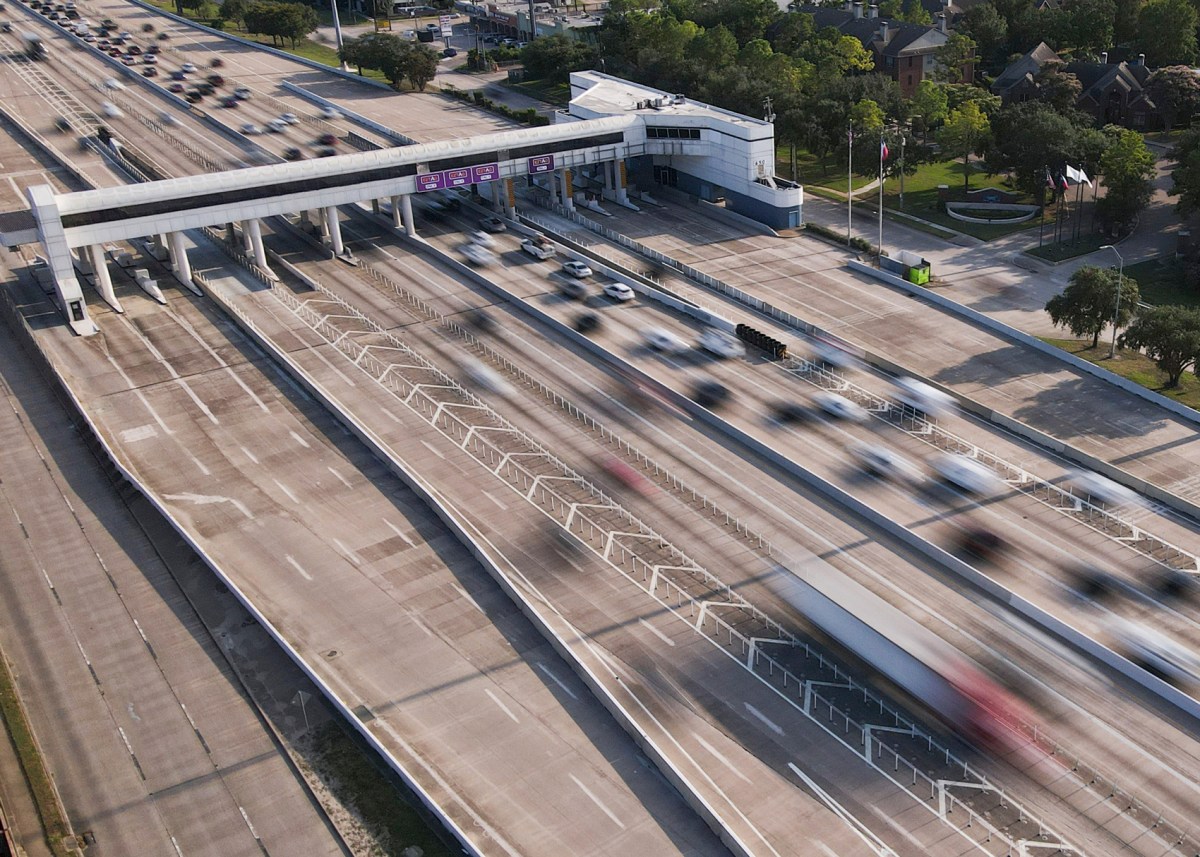
Harris County would have to turn over tens of millions in toll road dollars to the city of Houston for use on public safety and emergency services under a bill before the Texas Senate.
Senate Bill 2722 by Sen. Paul Bettencourt, R-Houston, is scheduled for a hearing on Wednesday.
“I filed the bill so that we could have more transparent use of excess funds,” Bettencourt said Wednesday. “It’s important to recognize that if we are going to have excess toll road revenue that it should be shared with the big cities within the county.”
HCTRA generates upwards of $1 billion dollars a year for the county, according to a May 2024 credit opinion by Moody’s.
Under Bettencourt’s bill, toll road revenues would be restricted to building, operating and maintaining the county’s toll road system or paying down debt associated with the system.
The county for years has used hundreds of millions of dollars in so-called excess HCTRA revenues – funding above operation and debt costs – to fund road projects that connect to the toll road system in some way. Commissioners Court has used some of that money for other purposes in recent years, including more trailways and bikeways and road maintenance.
EARLIER: City Controller sounds alarm as Houston’s projected deficit swells to more than $300 million
Bettencourt’s bill would require the county to give 30 percent of that revenue to “the municipality that contains more than 40 percent of the number of lane miles” — which is the city of Houston. The remaining 70 percent would go back to the county and “only be used on roads owned and maintained by the county.”
The revenue that Houston would get could only be used to reimburse costs “related to law enforcement and other emergency services during accidents and other disasters affecting a project of the county,” according to the bill.
Harris County also would be required to hire an independent auditor to ensure toll road funds are being properly spent, though the bill does not explicitly require Houston to do the same.
Bettencourt said that while the county auditor conducts an annual audit of the funds, he said it does not contain robust information about how the funds are actually spent.
The city currently faces a $330 million budget shortfall for the fiscal year that begins July 1, unless it finds a way to increase revenue or cut spending.
Harris County has a better financial outlook compared to the city, but it still is staring at a potential budget deficit in 2025, one that would drastically increase with a loss of HCTRA funds.
EARLIER: This year’s disasters will help Harris County eliminat $130 million deficit in 2025 budget
A spokesperson for Whitmire did not immediately respond to request for comment.
In the bill’s statement of intent, Bettencourt said that in 2020 it was discovered that there was a “stark increase” in the transfer of excess HCTRA funds to Harris County Commissioners Court. The funds were being distributed equally to commissioners, regardless of county road lane miles, Betterncourt said.
“It was found that a portion of this excess revenue was being put towards projects for non-drivers: sidewalks, bike lanes, bike paths, intersections, etc.,” the bill statement read. “The distribution of excess HCTRA funds is being guided by political formulation and not on a transportation-related basis.”
Harris County Precinct 3 Commissioner Tom Ramsey said in a statement that HCTRA funds are not distributed fairly, which this bill would help change. The lone Republican on court regularly laments that he is allotted the same funds as other commissioners when he oversees more roadways, particularly in unincorporated Harris County, which is one of the fastest growing areas in the region.
The bill would require the county to allocate 95 percent of the surplus toll road funds it gets based on the amount of roadway in each precinct.

