


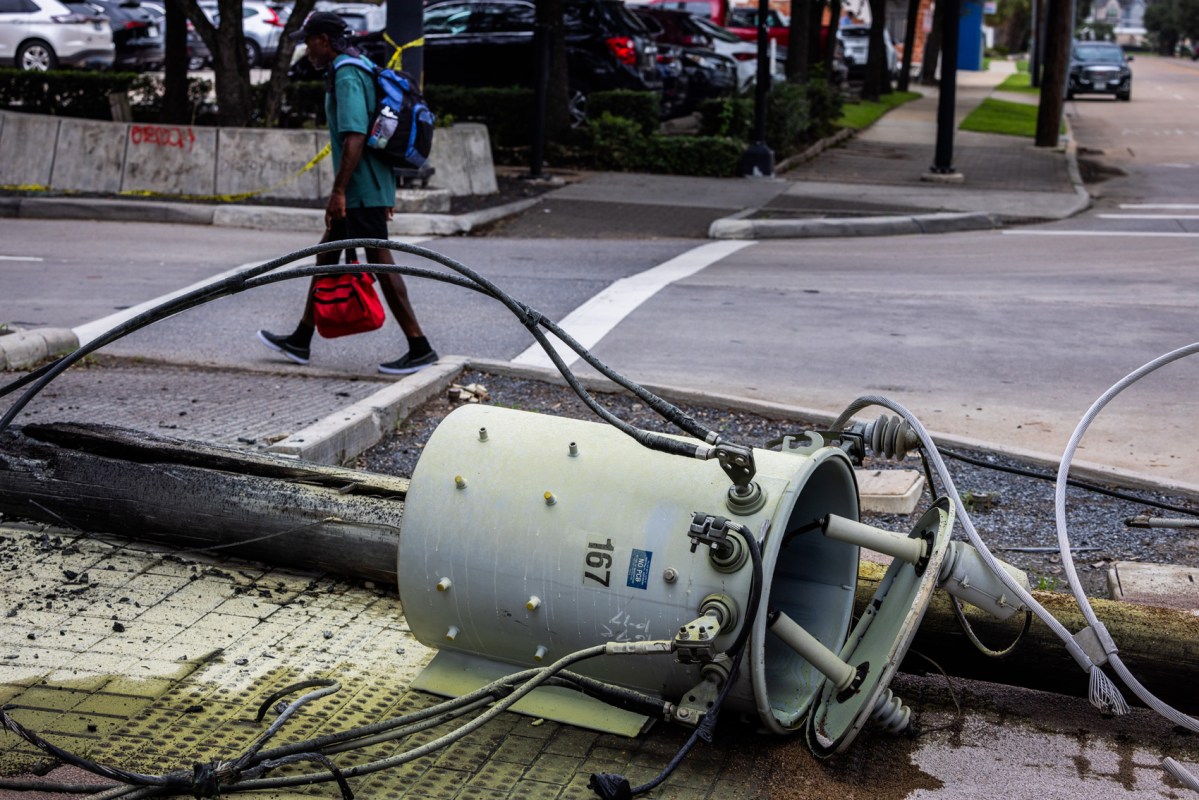
With power returning to more than 2 million Houston-area customers of CenterPoint Energy in recent days, attention has now turned to a question for the future.
How will CenterPoint, the region’s primary electric utility, prevent such widespread, prolonged and deadly power outages from happening again?
In recent days, CenterPoint officials have pointed to a $2.2 billion “resiliency plan,” which dedicates $1.5 billion to upgrading electricity infrastructure that failed miserably in the winds of Hurricane Beryl.
But a Houston Landing review of the company’s plan, combined with interviews of industry analysts, raise new doubt about whether CenterPoint’s billion-dollar proposal will significantly reduce the odds of similarly catastrophic outages. Unless CenterPoint makes even deeper, faster investments than those already proposed, Houston will remain dangerously vulnerable to hurricanes, wind storms and other extreme weather events, the analysis suggests.
Skepticism of CenterPoint’s plans largely stems from the size of the company’s proposed investment, which likely will fall billions of dollars short of what’s needed to prevent future outages, the industry analysts said. Over the past five years, CenterPoint spent more than $1 billion on projects similar to those proposed by the company, yet those improvements didn’t stop nearly 80 percent of its customers from losing power during Beryl.
CenterPoint executives also have made few promises about how another $1.5 billion, spent between 2025 and 2027, would impact its service. In a 900-page “resiliency plan” outlining the spending proposal, the company largely relied on vague promises of improved service for customers, with no pledge that the plan would dramatically reduce widespread outages from storms.
“To do it effectively, I think we’re going to have to spend more, and spend more rapidly,” said Ed Hirs, a University of Houston energy economics professor.

CenterPoint’s actions in response to Beryl will have an enormous impact on the future of Houston, huge swaths of which have gone dark twice in the past three months. At least 16 people died from storm-related causes, businesses lost billions of dollars and millions of residents sweated through days without power after Beryl pummeled CenterPoint equipment. A May derecho also resulted in eight deaths and left more than 900,000 CenterPoint customers without power, some for multiple days.
CenterPoint, a publicly held company with revenues exceeding $8 billion per year, has faced stinging criticism from residents and political leaders for its handling of Beryl.
While much of the frustration has focused on CenterPoint’s communications with customers, the company’s day-to-day maintenance of its infrastructure — the distribution circuits, transmission towers and street poles that carry power to customers — is increasingly in the spotlight. The Public Utilities Commission of Texas, or PUC, which regulates CenterPoint, launched an investigation Tuesday that will include a review of the company’s “infrastructure and storm hardening plans.”

related to hurricane beryl
Texas utilities regulator launches investigation into CenterPoint
by Clare Amari and Akhil Ganesh / Staff Writer
Meanwhile, Texas Gov. Greg Abbott sent a scathing letter Tuesday to CenterPoint CEO Jason Wells, requesting detailed plans for improvement and blasting the company for its handling of Beryl.
“Texans deserve better from their electrical companies, especially during hurricane season,” Abbott wrote.
In public statements following Beryl, CenterPoint leaders have argued the storm unexpectedly ravaged the company’s equipment, which will see major upgrades if state regulators approve the resiliency plan.
“In addition to improving communications with customers, CenterPoint intends to continue investing in the resiliency of its electric system,” CenterPoint said in a public statement Sunday.
In an unsigned statement sent from CenterPoint’s media relations email, the company said it could not respond to multiple written questions sent Monday by the Landing for this article because “we are still in the midst of ongoing restoration efforts and focused on restoring those customers who remain without power.”
‘We’ve got to harden’
CenterPoint serves 2.8 million customers across 5,000 square miles, encompassing the majority of Harris and Fort Bend counties. The company maintains nearly 3,700 miles of transmission lines and 50,000 miles of distribution lines.
Since 2019, CenterPoint has invested at least $1.1 billion on hardening their infrastructure, according to their filing to the PUC. The bulk of that money, $621 million, has gone to “transmission system hardening,” such as upgrades to wooden transmission towers and protecting power lines from high winds.
The company also spent nearly $200 million on replacing and stabilizing utility poles, in addition to about $200 million on boosting voltage capacity in the company’s transmission system, among other investments. Both could help reduce power outages.
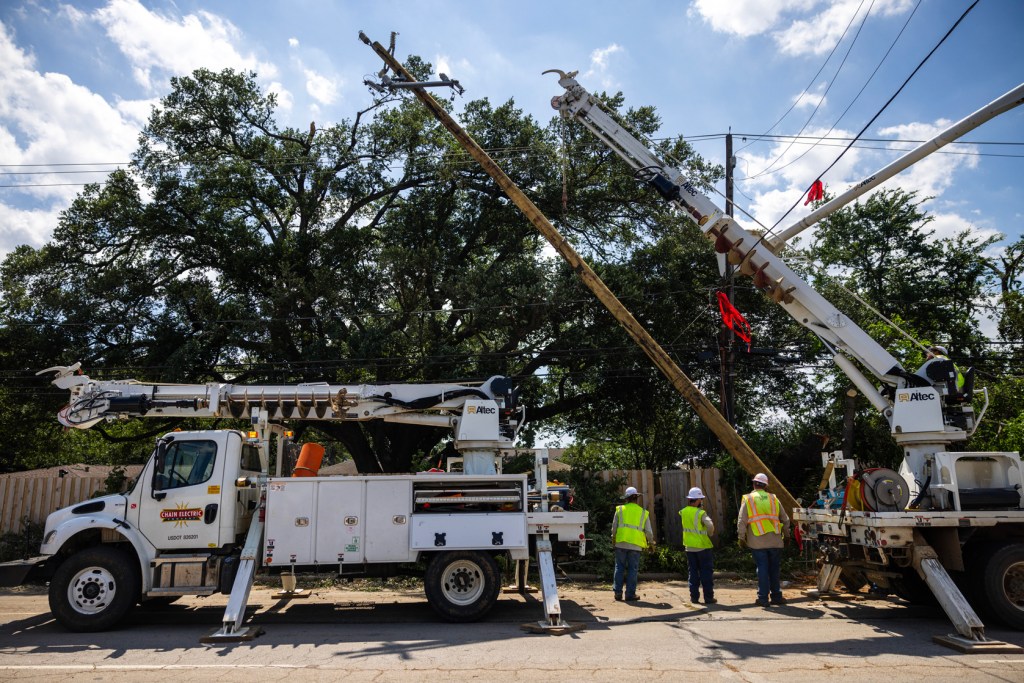
Despite these improvements, industry researchers say CenterPoint’s infrastructure remains susceptible to major storms. Nearly seven days after Beryl hit, CenterPoint crews had removed over 18,600 trees that fell on power lines during the storm and were working to restore over 2,100 damaged distribution poles, the company reported Sunday.

related to hurricane beryl
Photo essay: Hurricane Beryl’s aftermath in Houston, documented
by Marie D. De Jesús and Antranik Tavitian / Staff Photographers
“These problems have been at CenterPoint for decades, arguably, for generations. So it’s going to take a lot to build a grid that is worthy for the people of Houston,” said Doug Lewin, an energy consultant and author of the Texas Energy and Power newsletter. “The problems have been thoroughly exposed.”
Michael Webber, a professor of mechanical engineering at the University of Texas at Austin, said the $200 million investment in upgrading utility poles likely made a difference in the system’s ability to withstand storms. Still, Webber said CenterPoint’s infrastructure will need even more investment as storms continue to stress the company’s systems.
“Three wicked storms hit Houston in less than two months,” Webber said. “The reality is, this is probably a preview of the future. It’s not an aberration going forward. So what have we got to do? We’ve got to harden.”
Much more needed?
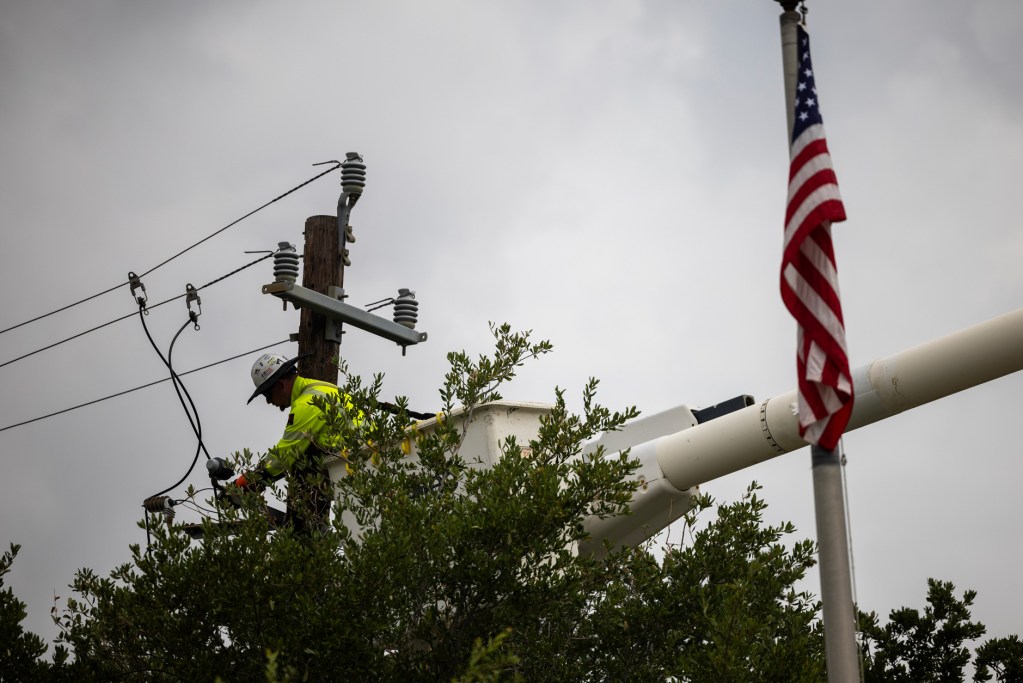
CenterPoint’s resiliency plan aims to reduce the number and length of power outages from extreme weather events by spending about $1.5 billion on several “system hardening” measures. These include replacing transmission towers, upgrading or securing distribution poles and burying some power lines, among other improvements.
In total, the plan will cost CenterPoint roughly $2.2 billion, a price they seek to pass onto ratepayers with PUC approval. A CenterPoint executive told the Houston Chronicle in April that the plan would add $3 per month to the average residential bill.
The company told regulators that customer “affordability” will not be affected by the changes. However, 64 percent of about 660 low-to-middle income households in the Houston region said they already struggle to pay their energy bills most months, according to a survey published in April by the Texas Energy Poverty Research Institute, a nonpartisan research nonprofit.
Yet notably, the plan does not include specific predictions of the number of customers who might benefit from the upgrades. The only quantifiable improvement CenterPoint identifies in its PUC application is buried deep in a report authored by the consulting firm Guidehouse, which the company commissioned to review its proposal before filing.
Through a complex series of calculations, Guidehouse estimated that CenterPoint’s proposed system hardening upgrades would result in 500 million “customer minutes of interruption” saved.
However, electrical engineers said the number means little without further context, such as whether the calculations included unplanned outages like those caused by a hurricane, as well as planned outages from routine maintenance.
“You really need to know a lot more about what it was calculated around,” said Ross Baldick, professor emeritus of electrical and computer engineering at the University of Texas at Austin.
CenterPoint customers combined to spend over 10 billion minutes with no power following Beryl, a Houston Landing analysis of outage data shows.
It also isn’t clear where CenterPoint’s upgrades would be made. Brad Tutunjian, a CenterPoint vice president, told regulators the company would consider which areas have been previously affected by weather events and equipment age and performance, among other facts.
But in the absence of more specific data, industry researchers questioned whether the company’s proposed upgrades would actually reduce outages.
“It’s all highly geographic,” said Elizabeth Plater-Zyberk, a professor of architecture and urban design at the University of Miami. “Because places are big and systems are large, we tend to talk in generalities. … But until you can really map (the upgrades), it’s hard to tell.”
Even in the absence of quantifiable impact, some industry researchers interviewed by the Landing agreed that CenterPoint’s proposed investment is only a fraction of the funding that would be required to insulate Houston against increasingly common severe weather.
“It’s like trying to charge a Tesla with a double-A battery,” Massoud Amin, a professor emeritus of electrical and computer engineering at the University of Minnesota, said of CenterPoint’s plan.
Who foots the bill?
Even if CenterPoint wanted to dramatically accelerate its planned spending, the company would need to figure out how to afford the enormous costs.
In years past, CenterPoint has relied on ratepayers footing the bill for equipment upgrades and maintenance through various fees charged to customers.
CenterPoint charges a flat fee of about $4 per month and additional fees based on electricity usage, which come out to roughly $40 per month for the average residential customer in Texas. The CenterPoint charges typically represent less than half of a customer’s overall electric bill, with the remainder owed to electricity providers like Reliant, TXU Energy and Rhythm Energy.
Given public and political frustration with CenterPoint, company leaders likely would not ask the PUC to approve a major rate hike, and state regulators likely would not approve one even if CenterPoint did.
“There’s always the question of how much people are willing to pay for reliability,” said Jay Apt, a professor emeritus of engineering and public policy at Carnegie Mellon University. “Are you willing to pay an extra $15 a month on top of your $120? Today, if you don’t have power, the answer is probably yes. Back in February, you would have probably said no.”
CenterPoint executives could turn to state legislators for an infusion of state cash to update its power delivery systems, though support for such a proposal likely would be minimal.
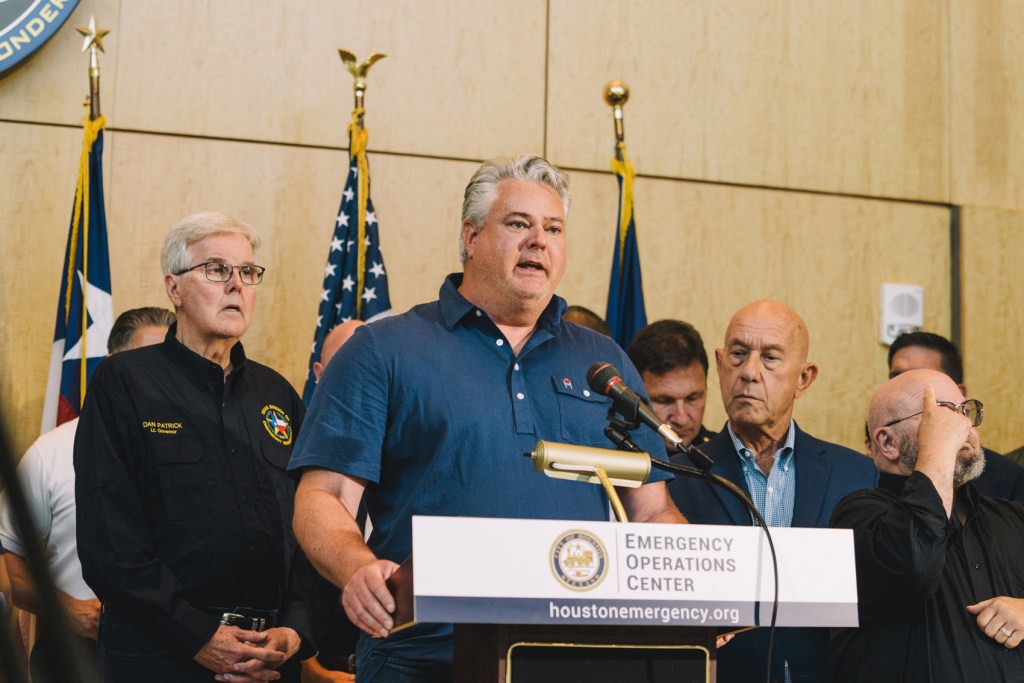
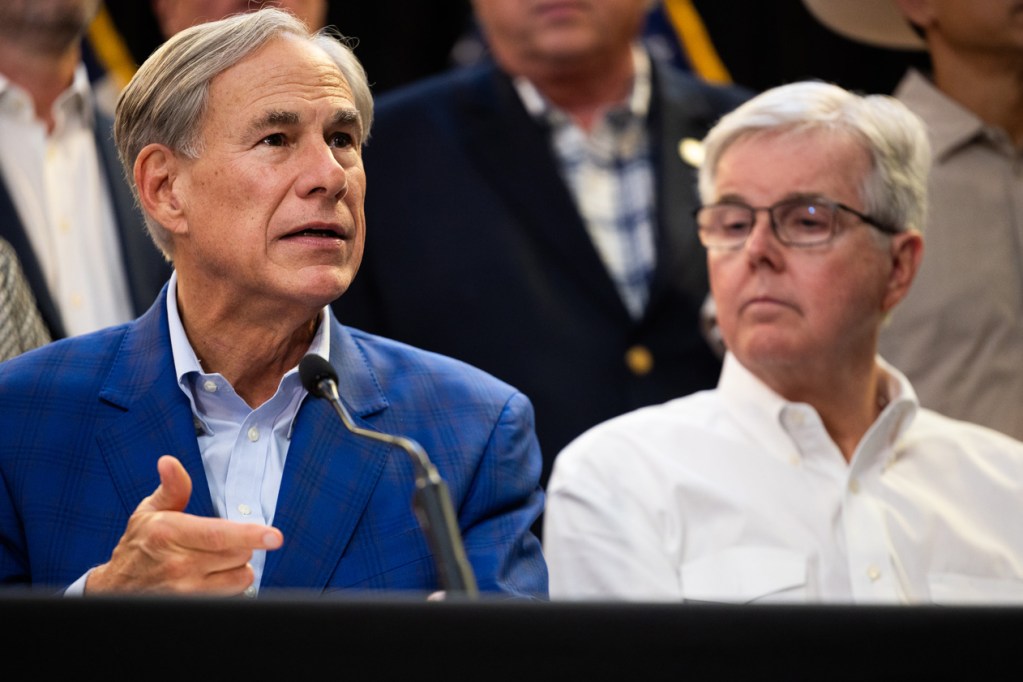
Texas Lt. Gov. Dan Patrick on Wednesday appointed a Senate special committee on storm preparedness, recovery and electricity. However, a press release announcing the committee, along with public statements over the past week by Patrick and Abbott, suggest they’re more interested in holding CenterPoint accountable for its actions than doling out money to the company.
State Sen. Nathan Johnson, a Dallas Democrat and member of the Senate’s Business and Commerce Committee, said the Texas Legislature has historically played only an indirect role in ensuring the soundness of local energy infrastructure.
Legislators do not provide funding for system hardening. Rather, the laws they pass can provide an economic incentive for companies like CenterPoint to invest in resiliency upgrades, Johnson said.
“Historically, local power distribution has been paid for through local electricity rates,” Johnson said. “And there are decisions that are better made at the local level.”
CenterPoint, which totaled $3.3 billion in profits over the past five years, also could dig deeper into its own pockets to pay for more upgrades. Shareholders aren’t forecasting a major sacrifice by CenterPoint, however: the company’s stock is only down 6 percent since Beryl hit.
The five-member PUC will decide whether to approve CenterPoint’s resiliency plan in October. According to state law, they must consider the extent of the plan’s impact on system resiliency and the estimated costs of implementation.
In the meantime, Johnson said Houston’s ordeal also raises profound questions about whether the state has allowed CenterPoint’s systems to wither, leaving customers in the dark.
“One of the things we have to look at is, have we incentivized the (utilities) to maintain the integrity of their local infrastructure?” Johnson said. “These are investor-owned utilities. If we’re driving them to invest their money in something other than the integrity of the local system, that’s something that we should be examining right now.”

