


Leticia Gutierrez remembers feeling optimistic at the start of Sylvester Turner’s first term as mayor.
As director of government relations and community outreach for Air Alliance Houston, Gutierrez was asked to represent the organization on Turner’s health transition team. That position, she said, helped create a blossoming partnership between the group and City Hall.
Since Mayor John Whitmire took office, that relationship has faltered.
“We just don’t see him,” Gutierrez said. “We don’t — we genuinely don’t.”
One year into Whitmire’s term, Gutierrez and other local organizers working on transportation, climate and community issues say they feel unheard and ignored by Houston’s chief executive.
Whitmire rejects the complaint, saying his relationship with community groups is “very close and full time.”
“Nobody, no one is genuinely more involved with the community than me,” he said last month.
RELATED: From 50-year legislator to Houston mayor, the transition was not always easy for John Whitmire
Much of the difference in communication style with organizers can be attributed to the philosophical shift between the Turner and Whitmire administrations, local political consultant Nancy Sims said.
“The biggest piece of it all is that you had eight years of an administration that was very grass-roots-driven, and then suddenly, you know, overnight, had an administration that came in with what the mayor would say is a broader city view,” Sims said.
Whitmire claims the previous administration did not truly value organizers’ input. Turner policies that organizers laud, he said, were more spin than substance.

Deb Bonario-Martin, a community activist in Northline, admitted that Turner did not always do what organizers wanted, but said the former mayor actually listened to them.
EARLIER: Is Houston Avenue median removal the start of a trend or a one-off? Advocates watch closely
Whitmire, she added, only listens to his donors and supporters.
The mayor denied that, saying it is community organizers who platform their constituents and ignore others.
“No, it’s just back asswards,” he said. “I am for the whole city, and they’re for their membership.”
Relationship building
The idea of only representing one group versus an entire city is part of an underlying tension that often exists between organizers and municipal leaders, said Paul Lichterman, a professor of sociology and religion at the University of Southern California.
“There’s going to be some disconnect and some difficult bridge building between people who are working hard and earnestly to voice their issue — to voice their demands — and governing officials who may or may not be listening to some extent, but have to at least appear to legislate for everyone and take different interests into account,” Lichterman said.
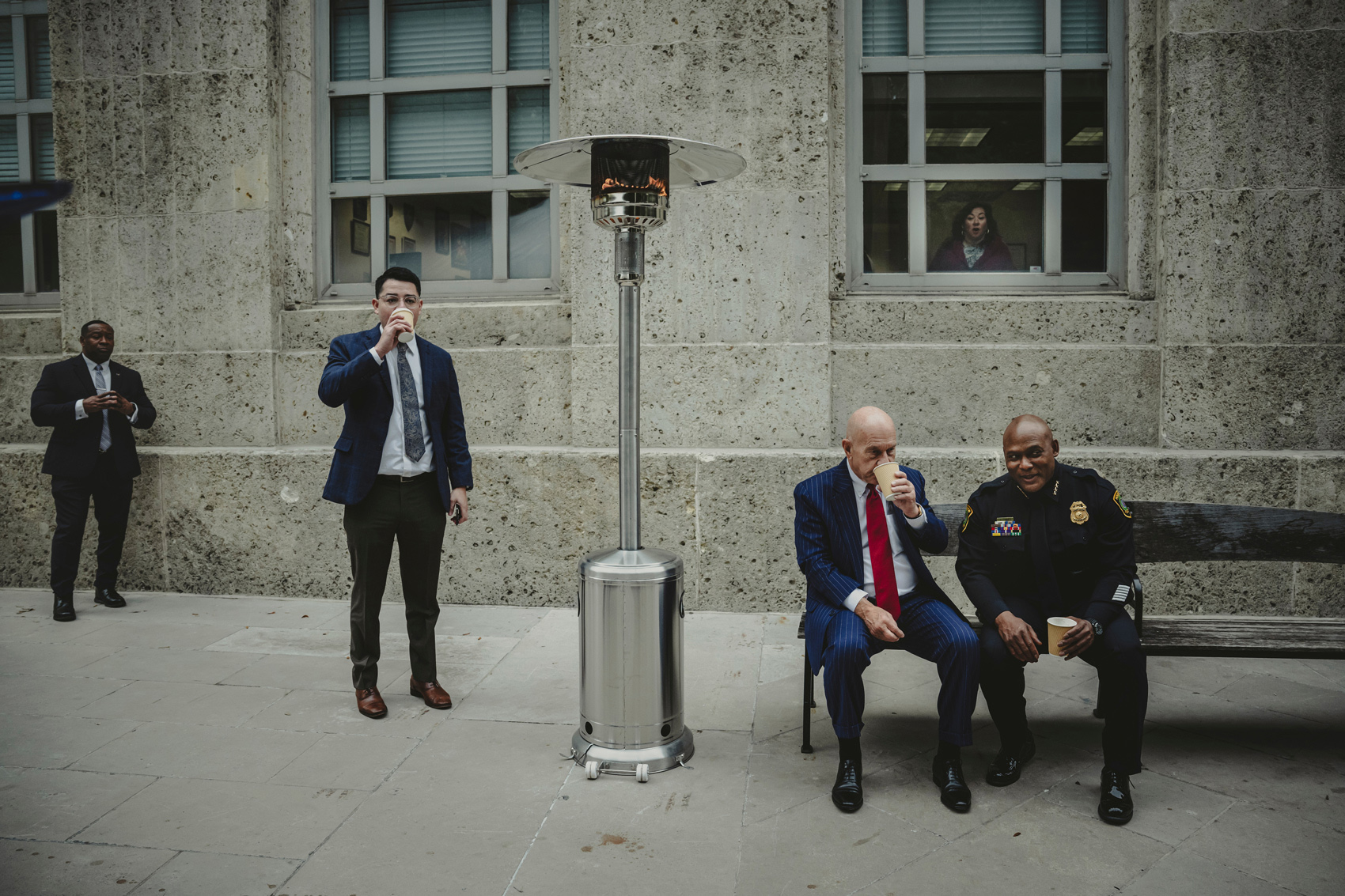
Gutierrez said Air Alliance is open to building those bridges with the Whitmire administration, but attempts to do that so far have been futile.
The group asked to meet with Whitmire twice in 2024, Gutierrez said. Both times the request was denied.
A Houston Landing review of Whitmire’s calendar from January through November 2024. found no scheduled meetings with grass-roots groups focused on climate or transportation, such as Air Alliance or LINK Houston.
Whitmire said there are no meetings with organizers on his calendar because those interactions are “encounters” that happen organically when he is out in the community. He added that he solicits input from across the city, not just from grass-roots groups, some of whom he said have a political agenda.
“You’re talking about the same activists that I could meet with them 100 times and it wouldn’t matter,” Whitmire said.
Building relationships with community organizers, however, is an important part of effectively running a city, said Celina Su, a professor of political science at the City University of New York.
Trust in democratic governance is at an all-time low, Su said. Choosing to build relationships with grass-roots groups can help build unity and create democratic accountability.

Activists and organizers working to advance multi-modal transportation in Houston were particularly rattled by the first year of the Whitmire administration. They say the mayor’s refusal to meaningfully engage has led to the shelving of both policies and projects that were backed by data and popular among residents.
EARLIER: Whitmire touts Shepherd-Durham construction compromise with wider lanes, narrower sidewalks
“Transportation was not an issue in the 2023 election because Houstonians were, by and large, happy with the direction we were headed in when it came to our streets,” said Joe Cutrufo, executive director of BikeHouston. “Mayor Whitmire took office and almost immediately put any project that helps to safely accommodate pedestrians and bicyclists and transit users on pause.”
Beginning with the February 2024 removal of medians along Houston Avenue, Whitmire’s transportation policy has shown that the mayor has abandoned his campaign promise to be a pragmatic problem solver in favor of decision-making based on his personal ideology, Cutrufo said.

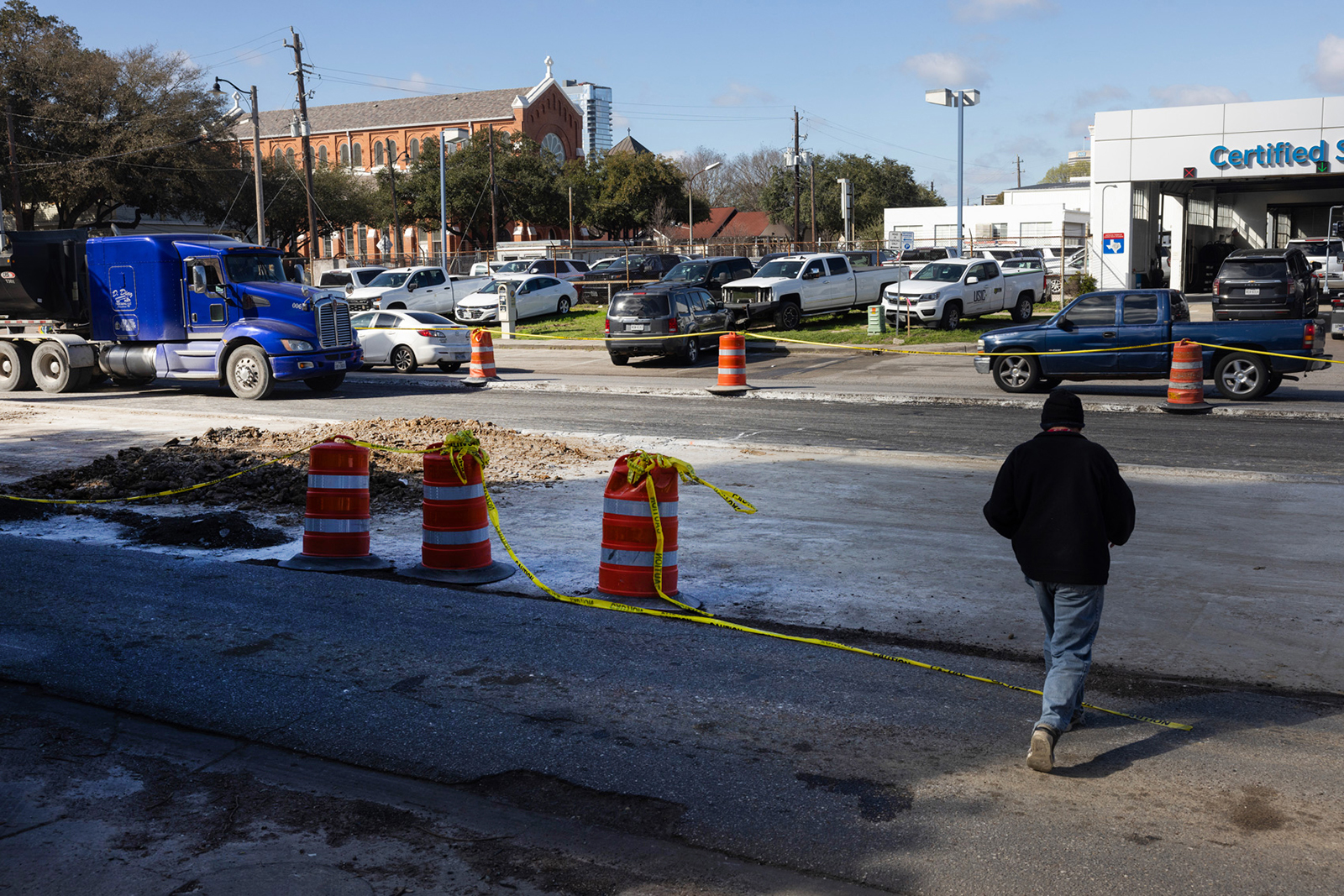
The Houston Avenue medians, installed in December 2023, were meant to slow traffic and ease pedestrian crossing across the busy roadway. After hearing from former Houston Police Chief Troy Finner during a ride-along on his first night in office that the medians were an impediment to first responders, Whitmire decided they had to go.
Whitmire’s decision to remove the medians was made without consulting District H Councilmember Mario Castillo, whose district encompassed the project.
It eventually cost the city $730,000 to remove the medians — $230,000 for the removal, and $500,000 to resurface. Those costs, far higher than the original $100,000 price tag to install the medians, also did not include repair costs for the water and gas line ruptures caused by the removal.
‘I listen to my team’
Despite an outcry over the medians’ removal, Whitmire has not shied away from controversial road and transportation decisions.
The mayor called former city transportation leaders “anti-car activists,” temporarily paused all city projects that would decrease automobile lanes, and forced a redesign of a shovel-ready Montrose Avenue improvement project.
Asked about his transportation policy, Whitmire said he prioritizes safety, mobility and efficiency.
PREVIOUSLY: Whitmire’s Metro emphasizes street repairs, microtransit. What does that mean for MetroNext?
Critics like Cutrufo say the mayor’s transportation decisions have failed to truly take safety into account.
“This mayor has said a lot about public safety,” Cutrufo said. “And in a city where a lot of people die in traffic crashes, one would hope to see more open-mindedness from our leaders about making sure that traffic safety is a key part of their public safety portfolio.”
He later added, “There’s no transparency as to what his guiding principles are, other than more lanes and wider lanes for cars.”
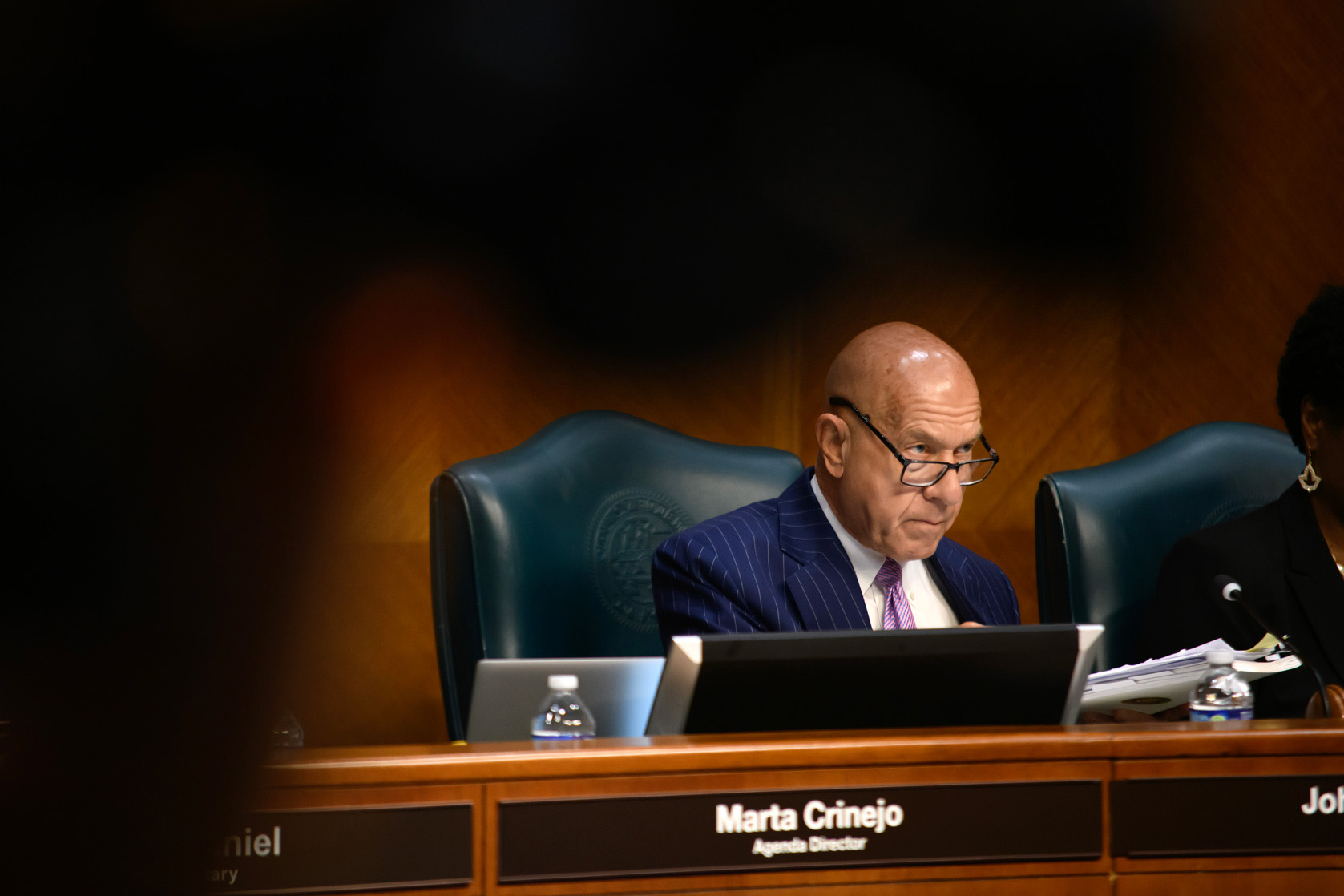
Whitmire said he has assembled a group of policy experts he relies on to lead city departments and help him make policy decisions.
“I listen to my team,” Whitmire said. “I have high standards for them.”
Kevin Strickland, co-founder of Walk and Roll Houston, pointed to the resignations of Veronica Davis and David Fields, former city officials who often championed transportation safety projects, as examples of Whitmire doing the exact opposite.
Strickland also said that the organizers Whitmire has ignored often are subject matter experts in the fields they spend time advocating.
Whitmire is uninterested in rehashing his decisions with critics.
“I don’t have time for people that complain that I won’t repeatedly meet with them about something that they know in my world is wrong,” he said.
Instead, Whitmire said he’d rather focus on results.
“I listened to them, met with them, and it’s time to go to work,” he said. “They want to keep meeting, and I want to go to work. It’s that simple.”

