
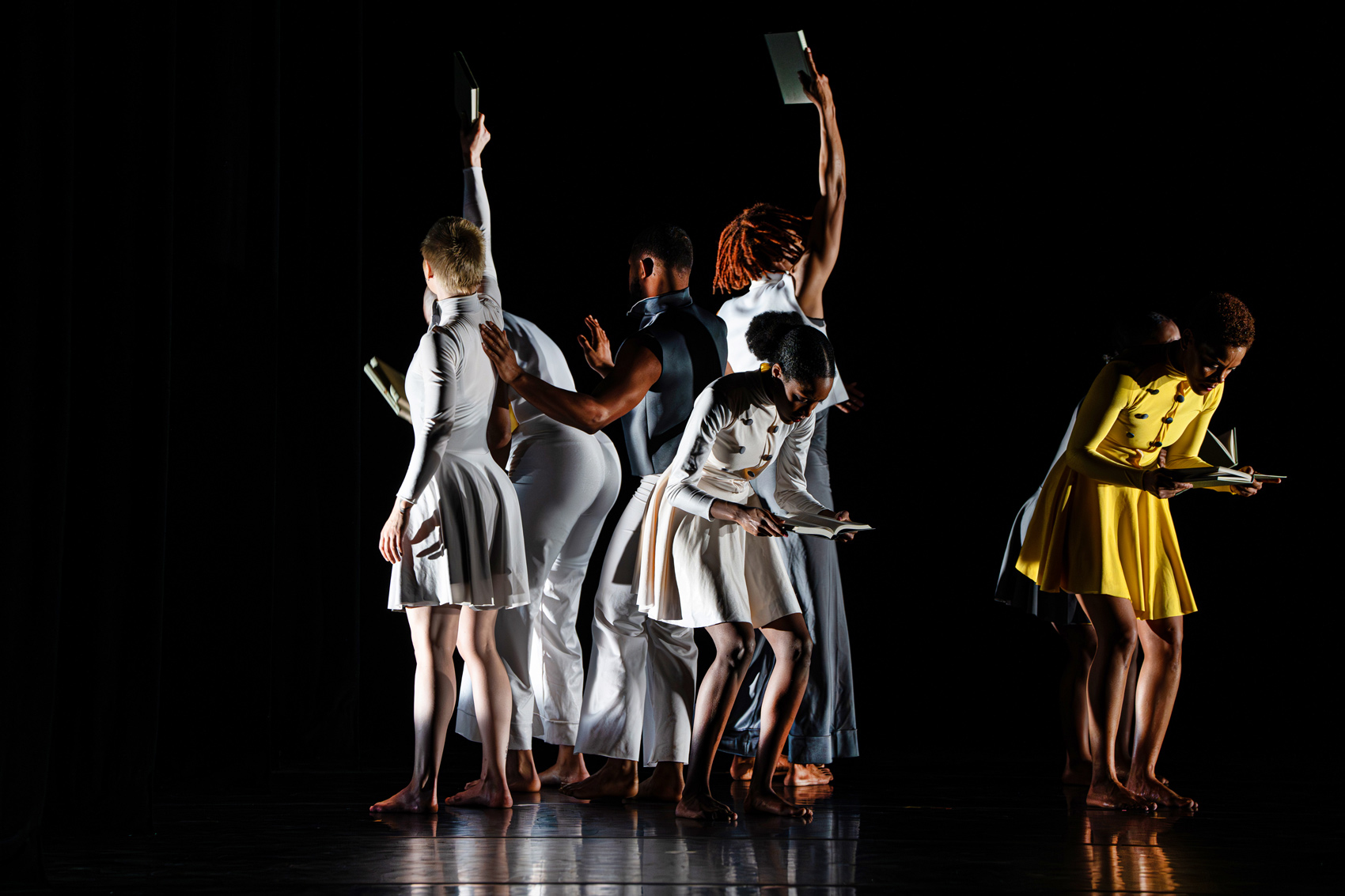

Harrison Guy first learned about the Houston Colored Carnegie Library, one of the first public libraries for Blacks, after reading about it at Houston Public Library’s African American History Research Center.
It was a natural discovery for Guy in his line of work as a choreographer who founded a social arts organization, Urban Souls Dance Company, 20 years ago to tell stories of the Black experience, prioritize racial equity and advance healing and justice.
With the sweeping attacks on diverse literature throughout schools in Texas, Guy is using performing arts to tell Black history at a time when some want to silence those voices.
“It’s just a great opportunity I think to use the mediums to do Black history,” said Guy, 47. “You don’t have to just read a book or see a traditional Black history poster. You can use music to tell a story. We can use dance.”
In a unique collaboration with the Hobby Center for Performing Arts, Guy and his team performed “Colored Carnegie” as part of the Hobby Center’s three-day Discovery Series, an educational program that aims to expose fifth-grade students from across the region to live theater performances by Houston-based artists and organizations and supplement classroom learning.
“Colored Carnegie” reprises the original show that was commissioned by Performing Arts Houston in November 2021 and highlights the Houston Colored Carnegie Library, a segregated branch of what is now the Houston Public Library that opened in 1913 in Fourth Ward at a time when Blacks were denied access to some public libraries by Jim Crow laws.
In addition to “Colored Carnegie,” Urban Souls will also offer two other pieces: “Black Bodies in White Spaces” and “Sugar Shack” Saturday at 7:30 p.m. at the Hobby Center for “Souls of Black Houston,” a dance concert dedicated to honoring Black history. Tickets start at $38 and are available online and in person at the Hobby Center Box Office at 800 Bagby St.
The new collaboration is the first of its kind for the Hobby Center, which has undergone a transformation in recent months from a traditional landlord role, in which it solely leases space to community organizations, to an incubator role that elevates artists of color who have traditionally faced hurdles accessing some of Houston’s art venues.
Deborah Lugo, the vice president of programming and education for the Hobby Center, credits this transformation to president and CEO Mark Folkes. When Folkes took over in August 2022, the center revised its mission, she said, focusing on augmenting the often underrated work of Houston’s diverse arts community.
“We have undertaken a whole new reevaluation of who we are as a performing arts center in Houston,” Lugo said. “As part of our mission, we are now really serving as a convener, connector and incubator for audiences, artists, and arts makers in our city.”
This partnership with Urban Souls is an example of that shift, Lugo said. It’s also particularly timely, Guy said, given the recent rise of banned books across the country. Fifth grade students hailing from Houston ISD, Alief ISD and Spring ISD are now exposed to the region’s Black history that might otherwise slip under the radar.
“It’s a true arts and education show,” Guy said. “It’s probably the only way they’re going to learn.”
RELATED: Houston artist Reginald Adams tells Juneteenth story in murals
In October 2023, the American Library Association recorded 1,269 demands to censor library books and resources in 2022, the highest number of attempted book bans since the organization began compiling data on the topic more than 20 years ago. The number nearly doubles the 729 book challenges reported in 2021, the ALA found. Of the record 2,571 unique titles targeted for censorship, most were by or about LGBTQ+ persons and Black, Indigenous, and People of Color.
As the show began on Wednesday morning, a performance by actor Kazi Owens silenced a loud, energetic crowd of nearly 300 HISD students. Owens captivated them with his antique costume and commanding stage presence as he narrated the history of Houston’s Colored Carnegie Library.
Kazi Owens, Performer
“… When Black educated minds come together for good, well, what happens next is destiny.”
Owens assumed the role of a Black educator who was denied access to an all-white Houston Public Library in 1907.
“This restriction has only caused me direction,” Owens said, standing firm in the theater spotlight. “And it is without question that when Black educated minds come together for good, well, what happens next is destiny.”
He explained how that was the impetus for national and local Black leaders to raise funding — roughly $1,500 according to the Texas State Historical Association — acquire land, and obtain a $15,000 grant from steel magnate Andrew Carnegie as part of his public library movement between 1883 and 1929 to build the one-story brick building across from the historic Antioch Missionary Baptist Church.
The Houston Colored Carnegie Library opened in 1913 with about 35,000 books, reading rooms for children and adults, a staff room, a basement, and an auditorium with seating for 210.
It thrived for roughly five decades, serving as a beacon of hope, strength and a place of respite for the Black community until it was demolished in 1961, one year after it shuttered its doors, to make way for Interstate 45.
As Owens exited the stage, applause and cheers reverberated through the Hobby Center’s Zilkha Hall from the students and teachers who had arrived from Foster Elementary, Sherman Elementary, MacGregor Elementary and Rhodes School for the Performing Arts.
By the end of the nearly hour-long performance, students had loads of questions ranging from the production and costume design to the history of the library as Guy took the stage to debrief after the show and gauge the audience’s interest in dance.
Walter Hull, executive director, Urban Souls Dance Company
“I think it’s our responsibility and I think it’s our village’s responsibility.”
Both Guy and Walter Hull, Urban Souls Dance Company executive director, believe that arts and culture in schools are important, but ultimately there’s also a dire need for these performances in the community, specifically Houston’s underserved Black communities.
“I think it’s our responsibility and I think it’s our village’s responsibility,” Hull said. “Imagine neighborhoods like Third Ward, Fourth, Fifth Ward, South Union, Sunnyside having art access in their neighborhood. Parks and recreation, the buildings here, how can we activate those? Because to me, kids can grow up in things and kids that grow up in things do better in life.”
Breaking barriers of entry
Lugo, with the Hobby Center, said she’s known Guy for a while and has been a fan of Urban Souls.
When Lugo stepped into the role nine months ago, Guy was one of the first artists she called. Tapping someone like Guy, a renowned, award-winning choreographer who was recently accepted as a Dance/USA Artist Fellow and who is a longtime activist and leader in Houston’s LGBTQ+ community, was a “no-brainer,” she said.
“He’s just such a powerful artist in our community,” Lugo said. “Really well recognized … and we are very, very lucky to have him and Walter.”
Guy has never doubted that this type of work was worthy of recognition on stages like the Hobby Center, but historical financial barriers and a lack of collaboration opportunities have often closed those doors for Black creatives. In fact, he recalls getting a quote from one theater, which he declined to name, that required a credit check to rent space, he said. He was shocked.

Urban Souls Dance Company performs Colored Carnegie production at the Hobby Center, Wednesday, Feb. 7, 2024, in Houston. (Douglas Sweet Jr. for Houston Landing) 
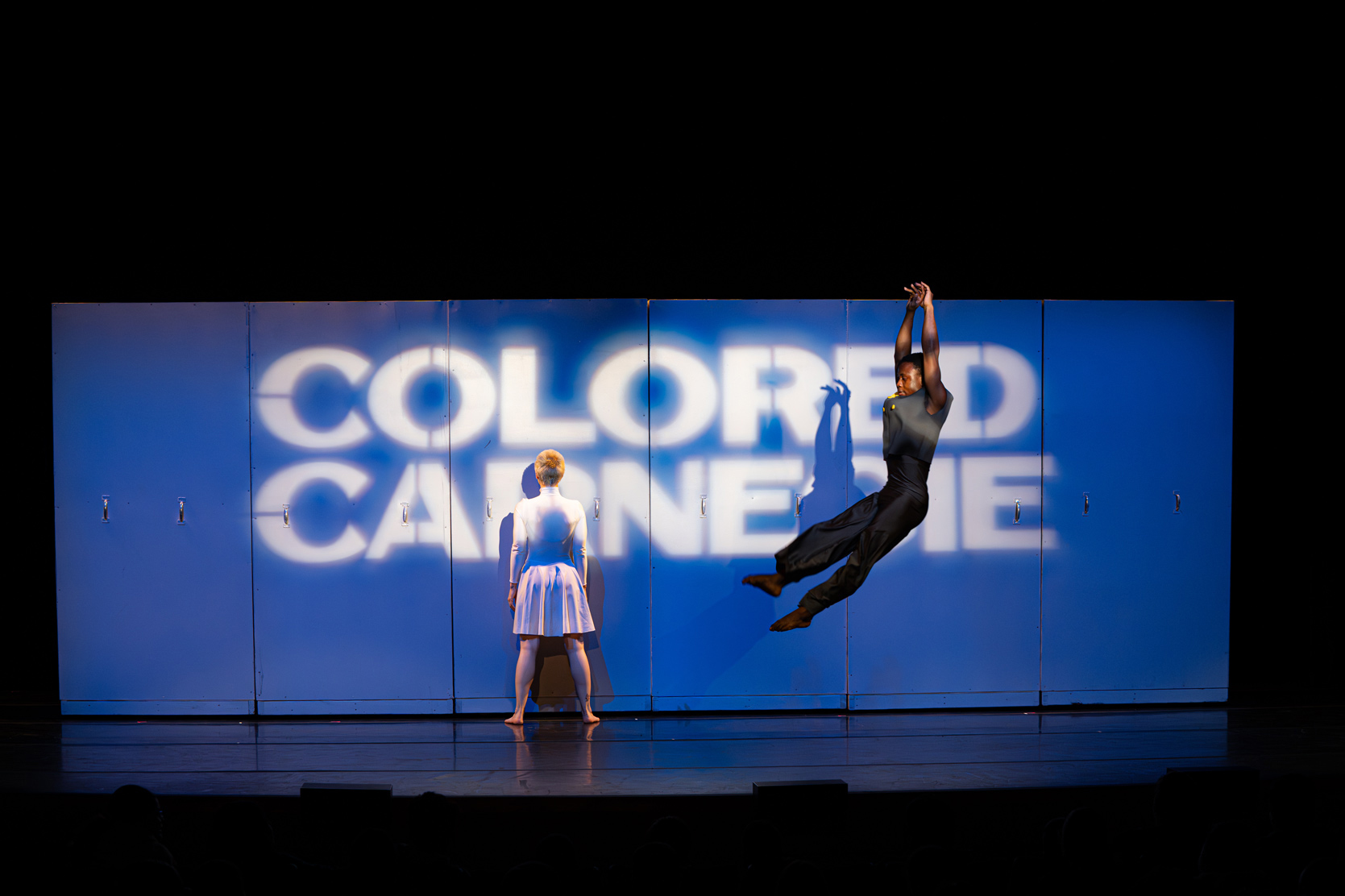
A performer for the Urban Souls Dance Company performs a section of the Colored Carnegie production at the Hobby Center, Wednesday, Feb. 7, 2024, in Houston. (Douglas Sweet Jr. for Houston Landing) 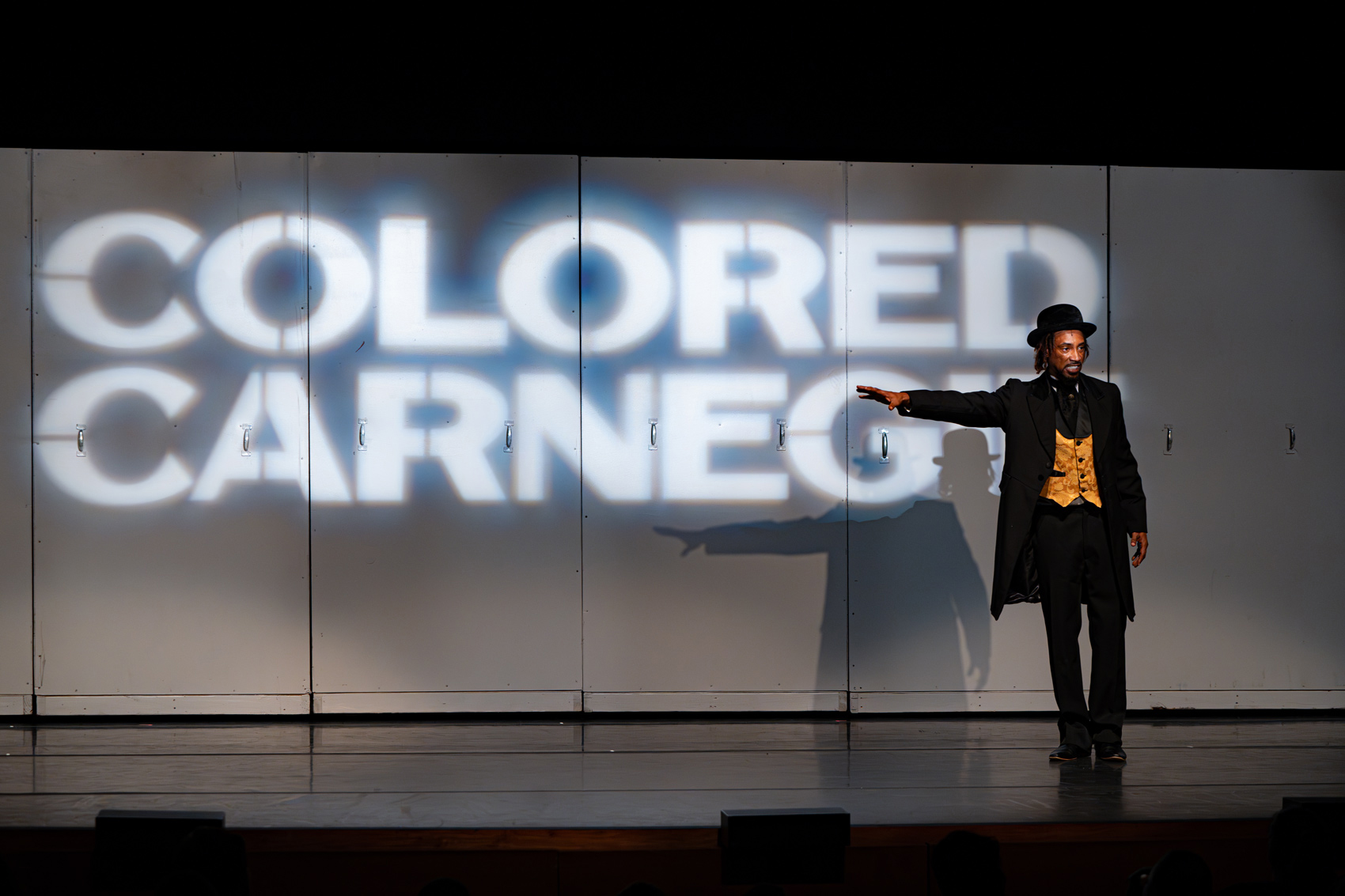
Kazi Owens, a performer for the Urban Souls Dance Company, narrates Colored Carnegie, a story about a library of the same name, which served Black people in Houston from 1913 until it closed in 1961, Wednesday, Feb. 7, 2024, in Houston. (Douglas Sweet Jr. for Houston Landing) 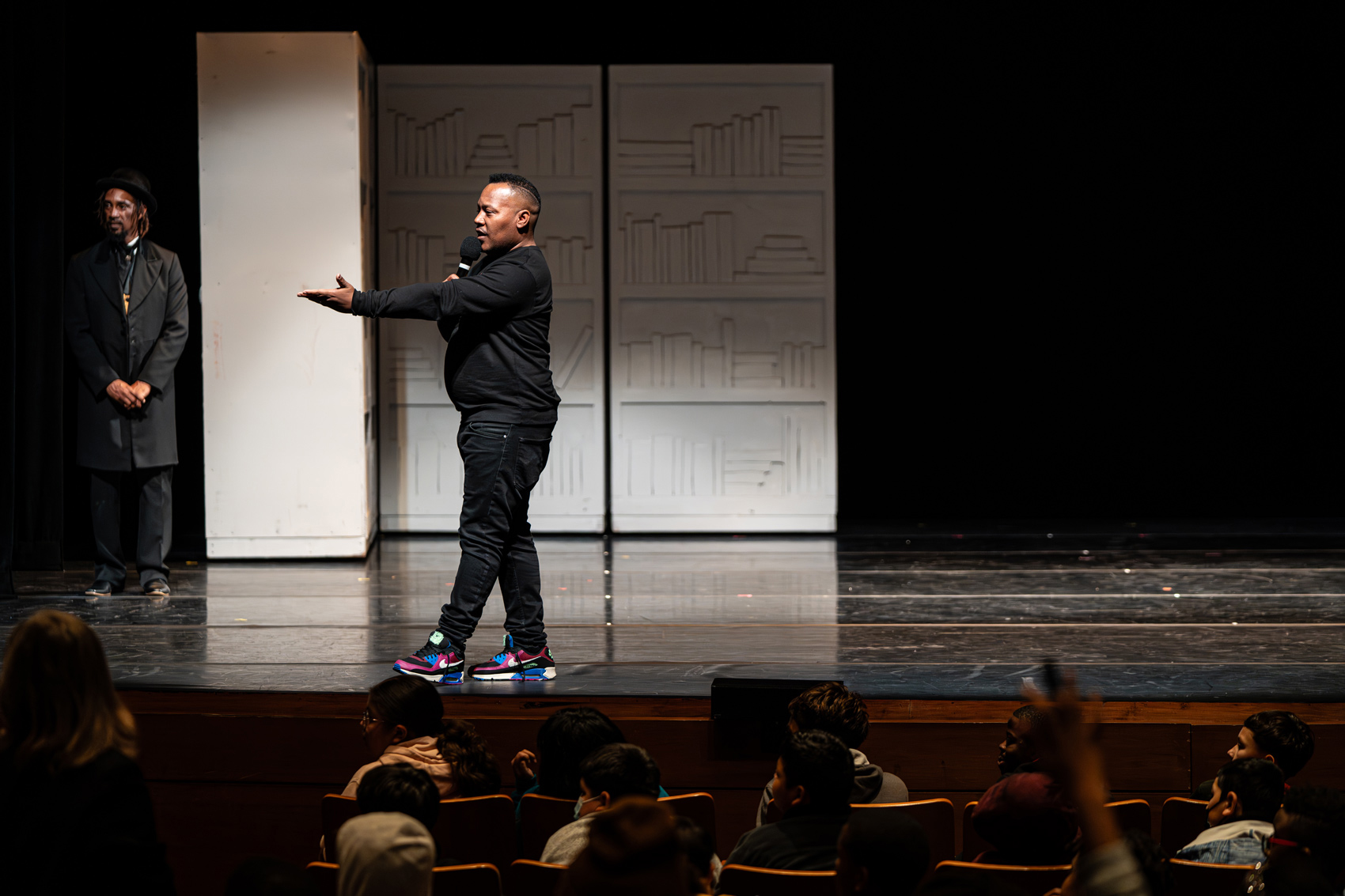
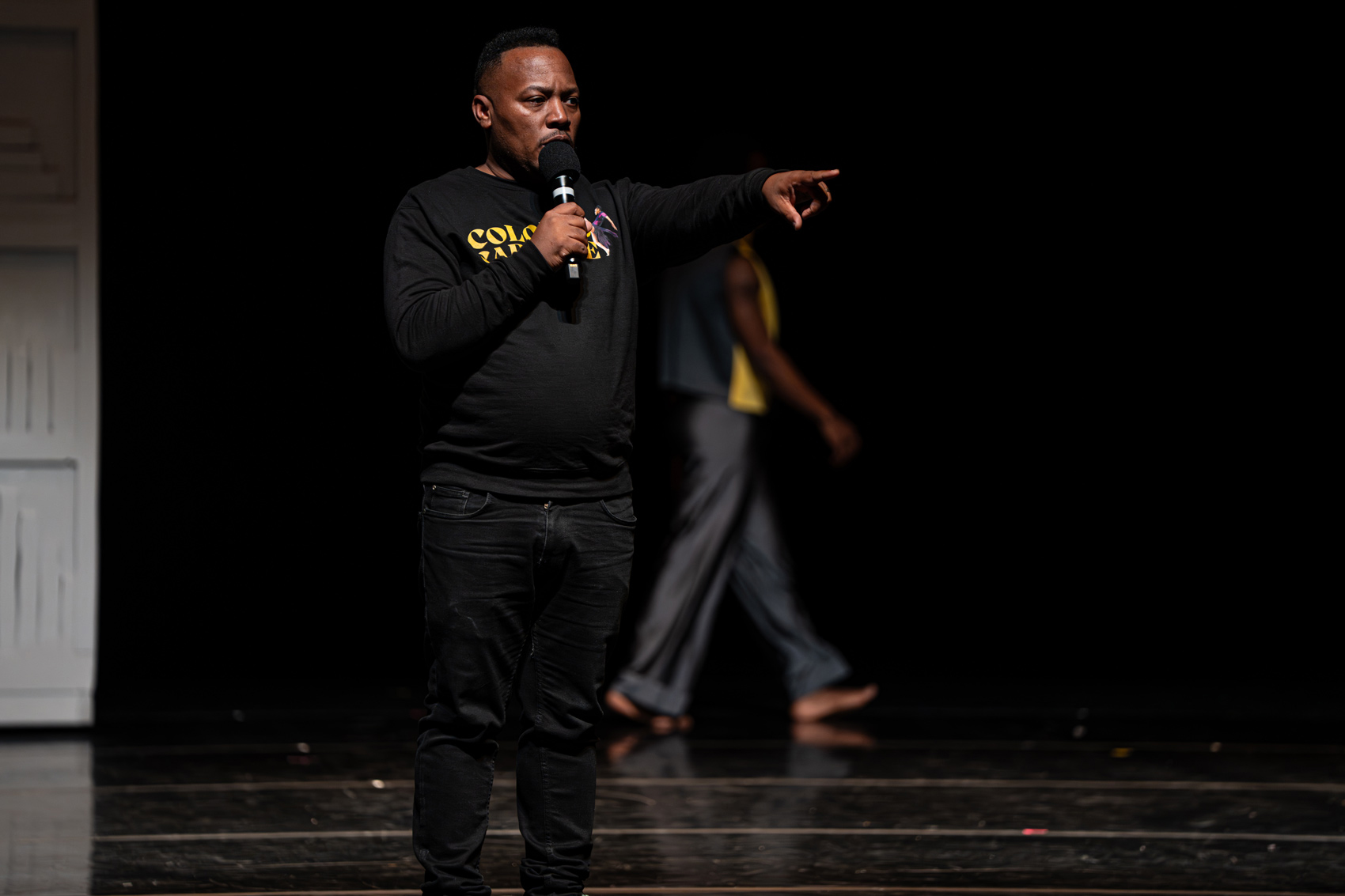
Urban Souls Dance Company founder and artistic director Harrison Guy takes questions from students after a performance of Colored Carnegie at the Hobby Center, Wednesday, Feb. 7, 2024, in Houston. (Douglas Sweet Jr. for Houston Landing)
But beyond financial barriers, he said, it’s crucial for traditionally white art institutions to provide a safe space for Black artists to feel comfortable presenting their work.
“I’ve gone places where the staff wasn’t culturally competent enough to explain what the pieces were about,” he said. “We’re doing Colored Carnegie, you have to talk about racism. It’s a piece about racism.”
Urban Souls Dance Company previously performed at Hobby Center in 2012 for a New Orleans inspired piece called Urban Utopia, where it rented the space for roughly $17,000 — the most they’ve ever paid — and had to do everything themselves, from ticketing to backstage production.
But this time around is vastly different. It’s more streamlined and organized, Guy said. The Hobby Center paid them a flat rate to produce a show and provided full access to its production team, relieving them of all backstage duties and allowing them to just focus on the work.
“We’re just here to dance. We’re just here to perform, which is how it should be,” Guy said. “We can kind of breathe easy because we’re not really worried about the other mechanisms that happen with putting on a show.”


