

DeShaun Desrosiers wishes she had used a doula for the birth of her first child roughly nine years ago, when doctors and nurses at an El Paso-area hospital ignored and mistreated her.
She said her doctors ignored her screams when she told them she could feel the incision during her cesarean and eventually flatlined. To this day, she still experiences anxiety about undergoing any surgical procedure, even minimal ones like dental work.
“It was a traumatic birth experience that essentially almost ended my life,” Desrosiers said.
Desrosiers has made it her mission to make sure women of color are represented in the birthing process by training other women of color to become doulas.
The path to becoming a doula started when she perused social media and discovered other women like herself had similar situations. She also learned of the disproportionate maternal mortality and morbidity rates affecting Black women.
She took an online, self-guided training course to become a doula, which is a nonmedical professional that supports and guides people through pregnancy and postpartum, and started her business, Harmonious Birthing, in 2018. Her goal was to help advocate for, educate and empower Black birthing parents and their families to trust themselves and have autonomy over their birthing experience.
“I knew what I would have wanted in my pregnancy, my birthing experience, and postpartum, so it was pretty easy for me to transfer that over to clients,” Desrosiers said.
But in 2020, as she started to pursue further education to become a licensed and certified professional midwife, she noticed a gap in representation among birth workers. She started an intensive, four-day doula training program, “Doulas of Discernment,” with the goal of increasing the number of Black and Brown birth workers who can provide culturally competent care to Black and Brown families, who are at a higher risk of experiencing adverse outcomes due to systemic racism and implicit bias.
The initial class of the training program started with five participants, then doubled the following year and has seen a consistent year-over-year increase since then, Desrosiers said.
This year’s training on March 21-24 at Full Circle Family Services, a Black-woman-owned midwifery and doula care business in Houston, welcomed roughly 20 participants total, with 17 attending in-person daily from 10 a.m. to 5 p.m.
Desrosiers has noticed a trend over the years among her attendees: many experienced traumatic births and wanted to ensure that Black and Brown women after them would not have to suffer the same fate. This year was no different.

Such was the case for Kimeisha Harmon, who lost her daughter roughly two years ago, following a complex care stenting procedure and a year in the NICU. Her grief inspired her to advocate for other families in hospital settings and help change birth outcomes.
“I don’t feel jaded by what happened to me,” she said. “I feel like it encouraged me and motivated me to be a voice, to help other women be their own voice, to give them power and help them take back their care. There’s just been so many things that happened in my own personal journey that I would have liked to change, but now that I know better, I can plant the seeds to make something else grow within our community.”
Expanding access to culturally component care
“Doulas of Discernment” has become so popular among Houston’s Black birth community that it attracted the attention of the March of Dimes, a national nonprofit dedicated to improving equitable health outcomes for mothers and babies while reducing maternal mortality, morbidity, and preterm births. The organization, through its Local Collective Impact Initiative in the greater Houston area, has partnered with Harmonious Birthing for the last three years by sponsoring several women of color to take the training and receive mentorship.
“We believe that as organizations that are across the spectrum of thought and purpose, can come together and do something that not one organization can do all alone,” said Alicia Lee, Houston’s MOD director of collective impact.
The primary goal of the initiative was to expand access to care, particularly by providing underresourced moms with a doula free of charge. In 2023, more than half of Harris County births (56 percent) were covered by Medicaid, and nearly half of all Texas births (48 percent) were covered by Medicaid, according to the U.S. Centers for Disease Control and Prevention natality data. Yet Medicaid does not cover doula services in Texas, a gap the initiative aims to address by offering free doula services to underprivileged mothers and expanding access to care.
“We know the outcomes are so much better for those who do have doulas,” Lee said. “(But) it is very much out of reach for those on Medicaid because it means it’s an out of pocket cost.”
The National Health Law Program has been tracking doula Medicaid implementation efforts since 2019 and found that, as of February 2025, 46 states and Washington D.C. have taken some level of positive action to expand access to doula care for Medicaid enrollees. Data shows that 23 states have implemented Medicaid coverage of doula care, another four states are in the process of implementation and 19 states have taken some adjacent or related action, such as setting up doula advisory committees, state certification of doulas for Medicaid purposes, and/or statewide doula advocacy coalitions. Texas falls in the latter, having introduced four bills this legislative session related to Medicaid coverage and reimbursement of doula services.
As Lee further assessed the doula landscape in Houston, she discovered that there are an estimated 200 birth workers, and that only a small percentage of them are doulas. The vast majority of birth workers are lactation or sleep consultants and birth education workers, she said.
Lee realized that in order to offer free doula services to the community, more Black and Brown women needed to be trained as doulas. As she connected with local doulas, many pointed her to Desrosiers, who already had a doula training program in place.
“She’s passionate about the work she does,” Lee said. “She grounds the work of being a doula and putting together the training in her community. This is what is happening to my fellow Black women and it shouldn’t be happening.”
March of Dimes sponsored six participants at this year’s spring training. Lee said March of Dimes provides additional six months of training to help augment the conclusion of “Doulas of Discernment” training which includes resources such as access to social service platforms for referrals, stipends for CPR training, and food handling licenses to provide a home-cooked meals for clients during postpartum.
‘Trying to set them up for success’
Day one of training dived right into lectures with data, background information and statistics about the history of birth work, cultural competency and the history of racism and bias in Black maternal health.
“The first day, we’re head-on, ‘Hey this is racist,’” Desrosiers said. “We talk about that because a lot of people don’t really understand why.”
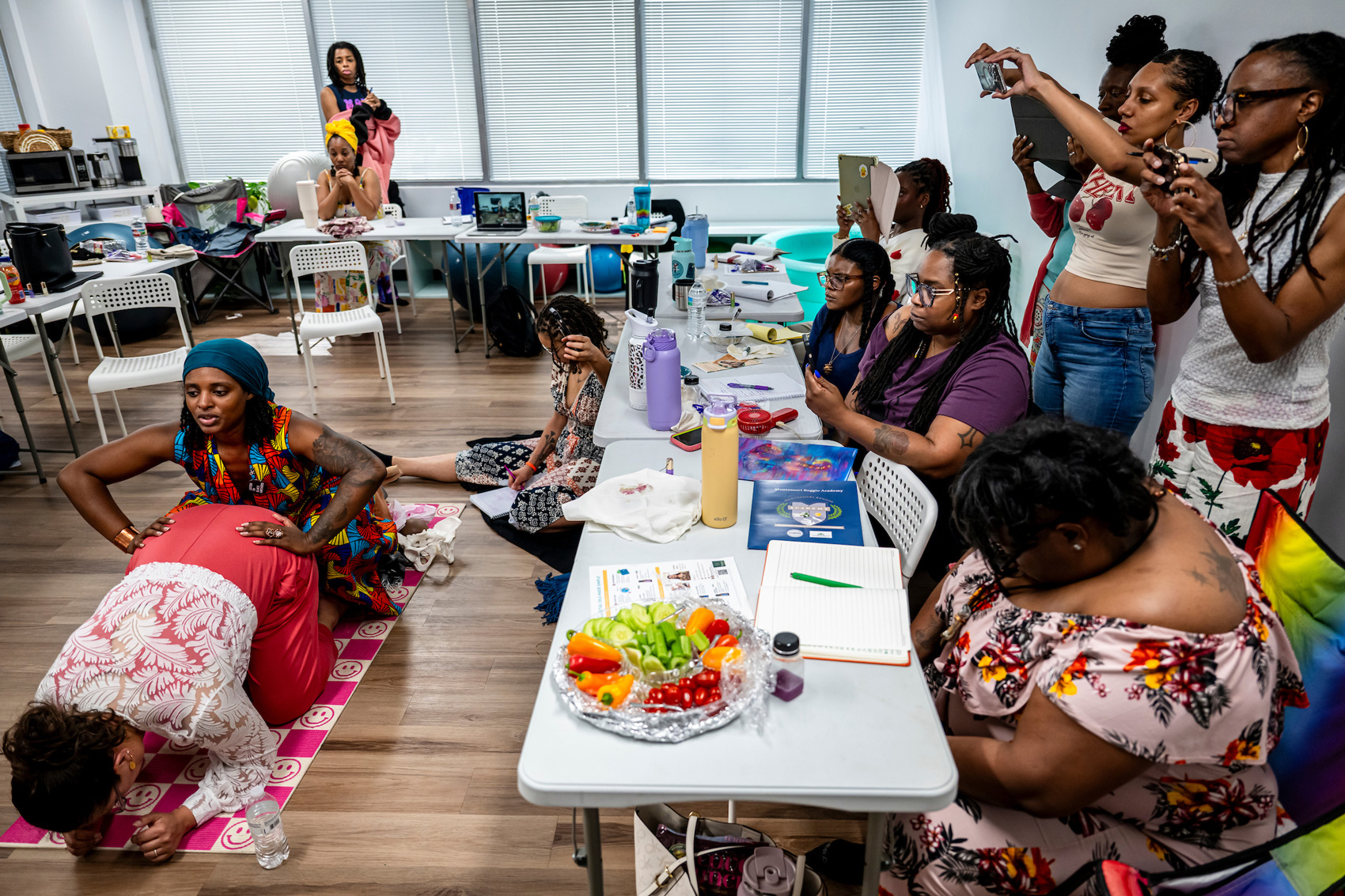
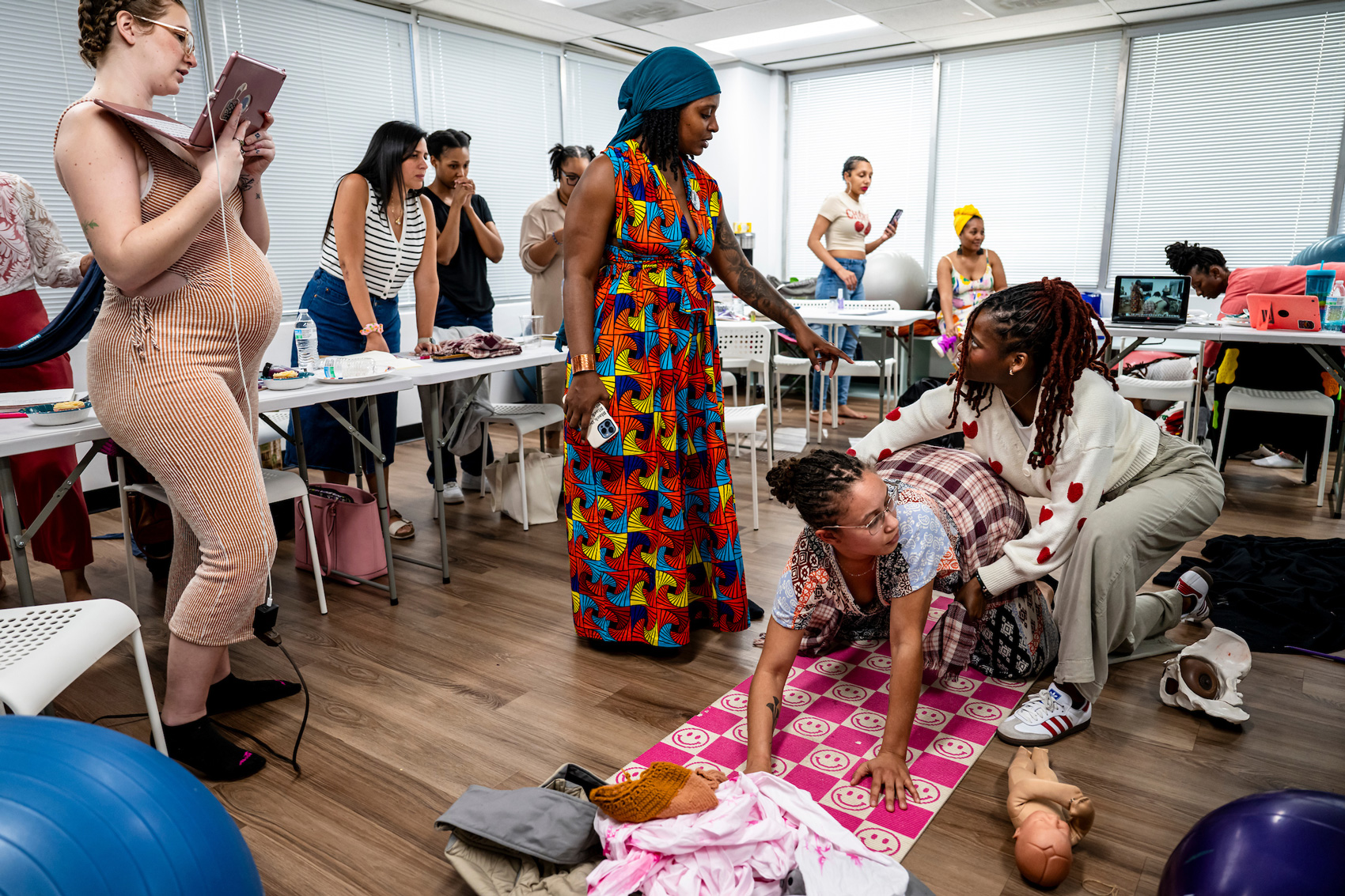
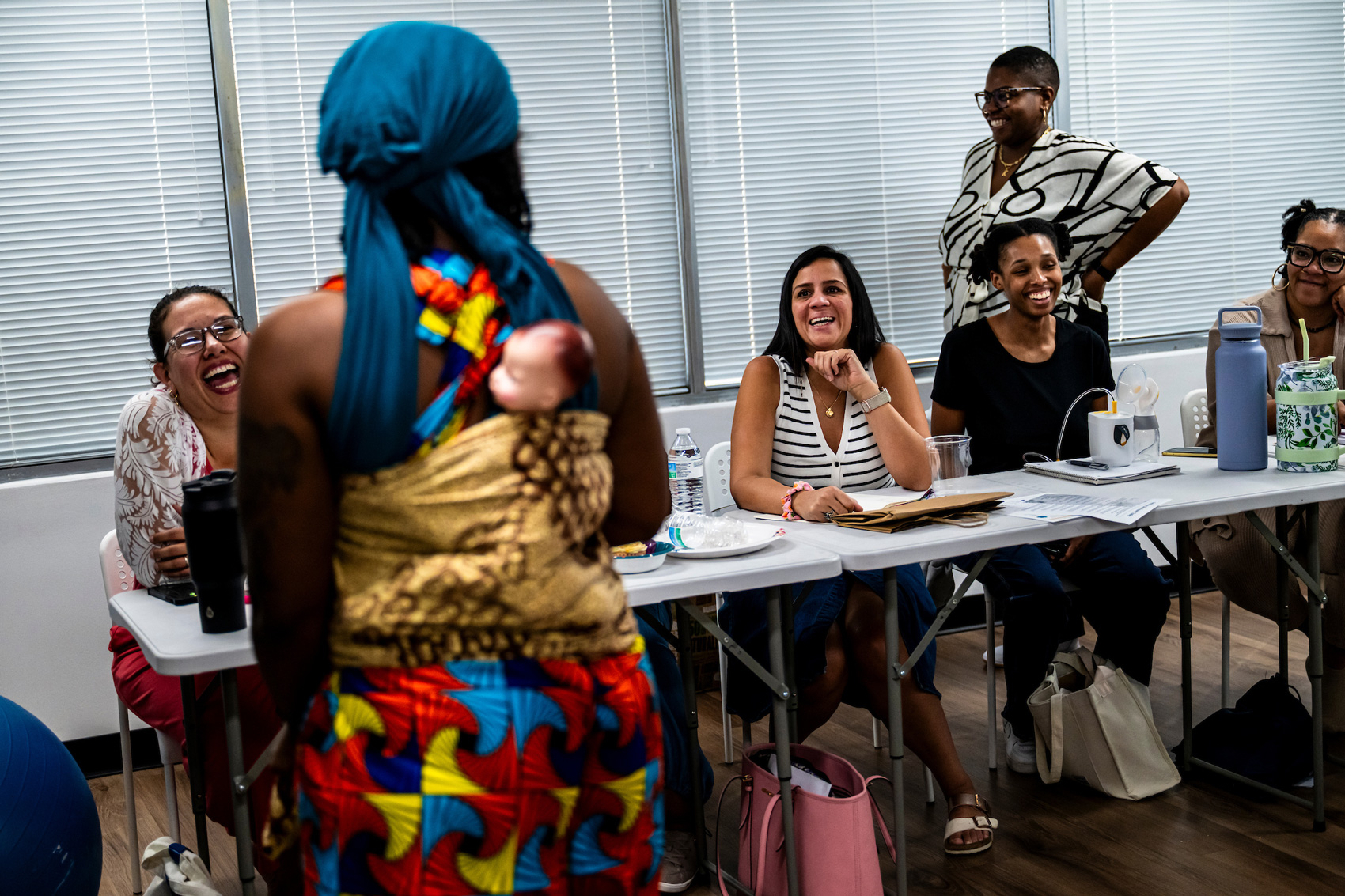
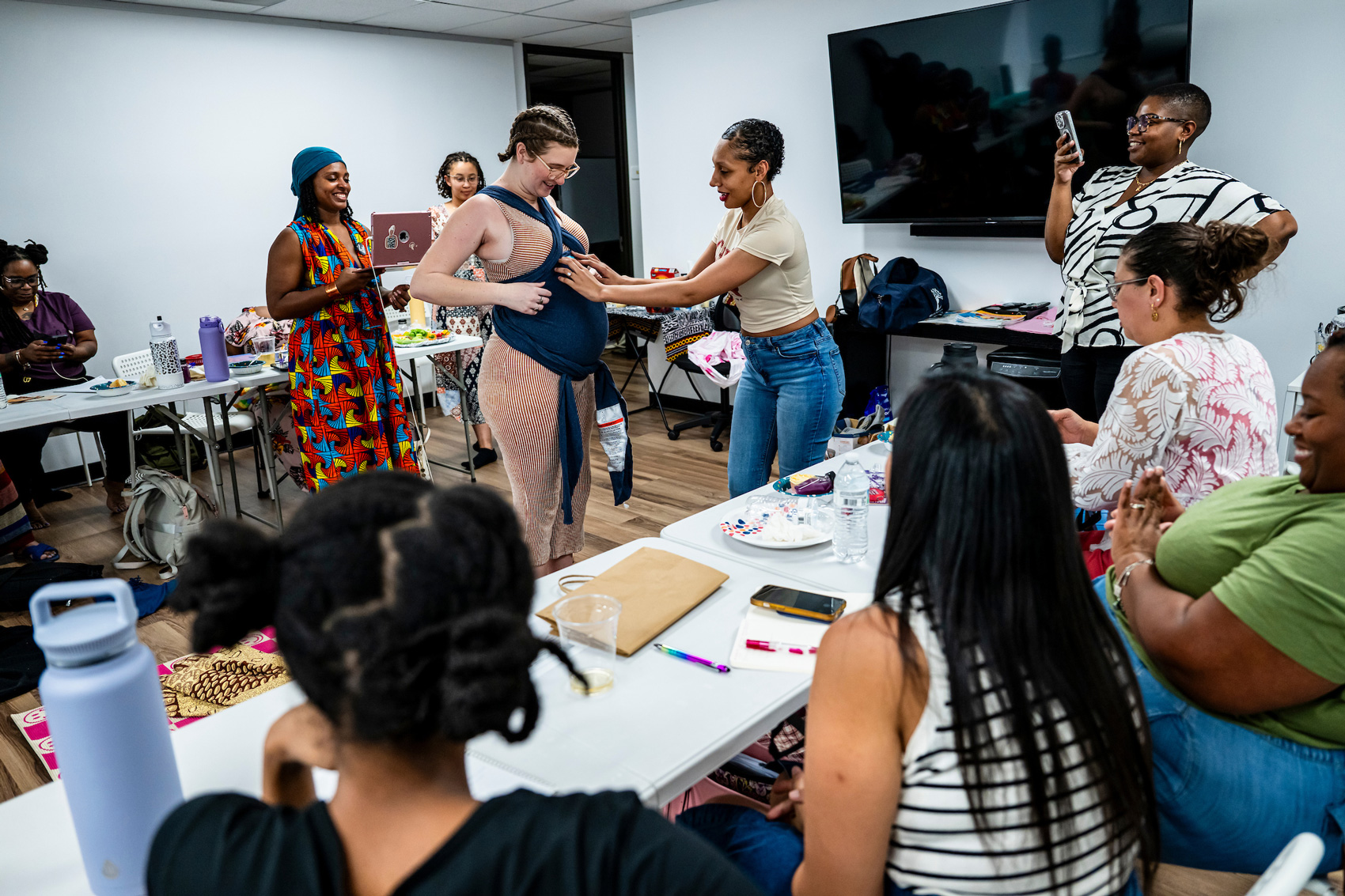
From there, the comprehensive training delved into various aspects of birth work, spanning prenatal, labor and delivery, and postpartum care, holistic care, and community building. The training also incorporated interactive, hands-on learning experiences tailored to specific birth settings, including demonstrations of labor positions, massages, and techniques such as sifting to help turn a breached baby, and belly binding for prenatal preparation and postpartum recovery. Trainees learned from a range of professionals, including fitness and nutrition experts with Mama Care Complete, a placenta encapsulation specialist, a doula who specializes in essential oils, and a pelvic floor therapist who demonstrated exercises for a smoother and faster labor.
“This should be the most inclusive and research-driven and information overdrive,” Desrosiers said. “You walk away really confident.”
It’s a stark contrast to the self-guided online course Desrosiers found on Google and took years ago.
At the time, she thought it was sufficient but, in continuing her education to eventually become a midwife, she learned of the disproportionate maternal mortality and morbidity rates affecting Black women. She realized her training was very basic and not inclusive.
“It definitely didn’t talk about maternal mortality or Black women,” she said. “It was good enough to get me by.”


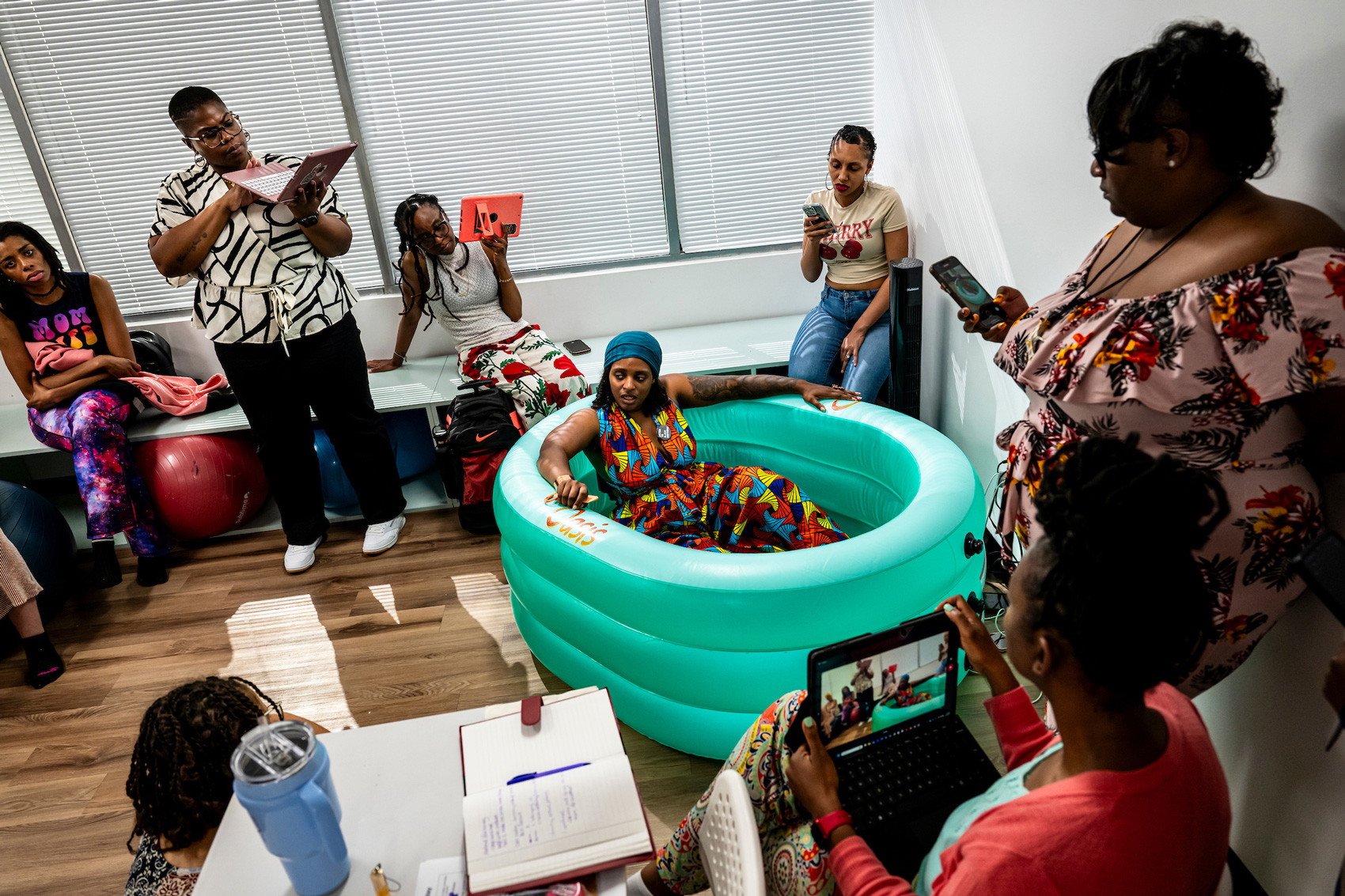
The majority of what she learned she discovered on her own or with experience working among other birth workers. She structured an intensive training program so that other women would have a better learning experience.
Trainees took full advantage asking a slew of questions from setting boundaries with clients or politely refusing service, how to structure contracts and how much to charge for services, how long they should be a doula before becoming a midwife and how to advocate for clients when getting pushback in hospital settings or negativity from family members.
Desrosiers periodically answered questions citing examples from her own experiences as a doula, like when a hospital nurse falsely told her and her client that they couldn’t do delayed cord clamping, but struggled to explain why when they asked questions, upon which Desrosiers quickly disproved a lie.
“You are their voice, and then you’re kind of giving them a voice too,” Desrosiers said to one of the trainees on day one. “People don’t think they have options.”
Viomar Guerere, a bilingual doula originally from Venezuela who wants to advocate for Latina women who only speak Spanish, said she had already taken an online training course. But still, she chose to attend the “Doulas of Discernment” training in-person to build a network of doulas she could rely on for backup support.
“I just felt like I was missing community,” she said of her previous online training during a lunch break. “The reason I wanted to take this one is because we’re building community. We’re not doing this alone.”
Training doesn’t stop after the four-day session, Desrosiers said. She sets up monthly Zoom calls and yoga meetups to check in with aspiring doulas. She also empowers them to build their business by assigning them tasks such as developing their marketing strategy, creating their business logo, and building a referral list of specialists, such as lactation consultants.
“I feel like I got the hands-on stuff here, but I feel ready to start doing the work,” said Laura Reid, a training participant.
Desrosiers personally reviews and provides feedback on each portfolio before trainees receive their certification in order to help ensure doulas are well-equipped to support their clients and manage the challenges of entrepreneurship.
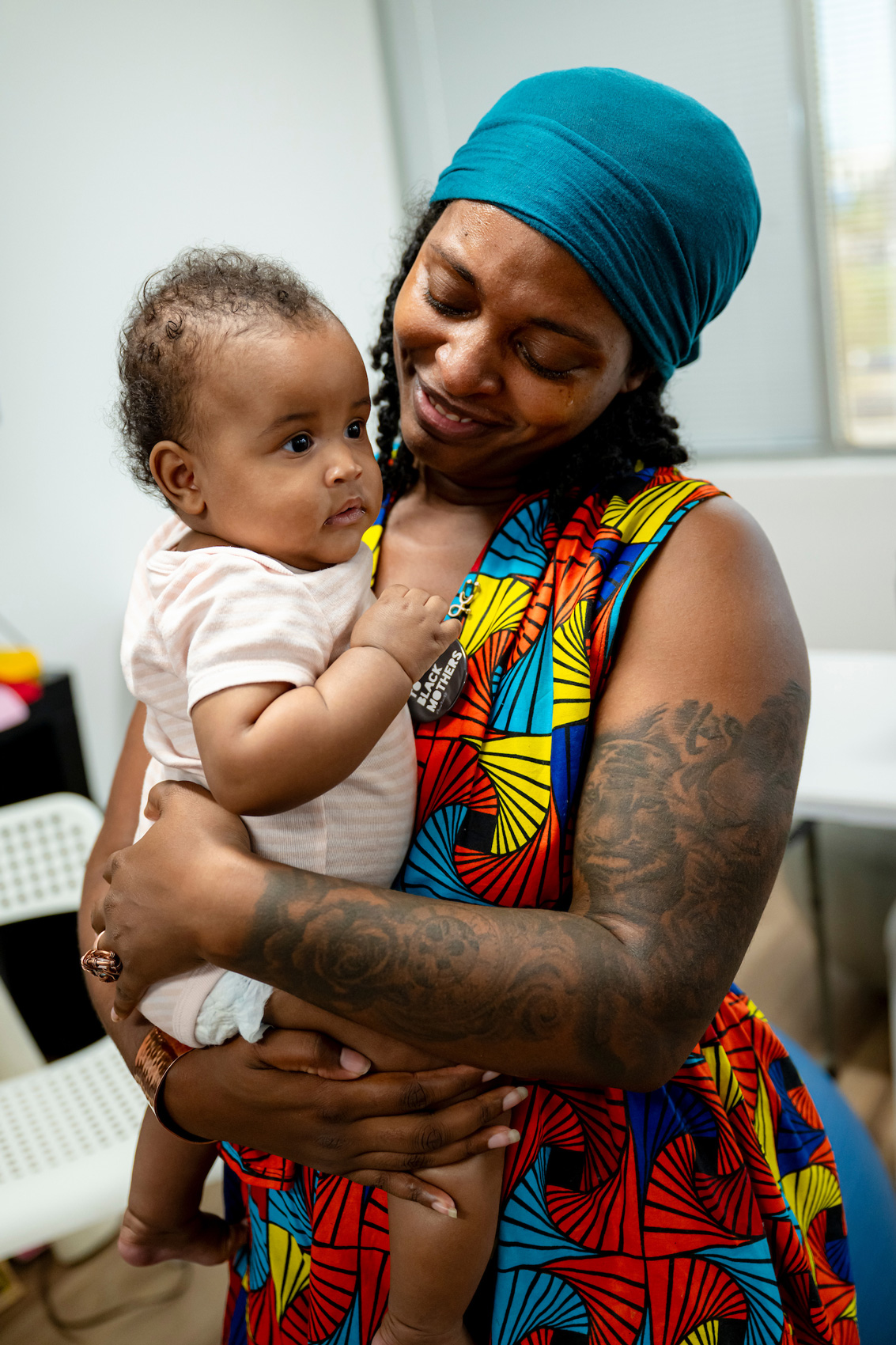
“I’m trying to set them up for success,” she said. “There should be no excuse as to why they don’t succeed.”
Desrosiers and her business partner, Jocelyn Durden, are now enrolling students in their newly launched Universal Light & Harmony Midwifery Academy. The school aims to make midwifery education more affordable and accessible for Black and Brown students to balance with families and other responsibilities by offering a three-year, hybrid self-paced program.
“I’m not going to be here forever,” she said. “God forbid I could die tomorrow and there’s need to be other people besides me that are proficient and can understand tying in holistic care because a lot of those things are forgotten about.”

