


Every election cycle, Stacie Fairchild hears local candidates enthusiastically agree City Council needs to change: there has to be more engagement among residents, meeting times should rotate or have a virtual option.
She has yet to see a difference.
“Overall, I think the engagement, especially when there’s a hot topic item or an issue that needs to be resolved in the neighborhoods, the burden is on the residents, right?” said Fairchild, the Washington Avenue Coalition, Memorial Park Superneighborhood president. “It’s not the city engaging with us on that item. They want us to bring that item to them.”
Fairchild feels well-connected to her community and elected representatives as the superneighborhood president and generally has enough time to learn about proposals making their way through City Council. Residents who are not as tuned in, however, easily can miss agenda items that directly affect them, she said.
Council agendas are posted on Fridays, followed by a period for public input the next Tuesday and, typically, a final vote on Wednesday. In other cities, the full process could take weeks, or more than a month, if items are required to be vetted by committee.
RELATED: Houston City Council meets when many people cannot attend. Should the city change that?
The expedited process in Houston, while aiding in efficiency, could negatively impact both residents’ civic engagement and council members’ ability to fully deliberate new policies and ordinances, experts say.
“There’s value both from a sort of accessibility representation standpoint, but also just from a, ‘Let’s find the right answers to problem standpoint,’ of taking your time,” said Justin Kirkland, a professor of politics and policy at the University of Virginia.
Community often last to know
Council meetings – the Wednesday business sessions – can take less than an hour or last up to three, depending on discussions between members.
Proposed ordinances that are not included on the city’s consent agenda, which is meant for uncontroversial, standard proposals, are required to be read at two meetings, according to the city code. That mandate can be lifted for emergency items.
Over the years, it has become standard practice at City Hall to consider most agenda items as emergencies, allowing them to be voted on just days after they are introduced.
The quick turnaround makes it difficult for residents to stay in the know, said Kevin Strickland, chair of the Greater Heights Superneighborhood. Unless council members reach out about specific measures, he generally does not have the bandwidth to keep track of every agenda. That means he frequently learns about important votes after they happen.
“I think the norm, not the exception, really is to find out afterwards,” Strickland said, adding it can be frustrating when the vote affects his neighbors. Proposals on the council agenda list the impacted districts, but he said there is no systematic communication with the neighborhoods themselves.
The most standard legislative practice, Kirkland said, is to have two to three “readings” of a proposal – meaning there are multiple opportunities and meetings for residents to ask questions.
“I would frame the trade-off between efficiency and transparency,” said Tyler Simko, a research associate and expert in local and state politics at Princeton University’s Department of Politics. “For every quick vote you make, there are fewer opportunities, then, for genuine public engagement.”
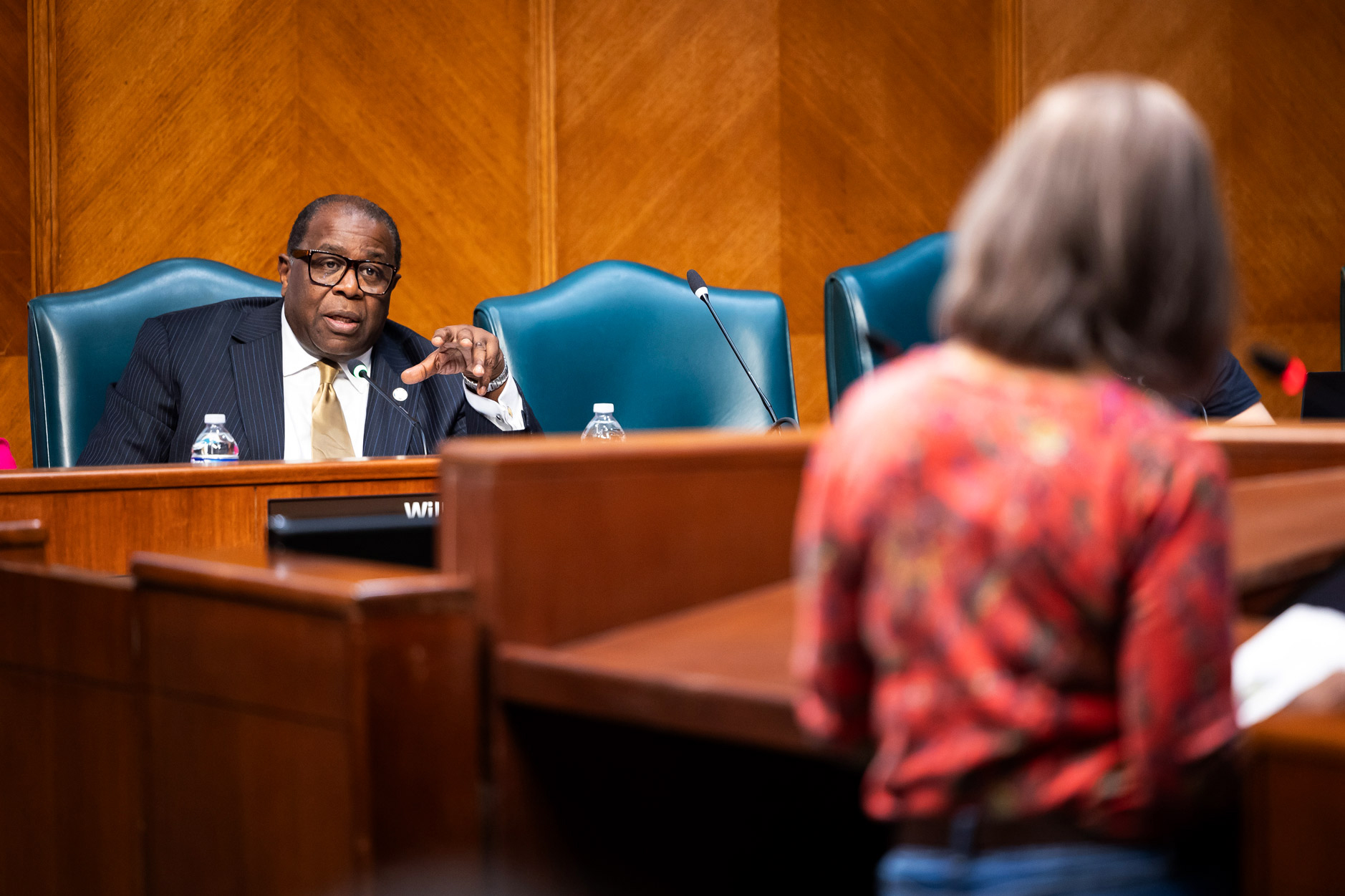
Fairchild, with the Washington Avenue Superneighborhood, wants to see issues of significance brought to neighborhoods directly. She pointed to the city’s engagement process every 10 years when it redraws district lines: there are meetings in each district with onsite professionals and opportunities for the public to informally learn from elected officials.
She would like to see a similar mechanism for proposals that impact residents’ pocketbooks, such as an increase in city water rates. She recommends city leaders lean more on the Superneighborhood Alliance as a way to expand communication with neighborhoods.
RELATED: Long meetings, drawn-out debates: Harris County claims to be more transparent. But is it?
Houston’s legislative process differs from other Texas cities because of its “strong mayor” form of government – Mayor John Whitmire decides the agenda put before City Council. A voter-approved charter proposition gave council members the ability to collaborate and force proposals onto the agenda, but they have used the new authority sparingly.
Strickland said he has spoken with Houston council members who had not heard about major proposals or changes before they were introduced at council meetings.
“So, if they’re not hearing what’s happening, then how can they let their constituents know what’s happening?” Strickland said. “The lack of transparency is actually pretty shocking.”
Checks and balances?
The city does have policies and procedures for informing and soliciting feedback from council members about items coming up on the weekly council agenda.
Council members or their staff representatives have agenda briefings on Monday afternoons where elected officials can ask questions about current agenda items. Those meetings, however, are not open to the public.
One option that is open to the public is the city council, which can hold meetings to question and evaluate administration proposals and initiatives. Houston has 12 standing committees on topics ranging from arts and culture to quality of life.
In practice, however, those committees often are underused.
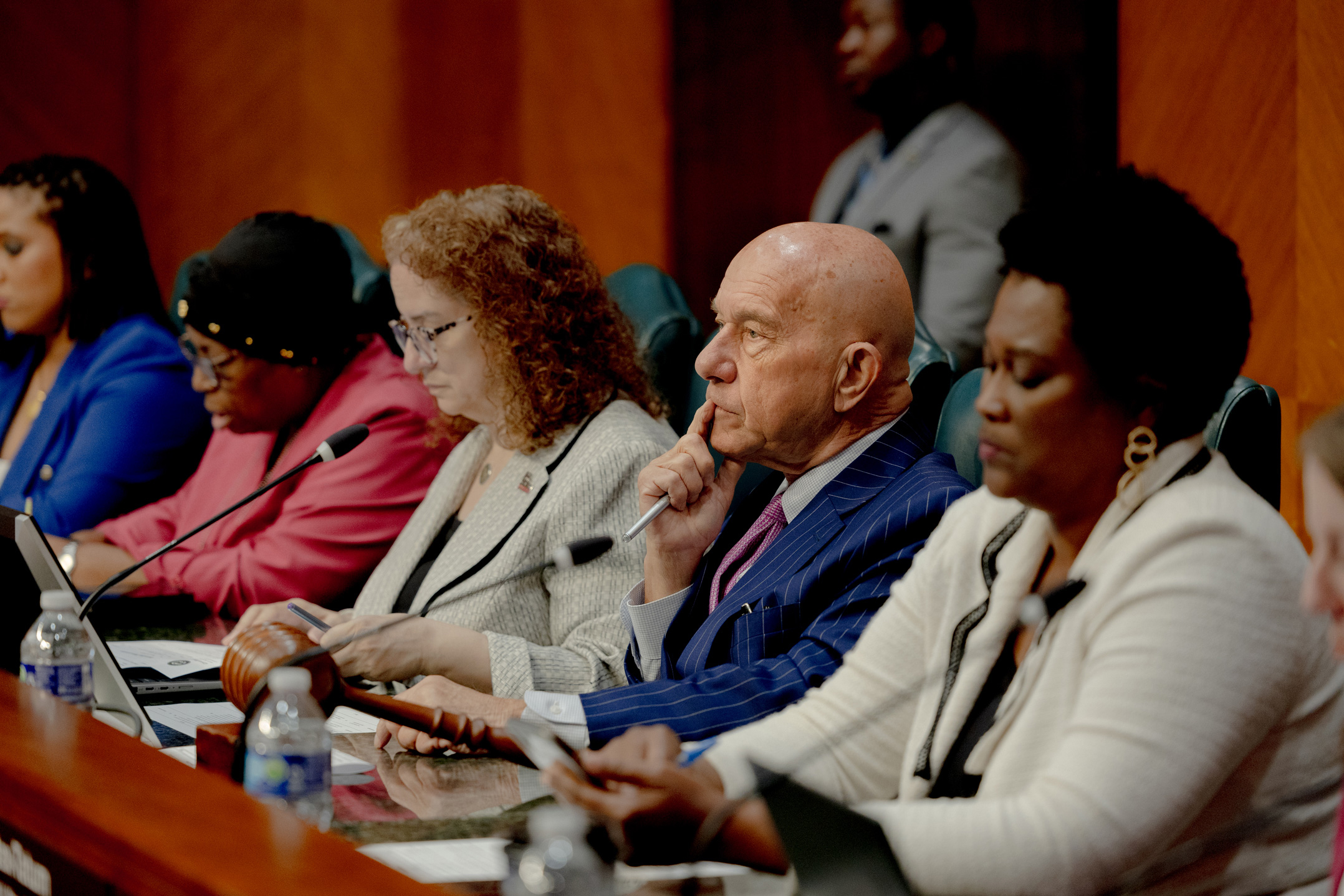
Most council committees are scheduled to meet once a month, or sometimes quarterly. Many do not even meet that often. For example, the Proposition A Committee, set up by Mayor John Whitmire to air out and legal-check council-driven proposals, has not met since last June.
Historically, legislative committees were designed to make the policy vetting process run more smoothly, said Brandon Rottinghaus, a political science professor at the University of Houston.
As the amount of legislation built up, it became more efficient to create smaller working groups than to have an entire governing body crafting each piece of legislation, he explained.
The committee process can have other benefits, as well.
It is unreasonable to expect one person to effectively research multiple proposals covering a wide variety of topics, said James Thurmond, a professor at University of Houston’s Hobby School of Public Affairs. Using committees during the legislative process, he said, allows council members to become subject matter experts in different fields.
RELATED: Three ways Commissioners Court could shorten its meetings without sacrificing transparency
The use and effectiveness of the committee system, Thurmond said, can change from place to place depending on a city’s charter and code of ordinances.
In Houston, the strong mayor form of government, experts said, impacts city council’s council committee power.
“Our form of government – strong mayor, relatively weak council – I believe does not allow council to act adequately as a check on the mayor’s power, when needed,” said At-Large Councilmember Julian Ramirez, who chairs the Quality of Life Committee.
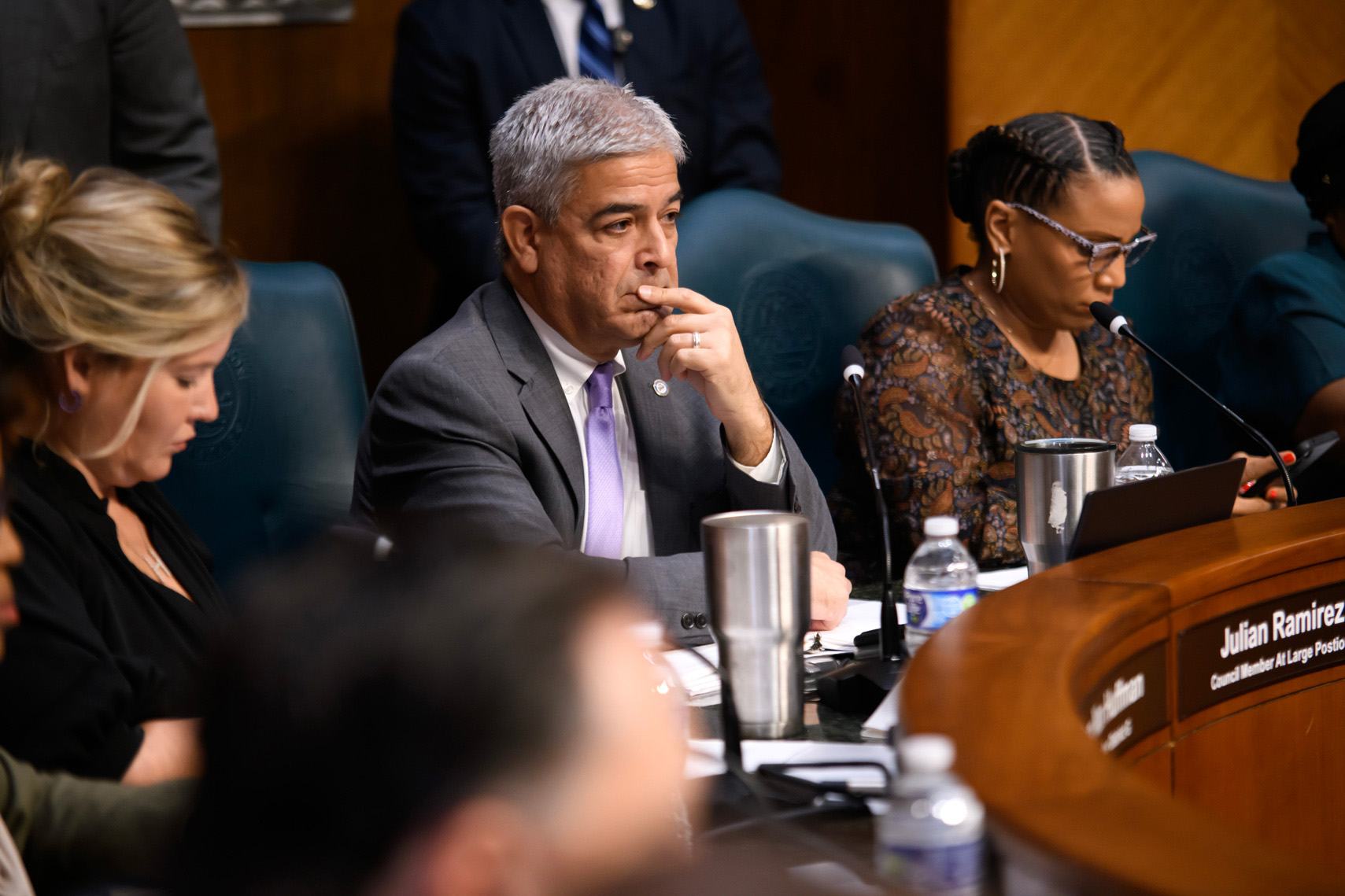
Ramirez added that his comments are not a critique of Whitmire, who he said has worked well with council.
Bill King, a local political commentator and fellow in public finance at Rice University’s Baker Institute for Public Policy, echoed Ramirez’s concerns.
“Houston City Council is virtually worthless,” King said. “I mean, they don’t provide any kind of check on the mayor.”
King, who ran for mayor twice, said he still believes in the reforms to Houston’s committee system he proposed during his campaigns.
Among them, he suggested giving council members more independence to organize among themselves, choosing committee topics and leadership. Both currently are determined by the mayor.
It is residents, King said, who feel the impact of the lack of checks and balances. Instead of creating systemic changes, city policies act as quick fixes.
“You end up with a bunch of short-term stopgap measures instead of really addressing difficult problems,” he said.
Until there is a change, he added, the city will continue to suffer the consequences.

