


In early December, Edrick Rougeau received an email from his mortgage lender, informing the first-time homeowner he had paid $8,823.42 in property taxes for 2024.
“This has to be a mistake,” he said.
It did not take long for the 30-year-old to figure out he was billed for the appraised value of his home and that of his next-door neighbor on Calhoun Road.
More mysteriously, a search for his address on the Harris Central Appraisal District and the Harris County Tax Accessor-Collector’s website found that neither an account or a 2024 property tax bill for Edrick Rougeau existed.
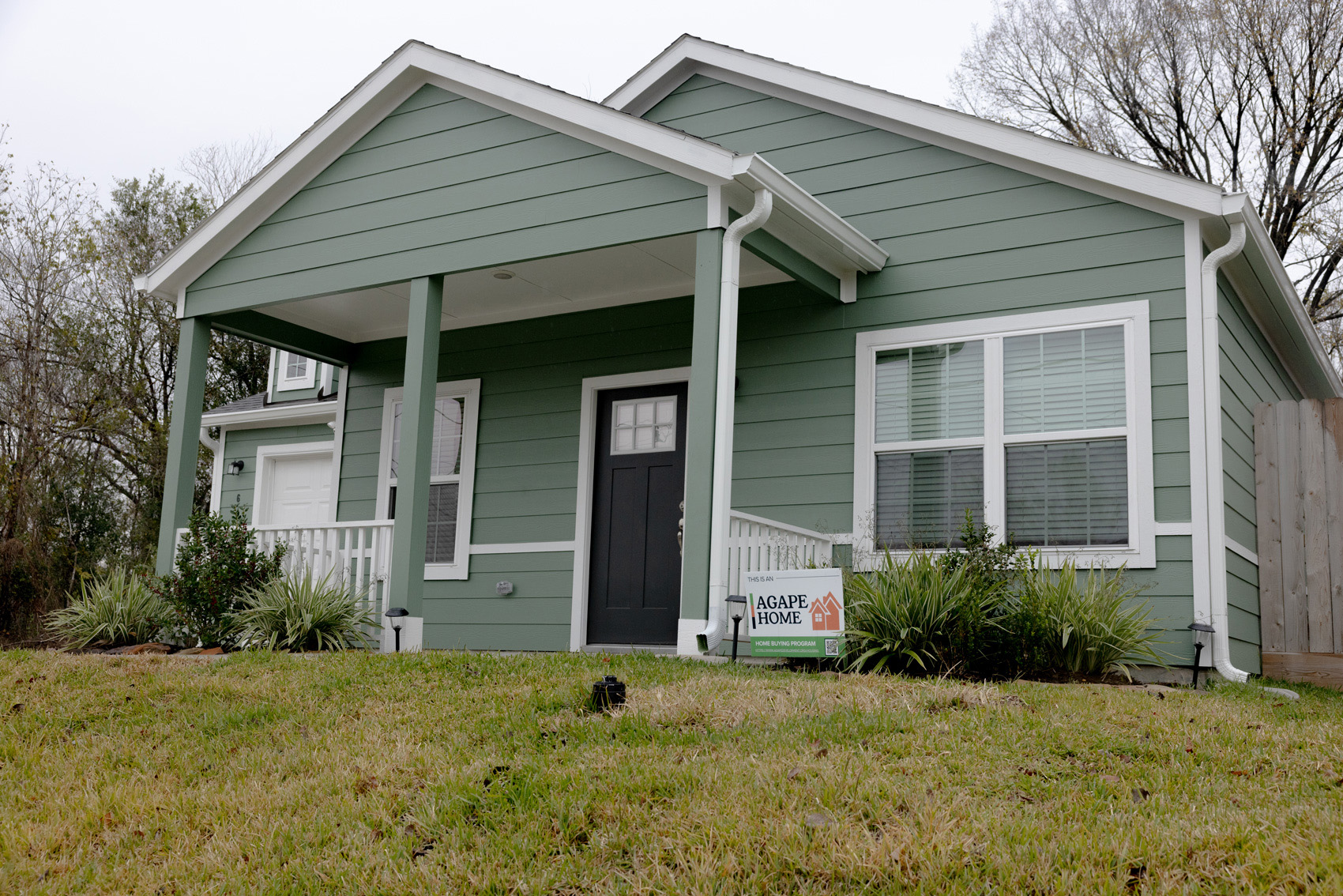
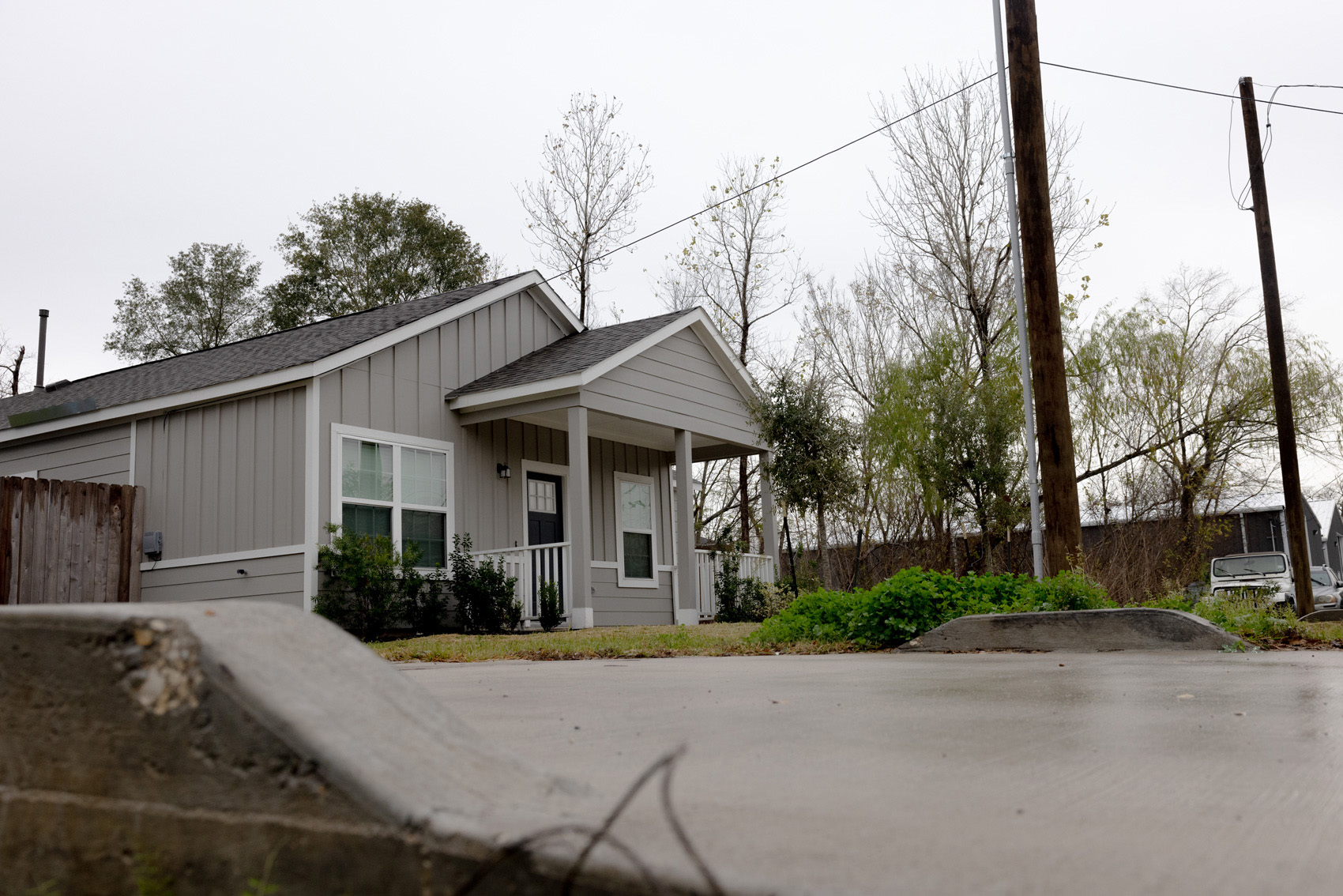
Rougeau, his neighbor and 14 other residents in their OST neighborhood bought their homes last year through Houston’s Affordable Home Development Program from Agape Homes CDC. None of the first-time homeowners’ properties, however, were properly assigned tax identification numbers by the appraisal district, the office that determines property values throughout the county.
The oversight resulted in some residents, like Rougeau and his neighbor, being incorrectly billed by the tax office while others’ homestead and property tax exemptions were not processed. Some residents did not receive a property tax bill for 2024.
The first-time homeowners have become increasingly frustrated in their search for a resolution as local government agencies offer little in the way of a timely solution. Some have been told their accounts may not get straightened out until it is time to pay next’s property taxes. And residents who overpaid have no clarity when, or if, they will receive a refund.
Appraisal district spokesman Jack Barnett said HCAD is in the process of creating accounts for affected residents, but could not comment on how the district would correct errors from 2024.
Peter Freedman, Agape Homes’ housing director, is frustrated that the appraisal district cannot give him or any of Agape’s residents an explanation of what went wrong.
“After all this occurred, Mr. Rougeau reached out to Agape Homes with hopes that as an affordable home builder working with (Houston’s) Affordable Housing Development Program, we may have better luck getting this resolved,” Freedman wrote in an email to the Houston Landing. “Unfortunately, that has not been the case.”
Barnett said HCAD is reviewing the records for all 16 properties and will correct any mistakes.
“We deal with a lot of data, 1.9 million households,” he said. “It’s a lot of information. If we made a mistake we will fix it.”
HCAD IN THE NEWS: GOP-backed candidates win Harris appraisal district runoffs, promise taxing transparency
Barnett did not have an immediate answer for how residents like Rougeau or his neighbor would be able to receive a refund, but noted the Harris County Tax Assessor’s Office would handle all financial transactions.
In a statement, tax office spokeswoman Laura Smith wrote, “Our property tax management team has reached out to HCAD … so that we can review and further verify the refunds as they become available.”
Smith was unable to elaborate about who was responsible for the errors and how residents like Rougeau, who were charged for a property tax bill they never received, might be refunded.
Property taxes for 2024 are due Jan. 31. A 6 percent penalty and 1 percent interest is added to unpaid bills on Feb. 1.
A $3,000 negative balance
Two days after Rougeau received the email from his mortgage lender informing him the bank had paid more than $8,800 in property taxes from his escrow account on Dec. 4, 2024, he drove to the appraisal district’s office.
“I told the clerks, including the supervisor and they told me they could not help me,” Rougeau said. “I was just told, ‘Hey, we’ll get to this in May.’”
At the end of last year, Rougeau had more than $5,900 in his escrow account. The tax payment dropped his balance to minus $3,000.
To make up the difference, he will have to pay an additional $400 a month on top of his $1,500 monthly mortgage this year.

Freedman, of Agape Homes, said it is likely Rougeau’s monthly mortgage payments could wind up even higher this year, after the bank analyzes Rougeau’s escrow account and takes into account that his property is being appraised at a higher, albeit incorrect, value.
“(We) do not have the ability to pay two tax bills,” Rougeau said. “It cuts into our pockets when our pockets were already not as deep.”
EARLIER: Houston residents want next mayor to tackle housing costs, economic anxiety, survey finds
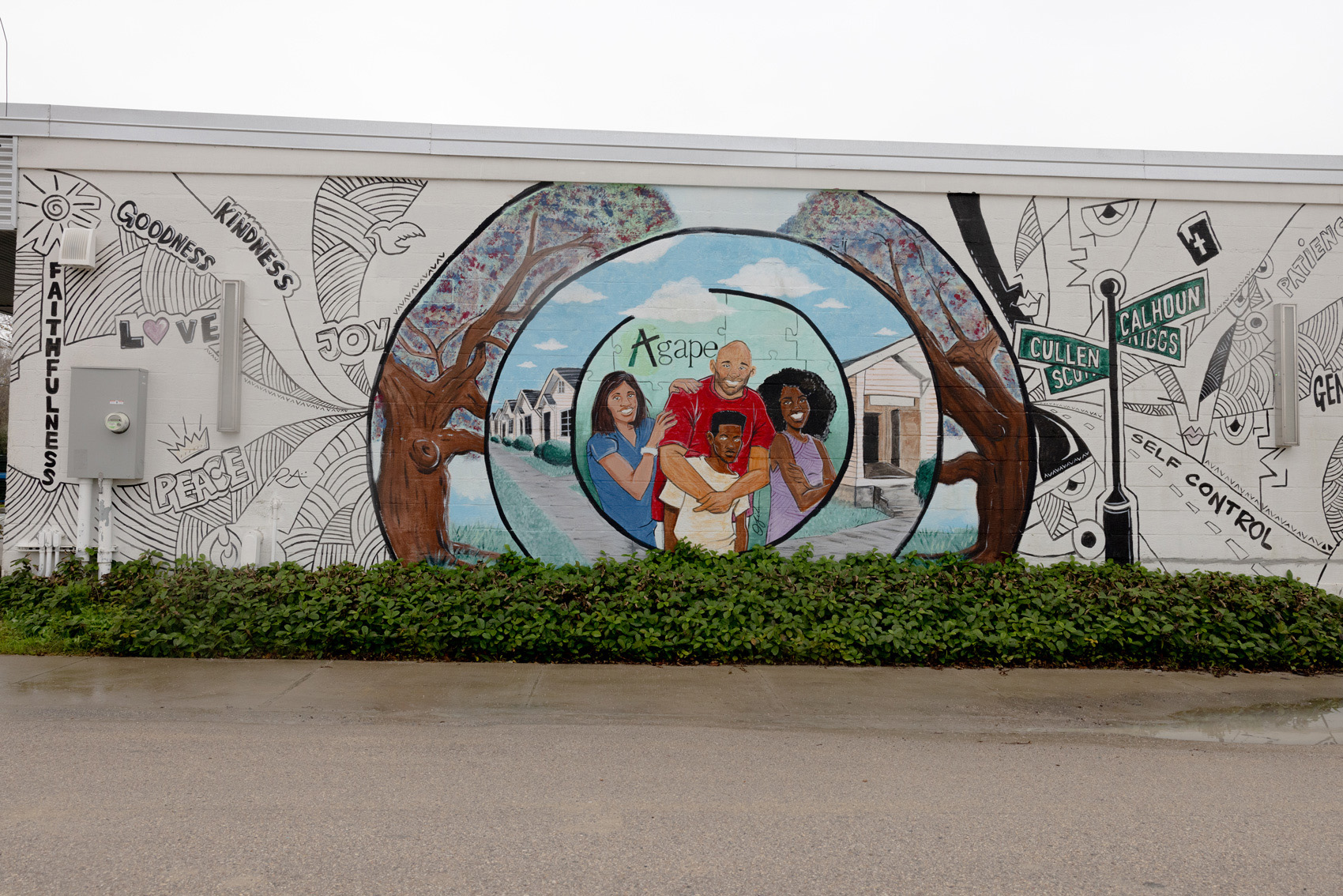
The city’s Housing and Community Development Department partnered with Agape Homes to construct 80 single-family homes in the OST-South Union neighborhood, funded by a $2.1 million forgivable loan through Houston’s affordable housing program.
So far, about 40 homes — including the 16 affected properties — have been built.
The department’s assistant director, Cedrick LaSane, said the city empathizes with Rougeau and his fellow homeowners, but the department does not have jurisdiction to solve the issue.
“These matters are handled by the Harris (Central) Appraisal District, and we strongly urge affected residents to contact them directly for assistance and resolution,” LaSane wrote in an email.
What went wrong?
Freedman said all of the residents the community development sold to, including Rougeau, followed standard closing procedures.
Rougeau’s title company filed the sale of the property and subsequent deed with the Harris County Clerk’s Office, which was recorded by the county in October 2024.
Freedman said that when his company started construction on both Rougeau’s property and that of his neighbor Agape informed the city’s addressing department that the land containing both lots would be split and sold separately, and the city created separate addresses for both properties.
Houston’s Planning and Development Department Director, Von Tran, said Agape was not required to subdivide the land through the city because those addresses and lots already existed.
However, when Agape sold Rougeau’s neighbor’s property on Jan. 31, 2024, HCAD incorrectly assigned a tax ID number that included both the neighbor’s lot and his.
Freedman flagged the issue to the appraisal district immediately after Rougeau contacted him.
In an email exchange between Bertha Munoz, the appraisal district’s problem resolution supervisor, and Freedman, Munoz blamed a third-party vendor the district contracts with for not properly relaying property records to the district from the county clerk’s office.
“HCAD receives some (but not all) deed records filed at the County Clerk’s office from an independent third-party vendor. These records may provide limited information, which can sometimes result in account updates being applied incorrectly,” she wrote.
Freedman replied to Munoz via email on Jan. 13, and asked the district to adjust the appraised values of the 16 affected homes and create proper tax ID numbers for 2024.
“HCAD’s use of an independent third-party vendor who did not provide the documentation of the sales is irrelevant because the owners did and we also alerted you to the issue and the addresses impacted,” he wrote. “This is the last time we will be asking for this correction on behalf of these owners.”
Freedman said another resident and another property Agape owns on Liverpool Street, a few blocks from Rougeau, also were erroneously billed for 2024.
“Even if the tax assessor’s office figures out how to do a refund, it will be difficult to determine because HCAD’s records have only been updated for 2025 and they don’t have the correct 2024 information,” he said.
Barnett, the appraisal district’s spokesperson, confirmed the district has assigned new tax account numbers to affected residents for 2025 but could not explain how, or if it was possible, to correct the districts’ records for the 2024 tax year.
As of the end of business Tuesday, Freedman said he had not received a response from the appraisal district to his latest email.
‘One more thing to worry about’
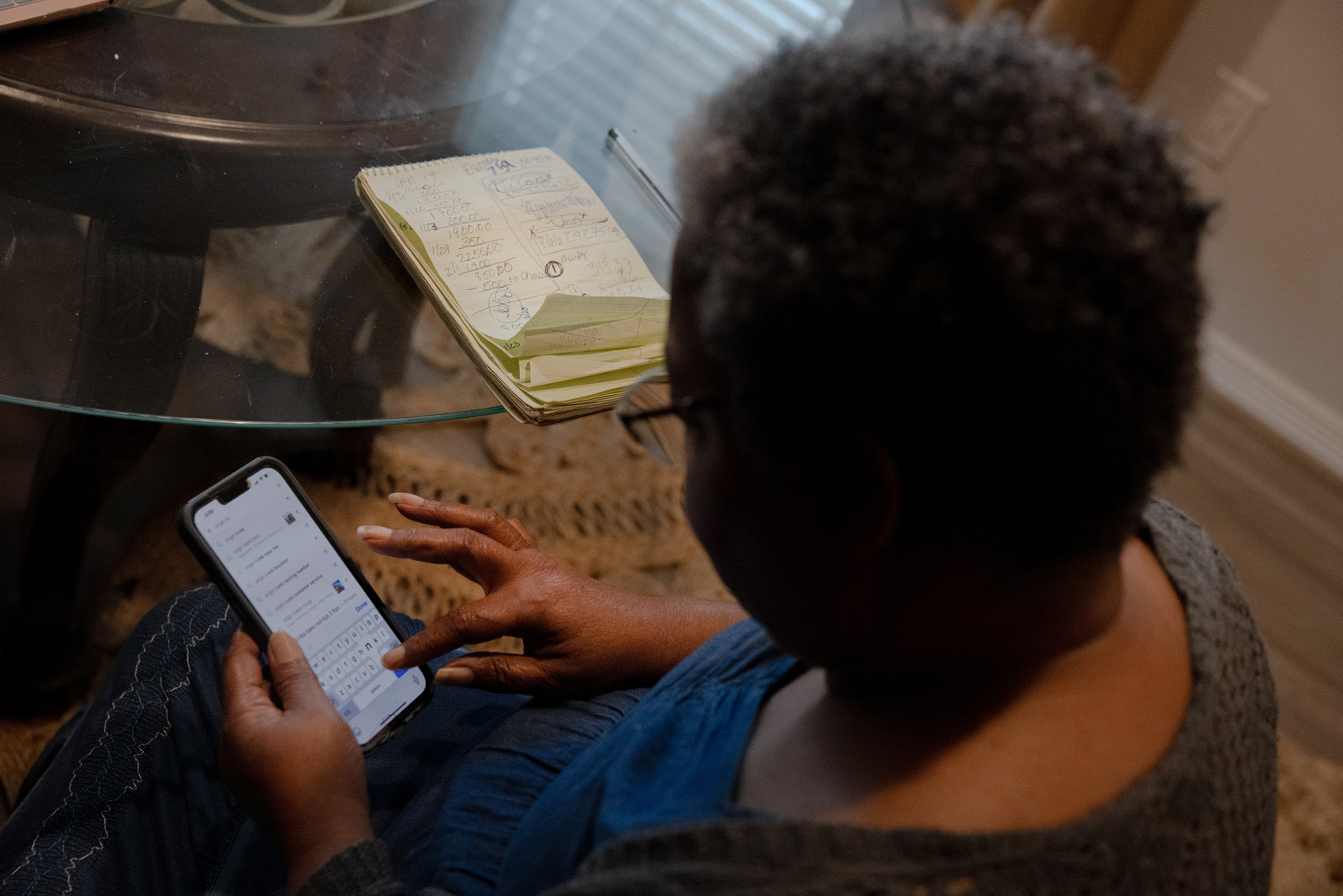
Across Yellowstone Boulevard, one of Rougeau’s neighbors, Jacquelynn Jackson, sat at her kitchen table on Calhoun Road last week, poring over documents.
“This is just one more thing to worry about,” the 65-year-old said with a sigh.

Neither Jackson nor her next-door neighbor, Sakenya Walthall, received a 2024 property tax bill despite both of them living in their new homes for months.
Instead, a $13,293.97 property tax bill — which includes the values of Jackson and Walthall’s homes, plus overdue property taxes from 2023 — was sent to Agape Homes, which incorrectly is still listed as the owner of her property in the appraisal district’s records.
According to HCAD’s website, Jackson’s address on Calhoun Road includes her lot and Walthall’s lot in the property description, despite Jackson filling out the district’s “Request to Split Out Or Combine Real Property Account(s)” in August 2024. Jackson said she only went to the district in person when she realized she could not apply for her homestead exemption online.
“I couldn’t do it online because they said my account didn’t exist,” Jackson said. “I assumed that once the title was taken care of that everything was taken care of.”
The appraisal district has updated its records to reflect that Jackson and Walthall own their individual properties on Calhoun Road for the 2025 tax year, but it remains unclear who will pay the 2024 taxes.
Freedman explained that at closing, Agape pays residents the company’s portion of that year’s property taxes, so that the new homeowners can pay the entire balance at the end of the year. But he said he wasn’t sure how to resolve this issue for Jackson and Walthall, since the developer is still listed as the owner of both homes.
“I’m too old for this,” Jackson said.
Barnett said the appraisal district requires all homeowners to fill out a “Request to Split Out Or Combine Real Property Account(s)” document when they are purchasing lots that used to be associated with another tax account. To be processed for the 2024 tax year, he said, that request must have been filled out by May 15, 2024.
“In a county as large as Harris County, this means any divisions or combinations of parcels described in deeds or transactions filed for record after January 1 of the current year will not be processed until the following year,” Barnett wrote in a statement.
Jackson, Walthall and Rougeau all closed on their properties after May 2024, and Barnett could not explain how property owners could have or should have known their properties would be incorrectly documented in the district’s records.
Neither Jackson’s or Walthall’s homestead exemptions were properly processed by the appraisal district for 2024. A general homestead exemption in Texas shields 20 percent of a property’s value from taxation by local governments. The exemption for school districts is $100,000.
Walthall, a disabled Navy veteran and mother of two, just wants the problems resolved.
“This just adds another layer of frustration,” she said. “I’m not working and I’m on a set income. If I end up paying (for the property taxes) I’ll have to cut back on little things for the children.”
If contacted about a refund, Smith, the tax assessor’s spokesperson, encouraged residents to provide as much information as possible.
“We ask that the residents (taxpayers) include the legal description of their property (example: lot # Block ## of subdivision X, and property address) on the tax payment so that our refund processors can use this information to cross-check and confirm the overage,” she wrote.
Smith said tax refund checks usually are sent to the mailing address the appraisal district has on file. If that address is incorrect, Smith suggested residents request the refund be sent elsewhere by updating their mailing information with the appraisal district.

