

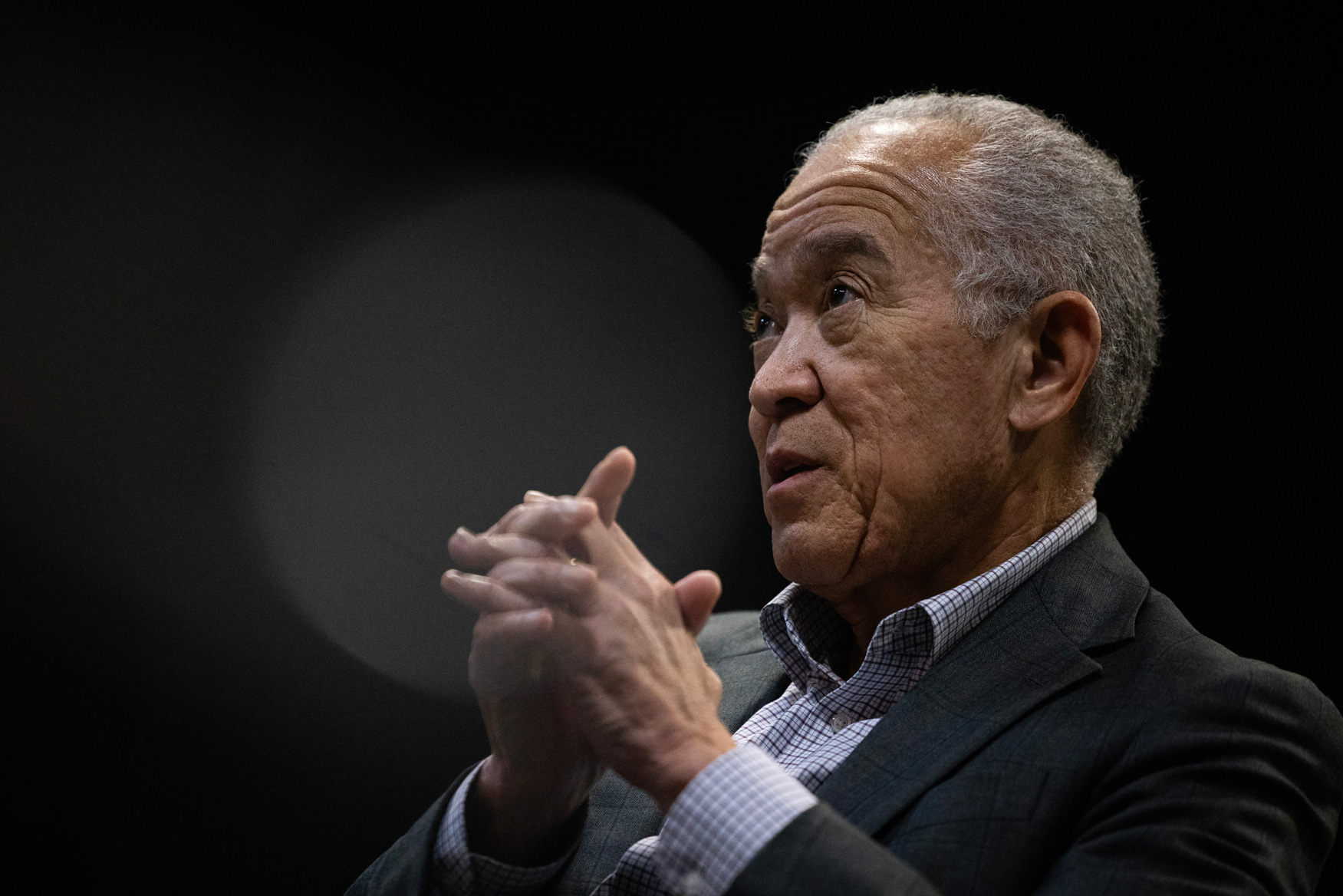
Houston ISD Superintendent Mike Miles plans to draw on recently announced savings to increase spending by about $125 million more than initially budgeted this school year, further ballooning the district’s large projected deficit.
HISD board members approved a budget amendment Tuesday that brings the district’s forecasted deficit for 2024-25 to about $250 million. While HISD can cover such a large deficit this year with its ample savings, the district likely would need to find significant new revenues or make large-scale budget cuts — possibly including more staff layoffs — to balance future budgets.
Most of the increased spending is tied to revenue sharing with the state, unexpectedly high building maintenance costs and more spending on classroom instruction. With the changes’ HISD’s spending on day-to-day operations would total about $2.2 billion.
Miles said his administration will propose a budget for next school year in early 2025 that includes a “much decreased” deficit, though he didn’t specify which cuts or additional revenues would balance spending. He acknowledged the plans could hinge on whether the state lawmakers allocate more education funding during the legislative session this spring.
“If we get zero money from the state, we will have some cuts,” Miles said.
Board members asked Miles several questions about the reasons for the increased spending during a public meeting Tuesday, though none expressed reservations about the updated budget. Board President Audrey Momanaee briefly questioned Miles on the longer-term plan for closing the deficit.
“I want to make sure what we’re doing right now is not putting us in a bad position next year,” Momanaee said. She and seven other board members approved the new budget, while board member Adam Rivon abstained from the vote.
Large projected deficits have not always spelled trouble in HISD. Last year, the district predicted a $250 million deficit but ended up with a gap of only $80 million, according to a financial report released in late November. In several recent years, HISD leaders projected they would operate in the red, yet ultimately ended up in the black.
Here’s what you need to know ahead of Tuesday’s meeting.
What explains the increased spending?
The additional spending would include about $57 million in payments of local property tax revenue to the state as part of Texas’ school funding system. The payments, previously known as “recapture,” are part of redistributing money from property-rich districts to property-poor districts, many of which are smaller and rural.
Miles said the payments were added because HISD saw an enrollment dropoff this school year of about 7,600, which exceeded original projects of 4,000 students. Districts required to share local property tax revenue pay a larger bill whenever they lose students.
HISD’s enrollment has declined over the past several years, though the losses this school year are the highest since the pandemic. Miles said several factors could be at play, including parent dissatisfaction with his overhaul of HISD and broader enrollment trends hitting large, urban school districts.

related to education
1,500 job cuts, big department overhauls: How HISD’s central office changed under Mike Miles
by Asher Lehrer-Small / Staff Writer
Another $32 million would go to maintaining HISD’s facilities and $23 million toward classroom instruction, among other costs, Miles said. The facility spending was necessary largely due to the fallout from storms over the summer, while the instructional increase, in part, followed a higher-than-expected number of students receiving special education services this year, Miles said.
How does the new spending impact the budget?
Under the changes, HISD projects its 2024-25 deficit would increase from roughly $130 million to $250 million.
All told, it means HISD could rely on more than $325 million in reserves and one-time funds this year, because the district also is planning to bring in $80 million from property sales.
The spending doesn’t spell immediate danger thanks to a high level of cash in HISD’s reserves, which is a fund comparable to a savings account. HISD forecasts it will maintain roughly the same end-of-year balance in its reserves — about $800 million — as it had initially budgeted, because district spending came in about $175 million under budget during the 2023-24 school year.
Miles said next year’s budget will also maintain at least an $800 million balance.
Is running a $250 million deficit risky?
While HISD has enough money in its reserves to weather a large deficit in the 2024-25 school year, the district cannot continue to spend at that level without significant new revenues or large-scale cuts in the near-future.
Miles, who was appointed by the Texas Education Agency to lead the district in June 2023, has blasted previous administrations for unsustainable spending, including devoting federal pandemic stimulus funds toward costs that would recur after the grants expired, like salaries. He vowed to identify inefficiencies and slash spending to make the district’s long-term financial outlook healthier.
related to education
Will the Houston ISD bond flop be a ‘wake-up call’ for Mike Miles? No chance, he says.
by Asher Lehrer-Small / Staff Writer
However, even after touting hundreds of millions of dollars in savings, Miles’ administration is still running a projected deficit and relying on one-time infusions of funds.
Last school year, HISD transferred $70 million from the reserves of its Capital Renovations Fund, which pays for new construction and school renovations, to shrink the deficit in its general fund, which is used to pay for day-to-day costs, like staff salaries. The Capital Renovations Fund now has about $70 million left in reserves.
And this school year, the district plans to sell $80 million in property and devote the revenue toward the general fund.
Will Texas provide more funding?
HISD is one of many districts across Texas facing significant budget shortfalls. The gaps are largely the result of the rising costs tied in part to inflation, a lack of increased state funding for schools, the expiration of pandemic stimulus funds and, in some districts, declining student enrollment.
During the 2023 legislative session, lawmakers discussed a proposal that could have increased the state’s per-student funding level by about 9 percent, after the rate had stayed flat since 2019. But the measure, which was linked to Gov. Greg Abbott’s school voucher plan, ultimately did not pass, leaving part of a historic $33 billion unspent.
Many school leaders across Texas now hope the upcoming 2025 legislative session could deliver new funds. If a similar plan passes as was discussed in 2023, it could erase most of HISD’s budget gap for next year.
However, if new state funds don’t get allocated, it would make the prospect of significant cuts more likely.
What’s next?
In January, HISD will begin the process of publicly discussing plans for its 2025-26 budget. HISD typically approves its budgets in June.
Team leader Jacob Carpenter contributed to this report.
Asher Lehrer-Small covers Houston ISD for the Landing. Find him @by_ash_ls on Instagram and @small_asher on X, or reach him directly at asher@houstonlanding.org.

