


Adrienne Wallace knew who to call in a pinch.
At her sons’ Houston ISD school, wraparound specialist Britt Perez-Williams had already connected Wallace’s family with uniforms and counseling, recognizing her then-seventh grader’s misbehavior in class as a cry for help.
So when Wallace and her four children fled a difficult family situation in mid-2023, she confided in Perez-Williams that the family had nowhere to go. Practiced in handling crises as Meyerland Performing and Visual Arts Middle School’s go-to staffer for kids’ non-academic needs, Perez-Williams helped settle the Wallace family in a Webster shelter and secured door-to-door transportation for the 30-mile trip to campus.
“If it wasn’t for her,” Wallace said, “I don’t know how we would have gotten through that.”
Over the past several years, the state’s largest school district has hired wraparound specialists like Perez-Williams for each of its 270 schools, providing dedicated support to students facing challenges including hunger, homelessness, violence at home and fear of parents getting deported.
But this year, after state-appointed Superintendent Mike Miles largely dismantled the program by cutting 200-plus specialists and moving some services off-campus, HISD employees are documenting fewer instances of providing non-academic help to their roughly 180,000 students, data obtained by the Houston Landing show.
In the first three full months of this school year, HISD staffers logged about 23,000 entries in a district database used to track how often staff assisted students, down from 59,000 entries over the same time span the previous year, the records show. The numbers reflect how often HISD employees recorded providing students with bus passes, hygiene products, uniforms, grocery vouchers and other items.
The records provide one of the first and only windows into the potential impact of Miles’ cuts to HISD’s prized program — though the value of the numbers is open to interpretation. HISD administrators dismissed the data as “unreliable,” while wraparound supporters said it validated their belief that the district’s most vulnerable students aren’t getting sorely needed help.
In statements to the Landing, HISD Communications Chief Alexandra Elizondo said district employees were directed in prior years to consistently log when they provided support, but they can now do so in some cases without recording it. Elizondo also said many campus staffers — including counselors, social workers, principals and teachers — are filling the roles of wraparound staff, while seven new resource hubs called “Sunrise Centers” and a new virtual health offering are available to families.
As a result, HISD students and families are getting “at least the same, but likely a greater level of support” in a most cost-efficient way, Elizondo said, though she said it would be “impossible” to prove that with data.
“Unfortunately, the data set collected by the wraparound program was inconsistent across years and inaccurate within any given year,” Elizondo said. “It can not be used to assert that there has been a significant reduction in resources or services to families.”

But in interviews with the Landing, seven sources who have worked closely with HISD’s wraparound program — three former specialists, two parents, one student and one nonprofit partner — said the lack of designated staff members on each campus removed a key resource for families in need.
Perez-Williams, who was laid off over the summer and is now getting her master’s degree in San Antonio, said current staff at Meyerland Performing and Visual Arts Middle tell her students are “suffering” without basic necessities. The new specialist, who has to split time between several schools, comes to campus only occasionally, and overwhelmed school staff rarely have time to ask whether students need fresh clothes or food at home, Perez-Williams said.
“You don’t have a direct person on your campus,” Perez-Williams said. “They’re not having daily conversations and building that relationship with the kids and finding kids slipping through the cracks.”
A signature initiative
HISD launched its wraparound program during the 2017-18 school year amid a wider shift in education toward prioritizing students’ outside-of-class needs. Leaders started with 40 specialists but quickly scaled to nearly 300, making it one of the nation’s largest efforts by a public school system to address students’ non-academic struggles.
The program came with a hefty price tag — totaling roughly $20 million at its peak — and some growing pains. Wraparound specialist turnover rates were high, while school-to-school results were inconsistent. Still, the district’s school board firmly backed the signature initiative.
“Wraparound services, for us, was extremely high priority because we recognized the benefit of it,” HISD Trustee Myrna Guidry, who joined the board in late 2020, said in a February interview.
When Texas Education Commissioner Mike Morath replaced HISD’s leadership with an appointed board and superintendent, the result of state sanctions against the district, the newcomers didn’t make any immediate changes to wraparound.
Rather, Miles increased spending on non-academic services, rolling out seven Sunrise Centers while assuring community members that the new hubs wouldn’t replace school-based specialists. In a late 2023 press conference, Miles said the social-emotional and mental health needs of students “are not going to diminish over the next several years … so it would not be appropriate to decrease services at this time.”
But several months later, Miles changed course. Faced with a projected $500 million budget shortfall — largely the result of federal pandemic stimulus money running out and increased spending on teacher salaries — Miles cut roughly 220 of HISD’s 280 wraparound specialists. Between the specialist layoffs and opening of Sunrise Centers, HISD’s net savings totaled $7 million for its $2.2 billion budget.
At the time, the wraparound cuts generated wide outcry from community members, who feared students would lose vital help in school.



Even HISD’s state-appointed board took the rare step of pushing back on Miles’ choice during a May 2024 public meeting. Board member Paula Mendoza described wraparound as “a big deal in our community.” Then-Board President Audrey Momanaee and board member Cassandra Bandy pressed Miles to provide research or analysis to justify the cuts.
“It would be helpful to have an understanding of how the analysis is done on a go-forward basis,” Momanaee said at the time. “If the end goal is making sure that our kids are sufficiently fed, clothed and mentally prepared for school … then we need to find the most appropriate and efficient manner.”
Bandy cut in: “We need the data to prove it.”
‘Lot of people being missed’
Almost a year later, some numbers are in — though they have limitations.
The most extensive data come from a digital system HISD uses to track support to students. HISD employees have logged hundreds of thousands of entries over the past several years, documenting when they provide resources. (The database also includes other types of support, such as routine check-ins with students and academic advising.)
The records don’t show the quality of care provided or the specific types of resources given. But the number of entries into the system offers some perspective on the scope of work done by wraparound specialists.
For several sources interviewed by the Landing, the dropoff in employees’ entries this school year lined up with their personal experiences.
Wallace, the Meyerland Middle mother who relied on her school’s wraparound specialist, said campus employees now only give her unhelpful printouts for finding help. She doesn’t regularly travel to her nearest Sunrise Center, located about 2.5 miles away from her home on Houston’s south side, for food and other goods because she doesn’t have reliable access to a car.
“It wouldn’t be pleasant trying to carry a gigantic box like that on foot,” Wallace said. “Unless you have a vehicle, you definitely won’t get those resources, I’ll tell you that.”


For former Westside High School student Queen’Azha Broadnax, the relationship with wraparound specialist Wil Smith meant she had bus fare to school and snacks so she wouldn’t have to take medications on an empty stomach. Broadnax, now a senior, switched to online classes mid-semester this fall after HISD cut Westside High’s full-time specialist.
“I was actually very confused when I realized that he wasn’t there, because I didn’t know that he was going to be leaving,” Broadnax said. “It actually played a big part in me switching schools because I really didn’t have anyone to provide those resources.”
Former HISD employee Kimillya Young said she got to “see both sides” of HISD’s approach by working as a wraparound specialist at Briargrove Elementary School for three years and doing temporary contract case management this fall at a lesser-used Sunrise Center in Houston’s First Ward. Young said she served only a trickle of people each day at the Sunrise Center, compared to over a dozen daily on campus.
“A lot of parents, if they already have a resources problem, don’t have transportation to get their kids to school. How can you really get them to the Sunrise Center?” said Young, who now works as a therapist for Life Enhancement Services in Houston. “It’s a lot of people being missed.”
A more targeted approach?
HISD leaders, however, strongly reject the argument that students are worse off following the cuts.
The number of entries logged by staff providing resources misrepresents the overall level of care, Elizondo said. Wraparound specialists have been trained to digitally document each time they provided help to families, but HISD now asks some school staff to provide assistance without requiring them to record it, she said.
“Every school has a supply closet that is restocked as needed and was paid for out of the HISD budget,” Elizondo said. “Any staff member can go to the supply closet, get that same food or clothing and hand it to the same student or family. They are just not responsible for documenting it, as their time is better spent working with students than entering ‘school uniform given’ into a database.”
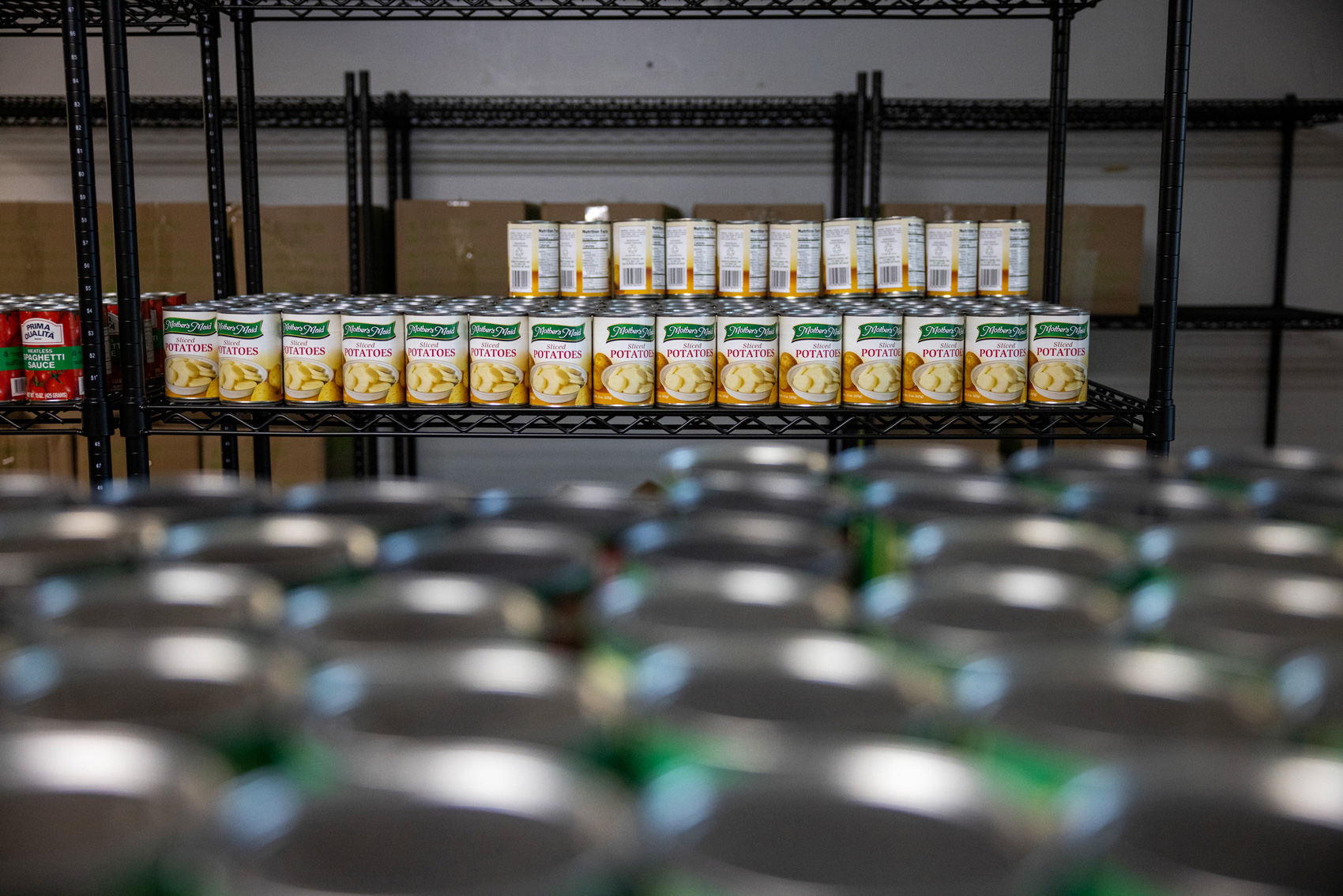


Meanwhile, HISD argued traffic at Sunrise Centers — which totaled roughly 4,300 individuals who, on average, visited twice in the fall 2024 semester, according to a mid-year report HISD provided to the Landing — illustrates the success of the approach.
Elizondo said the district has worked hard to inform families about Sunrise Centers by sending mailers and holding open houses. HISD addresses transportation barriers by dropping some resources off on campus and offering bus fare to families who need it, she said. Additionally, free virtual health services are now available to students on-site at all HISD schools.
In response to comments by Young, the former wraparound specialist and temporary Sunrise Center staffer, Elizondo said it would be a “major leap” to draw conclusions from one employee’s experience.
HISD Board President Ric Campo said he believes HISD’s new approach is “providing more services in a more targeted way,” allowing the district to invest more heavily in academics.

“The system today is more robust,” Campo said. “Part of the challenge with the past data is it was not really well organized and the wraparound services group were not organized in a way where they were consistently applying services throughout the district — and they are today.”
But for Perez-Williams, the former wraparound specialist, HISD’s quest for efficiency and consistency has stripped the district of a major asset in caring for families in need: a personal touch. She recommended district leaders consider how wraparound staff who now split time between several campuses might not have the same chance to build relationships with families.
“I feel like it’s a disadvantage,” Perez-Williams said. “Because it’s not person-centered in regards to the community and just being very specific about what the needs are to one school.”
Asher Lehrer-Small covers Houston ISD for the Landing. Find him @by_ash_ls on Instagram and @small_asher on X, or reach him directly at asher@houstonlanding.org.