


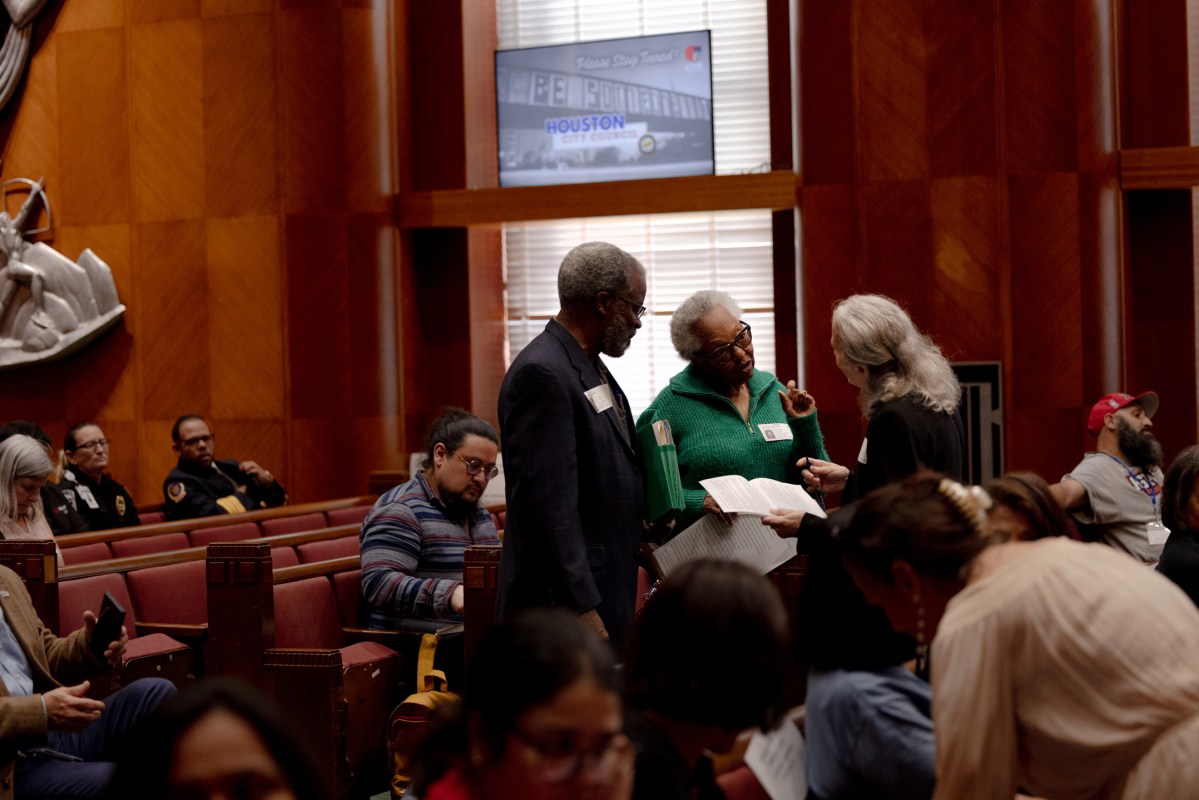
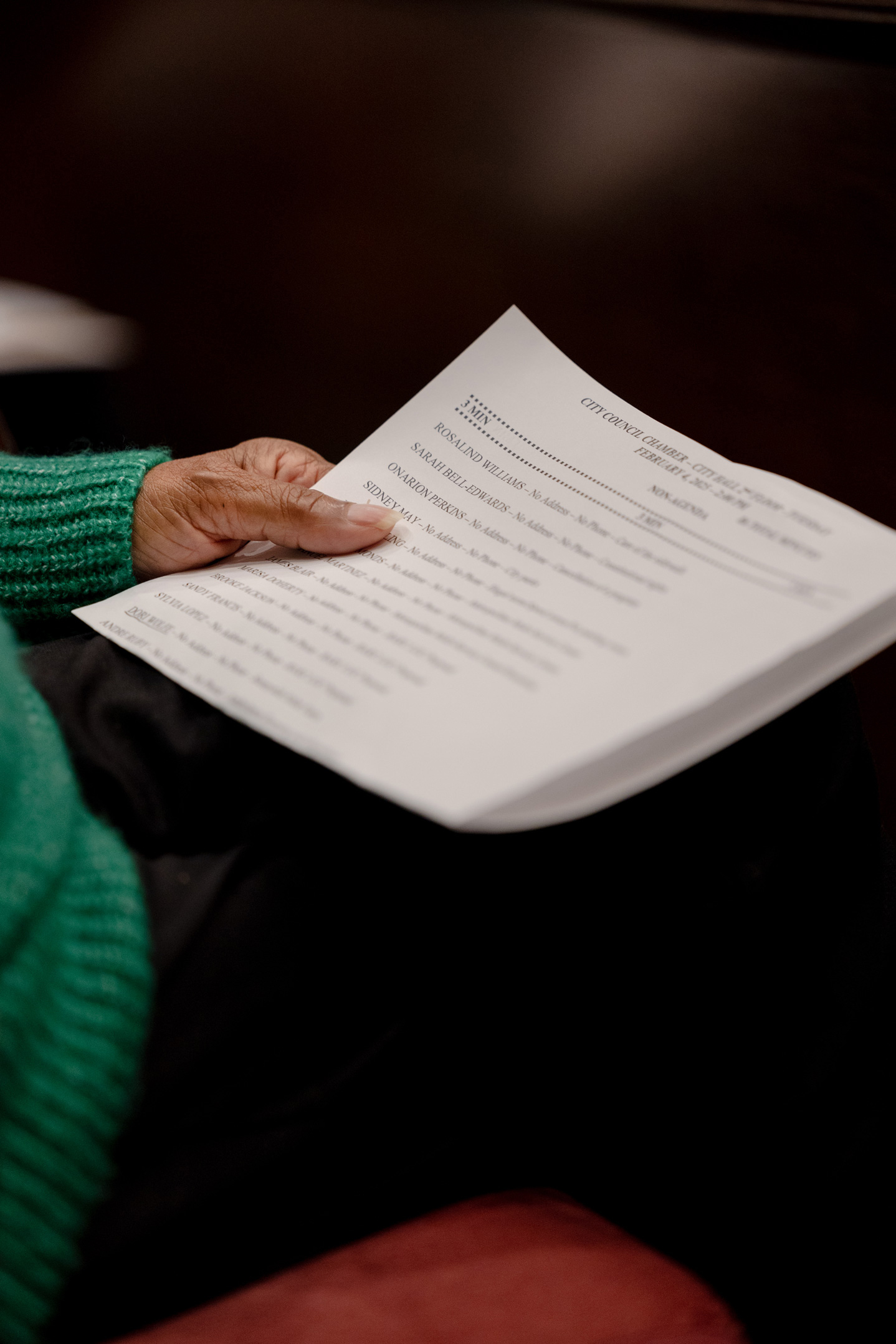
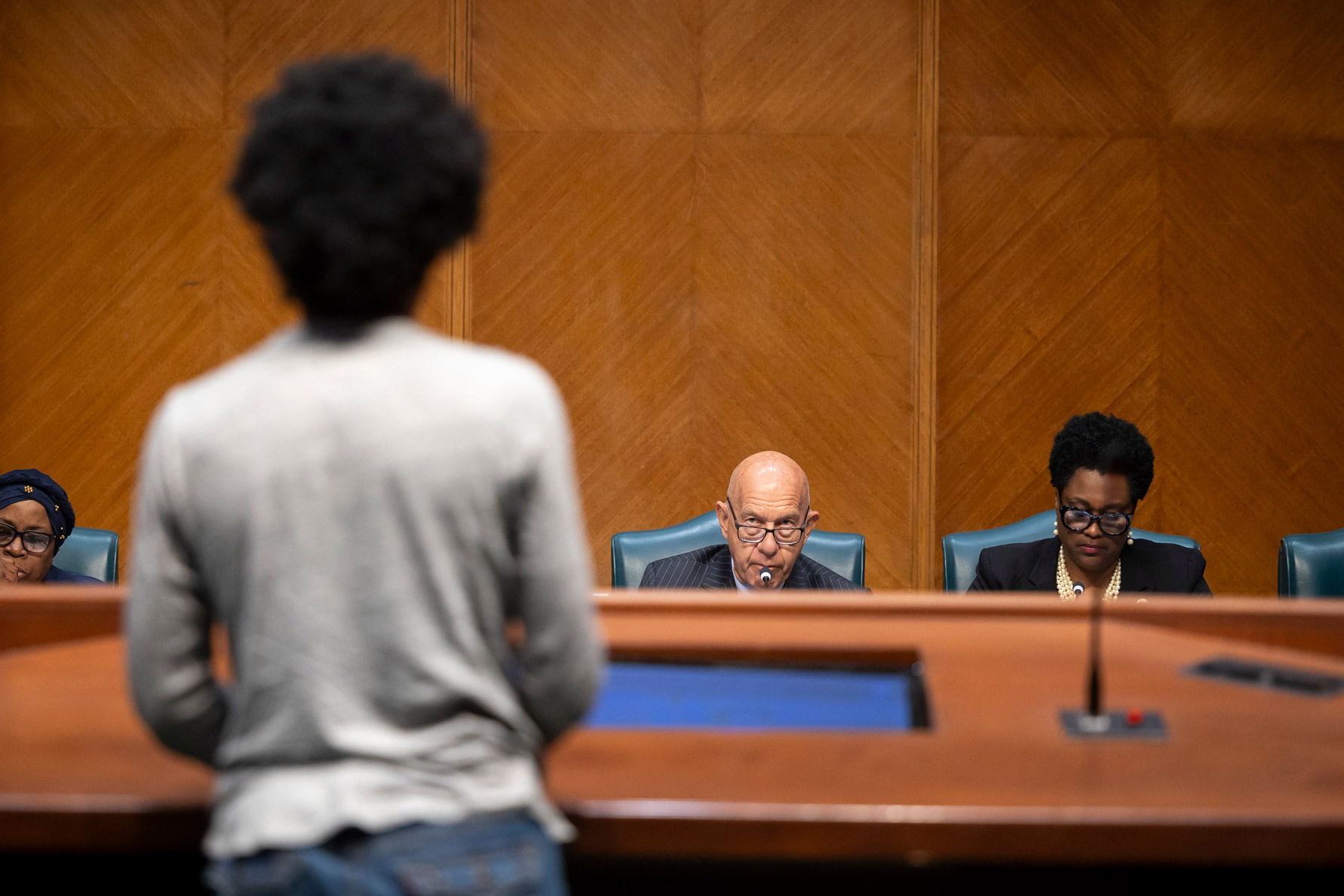
Marisa Doherty had never stood before Houston City Council, but an increase of stray dogs outside her family’s business pushed her to head to City Hall in early February to urge officials to increase enforcement and funding for the Bureau of Animal Regulation and Care.
Doherty initially found the idea of speaking before the 19-person body intimidating, but said she felt heard — an encouraging sign since she had to take a day off from work to attend the 1:30 p.m. meeting.
At least three of her friends could not attend for that very reason.

“It’s not convenient for people who work,” Doherty said of the regular Tuesday afternoon meeting time.
Houston City Council meets twice a week during traditional business hours. The meeting designated for public comment is at 1:30 p.m. on Tuesdays, and council takes up the agenda of policy and proposals at 9 a.m. the next day.
It is the only city in the immediate region where public meetings start so early on a weekday.
Experts say meeting times do have an effect on the accessibility and transparency of local governments. Alternating meeting times and locations, they say, can increase the number of people who attend and improve a governing body’s ability to accurately represent its constituents.
Responsibility for improving that accessibility lies with elected officials, experts agreed.
“If the goal is really to get citizens more involved in this process, then you need to bring politics to them, rather than expecting them to come to politics,” said Justin Kirkland, a professor of politics and policy at the University of Virginia.
ACCESSIBILITY: Emily Takes Notes to make Houston City Council more accessible, serve her community
Mayor John Whitmire criticized the system on the campaign trail in 2023. In a December 2024 interview, Whitmire confirmed that he still did not like how and when City Council meetings were held.
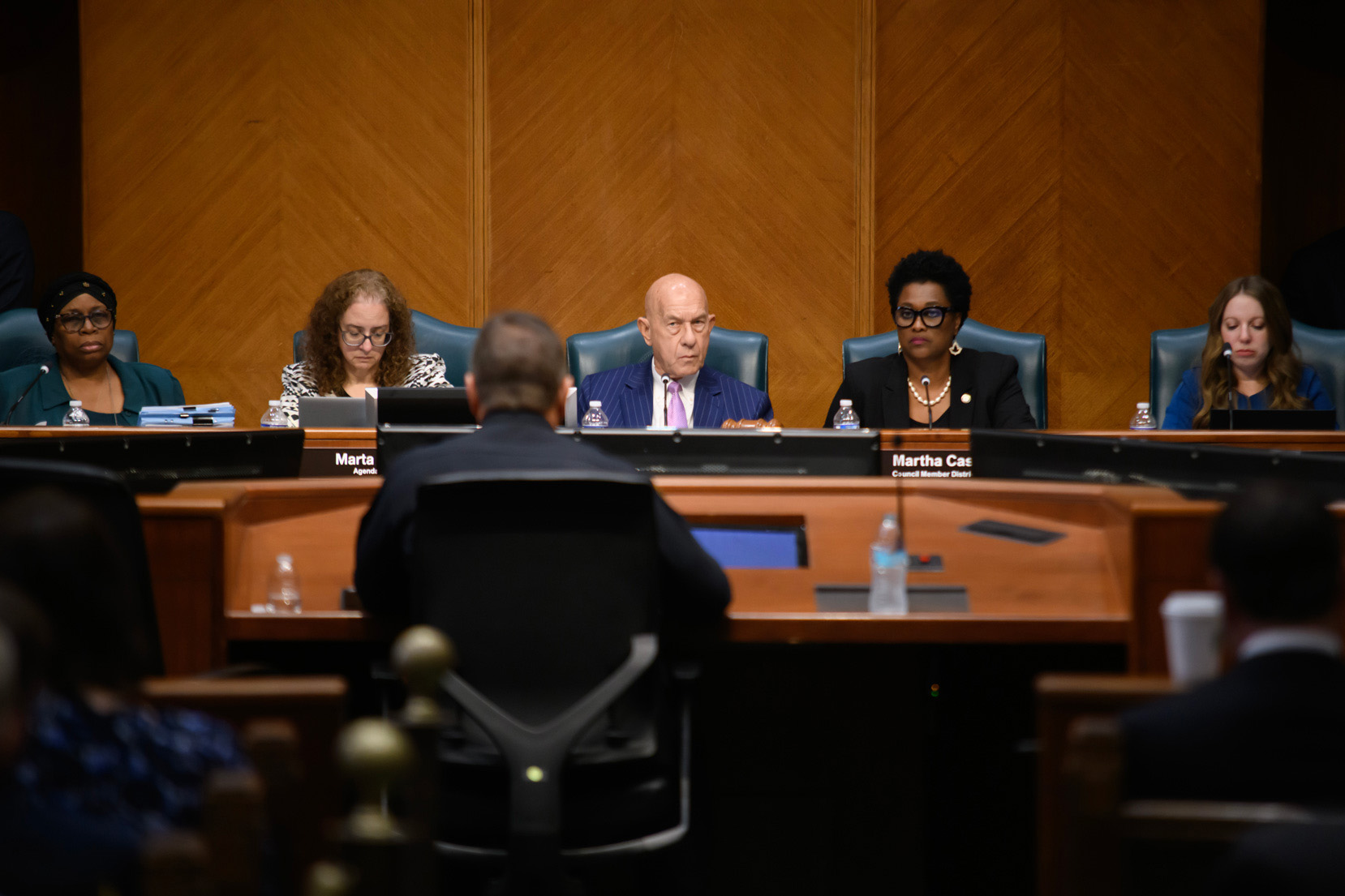
He did not think the average Houstonian could be at meetings in the middle of the day – and even if they could, he said he did not like that they had to sign up to speak at public comment the day before the meeting.
“What if you read your story this morning, it gets you all fired up. What the hell do you do?” Whitmire said. “You can’t come talking to council. So, I’m an impatient guy. I’d love to have already fixed that.”
Despite his previous comments, the mayor has yet to announce any changes to council’s meeting structure.
A local outlier, but nationally on trend
Houston’s daytime council meetings, while abnormal in the region, are in line with other major cities in Texas and across the country.
Both Austin and Dallas hold daytime meetings, at 10 a.m. and 9 a.m., respectively. New York City, Los Angeles and Chicago, the only three cities in the United States more populous than Houston, also hold daytime city council meetings.
Within Harris County, Houston is the only municipality whose city council meets during business hours. Of the 40 area municipalities reviewed by the Landing, the second earliest meeting time – 4:30 p.m. – belongs to Richmond. County commissioners courts across the region, however, tend to meet solely during business hours.
In Harris County, commissioners court meetings begin at 10 a.m. Brazoria, Liberty and Waller counties meet at 9; Chambers, Galveston and Montgomery at 9:30; and Fort Bend County starts the latest, at 1 p.m.
RELATED: Long meetings, drawn-out debates: Harris County claims to be more transparent. But is it?
Holding meetings in the evening generally makes them accessible to more residents, many of whom are working during the day and unable to attend, said David Cuillier, Director of the Freedom of Information Project at the University of Florida’s Brechner Center for the Advancement of the First Amendment.
“To be truly accountable and respectful to the public, they really should have public meetings after work hours,” Cuillier said. “That’s just the right thing to do.”
While accessibility can play a role in the scheduling of meetings, for smaller suburban and rural cities other factors may be at play.
In Pearland, for example, city council meetings are held twice a month at 6:30 p.m. at Pearland City Hall. Part of that decision is to bolster community participation, but it also accounts for the fact that council members are volunteers, said Josh Lee, the city’s director of communication.
“They get a stipend, but it’s not a career, right?” Lee said. “And so they have daytime jobs. They have things they have to do. I can’t imagine a situation where we would ever have daytime meetings.”
In Houston, however, both the mayor and council members are listed as full-time employees in city salary records. It is understood that while being the mayor truly is a full-time job, council members — who make just less than $63,000 annually — are part time employees who usually have outside employment.
Improving meeting accessibility
Houston’s council meeting schedule is not completely without merit.
Experts say the city’s separation of the public comment and business sessions into different meetings does give the public the chance for more face time with their elected officials.
Holding those two meetings during the workday, however, creates a barrier to participation.
EARLIER: Want to make your voice heard? Here’s how to address 50 Harris county governing bodies
Holding meetings on a rotating schedule, some during the day and some at night, could accommodate more residents, Kirkland suggested.
A rotating schedule would allow Houstonians with different constraints — such as those who work during the day, or parents who would need childcare to attend an evening meeting — a more equitable opportunity to participate in local government.

Changing the meeting time is not the only option for improving access and citizen participation.
Galveston County Commissioners Court, which meets at least twice a month, holds one meeting in League City and the other on Galveston Island to enhance accessibility, spokesperson Spencer Lewis said.
For Doherty, whose friends could not attend a weekday afternoon meeting, a livestream option where they still could have spoken to council would have helped, she said.
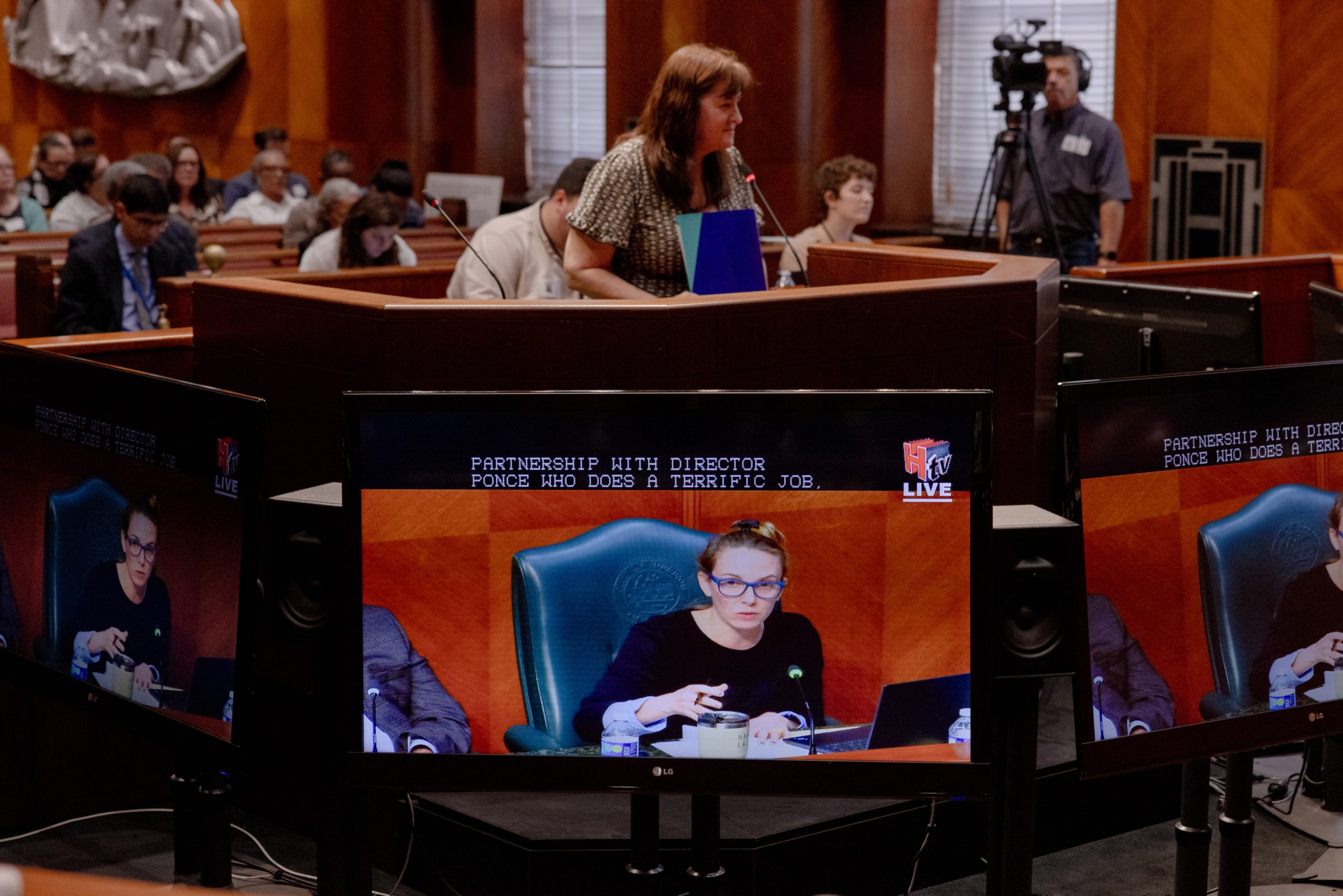
Houston does stream both of its weekly council meetings via a dedicated online channel, cable television and social media, but those watching remotely are unable to speak during the Tuesday public session.
Cuillier said that along with holding meetings “when the public is available,” governments would benefit from an interactive streaming model widely adopted during the COVID-19 pandemic.
In-person meetings offer significant benefits, such as seeing an official’s body language, hearing side conversations or talking with officials after the meeting, he said. Online streaming options with opportunities for feedback, however, also are valuable.
Political research shows that most people care more about local issues that affect their quality of life than politics in general, Kirkland said. Political elites “misperceive the public really badly” by relying on polls, making public input that much more valuable, he said.
“Best practice is to take in all of the input that you can get, let citizens say their piece, and then as a representative or deliberative body, think through with all the information what you actually want to do,” Kirkland said.
While alternating meeting times is a good start to increasing participation and accessibility of local government, it is not the full solution, said Tyler Simko, a researcher at Princeton University. If residents attend meetings, but no meaningful discussion or explanation of the votes happen, public engagement has not really happened.
“This is the long-term process of people getting disenchanted with a local government system,” Simko said. “Those are sort of deeper problems that we can’t just fix by changing your meeting time.”


