


Thousands of parasports enthusiasts with disabilities traveled to Houston’s George R. Brown Convention Center this past weekend for the 13th annual Metal and Muscle Expo to try a new parasport or showcase their skills in team sport competitions.
When the Houston Parks and Recreation Department launched the event in 2009, it aimed to introduce paralympic and other adaptive sports to injured veterans of the Iraq and Afghanistan wars. But over the years, it has expanded to include civilian sports for anyone ages 4 to 66 years old with varying disabilities from power chair users with spinal cord injuries to those with mental or cognitive disabilities. The expo now attracts more than 3,000 visitors from various states, including Hawaii, and four countries: Europe, Canada, Colombia, and Poland.
“It’s really providing an opportunity to have a one-stop shop for all adaptive sports programs, for all disability types,” said Hannah Walker, recreation facility manager at the Metropolitan Multi-Service Center and the Houston/Gulf Coast military representative for Texas Regional Parasport.

related
For decades, upgrades to Houston’s only adaptive recreation center have stalled. When will it be a priority?
by Monique Welch / Staff Writer
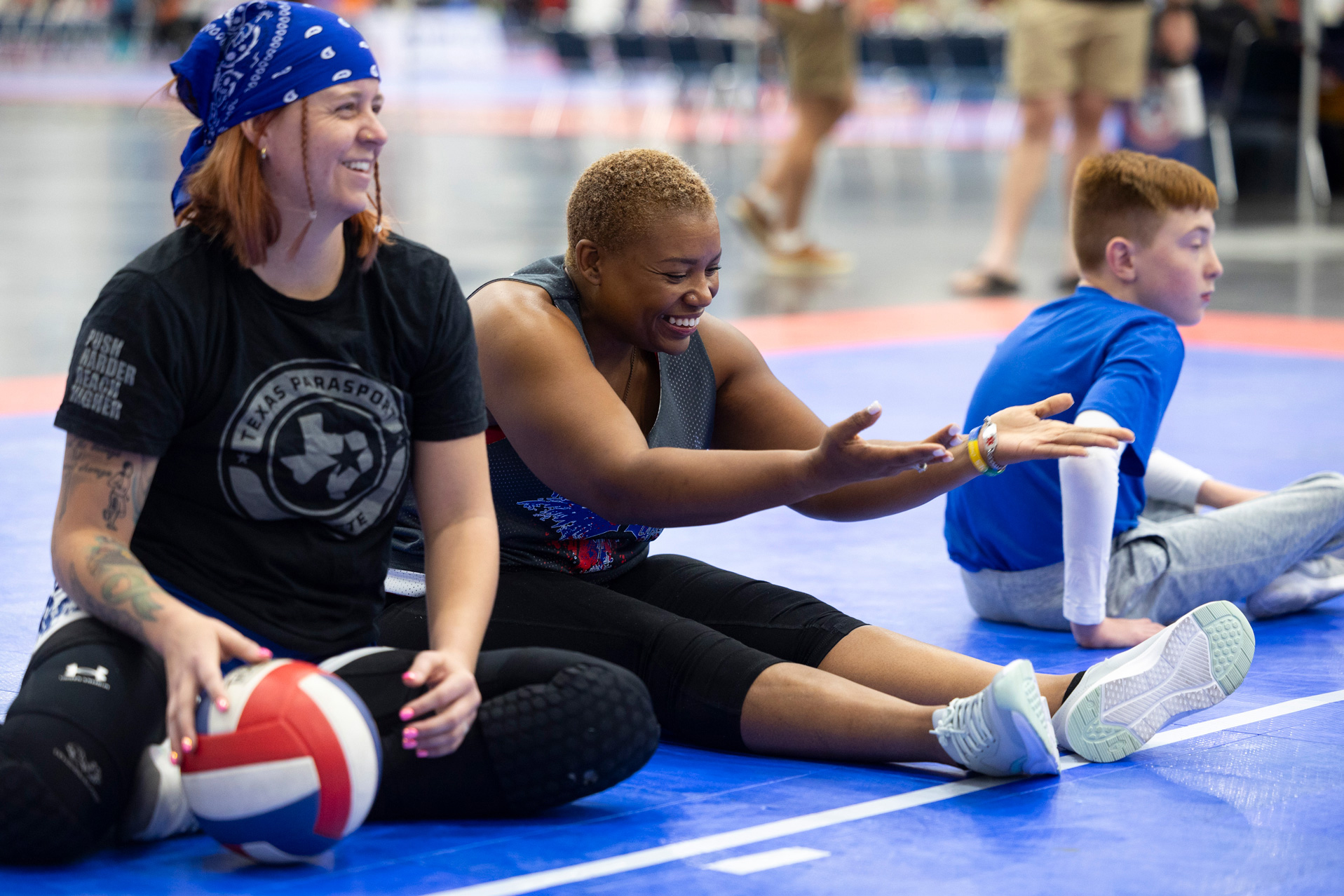
Attendees participate in a variety of scheduled events, ranging from individual sports, such as air guns, jiu jitsu, powerlifting and amputee running, to team competitions, such as power soccer, wheelchair rugby, youth wheelchair basketball and sitting volleyball. While most are returners, Walker said, the clinics, which are led by elite coaches and Paralympians, typically attract newcomers to a particular sport.
Organizers also encourage rehab hospitals like TIRR Memorial Hermann to bring their outpatient groups and newly injured individuals to the expo so they can find a sport that interests them, Walker said. Then, leaders connect them with coaches so they can continue the sport. While many tend to continue the sport recreationally, some have used the expo as practice grounds to take their skills to the main stage at the Paralympics.
The Metal and Muscle Expo afforded three-time sitting volleyball Paralympic medalist Kari Miller-Ortiz the opportunity to compete and prepare for the Paralympic Games. After just two years of trying the sport, Miller-Ortiz won her first silver medal at the 2008 Paralympic Games in Beijing, and afterwards used the expo to keep her skills sharp.

“Sitting volleyball does not have a lot of opportunities to get out and play with other people,” she said.
For the majority of her career, she’d train and practice by herself.
From there, she won her second silver medal at the 2012 Paralympic Games in London and later a gold medal at the 2016 Paralympic Games in Rio de Janeiro. For the 2020 Paralympics in Tokyo, Miller-Ortiz served as an NBC commentator.
Miller-Ortiz, who is a retired U.S. Army Sergeant and now works with Move United, played basketball and ran track in high school before she lost her legs after being struck by a drunken driver in 1999. Returning to what she knew best, she picked up wheelchair basketball and tried out for the USA Paralympic Team. When she didn’t make the team, her teammates suggested sitting volleyball instead.
While she was previously deterred from volleyball because of the high-cut shorts athletes wore, she figured it was the best time to give it a shot. She did, and fell in love with it.
“Sitting volleyball is amazing because it’s the only time that I feel unencumbered,” Miller-Ortiz said.
Unlike basketball, she doesn’t have to use a wheelchair and she gets to take a break from wearing her prosthetics.
“In volleyball, it’s just your body, and so I can just throw myself across and play and it’s just me. I’m free,” Miller-Ortiz said. “So, it’s kind of a liberating sport.”’
Although sports have always been a part of her life, Metal and Muscle Expo has pushed her to step outside of her comfort zone to try other sports, like archery, swimming and quadriplegic rugby.
Bigger than sports
Miller-Ortiz moved to Houston in 2020 during the pandemic and now enjoys coaching at Metal and Muscle to pay it forward and bring that same liberation to others with disabilities.
“It creates a connection,” Miller-Ortiz said. “It’s not always clear how to become a part of adaptive sports.”
One of the best parts about sports is community and pushing individuals to become better people, she said.
Miller-Ortiz said she is less concerned about an individual appearing in the Paralympics or winning medals. The greater reward is when she can have a hand in helping people find purpose and happiness despite their disability.
“It’s about educating the masses, and that’s really important,” she said.


While Miller-Ortiz is among a select group of athletes to have found success at the Paralympics after competing at Metal and Muscle, Walker said the event is guaranteed to build community and connection in a demographic that needs it most.
“I think the camaraderie of the event is more important than anything,” Walker said.
“Often, there’s not a ton of spinal cord injuries, all in one place,” she said. “So it’s just like a giant reunion here. And then whenever newly injured athletes come to our event, they can find other athletes and the camaraderie, and the recovery journey from that is huge.”
Sports also help foster independence for people with disabilities and expose everything that they can do that may seem insurmountable, Walker said.
“Just feeling like you’re not by yourself, I think is huge,” she said. “A lot of times people don’t know about adaptive sports when they first get injured and they could be an athlete …. or military — really active individuals (and) once they get injured they think it’s over for them.”
A refined purpose
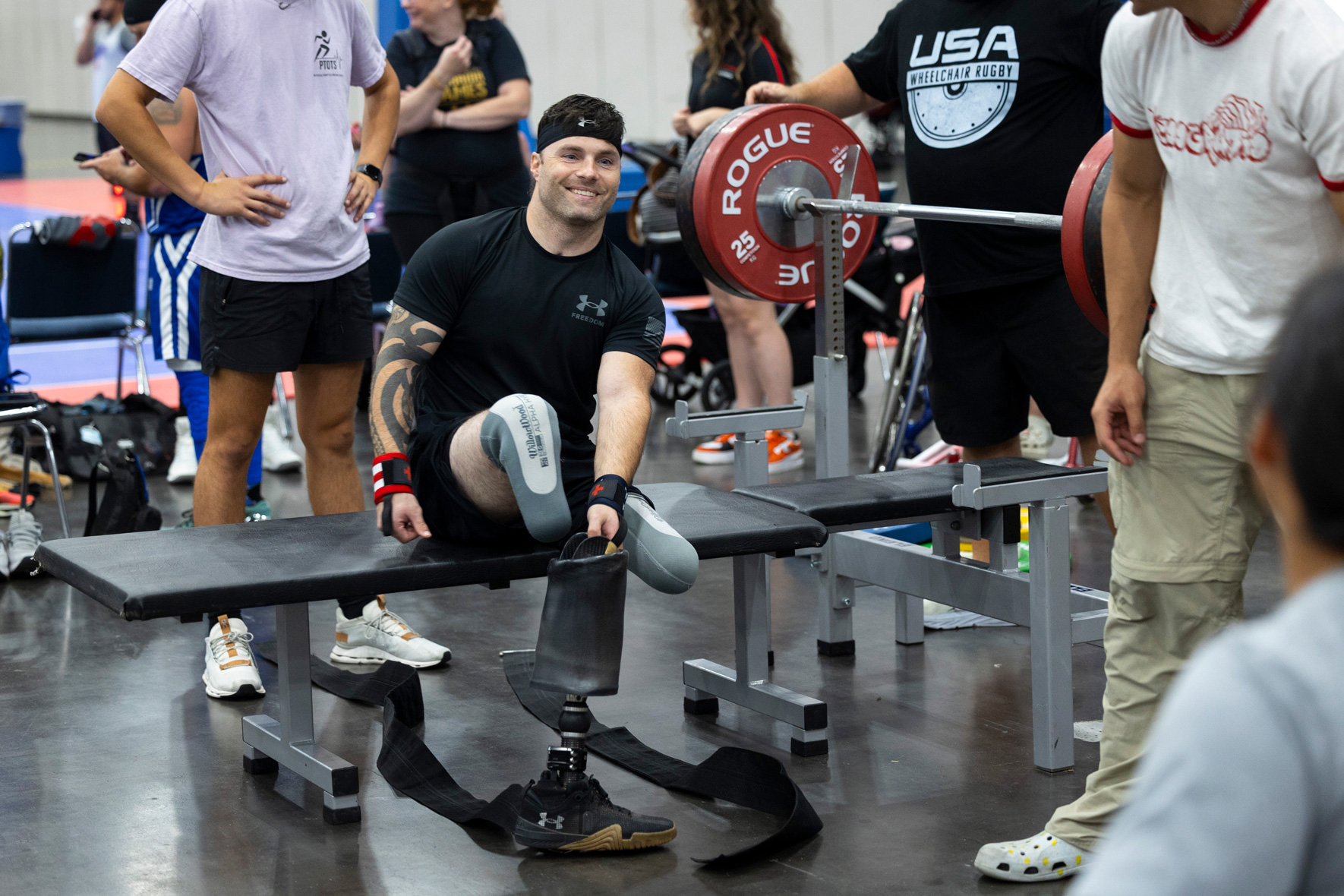
That was Kevin Greene after he was injured in 2014 when a distracted driver struck him on his motorcycle at a red light, resulting in the amputation of his left leg. He recalled the rough three-year period after his injury when he began to question his purpose and the path forward with a disability.
“All I knew after I graduated college was military,” he said. “I didn’t look for a job. I wasn’t thinking about, ‘Oh, I got to find a job.’ So now finding a job as an amputee having a disability, and I’m Black too, it’s like, ‘Now I got two things against me.’”
At the time, he was a reservist in the U.S. Air Force and feared he’d be medically discharged, thus forfeiting his desired military career since he was not injured in the line of duty.
He fought against a medical discharge, and in 2017, returned to active duty in the military. Roughly a year or two later, he was introduced to adaptive sports by participating in the Air Force Wounded Warriors program, which provides personalized support to wounded, ill or injured recovering service members who are undergoing medical treatment, therapy or recuperation for a serious illness or injury incurred in the line of duty, and their caregivers.
Greene traveled to Houston from Orlando to participate in his first Metal and Muscle Expo and tried sitting volleyball. He always wanted to try volleyball, but as a former basketball collegiate athlete, he didn’t have much time for it during the season.
“It actually sucks,” he said Friday after the clinic game while wiping the sweat from his face. “You have to push first, find a spot, react to the ball and then hit the ball (over) the net.”
Although it was harder than he thought, Greene, who is currently serving active duty in the U.S. Air Force, enjoyed the ability to remain active and challenge himself with a new sport. After the accident, he worried about losing his athleticism and competitive drive, which for so long was such an integral part of his identity.
Greene credits his faith and the Wounded Warriors program for helping him mentally, keeping him active and giving him something to look forward to.
“The power of adapted sports is everything,” he said.


