
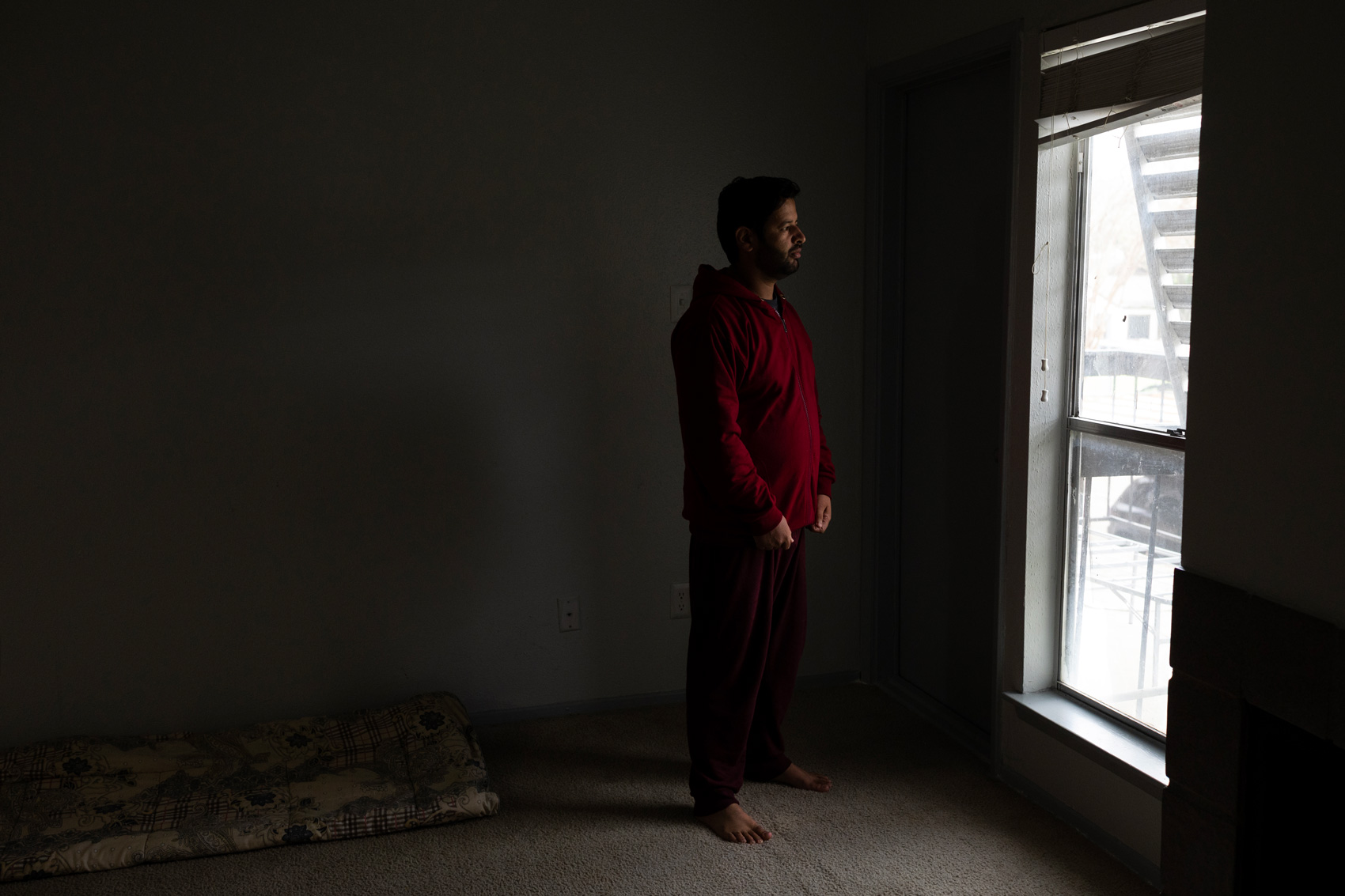

For years, Abdul Ahmad Sayedi flew an Afghanistan Air Force attack helicopter on hundreds of missions to gun down Taliban militants across the country. When the U.S.-backed government quickly fell to the Taliban in 2021, Sayedi led his wife and kids into hiding as he tried to figure out a way to safely get to America.
Sayedi finally made it to the United States last December, less than a month before newly inaugurated President Donald Trump abruptly shut down federal refugee resettlement programs the former Afghan combat pilot had been relying on to help his family adjust to their new life in Houston.
Almost overnight, the network of Houston refugee resettlement programs collapsed, leaving Sayedi and hundreds of other newly arrived families in a lurch, uncertain of how they will pay rent on their apartments, find jobs, or feed their children.
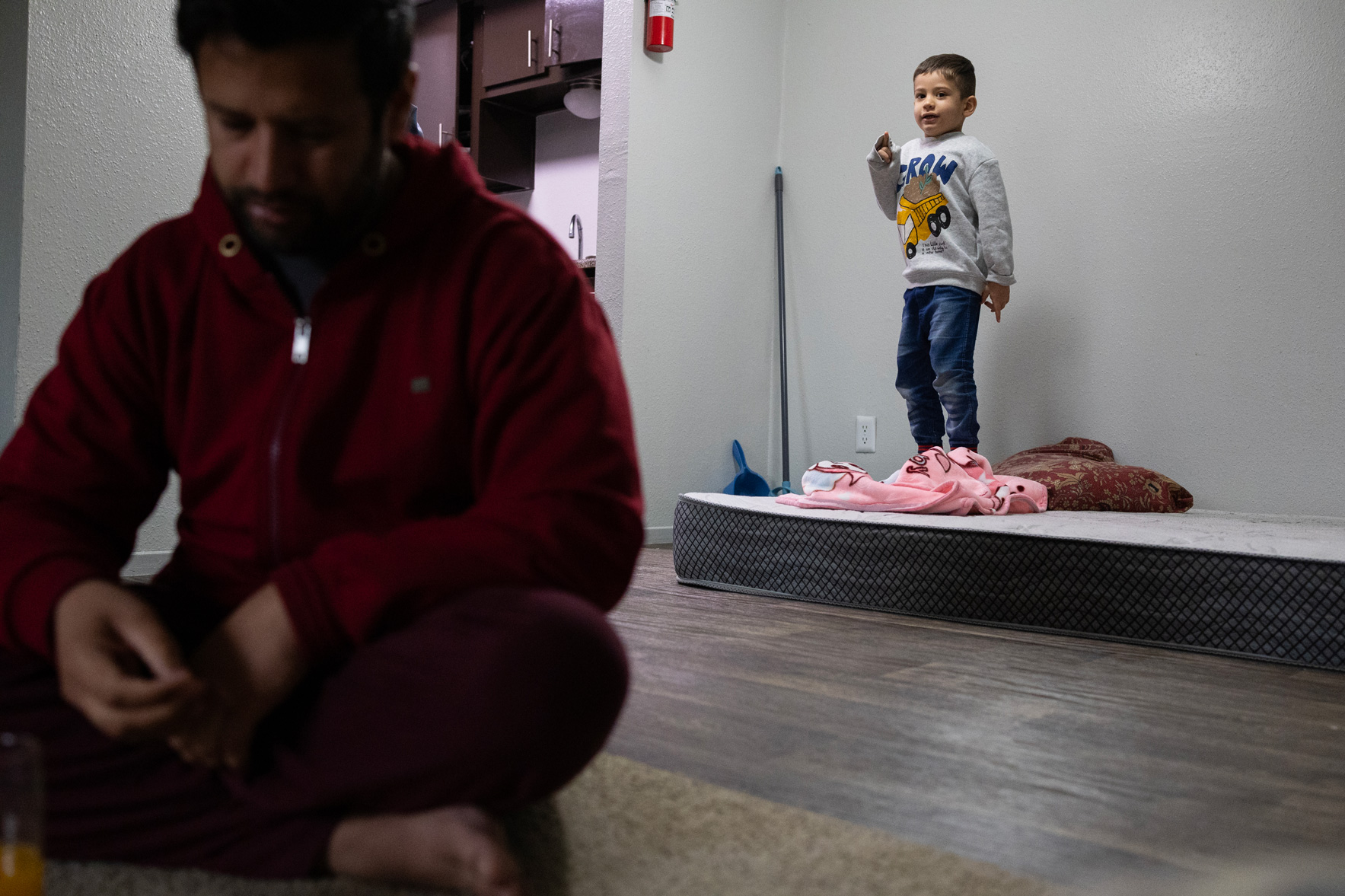
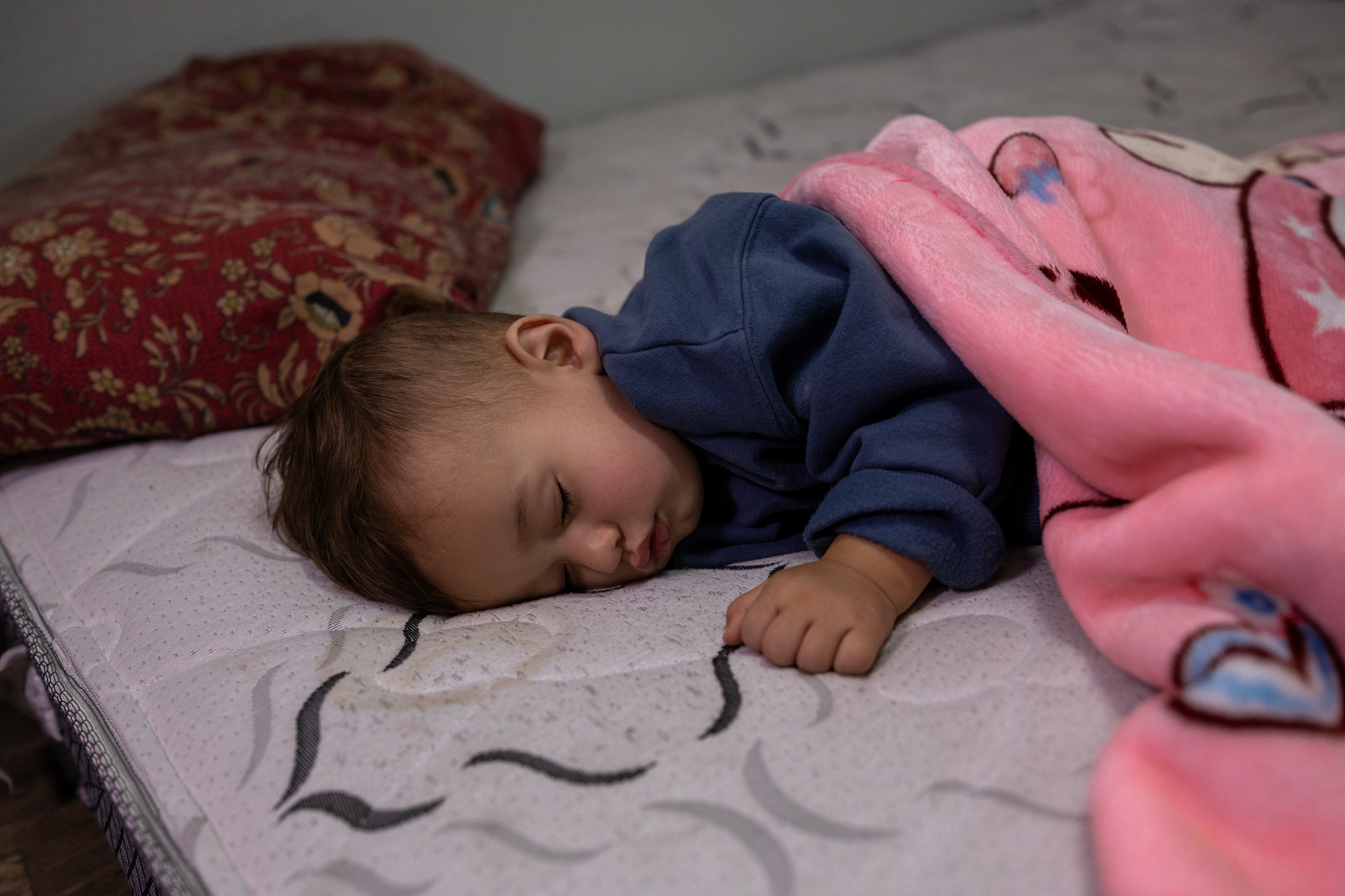
The programs imploded so quickly that Sayedi and his family have no furniture – not even mattresses for their three young boys – in their apartment. The couple share one twin mattress set on the bedroom floor, covered by drab blankets they brought from a Qatar refugee center stopover en route to the States
Sayedi, 36, silently wept as he sat on the dingy living room carpet in the family’s empty Houston apartment and wondered how he would be able to make enough money to take care of his wife and kids.
“I used to work as a pilot and it was my dream job,” Sayedi said as he wiped away tears with his thumb. “It’s not easy to study and work for your country and leave everything behind.”
RELATED: Halt of refugee programs creates fears for Houston Afghans with family stuck in Afghanistan
Houston’s refugee support services have no answers for families like the Sayedis. The major Houston refugee resettlement programs abruptly shut down their services last month when Trump pulled the plug on federal funding. Hundreds of people – including the case workers helping people like the Sayedis find work, health care, English language classes and food benefits – lost their jobs overnight.
The YMCA of Greater Houston said it was using limited private resources to help families most at risk of being evicted and asking apartment managers for leniency for those unable to pay their rents. Other major Houston groups helping refugees, including Catholic Charities and the Ethiopian Community Development Council, said they could not talk about how they are dealing with the federal cutoff of funds. That has created a major void and stoked widespread anxiety among newly arrived refugee families.
Some refugee families already have received eviction notices and could be thrown out of their apartments within weeks, said Bibi Khan president of An-Nisa Hope Center, a Houston nonprofit that primarily helps families in need of social and financial support.
“A lot of people didn’t know the rent wasn’t paid until they got a notice on their door saying that the eviction process was starting,” Khan said. “We have sent three families all the money they need because I don’t want to see them on the street walking with their children.”

Some smaller aid groups and volunteer networks have stepped in to try to help refugees with things such as furniture and boxes of food. They don’t have the financial wherewithal, however, to assist so many families with rent and help finding work.
Abdul Wahid Munshi, a retired chemical engineer who has been helping refugees, is part of a volunteer network in Houston that trades information and needs in various WhatsApp groups increasingly filled with appeals for help.
“The last few weeks have been chaotic, especially for people who have been here for three or four months who were still expecting food stamps and don’t have jobs,” he said. “This freeze has really exacerbated the challenges by pulling the rug out from under people. It’s sad.”
Munshi is part of a volunteer network in Houston that trades information and needs in various WhatsApp groups that increasingly are filling with appeals for help.
“Afghan refugee family arrived 3 months ago,” reads one recent WhatsApp message. “8 family members. Unemployed. Food card has been canceled. Need help with household items. Dishes( large size). Carpet. Furniture and groceries.”
Another reads: “We have to pay rent and utilities while no income and job. Husband is looking for a job while taking English classes. Agency is interfaith. Agency refused to help because all the funds were suspended.”

Mujtaba Yawari, a 34-year-old former driver for the U.S. military in Afghanistan, flew into Houston with his wife and two young daughters on Jan. 23 – three days after Trump cut off federal support for refugees like him.
The Ethiopian Community Development Council helped the Yawaris find an apartment, but the group hasn’t provided the family with any clarity on how much it can help them.
“They are not giving us clear answers on whether they will pay our rent or not,” Yawari said. “We don’t even know if they have paid the rent for this month or not.”
Yawari’s family members helped him buy a sofa, some rugs and a television for their spartan Houston apartment. His daughters, 4 and 6, are adjusting to life in America. Yawari hopes to find a job as a barber in Houston, but doesn’t know how to go about finding work.
“We’re afraid of what will happen to us if we can’t pay the rent,” he said.
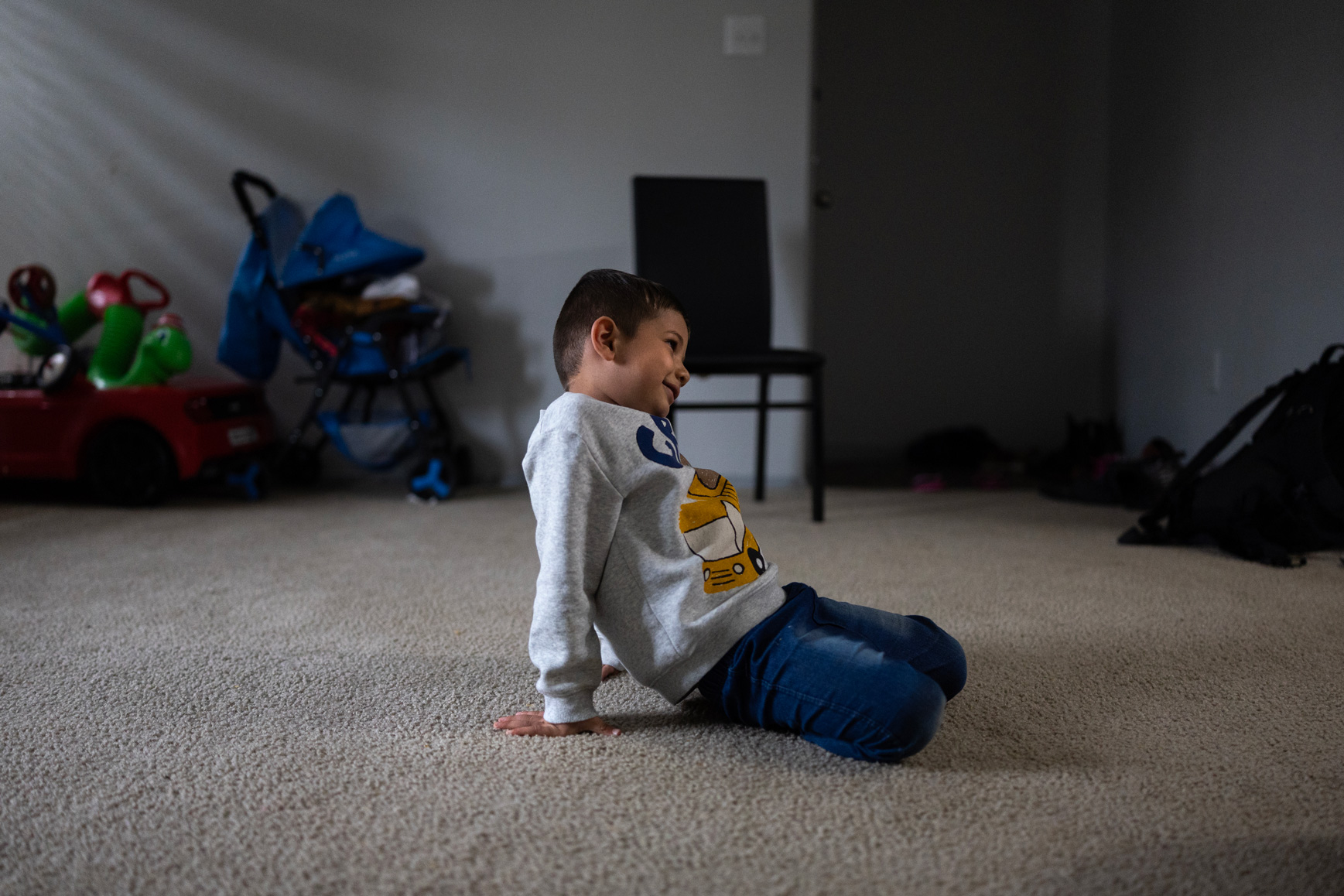
Sayedi also is worried about paying his bills. He has found part-time work at a manufacturing company, but he barely takes home enough to cover rent. His three boys, aged 6, 5 and 2, have few clothes and no beds to sleep on. The only donated toys they have are a small green inchworm ride-on toy and a red ride-on car sitting by the front door.
The boys are all in need of clothes. Sayedi’s wife, Nijaba Mohammadzai, needs pots, pans and dishes.
Sayedi said he hoped to find work at the airport because he misses his days working as a pilot.
“I miss that time,” he said. “For now, the most important thing is any kind of job with a good salary.”

