
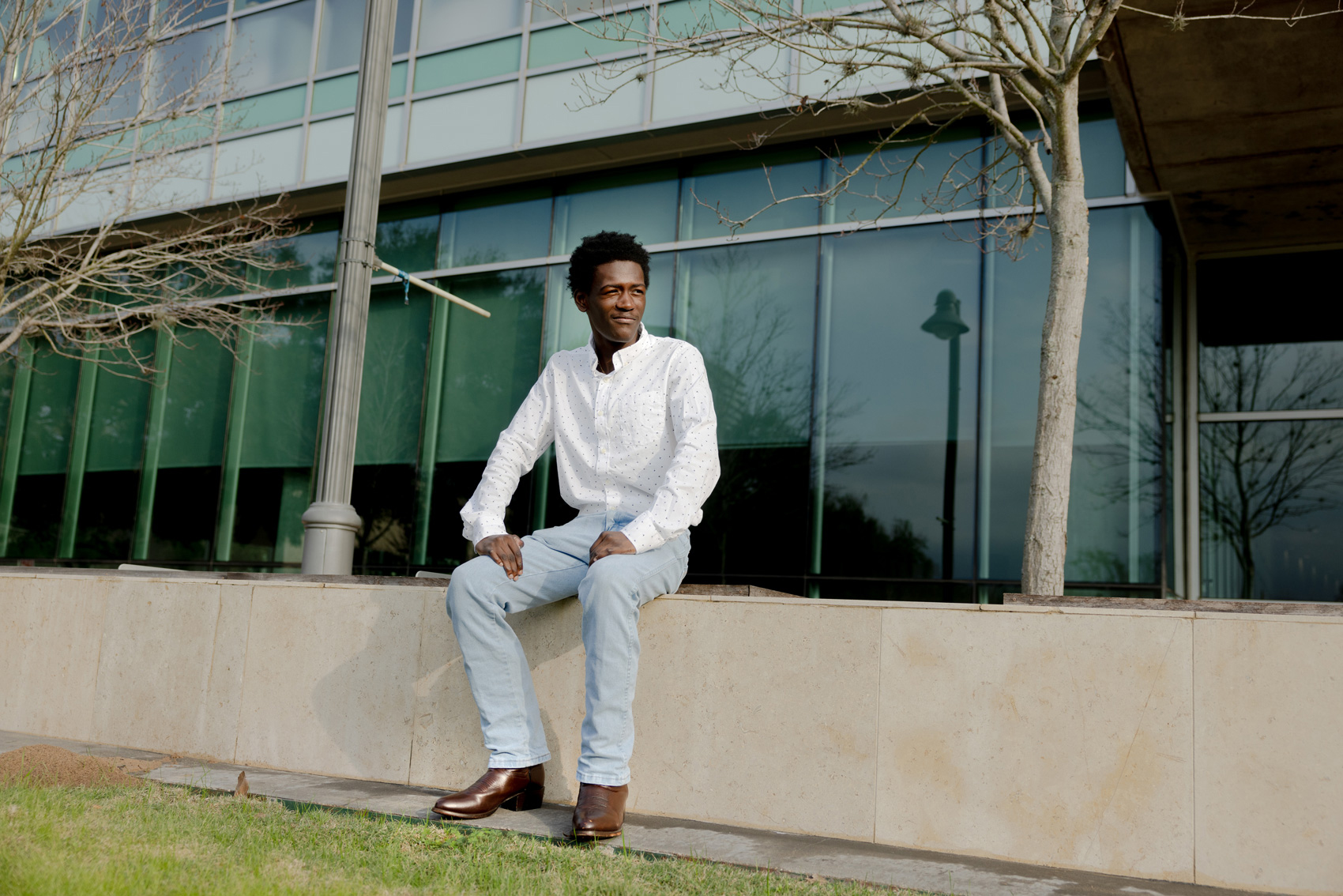

Demarion Keys hopes one day to attend the University of Houston or Texas A&M University to study architectural design. But first, he’s checking off introductory classes at Houston Community College, where he’s pursuing the college’s most popular path: a generalized associate’s degree.
“I feel like it’s preparing me for my next step,” Keys said. “It’s given me a lot of fundamental lessons about life, about society, about how the world operates.”
But the number of students choosing Keys’ path is rapidly declining. In recent years, thousands fewer HCC students have pursued general arts and sciences degrees, given to graduates who complete courses in a broad range of subjects. Instead, many of those students — at the urging of HCC advisors — are earning degrees more tailored to specific careers and fields, such as business, engineering and health sciences.
During a five-year stretch ending in 2022-23, the share of HCC graduates earning an associate degree in generalized studies fell from 61 to 33 percent, federal records show. The change represents 2,000 fewer students than the 3,800 who received the degree in 2017-18.
The shift follows HCC officials recognizing they needed to introduce more admissions advisors and become more deliberate about helping students choose programs aligned with their career goals.
Betty Fortune, HCC’s interim associate vice chancellor for student retention and completion, said many general studies students were “swirling around,” taking classes that didn’t count toward their degree or changing programs. Many graduates finished with dozens of extra credits, which can translate to thousands of dollars.
While a generalized degree can be useful for students transferring to a four-year university, education leaders and researchers have found graduates with only a generalized degree have a much harder time finding good-paying jobs when they enter the workforce.
Now, many HCC students who arrive without much direction meet with a college advisor to talk about options — and often choose a more specialized program.
“(It was) absolutely a concerted effort on our part,” Fortune said. “We became much more proactive.”
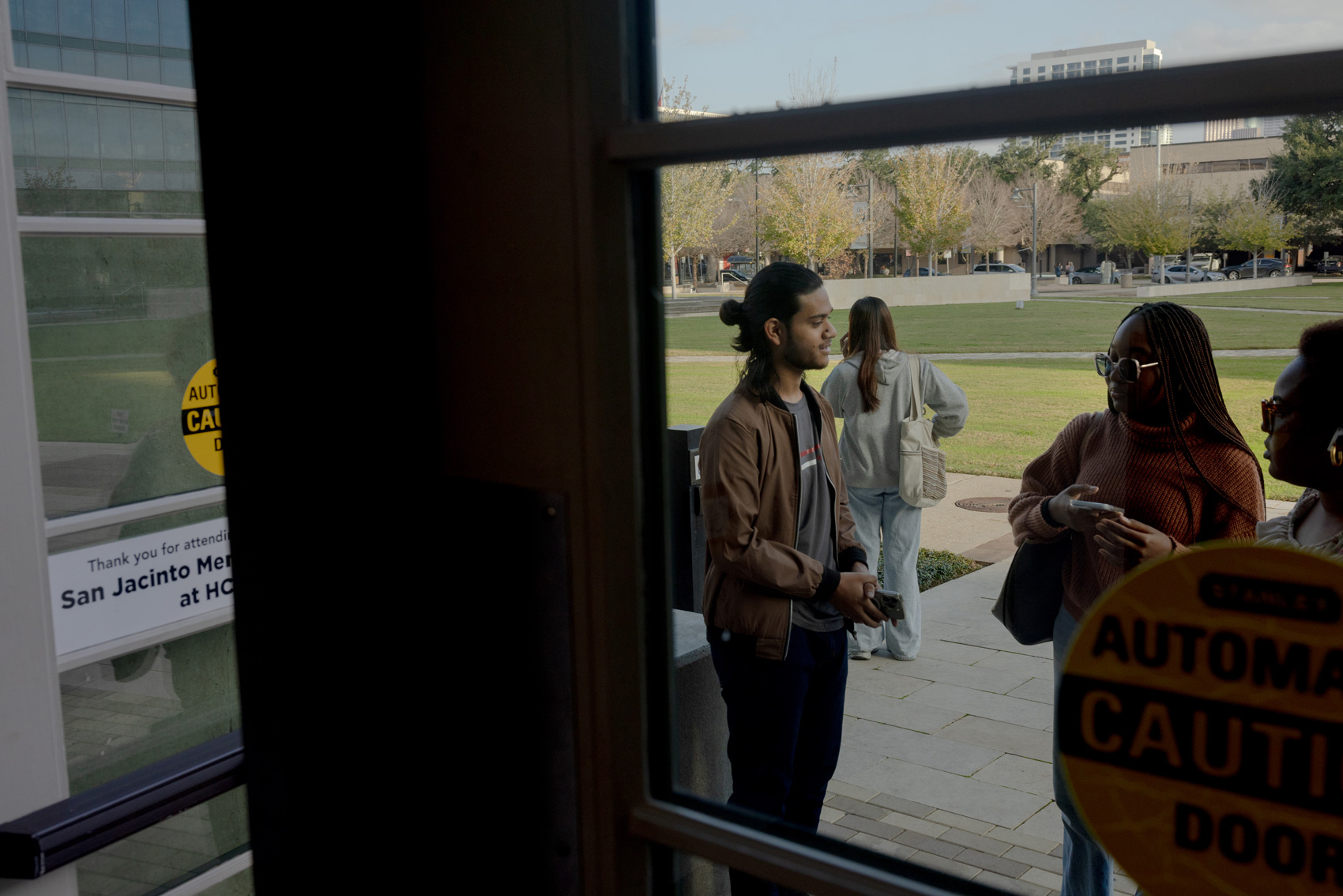
Conversations with advisors led HCC international student Zayed Sohail to change the focus of his studies after several semesters. Sohail began on a generalized degree path, with plans to transfer and get a bachelor’s degree. After speaking with his advisor, he moved into the civil engineering associate program and now plans to pursue a construction management job after he graduates from HCC next semester.
“I was not decided — do I want to transfer to a university, or do I want to get an associate’s and then move on?” Sohail said. “(Now) I just want to dive into the world of jobs and other opportunities. … I’m excited for the graduation day. I’m impatiently waiting for it.”
National, state pressures
In recent years, particularly in Texas, community colleges have worked to help students clarify their academic and career goals. Many colleges have adopted a framework known as “pathways,” which gives students a road map of courses and ensures they stay on the path to graduation, rather than leaving students to figure it out themselves.
A decade ago, HCC joined a Texas Association of Community Colleges institute that taught them to implement pathways, hired over 40 admissions advisors for the first time and ramped up its academic advising process.
With this in mind several of Texas’ large urban community colleges have decreased the share of students graduating with generalized degrees, instead emphasizing more workforce-aligned credentials.
“We are seeing movement away from these generalized degrees for a number of reasons. One of which is … students come to college, they have interests, and taking this sort of grab-bag or smorgasbord of courses doesn’t enable students to pursue their interests,” said Davis Jenkins, a researcher at Columbia University’s Community College Research Center.
“More and more, there’s research showing that students who take a course in a field of interest early on are better off, more likely to graduate. Because it’s important to see, ‘Do I like this field?’ And very importantly, ‘Am I good at it?’”
In 2023, Texas lawmakers stressed the importance of pathways when they redesigned the community college funding model, providing schools with money based on student outcomes instead of enrollment.
Colleges are incentivized to help students complete workforce certificates — such as cosmetology, barbering or pharmacy technician certificates — and degrees the state considers more valuable. Graduates with general arts and science associate degrees, on average, are less likely to follow a strong career trajectory, improve their earning opportunities and go into high-demand jobs, the Texas Higher Education Coordinating Board has found.
The advising process
At HCC, advisors have been largely tasked with putting the pathways model into action and getting more students on a career-specific track.
Admissions advisors now connect with students as they’re registering, before they enroll in classes. They talk to students about what programs match their interests. They suggest undecided students take a 60-question career exam and review the results with them. And when students still plan to complete basic transfer credits, they advertise topics they can specialize in while doing so, like communications or social science.
“Having those conversations with them showed us that this is the way to go. Students are saving money,” Fortune said. “It’s much more strategic, and not to discount the (general) degree, not to do that at all, but to advise students of what you can expect to be able to do with this degree and where you can do it at.”

Students are then assigned a pathways advisor who checks in with them, making multiple contacts in the first semester and holding follow-up talks as needed. If a student is on the fence about their course of study, they’re directed to a career placement officer, who can help them locate internships or jobs for real-world experience.
The goal, Fortune said, is for students to understand by the end of their first semester whether they want to pursue the program. If not, they can pivot without having wasted too much time or money.
Data shows the proactive measures are shaping students’ choices. In the same time that HCC has cut down on the number of students studying for general degrees, thousands more students are completing awards in career-aligned subjects. That’s encouraging to HCC leaders. After all, students “may not be able to transfer immediately, but they may need a job immediately,” Fortune said.
Here to stay
Although HCC has made outsized progress compared to other colleges, leaders say they still need to get more students on clear pathways to jobs and universities.
College leaders hope to ramp up their marketing of programs and hire more advisors in the coming years, particularly as the school’s enrollment bounces back from declines during the pandemic. HCC’s student-to-advisor ratio is roughly 460-to-1, worse than the average ratio of 320-to-1 across several other large urban community colleges in Texas, according to records requested and obtained by the Houston Landing from the schools.
Fortune said HCC leaders are also looking to other local and state colleges for inspiration.
At San Jacinto College, all first-time college and transfer students with fewer than 12 credit hours must take a course that covers career and transfer pathways, as well as job salaries and openings in the region. If a student reaches the 15-credit mark and is still a general studies major, advisors contact them to discuss potentially choosing a different major.
Generalized degrees remain the most popular track for HCC students, with many finding the breadth of classes useful for exploring different subjects. The path also helps potential transfer students who are interested in eventually getting a bachelor’s degree in a major that community colleges don’t offer.
Keys, the aspiring architect, loves the variety of courses he’s able to take, including the humanities and history.
“I got a lot of classes that I was actually genuinely interested in this semester,” Keys said. “I like to learn about different cultures. I like to learn about different regions. When you get into the professional world, you have to have a skill of communication, and you have to have a skill of being able to connect with people. … I think (this program) will allow me to understand people a lot easier.”
Miranda Dunlap covers Houston’s community colleges in partnership with Open Campus. Despite roughly half of Houston’s higher-education students attending community colleges, there hasn’t been much news covering these systems or students — until now. Her reporting holds institutions accountable, highlights barriers faced by students and helps them navigate their opportunities. Reach Miranda at miranda@houstonlanding.org or on Twitter and Instagram.

