

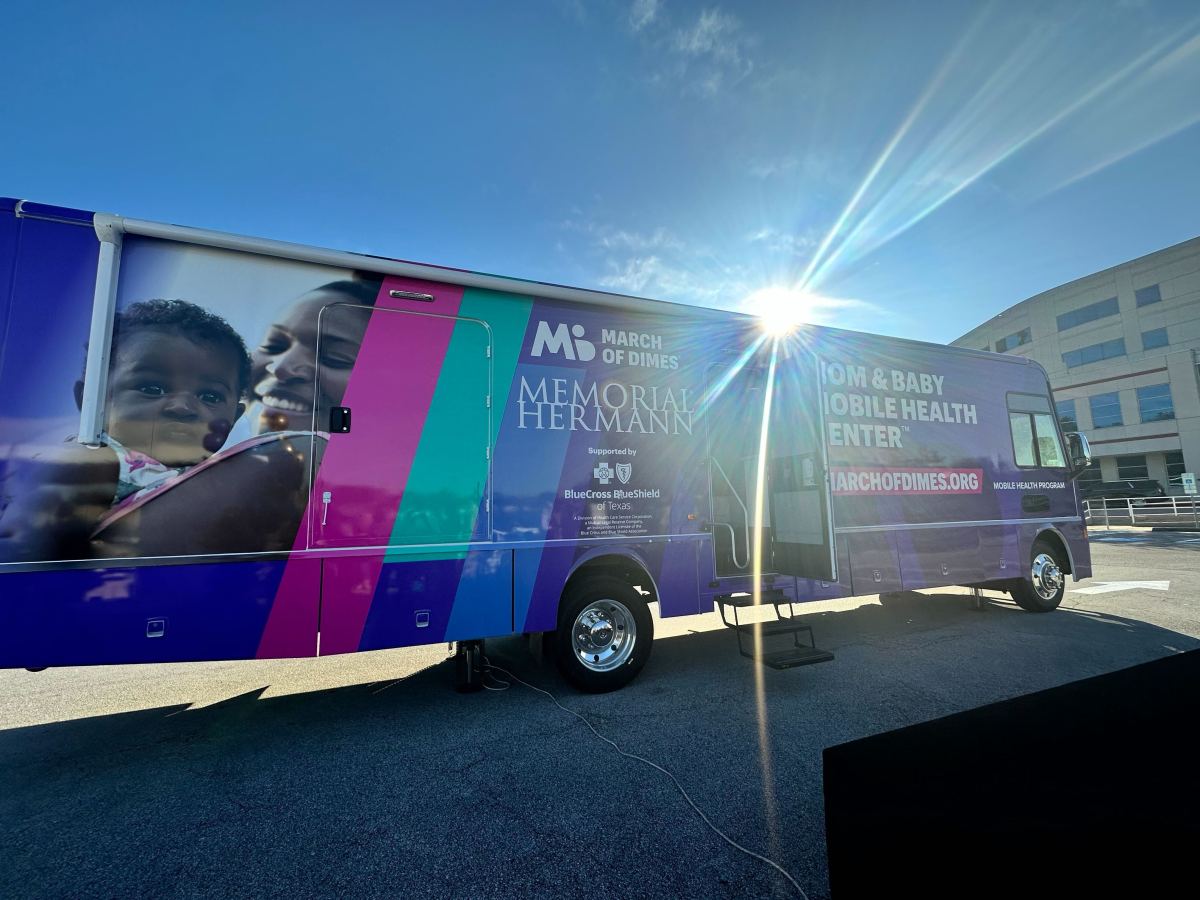
A mobile care center to provide maternal health services to underserved communities is coming to Harris County.
March of Dimes, a national nonprofit dedicated to improving maternal and infant health outcomes, revealed its first Texas Mom & Baby Mobile Health Center Monday, a 30-foot purple recreational vehicle with two clinical rooms that will provide critical health services and education to birthing parents throughout pregnancy. It’ll be its sixth unit in the U.S.
Starting in January, the mobile health center will operate on the same route at various community centers throughout the county three times a week in its first year with a goal of increasing it to four times a week. This will help establish trust and have a steady presence in communities that need access to services most, said Jen Torres, the Houston market senior executive director of market impact at March of Dimes.
The route for the maternal mobile health center has not been released yet, but locations will be selected based on data collected by the Texas Department of State Health Services that shows areas with the highest rates of prematurity and maternal mortality, Torres said.
Patients can make appointments or walk in to receive services. It will serve those in underserved communities regardless of immigration status, insurance or ability to pay.
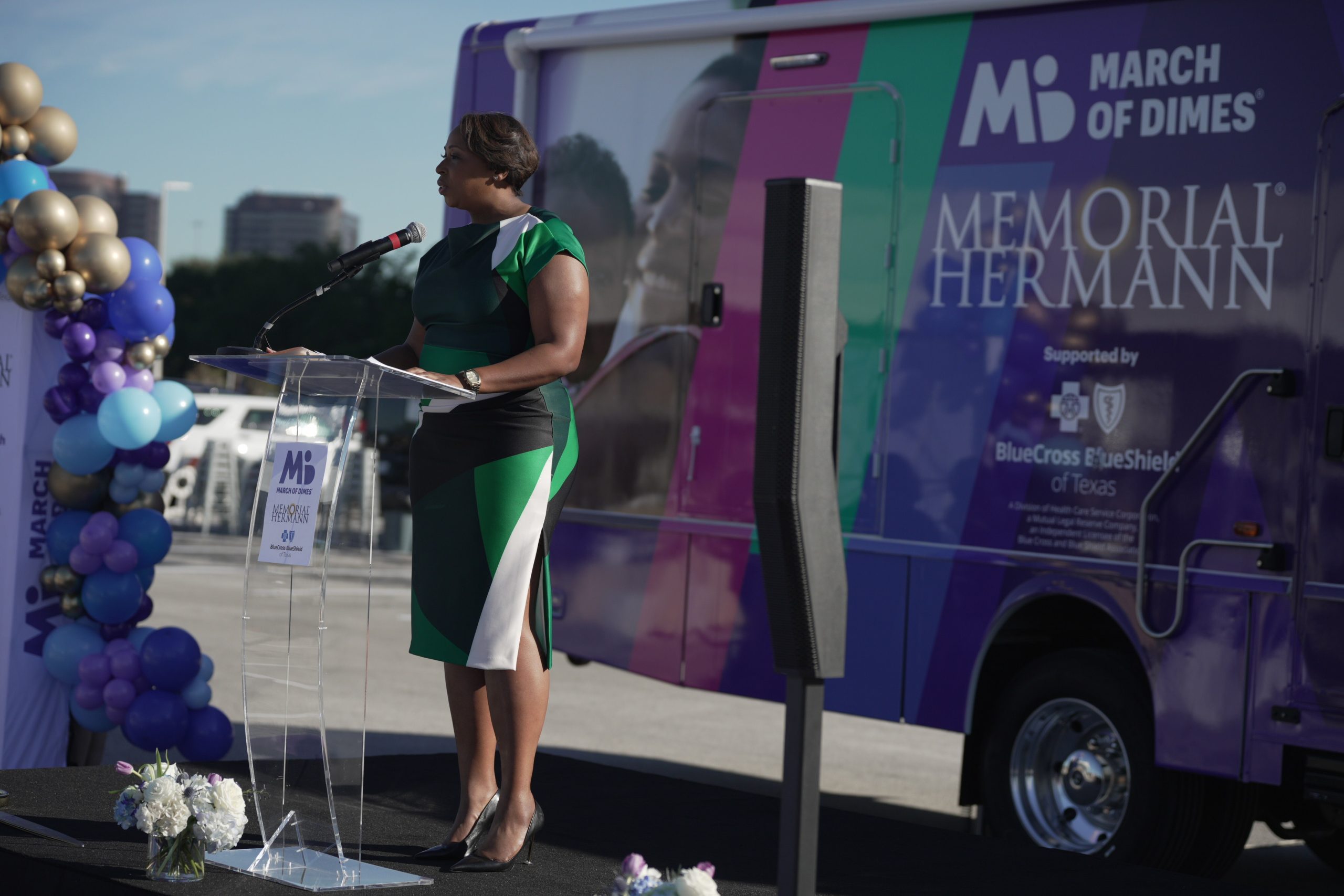
“We envision a world where every mom and baby is healthy, regardless of their geography, race, gender, or income, but unfortunately that is just not the case,” Torres said Monday at a ribbon-cutting ceremony at the parking lot of Memorial Hermann Southwest Hospital.
“One in eight babies are born too soon here in Harris County and that is just not acceptable.”
Harris County’s preterm birth rate in 2023 was 12 percent of live births, continuing its trend of outpacing Texas’ preterm birth rate since 2016, according to data collected by the March of Dimes. Of those babies born premature in Harris County, the rate of preterm birth is highest for Black infants at 16 percent. In the U.S., the preterm birth rate among babies born to Black birthing people is 1.4 times higher than the rate among all other babies, according to March of Dimes’ 2024 report card, which annually analyzes the state of preterm birth, infant mortality, and maternal health in the U.S.
March of Dimes graded Houston an “F” for preterm birth on its 2024 report card,
“One of the main driving factors of prematurity in our community is access to care, and this mobile health center will address just that,” Torres said.
RELATED: Harris County has had the highest Black maternal death rates in the U.S. for years. Here’s why.
The joint initiative between March of Dimes, Blue Cross and Blue Shield of Texas (BCBSTX) and the Memorial Hermann Health System aims to increase access to quality health care by offering pre-conception care to ensure a birthing parent is healthy before getting pregnant, pregnancy, postpartum and newborn interventions, as well as primary, wellness and preventive care.
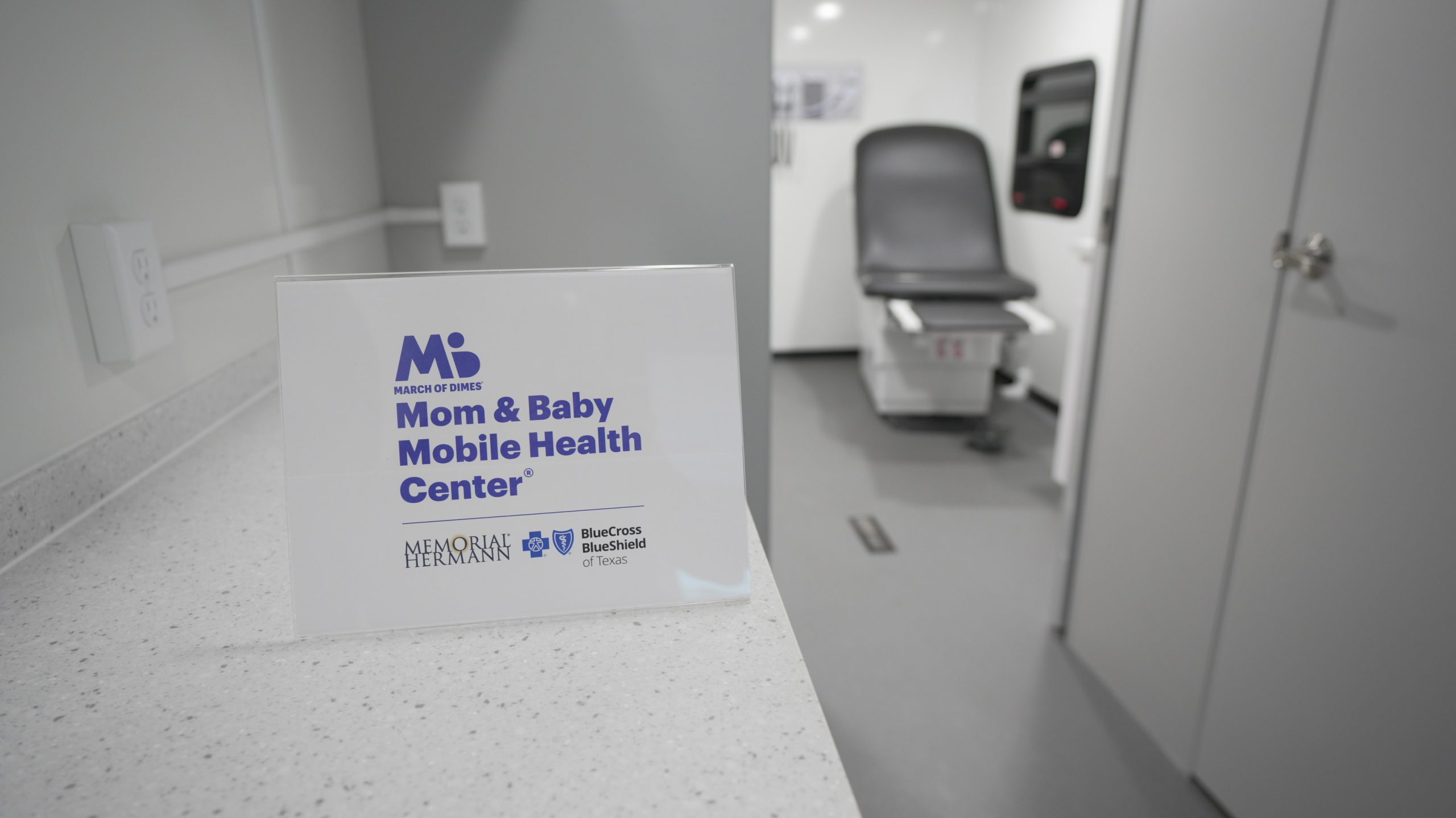
Blue Cross and Blue Shield of Texas invested a roughly $1.2 million grant for three years, and the Memorial Hermann Health System will provide clinical providers. The grant is part of BCBSTX’s statewide expanded Special Beginnings maternal and infant health initiative, which focuses improving health outcomes for Texas birthing parents and babies in the Dallas/Fort Worth, Houston, Rio Grande Valley and Austin regions, by identifying ways to reduce maternal morbidities, mortalities and health disparities.
“This is not a high-tech issue. It’s a high-touch issue. It’s an access issue,” said Jim Springfield, president of Blue Cross Blue Shield Texas at the ribbon cutting. “It’s (the van) elegant in its simplicity and I’m grateful that it’ll treat so many people in this city.”
Torres said the organization started speaking with Blue Cross Blue Shield Texas roughly two years ago to bring a mobile health center to Harris County because of the widespread need for services.
“We have one of the best medical centers in the country, in the world right here at our fingertips, but still there’s so many moms and babies that are not getting the care that they need,” Torres said.
A March of Dimes 2024 maternity care desert report found that 20.4 percent of birthing people received no or inadequate prenatal care, greater than the U.S. rate of 14.8 percent.
While Houston is renowned for having one of the largest health care centers in the country, several barriers still exist, including the distance required to travel to access care, a lack of transportation, a lack of trust in the health care system and the need to obtain child care, said Teal Holden, the senior vice president of ambulatory services, post-acute care and community health at Memorial Hermann Health System.
More than 2 million birthing people of childbearing age in the U.S. live in maternity care deserts, areas without access to birthing facilities or maternity care providers, according to March of Dimes’ 2024 maternity care deserts report.
In Texas, 46.5 percent of counties are defined as maternity care deserts compared to 32.6 percent in the U.S. Birthing people living in maternity care deserts traveled 4.5 times farther than women living in areas with full access to maternity care in Texas, traveling on average 8.2 miles and 12.9 minutes to their nearest birthing hospital, the report found. The report also found that roughly 4.6 percent of women in Texas had no birthing hospital within 30 minutes.
Although data for maternity care deserts was collected on the county level, Holden said they’re aware that they exist in the southwest community and in parts of Harris County. She’s excited to combat many of those barriers through the mobile maternal health care center by simply meeting patients where they are, and also providing wellness and preventative care for the entire family, she said.
“Being able to have this mobile health center and go out into our communities, partner with our community partners to bring this type of care to expectant mothers and new mothers within the greater Houston community really helps drive our vision of creating those healthier communities now and for generations to come,” she said.
But Holden said she understands that mistrust may still exist with a hospital provider, and said that they also want to make sure that they have a diverse health care team that is reflective of the communities they’re serving.
“We want to make sure that providers really look like them and are hearing the needs of the community.”

