

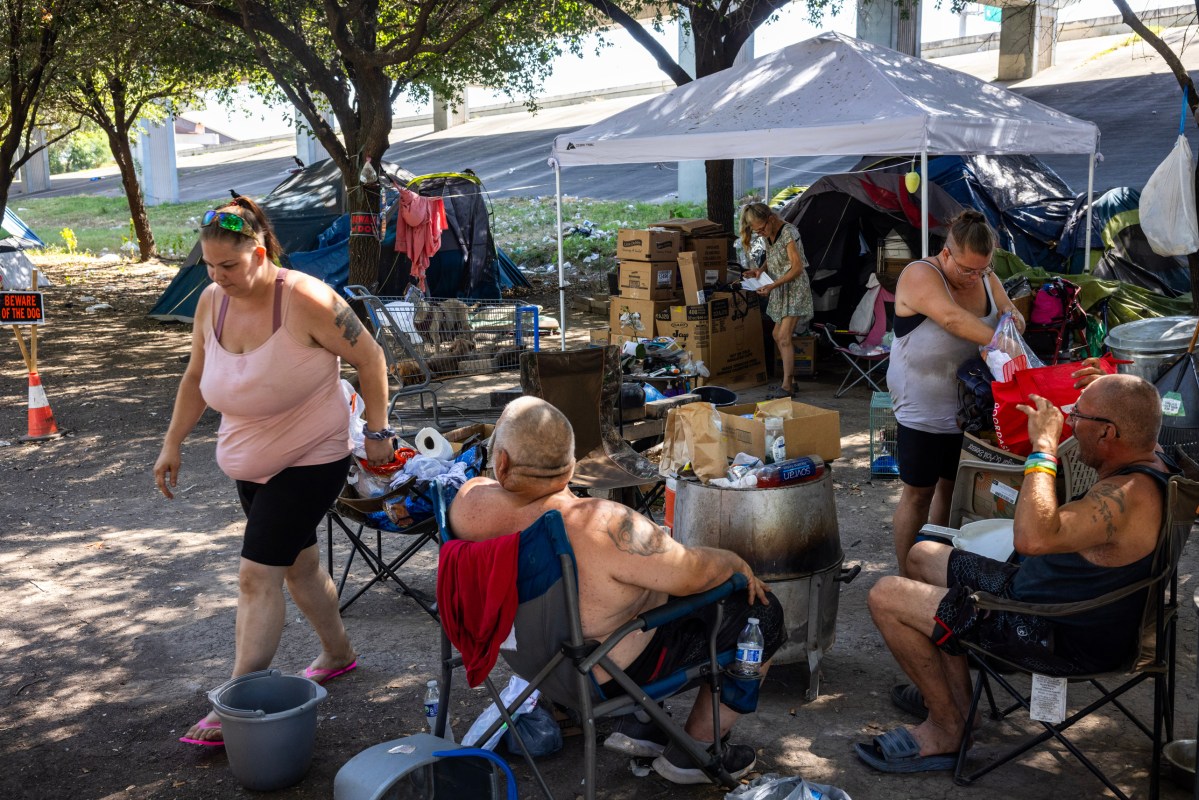
Mayor John Whitmire will announce plans for a city-sponsored homeless encampment next week, he said during a City Council meeting Wednesday.
He did not elaborate on the plan, other than it would be a collaboration with the city’s Office of Public Safety and Homeland Security and housing department.
“Our goal is to help the homeless by getting them off the streets,” Whitmire told reporters Wednesday afternoon. “Also we relieve the public of dealing with the homeless in public spaces.”
The encampment will not use public space but would utilize “safe residential facilities, maybe a tent,” he said. Specifics will be rolled out in a news conference next week.
Whitmire said after the City Council meeting that he worked with the Coalition for the Homeless on the plan.
Kelly Young, president and CEO of the coalition, said the organization provided data and housing-first solutions for a long-term strategic plan. She referred back to the city for specifics on the encampment.
The plan will focus on creating a consolidated service model that improves access to our homeless response system, connecting individuals to emergency shelter, housing, and supportive resources,” Young said in a statement.
Whitmire said he wanted to create a strategic plan to address homelessness in a humane way and do as much prevention as possible.
The mayor’s announcement comes at a time when states are varying their approaches to a growing unhoused population. Some states, like California, have been clearing encampments. Former Mayor Sylvestor Turner worked in his tenure to clear encampments throughout Houston.
Other states, including Florida, have outlawed “public camping” and instructed cities to construct movable encampments with access to mental health resources.
The design of temporary shelters – whether motel rooms, tents, or other options – does not matter as much as the services provided, Steve Berg, chief policy officer for the National Alliance to End Homelessness, told the Landing.
Houston has been a model in creating solutions for homelessness for decades and should continue the example it has set, he said. The shelter has to be clean and safe, but a primary goal has to be to connect individuals with permanent housing resources.
“It’s got to meet basic requirements, one, because there’s health and safety codes, but also because the main thing is, you want to make it an attractive place for people to come,” Berg said. Shelters should also allow people to bring their pets to help them feel welcome.
Whitmire mentioned the plan while responding to an East End resident who advocated for the city’s civility ordinance to be expanded to Magnolia Park, which would prohibit certain conduct on sidewalks, including lying, sitting or depositing personal possessions during most daylight hours.
The East End Management District submitted a petition to the city to expand the ordinance because of safety concerns in the neighborhood, members of the district told council during a public hearing Wednesday.
The district also is working to ensure deputies in the area have mental health training, a resident said.
“We’re not trying to criminalize homelessness,” Dan Joyce, vice president of East End Management District, said. “We are simply trying to make our toolkit stocked with the right tools to ensure residents and businesses feel safe in our community.”
For any plan to work, Berg said collaboration with advocates, landlords, homeowners and business owners will be necessary. He said the alliance has found there are real safety issues for the unhoused population when they live outside, not as many for the surrounding area.
Houston has been successful, in part, by avoiding the “us-versus-them” dynamic, he said.
“If you start allowing the narrative to build that the local homeowners and business people are the enemies of the homeless people and the homeless people are the enemies of local businesses, then you’re very unlikely to really make any progress because people have to work together,” he said.


