

“¿Qué tal amigos? ¡Bienvenidos a La Voz de Unidos!” shouted host and deputy Rafael Pantoja into the mic, greeting the listeners of the Harris County Sheriff’s Office’s weekly Spanish-language radio program.
Pantoja sat on the 10th floor of an office tower in Chinatown at a group of brightly-colored tables, windows facing a dreary winter day in Houston. A natural showman, he turned with ease from silly jokes to serious topics as he interviewed two fellow Sheriff’s Office deputies in Spanish about their work in the county.
The hour-long show, broadcast on the radio, YouTube and Facebook Live every Friday, was packed with information about the office’s human trafficking investigations, victim resources, and community events like a celebration they held for Three Kings Day the previous week.
An idea resurfaced again and again: that if anyone reports a crime to the sheriff’s department as a victim or witness, they won’t be asked their immigration status.
Nearly one-third of Harris County’s population is foreign-born, and even more speak Spanish as their first language, according to U.S. Census data.
The Unidos team at the Sheriff’s office, composed of two sheriff’s office deputies —Pantoja was once a member but now only hosts the radio show— are meant to be a link to the county’s Spanish-speaking and immigrant community. In an ever-shifting landscape of Texas law and political rhetoric, they look to give Harris County’s Spanish-speaking residents accurate information about resources, local laws they may not be aware of, and how they can safely report crime, regardless of citizenship.
That’s important, they say, because if everyone, including the hundreds of thousands of the county’s residents estimated to be undocumented, feels safe reporting crimes, all Harris County residents are safer.
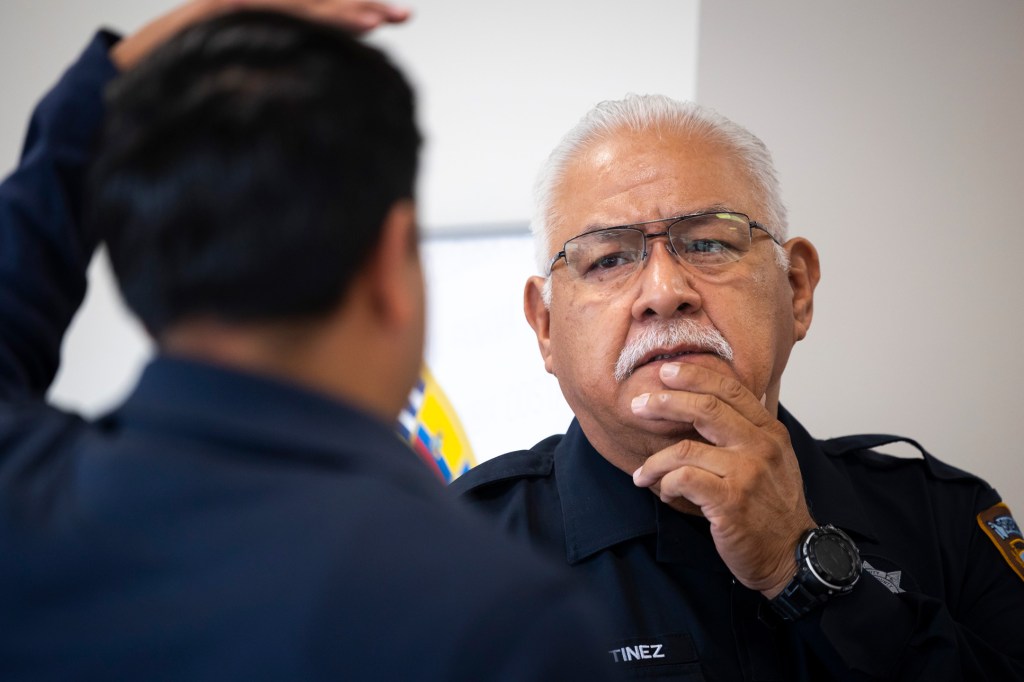
“It benefits everybody,” said one of the deputies, Heliodoro Martinez.
The Unidos Program
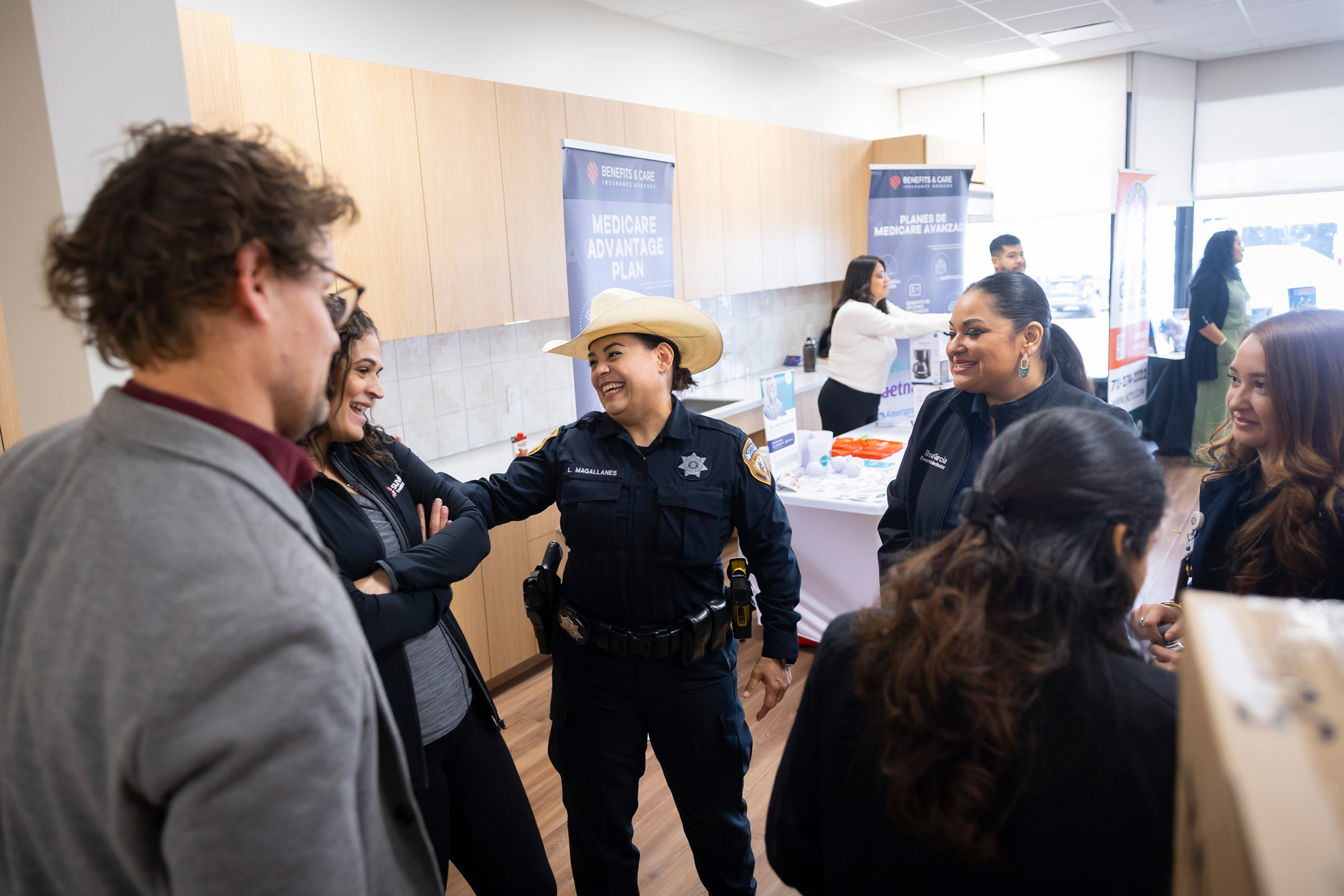
The Unidos program, an idea that began in Garland, Texas and was adopted by the Harris County Sheriff’s Office in 2021, is currently led by two deputies who are from immigrant families themselves – Martinez and Laura Magallanes. Martinez is the son of immigrants and the ex-constable from Precinct 6, and Magallanes was born in Monterrey, Mexico, migrating to the United States when she was 12 years old.
“Being the child of a migrant coming in, I saw the different challenges my father faced through the years…I feel that this helps us close that gap that they so desperately need,” said Martinez, whose family comes from San Luis Potosí, México.
Every week, Martinez and Magallanes fan across Harris County, joining radio and television shows, presenting information sessions at Latin American consulates, holding events at nonprofits, churches and community centers, and more to build trust within the community with both their stories and with facts about local laws.
In interviews with the Houston Landing, the Unidos team explained that they like to help share proper information about how to deal with the police, like making sure new arrivals know to pull over when a police car’s lights are on, or perhaps mitigate the fear some might feel of stopping because they think they’ll be required to share their immigration status, putting them at risk of arrest.
“How can you prevent this again? Information, communication,” said Magallanes.

The efforts pay off, they say, every time a community member feels comfortable coming forward to denounce criminals who have hurt them, ask for help, or send in a tip. Magallanes remembered one incident recently, where a woman reported her children’s rape, and she was able to help her find support and a lawyer at the Mexican consulate.
“More than anything I felt her breathe and say, ‘Thank you deputy, this is what I was looking for,’ and that was so very important for me.” “It really impacted me, to be able to help even one person,” Magallanes said in Spanish.
On Tuesday, Martinez, with his white hair, mustache and calm demeanor, quietly spoke with an elderly man from El Salvador who approached him at an event in Cloverleaf, asking for help with a car sale where he felt he was swindled.
Police departments face both mistrust and confusion about local laws, as well as language barriers and fear that policing agencies are conspiring with immigration authorities, when interacting with immigrant populations, according to a June report by the Police Executive Research Forum. And for Texan immigrants, the report cites “anti-immigrant rhetoric and legislation” like SB4 as an additional barrier.
“If local police are perceived as de facto immigration agents, some crime victims and witnesses will become reluctant to contact the police, which makes the job of investigating crimes more difficult,” wrote Chuck Wexler, PERF’s executive director in the report.
“Building trust with immigrant communities can be a difficult challenge for police agencies, but it is essential to advancing law enforcement’s core mission of providing public safety for everyone,” wrote Wexler.
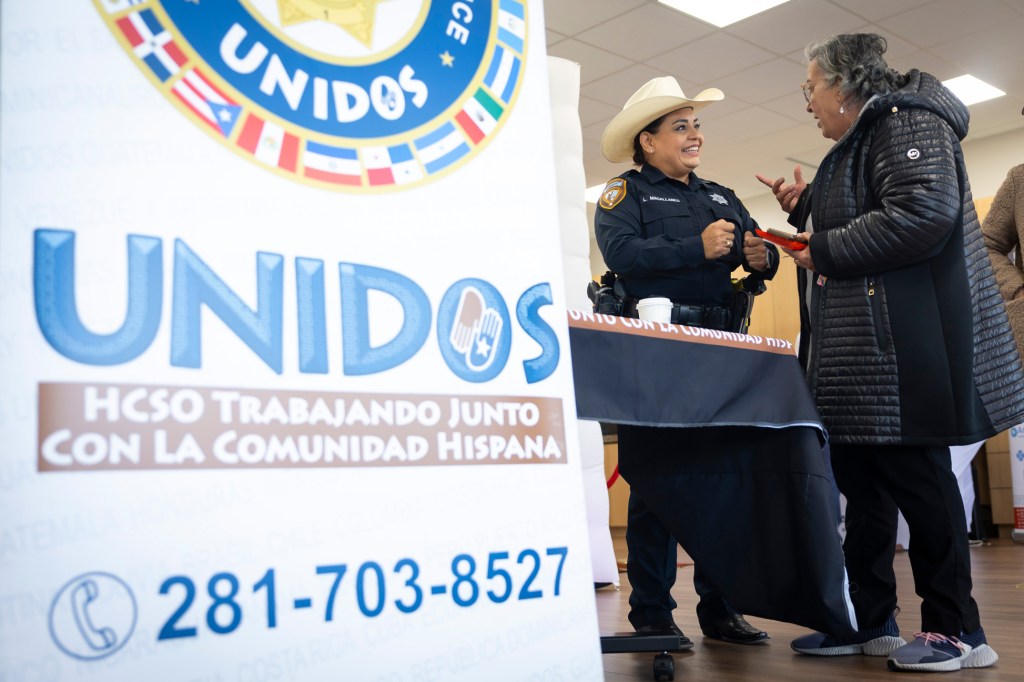
Unidos combats the mistrust cited by Wexler daily by “breaking down barriers,” Magallanes said.
“In Unidos, there are two words we don’t use: residents and citizens,” said Magallanes in Spanish at a recent event. “That’s not in our vocabulary. Community, our people, our countrymen [are].”
A complicated history
Police authorities in Harris County have, through the years, spoken out about how immigration rhetoric and local laws could impact police work.
That same year, Sheriff Ed Gonzalez wrote a letter to the Senate Committee on State Affairs opposing SB4’s provision to stop cities from telling police not to ask about immigration status.
“I am also concerned about the risk of an unintended consequence: creating a climate of fear and suspicion that could damage our efforts to reinforce trust between law enforcement and the communities we serve,” wrote Gonzalez, according to the Texas Tribune.

So far, local departments have been quiet about how they plan to work, or not work, with President Donald Trump’s promise of mass deportations.
Houston Police Department, the county’s largest policing agency, declined an interview request by the Houston Landing about their current outreach efforts in migrant communities.
“We encourage everyone who has been a victim of a crime or witnesses a crime to report it,” said HPD in a statement when asked by the Landing in December how they plan to reassure immigrant Houstonians who fear interacting with the justice system because of the rhetoric. “Our focus is on the criminals who are harming Houstonians and ensuring everyone in our city remains safe.”
Know your rights
Alain Cisneros, who represents FIEL, an immigrant-rights organization in Houston, said that despite the current facts on the ground, panic has spread among undocumented Houstonians, causing many to fear interacting with officials.
That fear harms everyone, he said, adding he wishes there were even more large-scale efforts by police agencies to share clear information about the current state of the law, and any changes in how immigrants are treated in the justice system.
“If someone, independent of whether they have papers or not, is the victim of a crime, and there’s an undocumented person that is a witness but staying quiet because they’re not sure if they’re protected, then anyone will suffer – whether they have papers or not,” he told the Landing on Friday in Spanish.
“We always suggest that if someone is doing good, nothing bad can happen to them,” he said. “As long as the conditions that we’re currently under don’t change…that people keep participating [in reporting crime].”
The dozens of policing agencies around Harris County each have their own policies, and laws may change, stressed multiple local advocates. It is important to know about your rights in situations like when you are pulled over by police, listen to news from credible sources, and to take action to prepare for potential changes during Trump’s second term.
What Cisneros, and other local activists, suggest is that immigrants also remember that the constitution protects them, and that they should reach out to local organizations to help guide them through the legal process.
Dustin Rynders, of the Texas Civil Rights Project, suggests remembering that “if a law enforcement officer asks a question related to your immigration status, you can decline to answer that question. Even if a hospital or an emergency room ask a question related to your immigration status, you don’t have to answer that question.”
Martinez and Magallanos also press home the fact that anyone can remain anonymous when reporting a crime and ask for a Spanish-speaking officer or 911 operator when dealing with the sheriff’s office.
On Tuesday, Martinez and Magallanes leaned against a table as they watched local seniors enjoy lunch and a show at the opening of a clinic for elderly Hispanic residents.
“In our pledge of allegiance it says ‘freedom and justice for all,’ not only for citizens,” Martinez said, as a mariachi singer crooned in the background.
Correction: The original caption in the main image of the story wrongly identified Harris County Sheriff’s Office Deputy Laura Magallanes. We regret the error.