

A Houston African diaspora archaeologist’s unique vision to unearth Black history around the world was recently selected by the National Geographic Society for a grant program.
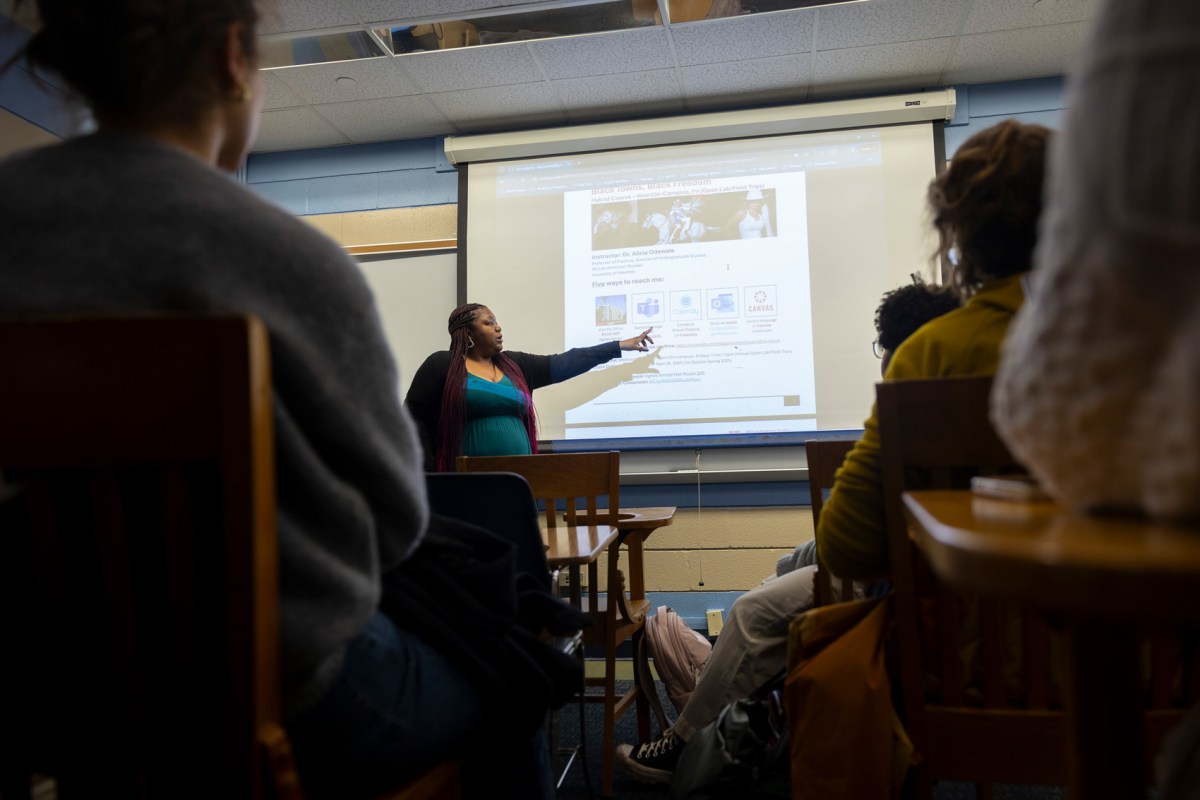
The two-year project, known as “Silent Witnesses: The Black Heritage Tree Project,” is spearheaded by Houston-based Alicia Odewale, the University of Houston professor behind the popular “Cowboy Carter” history class, and aims to chronicle the stories of Black heritage and resilience by mapping trees. These trees, known as heritage trees, are also commonly referred to as witness trees, spirit trees, righteous trees, or survivor trees, and symbolize the history they have silently witnessed, Odewale said.
Odewale’s project is one of 10 selected to receive $1.5 million total from the National Geographic Society as part of its Meridian program, which encourages interdisciplinary collaboration and innovation among explorers from many fields of study to address some of the world’s most pressing problems.
The project will document generations of Black freedom stories in historic Black towns, including Galveston, Texas; Tulsa, Oklahoma and St. Croix in the U.S. Virgin Islands, in addition to other areas around Houston. Joining Odewale are nearly 20 individuals from six different academic disciplines from geography to architecture and design, descendant community leaders from Black towns, historians, forestry experts and college educators.
“We’re trying to revitalize those stories through the lens of these trees that have been here for generations, that outlive us all, that can tell us a whole bunch of stories if we actually take the time to listen,” Odewale said.
The long-term goal is to expand beyond the four initial sites and build the first living global Black heritage tree map. The Galveston region team is led by Galveston-native historian and president of the Juneteenth Legacy Project, Sam Collins, and the Houston region team is led by former educator and long-respected historian, Naomi Carrier.
For this program, the National Geographic Explorers granted funds to explorers who have previously received funding and now dedicate their knowledge and creativity to a specific problem to make long-lasting change. This grant, for $150,000, marks the fourth Odewale has received from the National Geographic, and will be used for equipment, travel expenses, and compensation. Thirty-six explorers from 11 countries are represented in this year’s chosen projects.
This initiative is crucial, Odewale said, as these stories could be lost due to lack of archives, living residents, or if the locations are no longer on maps. They’re also losing trees overnight, she said.

“Projects like this give us a reason to preserve whatever we have left. Because once it’s gone, it’s gone,” Odewale said. “Our goal is to find the oldest [surviving] tree in each of these regions, and put a marker there so that no matter what happens to this tree it’ll always be memorialized (and) that story will be preserved.”
The first step is to host a number of community listening sessions beginning this summer in each of the inaugural four sites to begin gathering information and oral histories.
Alex Moen, the chief explorer engagement officer at the National Geographic Society, said Odewale’s project was selected among 80 competitive applications because of its interdisciplinary collaboration, uniqueness and overarching goal of making these stories accessible.
“As far as the co-design and the ultimate deliverable at the end, it was just a very well thought-out and deliberate project,” he said.
Also, as someone who was unfamiliar with the concept of heritage trees, Moen said he was also intrigued by the potential disappearance of the knowledge and information, the opportunity for community members to share their knowledge through listening sessions, and the end result of a database of collected stories.
“Another key thing that came through was the impact on the community and the likely power at the end in terms of what it could deliver. It was essentially very solution-oriented,” he said. “The combination of practical methodology and the output just made it a powerful package.”
This type of collaboration and inclusivity is what sparks innovation, Moen said.
Continuing to invest in diversity
Carrier and Odewale, expressed their gratitude for the National Geographic Society’s investment in preserving Black history, especially considering the current political climate, where the Trump administration is actively dismantling diversity, equity, and inclusion programs and initiatives.
“I couldn’t do a project like this outside of National Geographic in this (political) climate,” Odewale said. “Right now it’s really difficult as an archaeologist, but also as a historian, as a historic preservation specialist, if you’re doing any work connected to a site that’s connected to a marginalized community and you need funding to support that work, it’s incredibly difficult to get funding for that kind of thing right now.”
In this political environment, Moen said the National Geographic committed to their values and guiding principles which are based on representation, openness, collaboration, equity and impact.
Odewale said that without potential funding from the federal government, they must find innovative ways to share these stories. This is why she recruited Carrier, a respected community figure with a wealth of knowledge and extensive research skills, to lead the Houston team.
Carrier’s research as the founder and CEO of the Texas Center for African American Living History was instrumental in the creation of H.R. 434. This legislation, introduced by the late U.S. Rep. Sheila Jackson Lee, intended for the study of the Emancipation National Historic Trail. Although disappointed by the bill’s stalled progress, Carrier said she was elated when Odewale presented a new opportunity to educate the public about untold Black history stories.
She is eager to share the stories and history of those who migrated from the Brazos Valley and settled in Houston.
“People do not know the Texas story. It’s in a way a well-kept secret and there are reasons for that,” she said. “Here is another opportunity to tell the real story of Africans in Texas and how we contributed to the economic development of this state.”
When she learned of the methodology of telling these stories through trees, the first thing she thought of was how trees were used for lynchings of Africans and knew that meant she would have to tell difficult stories that come with a great deal of trauma.
The concept of narrating stories through trees initially evoked the disturbing image of lynchings, forcing her to confront the inevitable inclusion of traumatic and challenging narratives.
Crying as she recalled the trauma, she said this is her “God-given assignment.”
“If we’re going to be an advocate for the trees that tell the trees of Houston, we still have to go back to the plantations,” Carrier said. “This history, it lives with me. It lives inside of me. It’s like you have to go through the shadow of death because this is my story, this is my history, I own it. And (to) own it means that you have to love it.”

