

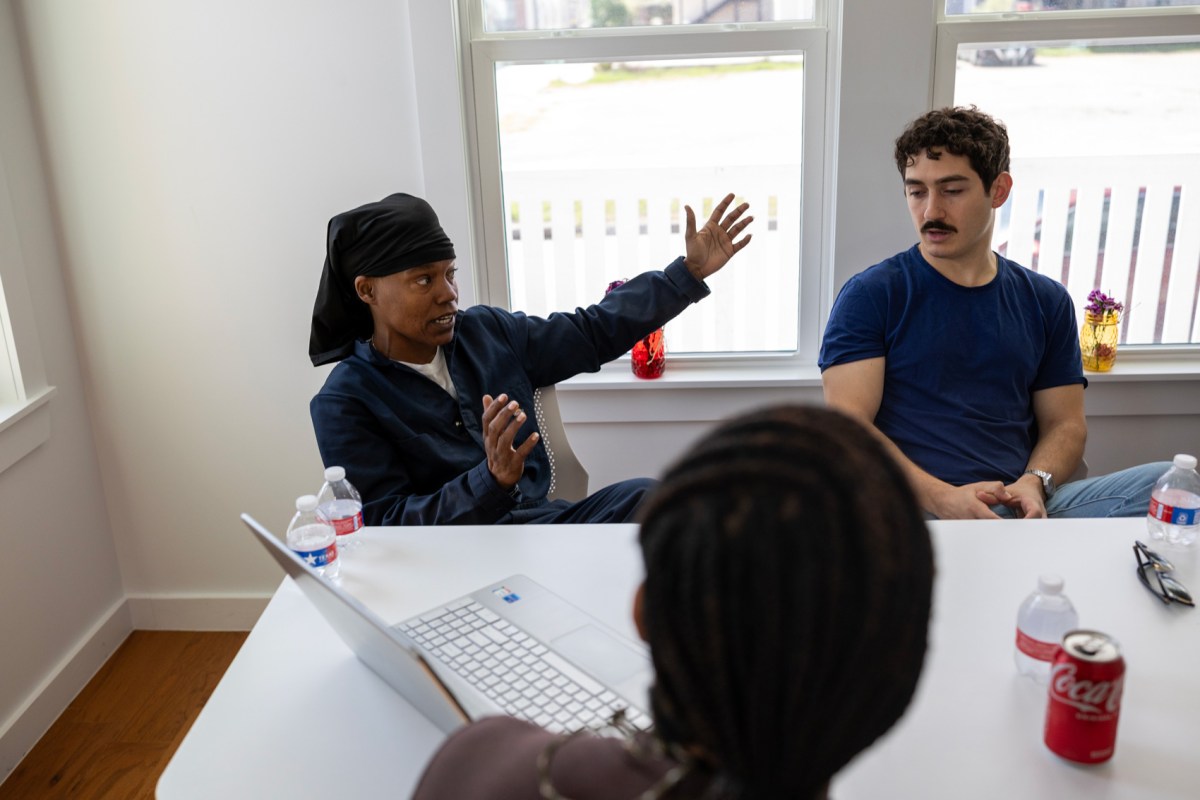
Sitting next to each other at a table in the Freedmen’s Town Conservancy Visitor Center, Charonda Johnson and Joseph Panzarella make an unlikely duo.
Johnson, 47, is a lifelong resident of Fourth Ward, where she is known as the “mayor of Freedmen’s Town.” She is involved with a laundry list of organizations throughout the area, and her family has lived in the neighborhood for five generations. Her childhood home next to the historic Gregory School has been preserved in its original condition by the Freedmen’s Town Conservancy.
Panzarella, 30, moved to the Fourth Ward in 2023. He was born and raised in Kingwood, but spent time in Europe and Boston over the last decade before moving to the area. Initially a renter in the neighborhood, he bought a townhome near the eastern edge of Fourth Ward last August.
Shortly after moving in, Panzarella was looking for ways to get involved in the community and discovered the Conservancy. In fact, he found all sorts of individuals like Johnson doing great work preserving the legacy of Freedmen’s Town and trying to revive the community.
Still, he thought the area lacked an overarching way to bring people together and disseminate information to residents, new and old alike.
“I just think the super neighborhood is kind of a perfect organization for that,” Panzarella said.
RELATED: Nearly half of Houston’s super neighborhoods are dormant. How can you activate yours?
Unfortunately for Panzarella, the Fourth Ward Super Neighborhood was one of nearly half of Houston’s 88 super neighborhoods that currently is listed as inactive. In fact, Super Neighborhood 60 had never been actually launched, according to Sandra Cortez with the city’s Department of Neighborhoods.
So, Panzarella took it upon himself to begin the activation process. He reached out to the Freedmen’s Town Conservancy and eventually found himself linking up with Johnson.
Johnson was familiar with the super neighborhood idea, but said she never felt it was worth the effort.
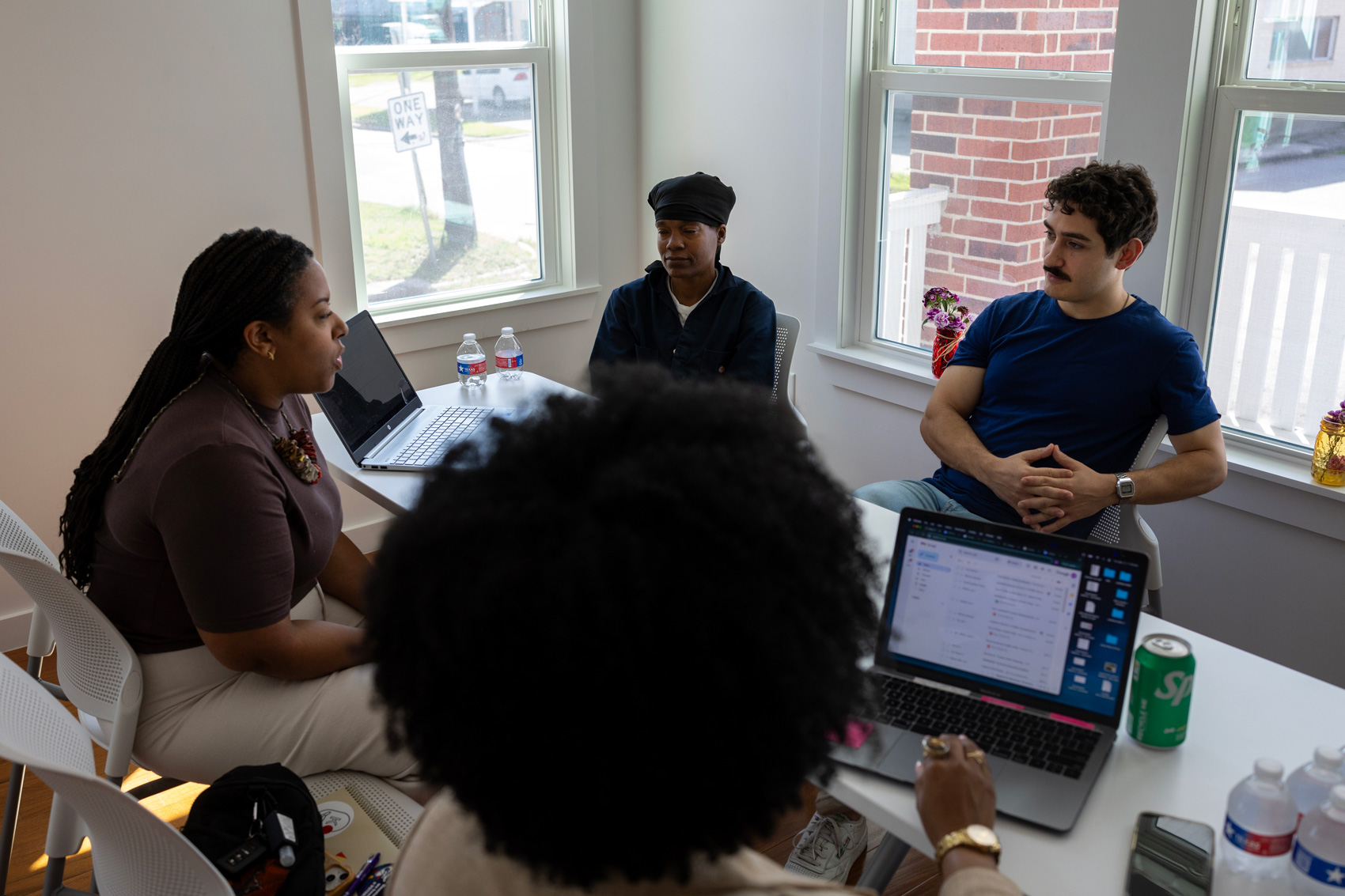
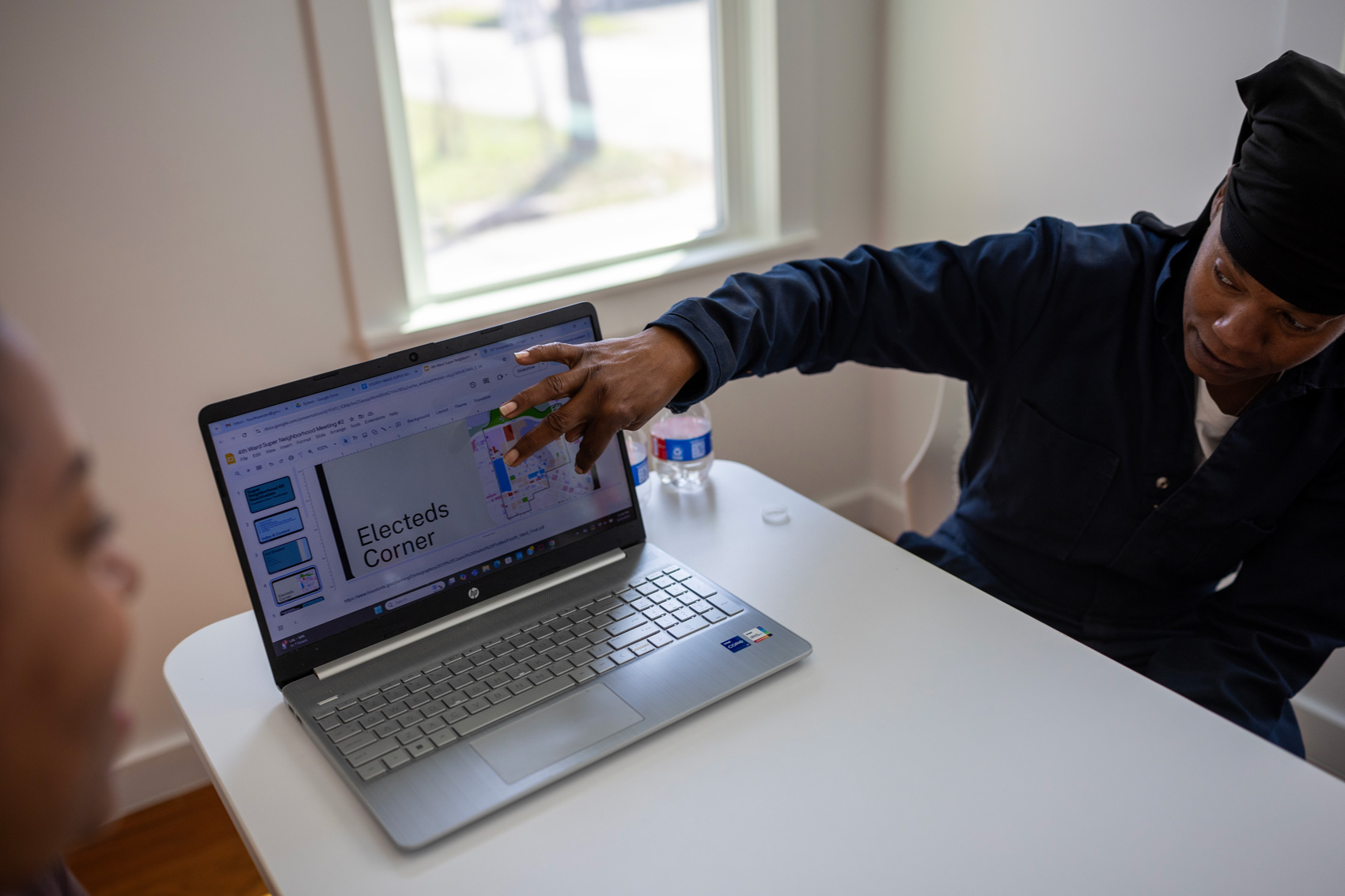

“For me, it was like, ‘No, we’re not going to create another entity to let the city tell us that they can’t do anything, they don’t have the funding for it,’” she said. “It’s us jumping through hoops and getting no reward. And that’s why people don’t want to do anything. It’s not that people don’t care about what’s going on. No one wants to be played with.”
That lack of trust with the city of Houston is baked into the community in Freedmen’s Town and Fourth Ward at large. One of Houston’s oldest Black neighborhoods, Freedmen’s Town thrived through the early 1900s before it began to falter toward the middle of the century, driven by policies outside the community’s control. At first it was desegregation and infrastructure projects cutting through the neighborhood, then it was demolition of the neighborhood’s historic structures.
“The city hadn’t always been forthcoming with things,” said Rev. Elmo Johnson (no relation to Charonda Johnson) of the Rose of Sharon Baptist Church in Fourth Ward. He was one of the longtime residents Panzarella reached out to about mustering support for the super neighborhood.
“People say, ‘Well, the city tell you something, they’re not going to do it,’” the pastor said of the lack of trust among area residents.
Panzarella acknowledged the area has been through a lot, from its start as one of Houston’s original four wards to the settlement of Freedmen’s Town through more recent gentrification.
“You now have two very distinct populations, the legacy residents and new residents, and that doesn’t usually lead to strong communal ties,” he said.
RELATED: As the East End changes, what do newcomers owe the historic neighborhood?
Panzarella knew that creating a super neighborhood would involve overcoming some of that mistrust. One of the requirements for activating or re-activating a super neighborhood is community support.
While Panzarella saw opportunity, he also was hesitant to tread on any toes. That’s when he was directed to speak with Charonda Johnson, among others.
“It was kind of time for somebody from the legacy community to reach out and bridge a gap with the new community because we are all in the community together,” Charonda Johnson said. “It was just my experience that (there) was not enough communication between all of the groups, all of the churches, all of the residents.”
She bought into Panzarella’s pitch for the super neighborhood, which centered on bridging gaps in the community between organizations and residents.
“We’re not trying to be a better pastor than Elmo Johnson or be a better nonprofit leader like Charonda (Johnson),” Panzarella said. “We’re just trying to get all those people into one room once a month, once a quarter to just talk about the Fourth Ward.”
The process so far has taken around six months.
That has not been the case for some others trying to launch a Houston super neighborhood.
Super Neighborhood 45, otherwise known as Northside/Northline, residents have been working to activate the organization since 2018, according to Pastor Deb Bonario-Martin.
Cortez said super neighborhoods sometimes struggle to make sure a diverse segment of the community shows up to meetings, especially in the early days. With most super neighborhoods, engagement comes through groups, including civic clubs and homeowner associations.
In Northside/Northline, the push for inclusion led to major delays, as different organizations struggled to work together to pass bylaws.
“They just didn’t mesh,” Cortez said. “They weren’t able to agree on items within the actual bylaws and eventually they parted ways.”
Groups would break apart and reassemble, starting from scratch each time, Cortez said. Participants finally reached a breakthrough earlier this year. The neighborhood has had its bylaws approved and is on course for hosting elections for its board.
EARLIER: Deja vu: TxDOT plan to expand Interstate 10 could divide a Houston neighborhood again
In Fourth Ward, there are no civic clubs, which made groups like the Freedmen’s Town Conservancy even more important when it came to reaching out to legacy residents.
“(Panzarella) has been very open and very, very gung ho about trying to get everyone to come,” Cortez said.
His efforts have made an impression on Fourth Ward fixtures, like Rev. Johnson. The 72-year-old was delighted to see a younger resident working toward the betterment of the community.
“He’s a go-getter, I like that,” Rev. Johnson said. “It takes somebody with tenacity and somebody with fortitude to get things done.”
Super neighborhoods can be limited in scope, but that has not stopped Charonda Johnson and Panzarella from aiming big. For example, Freedmen’s Town is a food desert as no grocery store exists inside the borders of Fourth Ward. The nearest grocery store is a Randall’s a mile away in Midtown. Though technically outside the super neighborhood’s purview, the topic has been discussed during planning meetings.


“Whatever is going to be done should be done at the benefit of the whole community,” Panzarella said. “When we talk about beautification, infrastructure, food deserts, if we’re able to accomplish even one of those things, that’s going to help out everyone and we can’t do it unless we’re doing it together.”
The long-term goal, he said, is to rebuild Freedmen’s Town into a complete community where schools, grocery stores and parks make a return to the neighborhood.
That goal is shared by Bonario-Martin in Super Neighborhood 45, which she describes as bereft of amenities.
“You can’t just say, here’s the one thing we need. We need everything,” she said, describing a lack of parks, medical options, food sources, and mobility.
Rev. Johnson is confident that when the Fourth Ward super neighborhood is up and running, it can hold the city accountable for promises made to the community.
“I know so, because other super neighborhoods hold the city more accountable for lighting, and park and green space and things that can benefit our senior citizens and our children,” he said.
As Bonario-Martin put it, “It’s not a way, it is the only way. When people don’t catch on to that, you see, they have no idea why they don’t have speed bumps and why they can’t get a police officer.”

