Each week, “Pop Quiz” features an interview with a member of Greater Houston’s education community. To suggest someone we should interview with an interesting story to tell, email us at education@houstonlanding.org.
Meet the interviewees
Advanced classes that provide early college credit can be a game changer for high schoolers looking to attend higher education. The courses can signal to admissions officers that a student is ready for college, and they reduce tuition costs by cutting down on the number of credits required for graduation.
Helping as many Houston ISD students enroll — and succeed — in such courses has been a top priority for Christinia Wehde-Roddiger, the district’s executive director of postsecondary programming, and Andree Osagie, deputy chief of college, career and military readiness.
Under state-appointed Superintendent Mike Miles’ leadership, the duo has worked to identify and enroll qualified students in college credit-bearing classes, which can count toward students’ course requirements in college. In HISD, those courses include Advanced Placement (AP) and International Baccalaureate (IB) classes, as well as offerings from district partnerships with the University of Texas (called “OnRamps” classes) and with Houston Community College (called dual credit classes).
This school year, 47 percent of all HISD high school students are enrolled in at least one course that could deliver college credit, early data provided by the district to the Houston Landing show.
While HISD doesn’t know how many students will finish the classes by the end of the school year, Wehde-Roddiger and Osagie said they expect the final share will exceed the 37 percent who completed such courses last year. By comparison, HISD saw a 2 percentage point jump in advanced course completion between 2022-23 and 2023-24.
The Landing spoke with Wehde-Roddiger and Osagie to hear how HISD has been able to move the needle for high schoolers and how students can take advantage of the opportunities.
This interview has been lightly edited for clarity and length.
Where is that surge in college credit-bearing classes coming from?
Osagie: One of the things that we implemented this year was to just take a more targeted approach, using data to identify students that are ready for advanced opportunities and providing those data points to our campus administrators as they meet with students to pick out courses. They notify students and their parents that, based on their student’s performance, that they are showing that they are ready to take advanced coursework, which includes the dual enrollment courses, AP courses, dual credit courses. So just having that data-driven approach to identifying students and literally encouraging students to take these advanced courses, we’ve seen such a huge response and a drastic increase based on that.
Houston ISD Deputy Chief of College, Career and Military Readiness Andree Osagie. (Photo courtesy of HISD)
I also think that the course offerings that we are getting right now from OnRamps, just in terms of all of the courses that are available, that has added an additional option for our students. So now you have students that, if they choose, they could take AP, if they choose, they could take dual credit, and if they choose, they could take OnRamps. So there are multiple avenues that you could use in gaining college credit. … And we have students that take advantage of multiple of these routes.
I also think, overall, just a shift in the culture of HISD in terms of how we are promoting the value for making sure that our students are pursuing opportunities to earn college credit. I think that is really just shifting the culture. Everything from leadership pushing down to the campuses that we really do want our students to be exposed to advanced-level coursework in high school, so that they could be prepared for higher education. So that shift, I think we would say has also really helped the enrollment increase.
Looking at last year’s data, the most notable increase was in the number of students taking the UT courses. But this year, with that big bump in the overall number of students enrolled in college credit-bearing courses, can you break that down for me? Is that AP, is it IB?
Which category is seeing the biggest increase and can we be more specific about which types of high schoolers — is it freshmen, is it seniors?
Wehde-Roddiger: Really, we’re seeing increases across the board in all four categories. Part of that goes back to what Andree was saying, really using that data to identify students. What was shocking when I came into this role was that, when we started looking at the data of the students who were ready to take advanced courses, and we were just looking at 11th graders, out of all of the students who were qualified … it was only 20 or 30 percent of those students who were actually enrolled. And so we knew there was an issue.
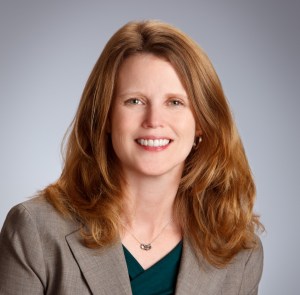
Houston ISD Executive Director of Postsecondary Programming Christinia Wehde-Roddiger. (Photo courtesy of HISD)
We started digging a little bit more. What’s ironic is, we talk about HISD and people like to say bad things about HISD. Do you know our kids, we have close to 60 percent of all of our student body in high school who are ready to take at least one advanced academic course? So we started targeting those students specifically to identify and talk to parents and have conversations to say your students are ready to take these courses. A lot of our parents had no clue. A lot of our students had no clue, because all adults have biases. … It’s not just in HISD, but all across the country, you’ll see this in high schools about who should go into advanced courses and who shouldn’t. And so we’re removing those biases.
We also know it’s important if a kid wants to earn college credit in high school, that usually happens in grades 11 and 12, but we also need to make sure that they have the strong foundation with that pre-AP curriculum or that advanced curriculum in grades nine or 10. So you’re going to start to see trends even going higher, we think so, because we’re starting really with grades nine and 10.
Another thing that we’ve done this year with our (New Education System) campuses is that all of our students who are in grade 10 who are in Pre-AP English II are also enrolled in AP Seminar, which is a great first AP class to get them started, to get their feet wet, so to say, to be able to develop those skills that are critical to be successful in future AP classes.
We are seeing a lot of success with OnRamps with our science classes, especially with OnRamps chemistry, OnRamps physics and (Houston Community College), they have a plethora of classes. So we offer everything from more academic classes to advanced CTE courses that are dual credit. … And then, like I said, we had a huge uptick last year and then into this year with students who are in the AP seminar class, like I mentioned before, and then also AP (Pre-Calculus), which was a newer course. And so another reason we see that uptick is because … we’ve actually no longer offered just regular (pre-calculus). If a student is ready to take (pre-calculus), we want them to take the course that can get them more prepared for earning college credit. So a lot of our campuses are doing OnRamps or AP (Pre-Calculus).
You mentioned looking at data to inform which students are recommended for these courses. Can you say a little bit more about which data points you all are looking at?
Osagie: We look at all of the different data points that are available. We look at everything from their (State of Texas Assessments of Academic Readiness, also known as STAAR) performance data. We look at their PSAT data. We look at their (Northwest Evaluation Association Measures of Academic Progress), which is a national standardized exam that determines growth. So all of the different assessment data that we have available, we correlate them together and then use it to define a benchmark that will qualify students to be ready.
I think the worry around all of this from some folks might be that you’ll push students into a class that maybe they’re not ready for, and maybe they wouldn’t pass the test later on that could have helped them get college credit. Looking at last year’s data, even when the (enrollment) numbers did go up, it looks like pass rates actually also did go up slightly in AP, IB and OnRamps, and they were somewhat flat for dual credit.
But with so many students in these classes this year, does HISD have any concerns about passage rates potentially being lower? And what support is the district providing to make sure students are prepared?
Osagie: One of the things that I’m very proud of is that, traditionally, when you see an increase in enrollment, when school districts begin to focus on getting students enrolled in advanced coursework … for the first couple of years, you will see a decline in student performance. Because students need time to get acculturated into working through that high level, high rate of coursework. So in most cases, you’ll see a decline the first couple of years in student performance.
What is encouraging about HISD data is that you’ve seen a dramatic increase in student enrollment, but simultaneously, we’ve also seen an increase in our student performance data in this coursework. And that speaks to what I talked about in terms of making sure that we are very targeted and strategic in identifying the students that we know are prepared for this level of academic rigor in taking this coursework. So we’re just not identifying any student, but we’re making sure that when the data indicates that our students are ready, we don’t leave it up to chance.
I think the other part of it is the support that we do provide, and I’ll probably let Chris speak a little bit into that.
Wehde-Roddiger: First, we make sure that the teachers have the support that they need. So number one, if they are an OnRamps teacher or an AP teacher, IB teacher, there’s different professional development that the teacher needs to attend. OnRamps requires teachers to apply and be annually certified to be able to teach that course. Then my team also helps support the principals and the teachers all throughout the year. So when we have professional development days, maybe if they have an OnRamps physics course, that’s the only OnRamps physics teacher at the campus. But now they get a chance to be able to collaborate with other teachers, to be able to plan and problem solve and share lessons, everything like that to create their own professional learning community.
A lot of our teachers also serve as what we call lead teachers. … Those lead teachers are awesome in that we schedule … what we call Saturday Academy. So we bus students from all over the city to one location on various Saturdays throughout the year, and this is for support for our AP students, our IB students, and for our OnRamp students. And so those lead teachers not only teach their students, but become kind of this master teacher for every student within the district, providing resources and giving them those extra high-leverage tutorials right before the test.
Houston Landing's published content is free. Please review our republication guidelines, and give us attribution when you republish our content. Houston Landing photos and graphics are able to be republished within the context of the stories in which they originally appeared.
For photo licensing and republication questions, email photo@houstonlanding.org. Note that individual Houston Landing photographs and graphic illustrations are subject to copyright and cannot be republished without specific written approval from the Houston Landing.
Q&A: Nearly half of HISD high schoolers could earn college credit this year. Here’s how.
by Asher Lehrer-Small, Houston Landing March 21, 2025
Asher Lehrer-Small is an education reporter covering Houston ISD for the Houston Landing. His work focuses on helping families understand how HISD policies and practices impact their children, holding...
More by Asher Lehrer-Small