

Each week, “Pop Quiz” features an interview with a member of Greater Houston’s education community. To suggest someone we should interview with an interesting story to tell, email us at education@houstonlanding.org.
Meet the interviewee
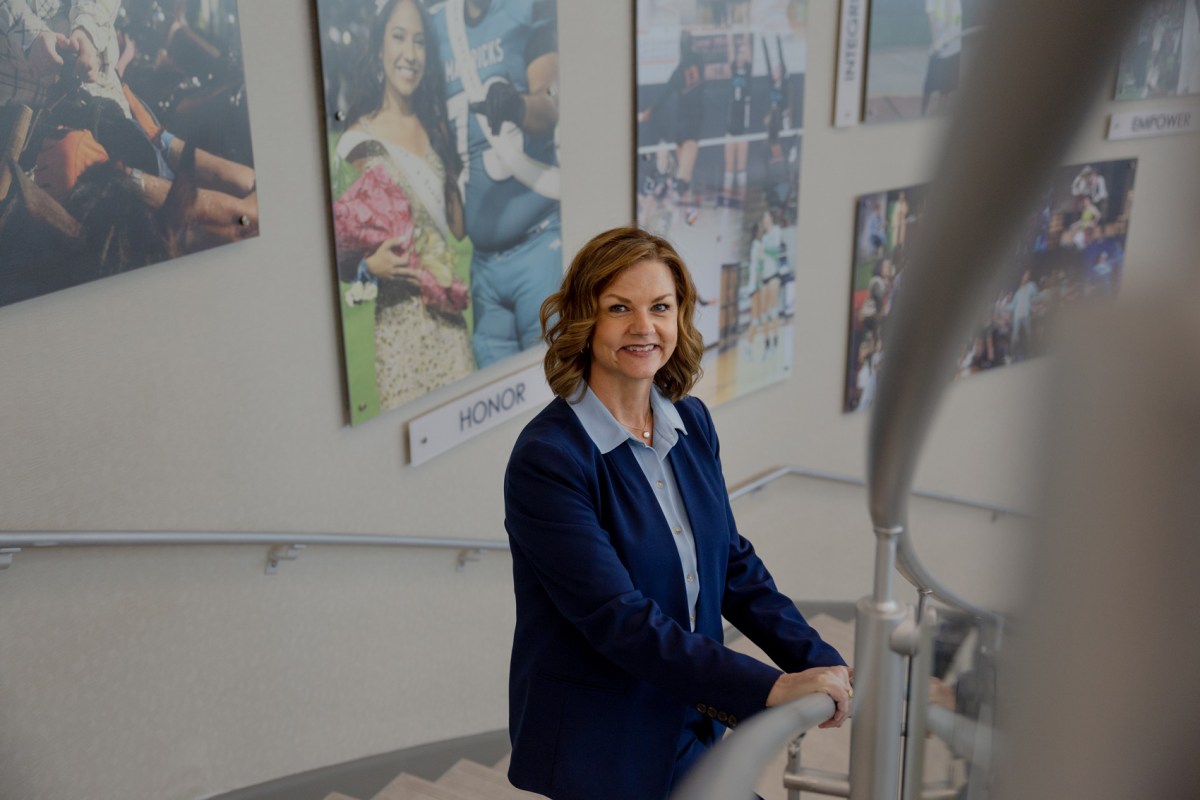
When Toni Lopez started as a Pasadena ISD middle school math teacher nearly 30 years, she never planned to leave the classroom. The principal of Beverly Hills Intermediate School had other ideas.
“We call that getting tapped — someone tapped me and said, ‘Hey, you need to do something bigger,’” Lopez recalled in an interview earlier this week.
Over the next three decades, Lopez climbed the ladder in Pasadena, serving as an assistant principal, principal, two high-ranking central office positions and deputy superintendent.
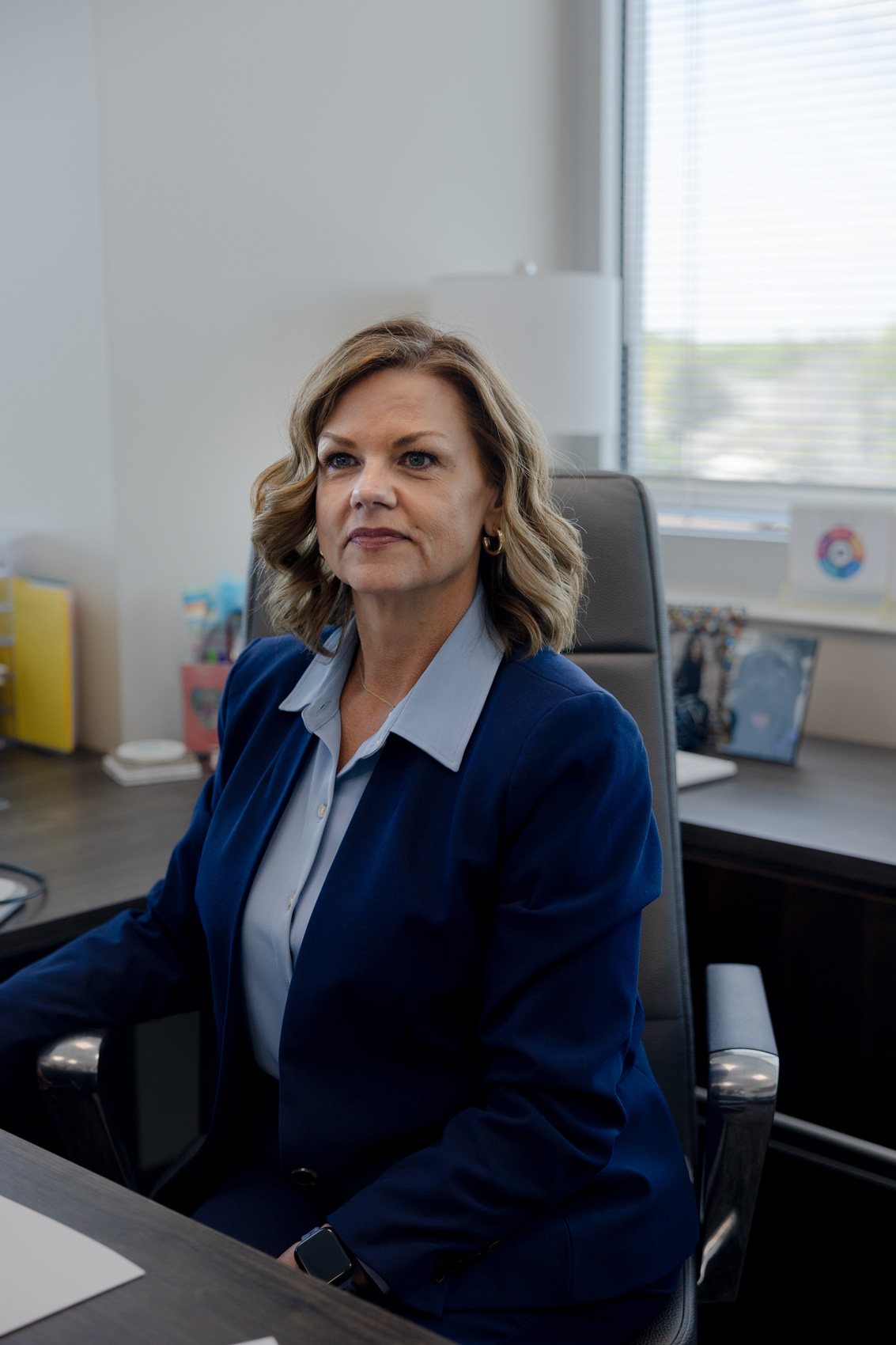
Lopez reached the top of the district Thursday, when Pasadena’s school board unanimously voted to make her the district’s new superintendent. Lopez immediately replaces DeeAnn Powell, who served in the position for 12 years before announcing her retirement last fall.
Board members told the Houston Landing earlier this month that Lopez’s many years of experience in the district put her in the best position to build on Pasadena’s success. The district boasts above-average test scores in reading and math compared to similar districts, and also stands out for its high school graduates’ college and career readiness.
In her time as deputy superintendent, Lopez said she is most proud of her work developing Pasadena’s “Portrait of a Graduate,” a start-to-finish education plan geared towards creating a motivated, well-rounded high school graduate.
“We’re not just going to teach kids to read,” Lopez said. “We’re not going to just teach kids to do math. We’re going to educate the whole child and make sure that they have the skill set to be successful in whatever next level that they’re going to.”
Lopez sat down with the Landing ahead of her official hiring to discuss her hopes for the position, the potential challenges ahead and how she’ll continue Pasadena’s steady course.
This interview has been lightly edited for length and clarity.
What do you think your principal saw in you when you got tapped?
I care deeply about kids, and I am one of those people that — I’m just going to do whatever it takes to get the job done. It doesn’t matter if it’s at 4 o’clock in the morning or if it is at 10 o’clock at night. I’m one of those people like, “If this is what the kids need, then that’s what I’m going to do to make sure I take care of the kids.” I consider them my babies.
I was just actually texting with the principal last night, and one of her teachers at her campus was one of my former students, and he has a child that is going through some things. And I was like, “Hey, he was one of my babies in my classroom.” You start to feel like those students are yours and you want to help them. So I think just having that passion and that background for kids, I think that’s something she saw in me.
What made you interested in the superintendent role?
I don’t know that there’s one thing that I can point to. … After I was principal, I took a role as an executive director in the curriculum and instruction department, and I was able to be very instrumental in launching our personalized learning program. There, I got to see a bigger picture and that I could influence more kids than just on one campus, and so that kind of opened up my eyes. The next role I played was being the associate superintendent of (human relations), which is very different from the academic world, but that role allowed me to see that what we do for employees matters greatly. If we’re keeping our employees happy, they’re doing great things for kids. And it’s not just about teachers. We have lots of other employees in our district, not just teachers.
Then, of course, once I stepped over into the deputy superintendent role, I oversee academic achievement and HR, and so I get to see the big picture with students and with staff. Those are the things that led me here. And it’s the right time in my life. My husband and I are empty nesters. Our children are successful. They both graduated from Texas A&M, they both have good jobs, and so it’s not like they need us right now.
What does your vision for the next five, 10 years of Pasadena look like?
We are in the final stages of our 2030 strategic plan, and one of the things that I’m very excited about in that strategic plan is highlighting the journey of our students. We want to make sure they have a strong start, a strong journey and a strong finish.
Some of the things we’re looking at is, what might pre-K3 (prekindergarten for 3-year-olds) look like? Could we do pre-K3? During Dr. Powell’s tenure, we instituted full-day pre-K4, but what does pre-K for 3-year-olds look like? We want to investigate what that market looks like and how we can get kids in, because we have seen the fruits of our labor for pre-K4 already. Those kids are ready for kindergarten, and so starting them at pre-K3, we feel like would be something that just makes our kids stronger and stronger and stronger.
Other things that I would like us to continue to do is we’ve worked at the middle and intermediate level of making sure that our middle and intermediate students have opportunities for different experiences. One of the things we’ve started, I think, two years ago was A+ Academics challenges, where students can compete academically with one another. We’ve seen interest in it explode this year. … So I’m very excited about that and what it gives our students at those middle and intermediate levels, a critical time in their lives for them to feel connected to the school. So that’s something that I definitely want to see keep moving forward.
When you talk about accomplishments you’re most proud of, Pasadena has particularly impressive numbers when it comes to college, career, and military readiness (CCMR). What do you credit for that success?
After COVID, maybe two, three years ago, we identified that our CCMR data was a problem. It was not where we wanted it to be. So we got people around the table and said, “Guys, this is a problem. How are we going to fix this?” And when I say we get people around the table, it’s not just us. We’re not afraid to ask for outside help. We had an organization that was helping us pull data on our kids and where they are with our CCMR, and we took that data, and then we had some really smart people create a data tracker for CCMR. And so we take it kid by kid, and campuses look at it kid by kid … and then we make adjustments where we need to, to get the kids where they need to be. …
We just take it kid by kid, because there’s not one magic answer. Every kid is different, and so making sure we get down to the individual student level was very important, and that’s really how we’ve done it. I know that sounds like, “How do you possibly do that for so many kids?” But everybody took a role and took part in it. And so that’s really how we tackled it.
That kind of participation takes a lot of buy-in from the staff and from the community. How do you go about building that buy-in and establishing that kind of culture?
It’s always difficult creating buy-in, but the one thing that I do know is, if we can show it’s good for kids, our people get behind it. When we make decisions with the kids in mind, our people get behind it.
We’re also pretty stable with our leadership here, and that’s very important, because we have people that are in our culture that do believe in our kids and believe in what our kids can accomplish. That goes all the way from the top, from a school board that’s been consistent, that supports us. They push us to do better and better and better. That consistency matters. So when we need to create buy-in, if we can show it’s good for kids, it becomes easier and easier.
One of the things when I spoke to board members that they mentioned was a priority was roots in the Pasadena community. Obviously you’ve spent a lot of time in the district, but how would you describe your relationship to the community here?
So in 28 years, I have built relationships. There were people from Pasadena at my kids’ wedding. They’re my family here in Pasadena ISD. … But I will also continue the work that Dr. Powell has done building those relationships with the community at large, making sure that we’re in conversation with the Pasadena mayor, the Chamber of Commerce, whether it be South Belt or Pasadena Chamber of Commerce, with San (Jacinto) College.
The Friday before spring break, I was at the Rotary Club, making sure that we’re telling the story of Pasadena ISD. I feel like one of my roles, if I’m fortunate enough to be named superintendent, is to be the chief storyteller … telling the great things that are happening in Pasadena ISD.
How would you describe your leadership style overall?
Let’s see. I would say that I’m calm and consistent. That definitely is my leadership style. I will say that I make decisions based on what’s best for kids, and then once I decide what’s best for kids, then my next layer is what’s best for our employees and the community. Always looking at the angle of what’s good for the district as a whole with the kids being number one.
I feel like I’m open with folks and that I have developed good relationships with people in the district, so transitioning from one superintendent to another, I hope, is going to be a little smoother, because people do know me. They know my style. They know I’m approachable. They know they can come to me with whatever problems that we have going on. And so I just think if you ask people about me, they will say, “She’s calm, cool and collected.”
Brooke Kushwaha covers Aldine, Alief, Pasadena and Spring ISDs for the Landing’s education team. Find her @BrookeKushwaha on X and Bluesky, or reach her directly at brooke@houstonlanding.org.

