


Mayor John Whitmire’s request this month to halt the move-in process at the Houston Housing Authority’s new East End complex had all the hallmarks of another abrupt announcement by a first-year mayor whose reputation is being built on break-neck changes.
The turmoil at 800 Middle Street, however, has been brewing for years.
The 398-unit affordable housing complex has been beset by a series of environmental issues and outcries from a vocal group of developers who oppose the addition of a low-income complex in a rapidly gentrifying neighborhood. This month’s move-in delay is the latest in a string of setbacks, the costs of which can be measured in millions of dollars and its toll on hundreds of families forced to press pause on their lives.
In 2019, before the Clayton Homes public housing project was demolished to make way for the reconstruction of Interstate 45, the Texas Department of Transportation and the housing authority agreed to the speedy relocation of residents to new homes within two miles of Clayton Homes, “so that each resident will only have to relocate once.”
The housing authority took six months to identify the perfect location: A 21-acre tract, and a 5-acre parcel immediately to its northwest, both of which had been industrial sites. There, the agency would construct a new kind of affordable housing, with granite countertops, a fitness center and a “resort-style pool.” The property at 800 Middle Street, dubbed The Pointe At Bayou Bend, would include 95 units for residents whose income is less than 30 percent of the area’s average — a sliding scale from $19,600 for one person to $36,900 for a family of eight. The remaining residents would earn no more than double that.
The Houston Landing has reviewed more than 3,000 pages of emails, along with hundreds of pages of public documents and environmental reports, which reveal a lack of transparency about serious environmental issues. The housing authority has kept local, state and federal agencies in the dark about environmental concerns, and continues to keep residents waiting.
Ongoing questions surrounding the project have created a dilemma, Whitmire told the Landing last week, pitting an “affordable housing project that we badly need” against the health and safety of residents.

middle Ground
Environmental concern or NIMBY: What’s driving developers’ opposition to 800 Middle?
by Maggie Gordon and Elena Bruess / Staff Writers
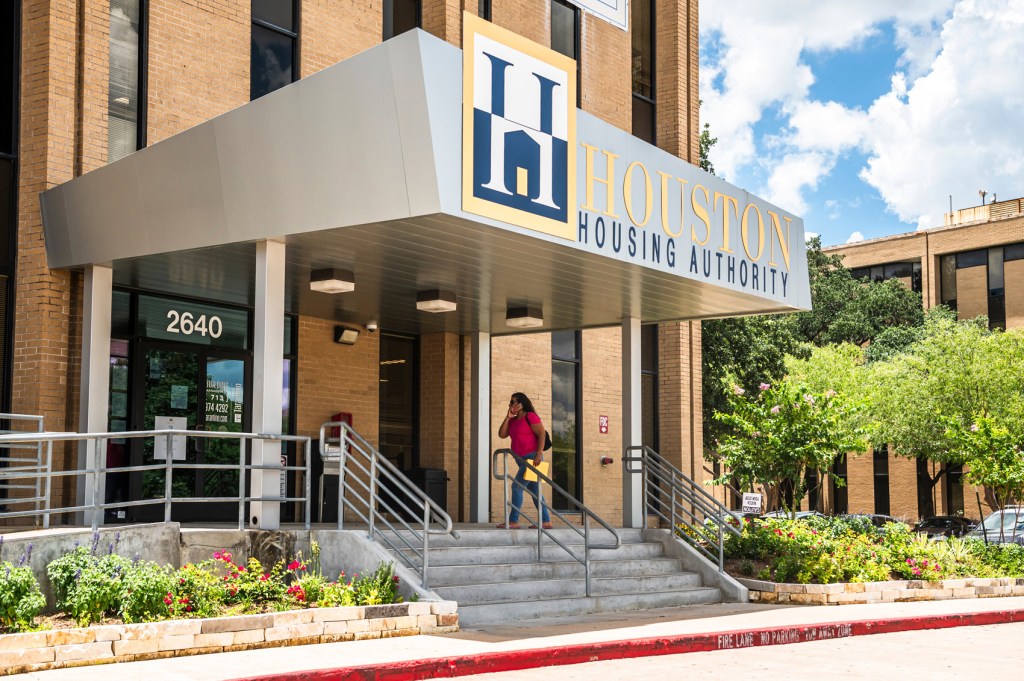
The mayor cited a lack of trust in the agency due to its handling of 800 Middle as a key reason he replaced the housing authority’s board earlier this year.
While it’s too soon to quantify the true extent of the damage due to the property’s environmental issues, Whitmire said he worries the authority’s handling of the problematic project has left the city vulnerable to a host of liabilities.
“Once people start moving in there, I think there’ll be all types of lawsuits,” he said.
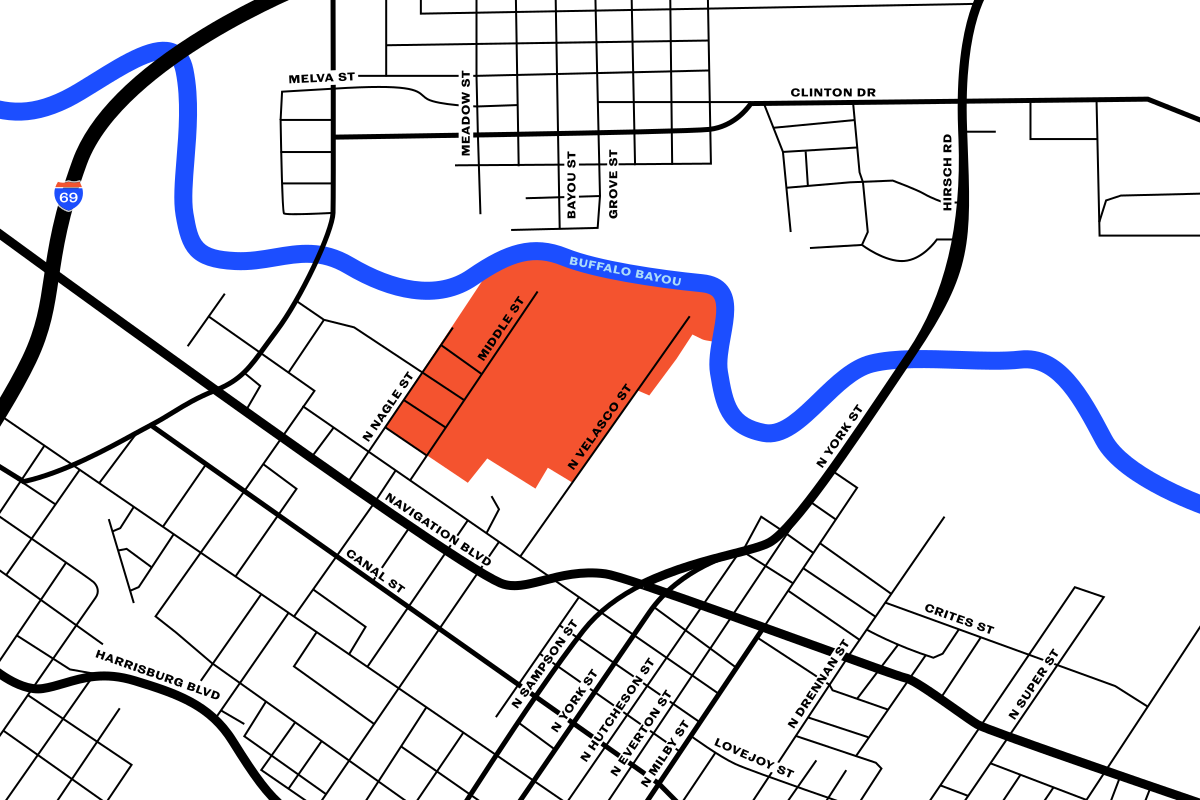
800 Middle
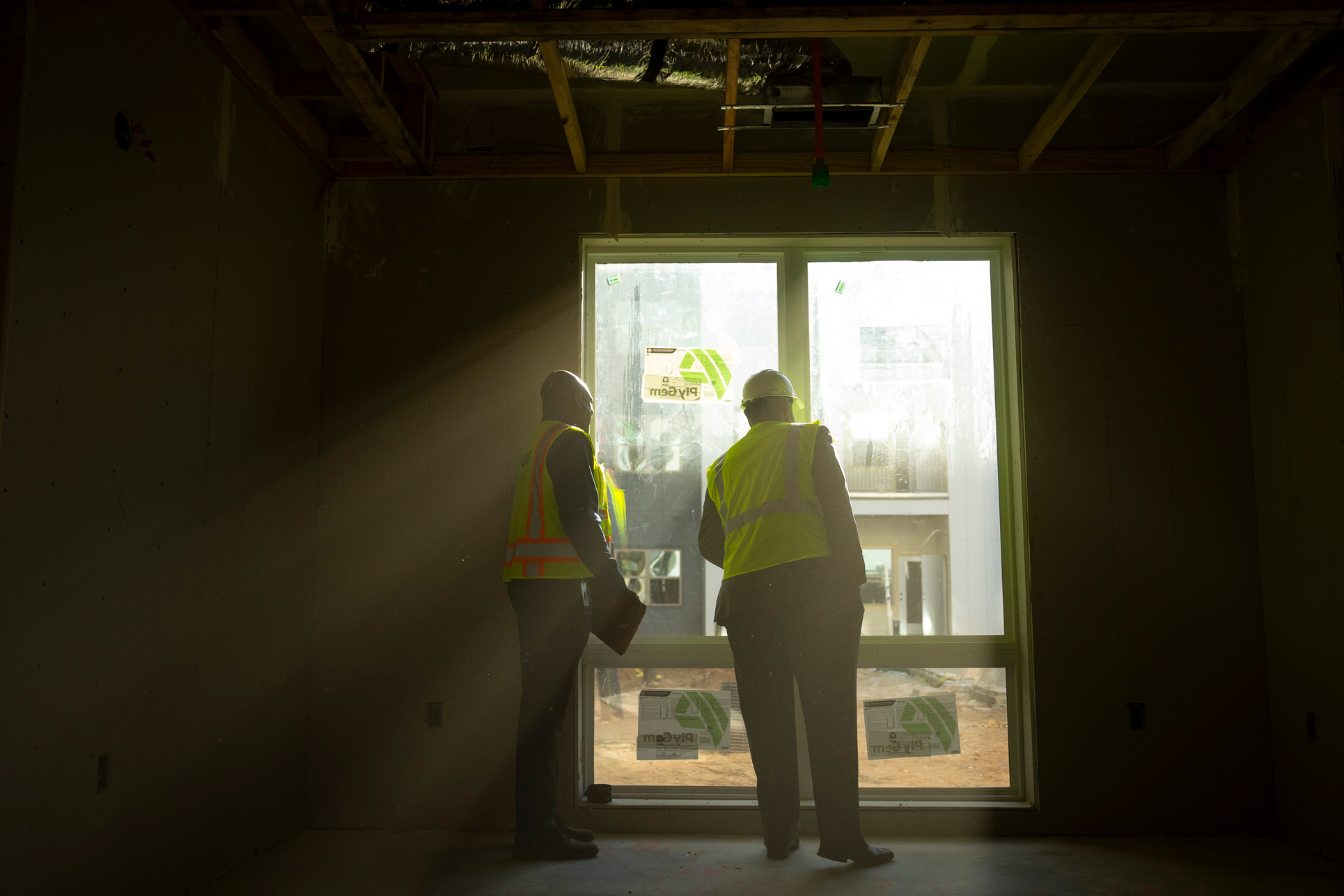
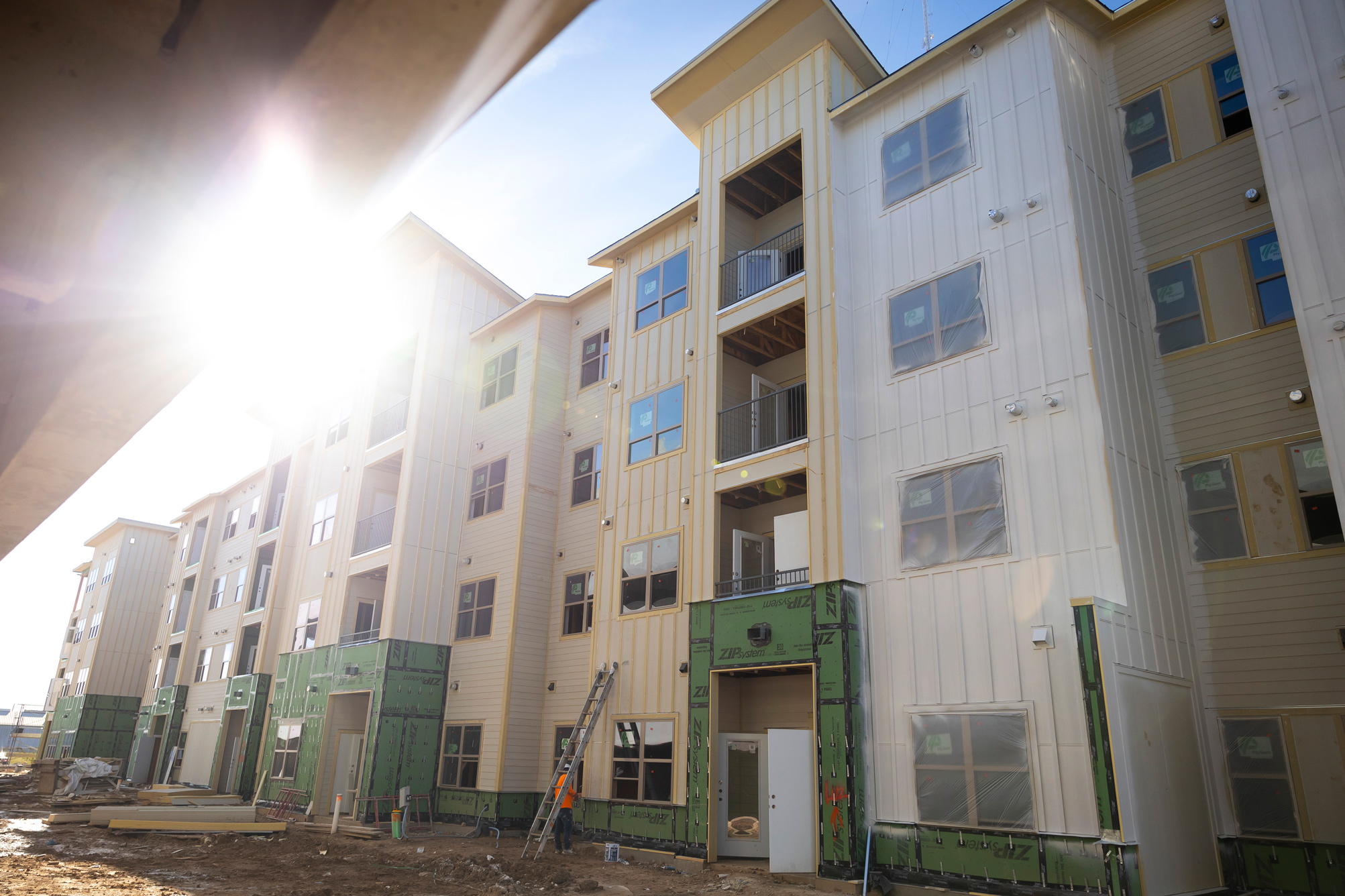
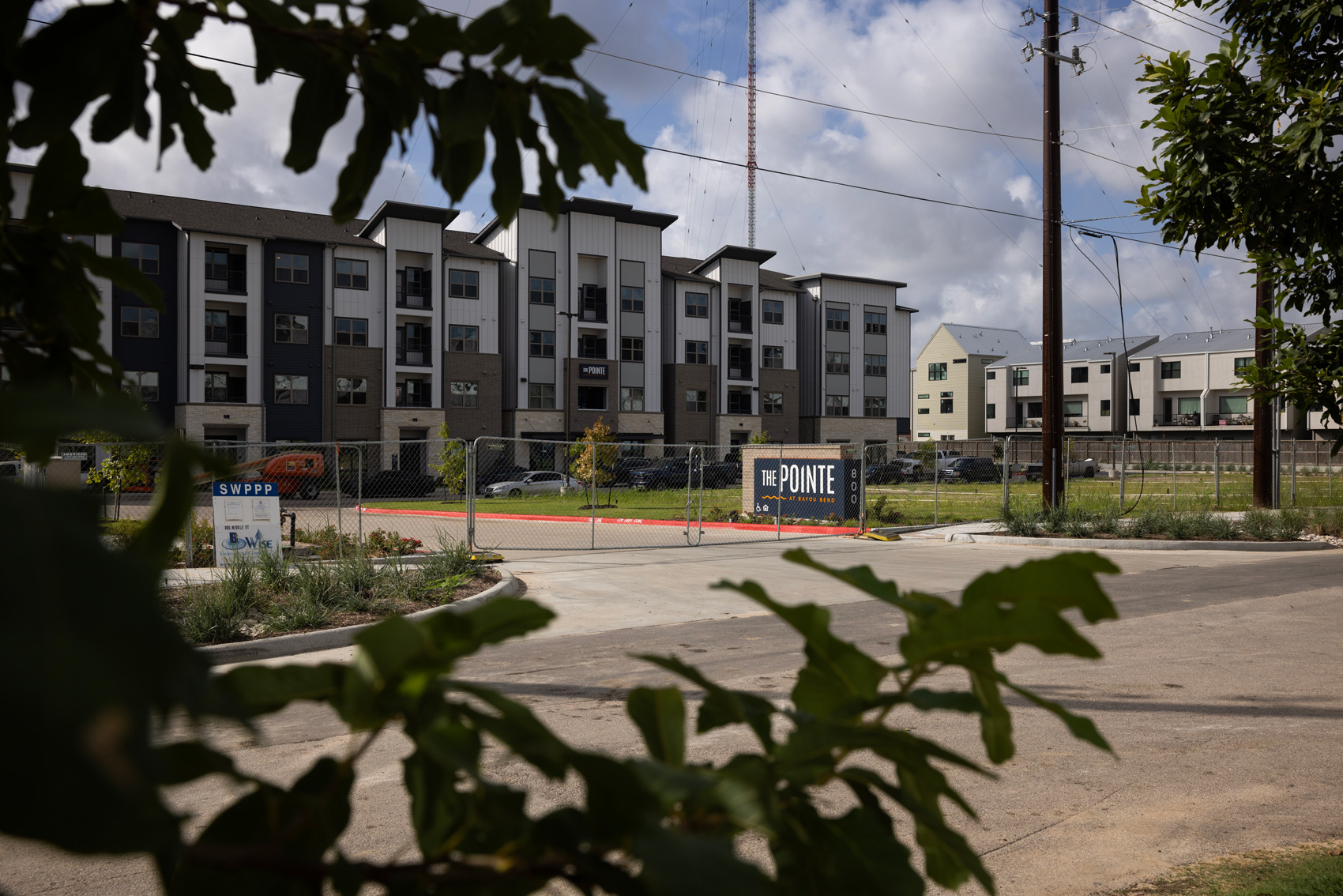
The Pointe at Bayou Bend, a 398-unit affordable housing complex, is nearing completion at 800 Middle Street in the East End.

Tract 1
A century ago, the 21-acre parcel upon which the apartments are being built operated as a storage space, oil lubricant cannery and cotton re-ginning facility. It also included several underground petroleum storage tanks. That land was remediated by its previous owner Pinto Realty through TCEQ corrective action in 2012 before its sale to HHA.

Tract 2
The 5-acre tract housed a clay pit where the city dumped mountains of ash containing toxic metals from its municipal trash incinerator, which ran nearby from the 1920s to the 1960s. The ash was mostly covered with a TCEQ-mandated clay cap, which keeps rainwater and its runoff from seeping into the ash and soil, mitigating harm. Pinto Realty finished remediating this portion of the property in 2016 through the TCEQ Voluntary Cleanup Program.

Tract 3
This property used to house the city’s Velasco trash incinerator, which operated from the 1920s to the 1960s. The city transferred the property to the Houston Land Bank last fall to build a park over the remediated land. The work will take four years or longer and cost between $5 to $7 million.

‘We have to get out of here’
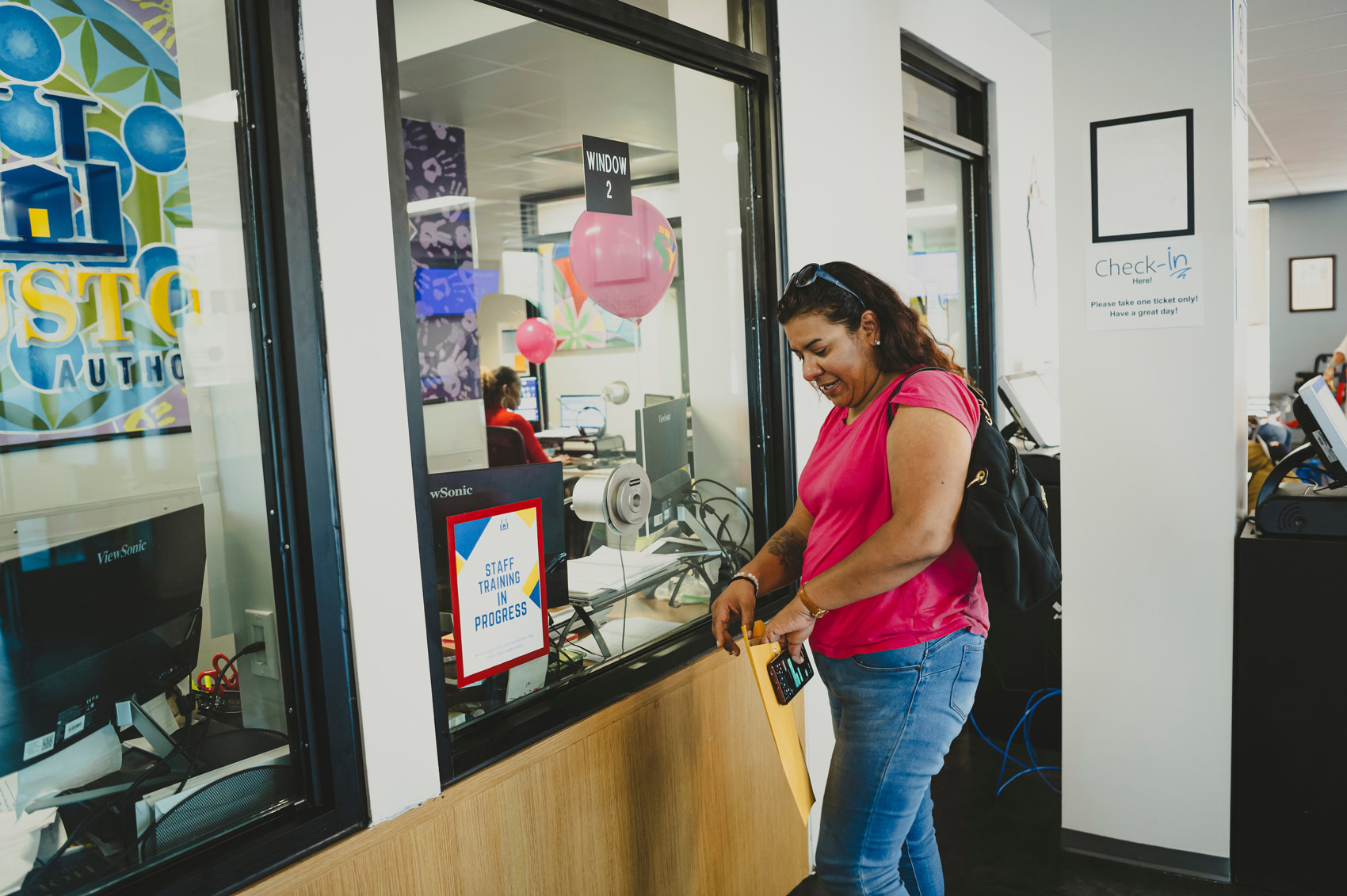
Donna Salazar, 43, needs a better apartment for her young family. Their current one at the housing authority’s Irvinton Village is old and cramped, with only one bathroom. So, when she first heard about the new building rising from the piles of dust and dirt just south of the Buffalo Bayou in the East End, she was cautiously optimistic.

Irvinton hasn’t been the best fit for Salazar or her five children. It’s better than Clayton, where her youngest would name the mice that scurried across the floor. Still, Salazar said, their current home does not provide a safe place for her kids to play. She has big expectations for their next apartment.
Now, she wonders whether the property at 800 Middle will meet those expectations. Earlier in the spring, a co-worker told her the dirt at the property was contaminated, poisoned even, due to its location next to the site of the city’s decommissioned trash incinerator.
In March, she received a letter from the HHA asking if she wanted to move to the new complex. It was a difficult decision — choosing between the opportunity to raise her children in a new, fancy neighborhood or staying in their current home, where she at least knew she could trust the dirt.
“I could try to move to other housing, but I have no clue how long that would take,” she said as she fretted over the forms. She ultimately checked the box informing the housing authority she would like to move to 800 Middle.
“We have to get out of here,” she said.
Cap not a perfect fix
When the HHA purchased the property in 2020 with $54 million in federal funds, the U.S. Department of Housing and Urban Development required the land be cleared of environmental contamination.
And it was, on the surface.
Starting in the 1920s, the larger 21-acre tract of land held cold storage warehouses, and over time housed an oil lubricant cannery, cotton re-ginning facility and underground petroleum tanks. Its previous owner, Pinto East End, remediated the property through Texas Commission on Environmental Quality corrective action, receiving an OK from the TCEQ in 2012 in the form of a No Further Action letter.
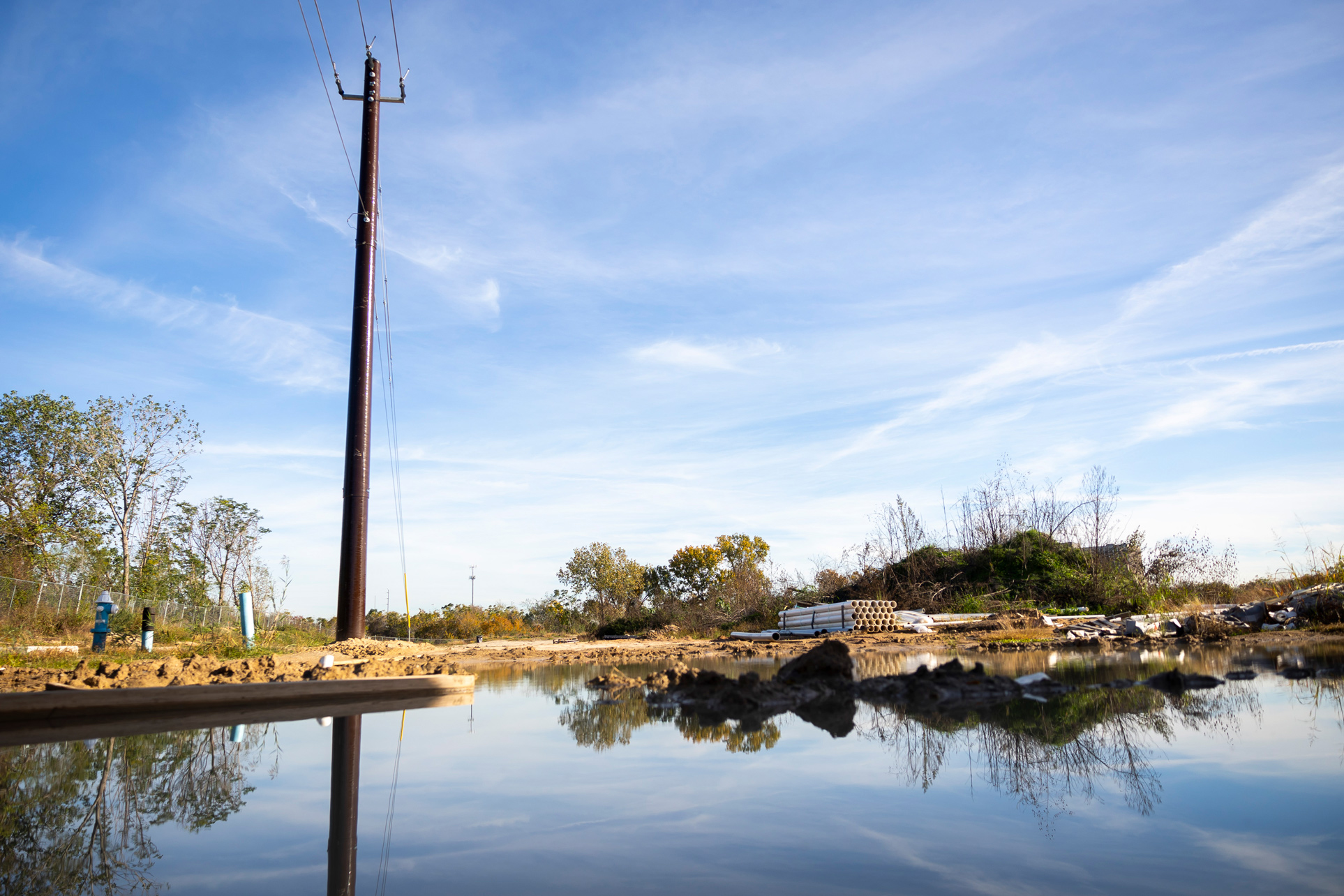
Four years later, Pinto remediated the 5-acre tract to the northwest, where the city had dumped mountains of toxic ash from the nearby municipal trash incinerator in the early 20th century. Through that TCEQ Voluntary Cleanup Program process, Pinto covered the ash with a TCEQ-mandated clay cap, a mix of soil and compacted clay to keep rainwater and its runoff from seeping into the ash. The TCEQ requires caps to be at least 2 feet thick.
The cap, however, has not been a perfect fix. In 2020, before the housing authority bought the property, the clay cap crumbled at a steep slope near Buffalo Bayou after a winter storm, exposing toxic ash. In response, InControl Technologies, the environmental contractor hired by Pinto and kept on by HHA, installed a TCEQ-approved steel wall as a barrier between the soil and the bayou.
The cap has been breached three more times during the apartments’ construction. In December 2022, while contractors installed a storm sewer, the cap suffered at least two significant cuts, according to Michael Marcon, InControl’s vice president.

By law, the housing authority should have notified the TCEQ immediately. It did not.
Ten days before Christmas, the TCEQ received four citizen complaints alleging a “lack of best management practices” and resulting pollution at 800 Middle, prompting an investigation by the agency tasked with protecting the state’s land, water and air.
According to TCEQ documents, Marcon told investigators “he was not aware of any ash material at 800 Middle.”
The following month, a city inspector reported a construction crew “was actively excavating toxic ash on the 800 Middle Street housing project” and that “the workers mentioned they did not know the ash was toxic which is why they are not even wearing personal protective gear.”
A week later, the TCEQ received another neighbor complaint. Ten days later, another.
In the meantime, records show the housing authority continued building without interruption. And the U.S. Department of Housing and Urban Development, whose grant funded the purchase of the property, remained unaware of the exposure of the ash at the site.
That is, until Tony Padua, a real estate investor and neighbor, emailed HUD on Feb. 2. He included a Dec. 30 video, showing workers for NRP — the construction company developing the site — covering soil with a black tarp. The soil, he alleged, was ash.

“Note the handling of ash by bare hands of the workers,” he wrote, echoing the city inspector’s findings. “I asked one of the workers if they knew it was toxic ash and they said neither NRP or anyone else warned them.”
Lorraine D. Walls, director of HUD’s Houston field office, immediately emailed housing authority leaders: “Frankly, this was a huge surprise, unfortunately, HHA has not been keeping HUD updated with these matters.”
In the coming days, Walls cataloged the high level of lead in the ash, which she said “should have immediately ceased any activities in that area.” She requested status updates; as she waited, her emails grew shorter.
On Feb. 14, she emailed HHA CEO David Northern, “Third status request, thank you.”
The following day: “Fourth update request.”
The housing authority’s director of real estate and investment Jay Mason responded later that day, forwarding Walls an email from InControl Technologies, detailing the ash’s removal: “A total of 290 loads were hauled from the site which is estimated to be 3,480 tons.”

Low rate of return
New, green real estate is hard to come by in a still-expanding city with an industrial history. As Houston grows and its aging public housing deteriorates, the displacement of residents becomes almost inevitable. After Clayton’s demolition, the housing authority offered residents buyouts or relocations until the permanent housing was completed. Former residents, though, have scattered throughout greater Houston.
That is a concern for housing advocates.
“Residents will end up dealing with a lot of challenges, like income discrimination or bad faith landlords or evictions, which can lead to further housing instability, “ said Taylor Laredo, a community navigator for the nonprofit Texas Housers. “And then, in the end, do they even get to return to the new, promised housing?”
In late May, Salazar received a thick packet from the HHA, asking her to apply for a spot at 800 Middle. She found it daunting; she had to dig up birth certificates, social security cards and other government documents — all within 11 days.
It took Salazar an additional two weeks to file the final application. As relief washed over her in the housing authority parking lot, she managed a slight smile. Finally, she was on her way to new, better housing.

Not everyone has breathed that sigh of relief. Typically, 20 percent of displaced residents return to new housing. Houston Housing Authority CEO David Northern said he expects a higher return rate to 800 Middle, because the complex is so nice. As of late June, however, only 23 of the 110 eligible former Clayton Homes households had applied to live at the new complex.
Houston Landing reporters knocked on the doors of more than a dozen former Clayton Homes residents. In some cases, residents were not at the addresses listed by the HHA. One listed property was a long-vacant plot of land on the city’s southeast side.
Some residents who lived at the addresses listed by the housing authority said they wanted to stay put.
“I couldn’t imagine having to move again,” said Henrietta Wheaton, 63, who moved to Cuney Homes in Third Ward. “I like the people I live near now. I have a community and I don’t know what it’d be like at a new place.”
‘Can and will happen again’
Environmental experts question what 800 Middle will be like for its new residents.
“It’s not totally clear how extensive this contamination is,” said Stephen Lester, a toxicologist and science director for the Center for Health, Environment and Justice in Virginia, who reviewed environmental assessments, InControl files, lab reports and TCEQ documents at the Landing’s request.
“If they were proposing a parking lot or a warehouse or something where you don’t have people living on it 24/7, it’d be a different issue,” he said. “But this is multi-family housing and that’s a concern.”
Because ash already has been uncovered four times, Lester said it is “actually and realistically likely that it can and will happen again.”
The TCEQ concurs. In its 2023 investigation, the commission noted potential for “further uncovered material.”
Marcon said he is not worried, given that the property once was covered by a warehouse and InControl’s plans to inspect the cap annually.
“Someone would have had to pick up the warehouse, put ash underneath and put it back down,” he said. “There’s been a lot of assessments across the property.”
In September 2023, the TCEQ sent a letter to the Houston Housing Authority, alleging four violations: failure to prevent contamination of Buffalo Bayou with industrial waste; failure to immediately notify the state of the uncovered ash; sampling irregularities, such as improperly sealed soil samples that appeared to have large pieces of glass and metal removed from them; and the lack of a comprehensive hazardous waste sampling plan.
Still, the samples were illuminating: The TCEQ found concerningly high levels of toxic metals, which can cause cancer, nervous system disorders and reproductive problems, including arsenic, barium, chromium and five times HUD’s acceptable limit for lead.
In addition to the soil contents, Lester raised concerns about the reliance on the state’s regulations, which he said do not always meet national standards. Texas relies upon cleanup standards called the Texas Risk Reduction Program, which provide property remediation guidelines. Those guidelines are not as stringent as the Environmental Protection Agency’s recommendations, which are not enforceable, according to Lester.
“This gives developers in cities and states tremendous flexibility, if not freedom to hire a contractor who tells them they are consistent with the guidelines and you can move forward,” Lester said. “But there is no requirement on any level, whether federal or state, that actually requires certain kinds of tests to evaluate a situation.”
Construction continued
In the weeks after the September TCEQ report outlining the four violations, the city was unable to compel the HHA to stop work.
In October, Laura Serrano of the city’s Housing and Community Development Department informed the housing authority that “if construction operations are ongoing on any portion of the ~21 acre site, operations should cease until the project is recertified.”
One day later, one of the department’s environmental investigators sent his own email to housing authority executives illustrating just how dire the issue had become: “This project is under review by HUD OIG.”
The construction continued. Mason, the housing authority’s real estate director, argued in an email that halting work would cost $600,000 a day. “Stopping work is not a viable option,” he wrote Northern in November.

Environmental testing also continued. InControl tested for heavy metals, including lead and arsenic, and polycyclic aromatic hydrocarbons, toxic byproducts of gasoline, crude oil or incinerator combustion. It did not test for dioxins — cancerous chemicals produced from burning trash in an incinerator. Dioxins, Marcon said, were “not identified as chemicals of concern at the site.”
When the adjacent site — the former home of the Velasco trash incinerator, now being remediated by the Houston Land Bank — was tested in 2017, the soil revealed elevated levels of dioxins.
“I think the most important thing is that the intended initial plan for this property was to build million-dollar homes both on the capped area and 800 Middle Street,” Marcon said. “I mean if it’s good enough for million-dollar homes, it’s good enough for any kind of land use.”
Assessment ongoing
At the western boundary of 800 Middle, dozens of towering townhomes loom — many priced above $500,000.
It is no secret that 800 Middle would be worth more if developed similarly: A 2022 appraisal commissioned by NRP found its “highest and best use would be to develop the site with market rate townhomes, similar to what is being built adjacent.” That could quadruple the current $16.7 million value of the 8 acres where the apartment building is being constructed, according to that assessment.
Padua, the neighbor and developer who complained to HUD, is among a wave of high-income residents planting roots in the area. In recent years, he — along with his longtime friend and fellow developer Alan Atkinson — have been outspoken in their pushback against the affordable housing project.

Their vocal opposition, which has included lawsuits, letter writing campaigns and regular speeches at housing authority meetings, has amplified the conversation surrounding the property. At the same time, their ownership stakes in potentially profitable land nearby has provided the housing authority with a useful defense.
“One thing is clear,” Northern wrote in an August 2023 email to elected officials, including then-Mayor Sylvester Turner, and the late U.S. Rep Sheila Jackson Lee, Padua and Atkinson “are dismayed by the idea of affordable housing in areas where they have built single-family units within feet of HHA’s 800 Middle site.”
Atkinson and Padua have protested the project for years. Atkinson unsuccessfully sued the city, the housing authority and Turner in 2019 to try to force the city to disclose which properties it was purchasing for the complex. In recent months, as more eyes examined 800 Middle, the back-and-forth has reached a boiling point.
In early May, the housing authority hired Braun Intertec, an engineering and environmental consulting firm, to perform another environmental assessment of the two tracts of land.
The first part of the evaluation, conducted where the new apartments sit, found no environmental concerns immediately surrounding the buildings, according to the housing authority. Braun then began assessing the land north of the apartments, which is ongoing. The authority expects the final report from Braun in the next few weeks.
Around the same time, the TCEQ sent a letter of enforcement to the housing authority, urging it to resolve the four open violations. The authority, however, continued its push to welcome residents in August.
When the violations remained unresolved in July, the TCEQ called City Hall to inform Whitmire about the outstanding issues. That, according to the mayor’s office, is the moment Whitmire decided to take action.
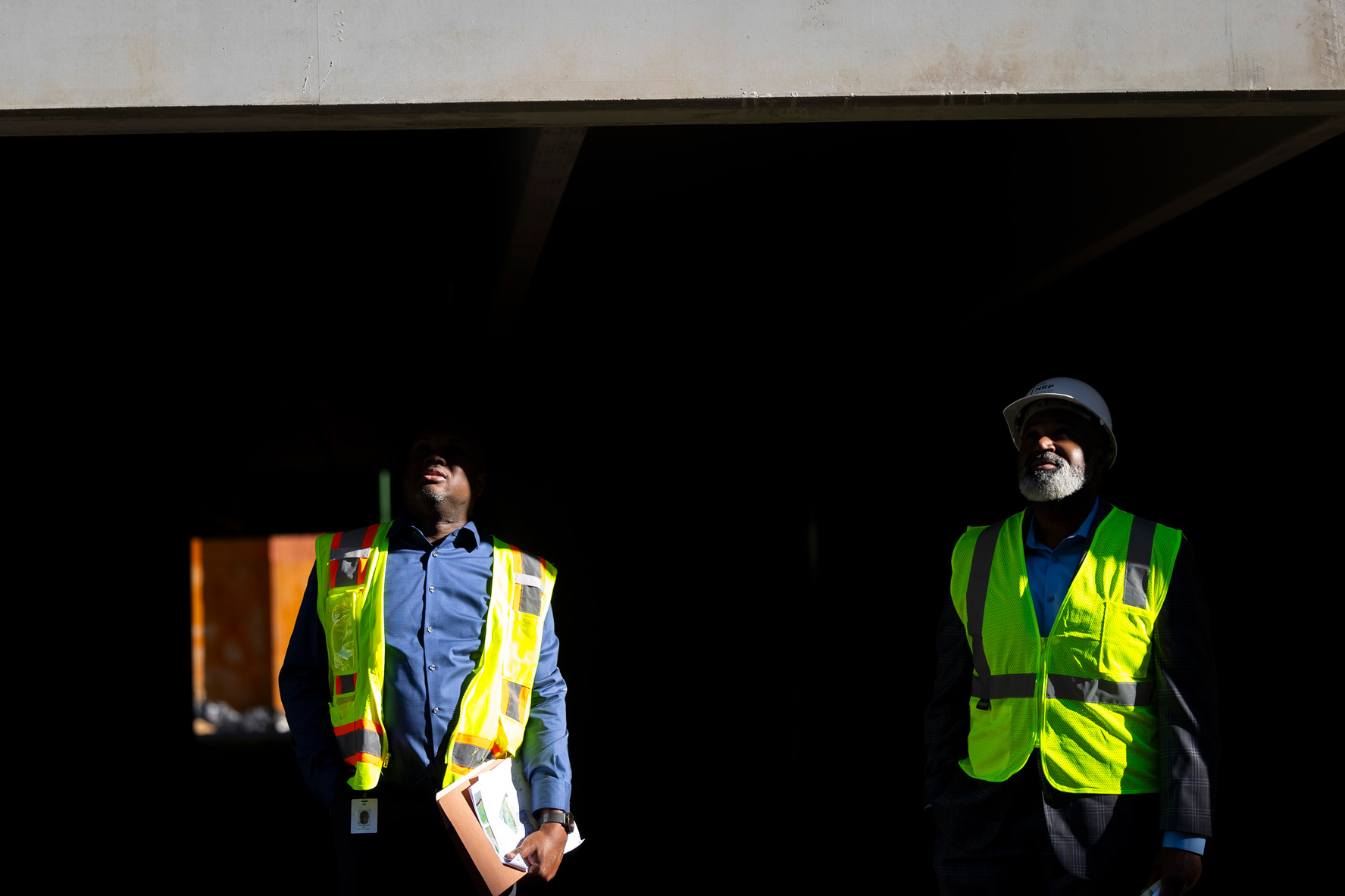
Lester’s prediction came true when Braun’s investigators discovered more ash this month. This time, Braun found “buried incinerator ash” by digging and examining 26 soil samples close to the Houston Land Bank property north of the apartments. The housing authority notified the TCEQ of the discovery on July 18, prompting Mayor Whitmire’s request that same day to halt work until Braun’s environmental site assessment found the soil quality “to be acceptable.”
That assessment is continuing, the housing authority said, committing to adhering to the mayor’s request.
“We understand concerns about safety and are committed to resolving these outstanding issues before moving in residents,” Northern said.
The housing authority does not know when leasing will begin.
Salazar no longer feels the peace that washed over her in the HHA parking lot last month, particularly after the mayor said the land might be unsafe for families like hers.
“I’m kind of scared to move there,” she said. “To be honest, because over the years we might develop an illness. That’s what scares me.”
Her future, again, lies in limbo. When will the land be remediated? Will she be able to move there after all?
To date, no one has given her an answer.

