

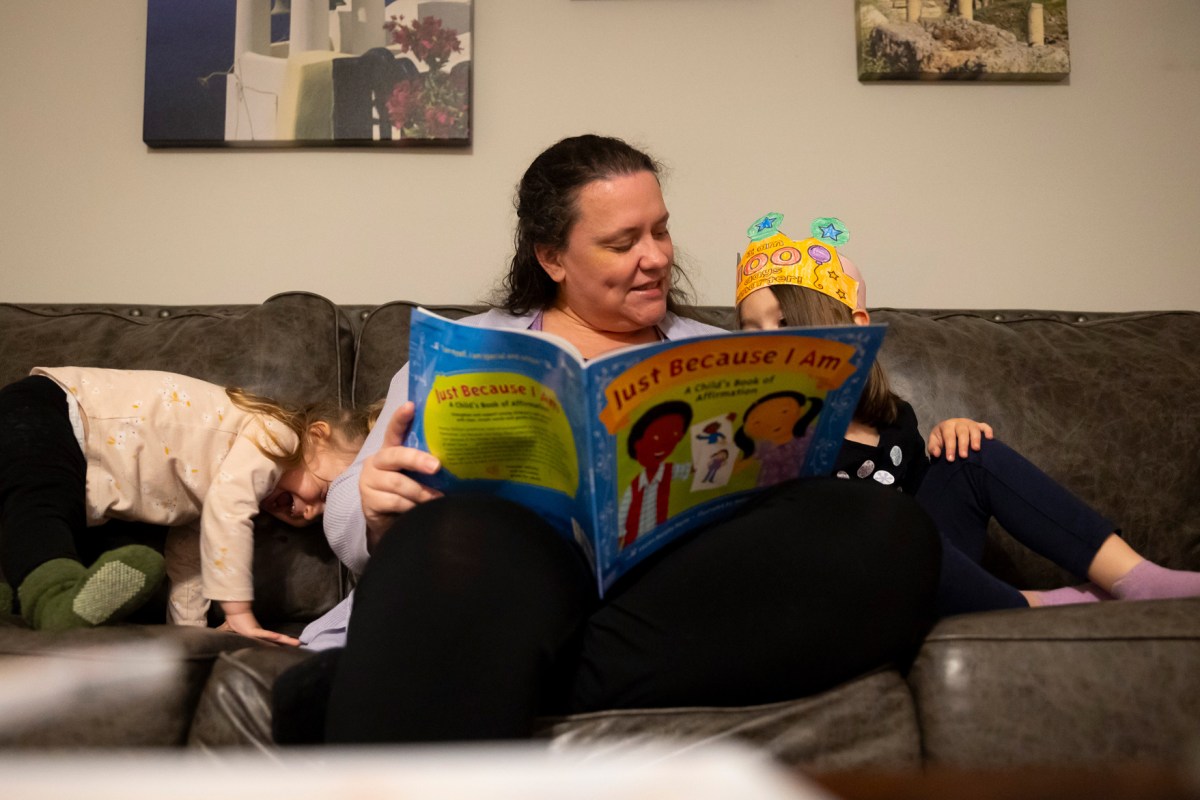
As a toddler, Carin Rinkenberger’s daughter had a tough time with certain letter sounds. If she tried to say the word “go,” it came out more like “dough.”
Rinkenberger knew her child would need speech help in preschool. So in the spring of 2023, six months before her daughter was set to enroll in Houston ISD’s Durham Elementary School, Rinkenberger began the process of requesting special education services.
It took some nagging, but district staff evaluated Rinkenberger’s daughter over the summer and approved her for speech services. Now, in her first year of preschool, Rinkenberger’s 4-year-old has progressed as she works with a staff member to improve her speaking.
“Now she can pronounce the ‘G’ sound,” Rinkenberger said. “She’s not ‘doughing’ anywhere. She’s ‘going’ somewhere now.”
Rinkenberger’s daughter is one of thousands of students across Houston’s five largest districts who qualified for special education services this school year, contributing to the largest increase in students served since at least 2016, records obtained by the Houston Landing show.
About 9,000 more students are receiving special education services across the region’s five biggest districts: Houston, Cypress-Fairbanks, Katy, Fort Bend and Conroe. The increase tops the previously largest jump — roughly 6,000 students in 2022-23 — documented in recent years. State officials have not yet vetted the counts taken by districts this school year, which were done in late October, but the figures traditionally do not materially change during that process.
“More kids are being served. More kids are getting their needs met,” said Justin Porter, who helps oversee special education programs for the Texas Education Agency. “That’s only going to have a positive outcome for kids in Texas public schools.”
The data illustrates how Texas school districts continue to make slow but steady progress in emerging from the long shadow of a de-facto TEA policy that illegally repressed the number of children receiving special education services.
A Houston Chronicle investigation in 2016 revealed that state officials encouraged districts for over a decade to limit their share of students identified for special education services to 8.5 percent or less. Roughly 15 percent of students nationwide receive such services.
A 2021 peer-reviewed study published in the American Economic Journal found Texas students who needed special education services but didn’t get them under the state’s since-reversed practice were slightly less likely to graduate from high school and enroll in college.
'Making good things happen'
State and local education officials attributed the increase primarily to ongoing investments in new special education staff and training as school districts work to rebound from past failings.
TEA officials said they have nearly quadrupled their staff working on special education at the state level, from about 20 to 70, since the federal government sent a letter in 2018 reprimanding Texas for letting special education students go without needed services.
Porter said school districts have “moved mountains” to find the staff necessary to accommodate the increase in special education students, despite a nationwide shortage of special education teachers. State records show public school spending dedicated to students with disabilities rose from about $5.6 billion in 2015-16 to $8 billion in 2021-22, the most recent year with available data.
“Districts are still making the (evaluation) timelines, making good things happen for kids, and identifying more kids than they’ve ever identified before, even with these incredible staffing challenges that they’re all facing right now,” Porter said.
However, state and local education officials also noted that a 2023 change in state law resulted in some students with dyslexia beginning to receive special education services. The change likely contributed to the uptick, but did not appear to be the main driver, according to a Houston Landing analysis. Many districts are still in the process of making the change.
Some families and advocates also continue to report issues navigating the complex special education system, including poor communication from school staff and missed deadlines on legally required meetings.

Carin Rinkenberger reacts as she reads to her two daughters in their home Tuesday in northwest Houston. (Annie Mulligan for Houston Landing) 
Carin Rinkenberger's 4-year-old daughter holds a 100-day crown she decorated in her prekindergarten class after dinner in her home Tuesday in northwest Houston. (Annie Mulligan for Houston Landing) 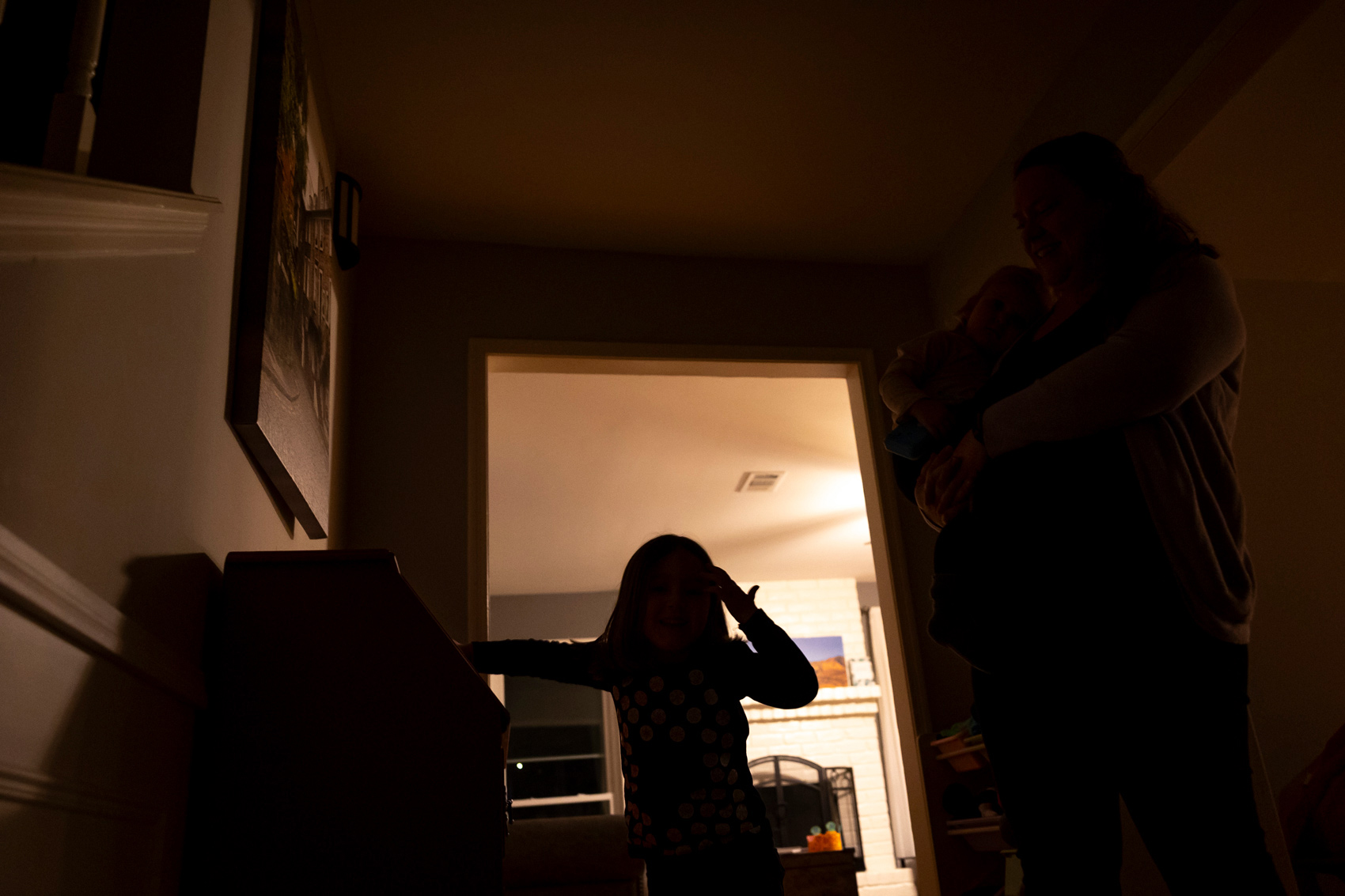
Carin Rinkenberger prepares her two daughters for bedtime in their home Tuesday in northwest Houston. (Annie Mulligan for Houston Landing) 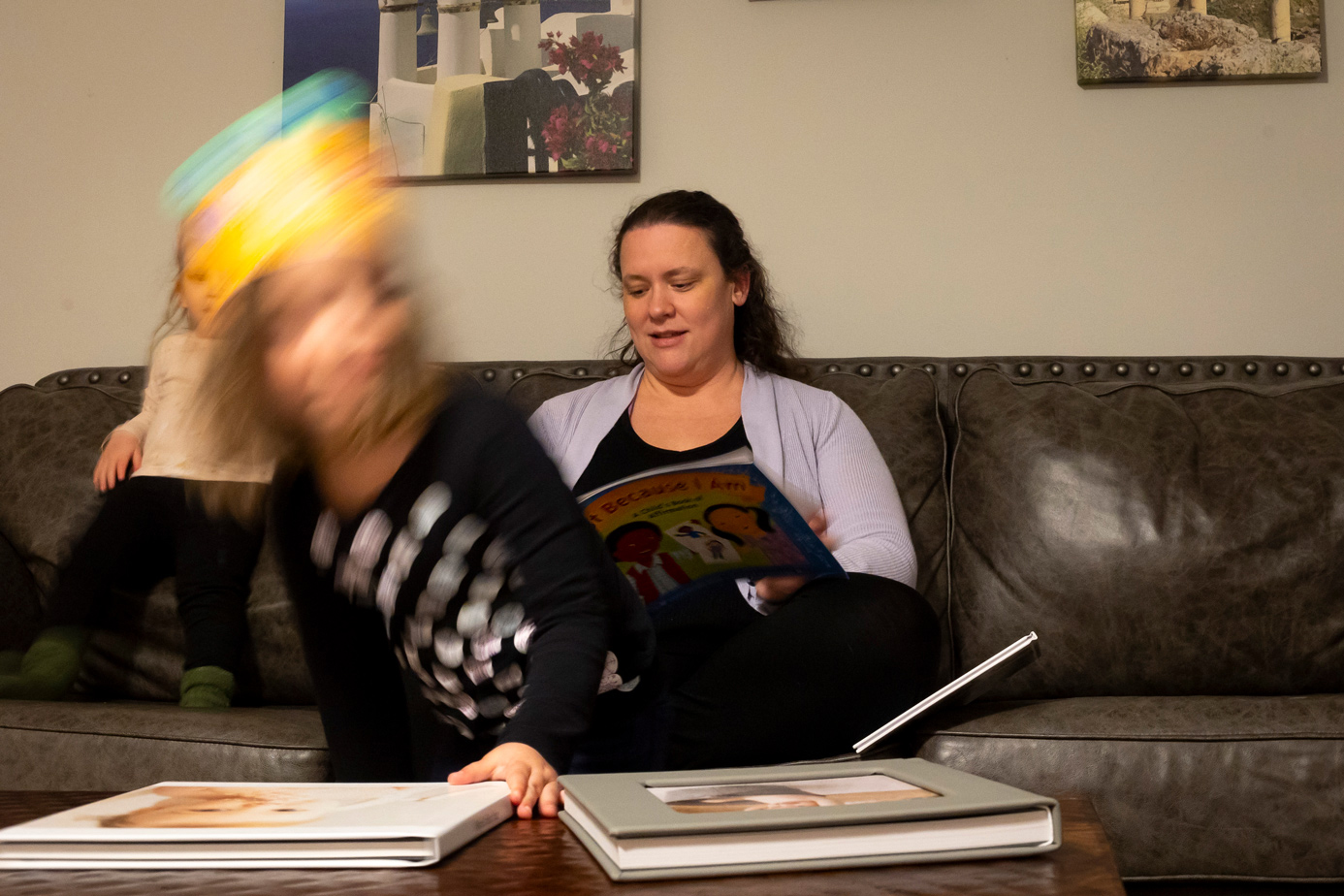
Carin Rinkenberger reads to her two daughters in their home Tuesday in northwest Houston. (Annie Mulligan for Houston Landing)
Rinkenberger had to appeal to HISD’s special education department when she met resistance from employees at her campus, she said, and district officials determined school staff missed deadlines in the evaluation process. Then, even when Rinkenberger’s child got approved for services, her school lacked a speech therapist for the first month of school. One arrived in October.
“It felt like putting a lot on the parents to figure out what their rights are, figure out what they're entitled to in terms of the timeframe for going through this process, and then actually push for it to happen,” Rinkenberger said. “I think that was probably the frustrating part for me.”
Texas remained out of federal compliance on special education until 2023, as it worked to improve communication with families and data collection from districts. In HISD, state-appointed conservators overseeing special education found earlier this year that the district still needs to improve in several areas, such as holding timely meetings with families and prompting addressing parent complaints.
'Hitting those marks'
Texas’ share of students receiving special education services — 12.6 percent in 2022-23 — also remains below historical national averages. Porter said there is no magic number of students the state aims to serve because the goal depends on the number of children who need help.
Still, local education leaders reported progress in serving students with intellectual, behavioral and physical disabilities, as well as students with autism.
Stacy Venson, HISD’s deputy chief of special education, attributed the district’s uptick in students receiving services — from 17,320 last school year to 18,909 this year — largely to a change in the district’s structure. Under the new state-appointed superintendent, Mike Miles, each high school feeder pattern has a team devoted to special education.
Venson added that most HISD staff received training in November and December on how to identify and support students in need of special education services, but those sessions came after the late October count. In addition, HISD has hired dozens of new special education staffers at 28 campuses Miles is overhauling this school year, though Venson said she couldn’t speak to whether that impacted work to identify students needing services.
“There's always areas to work on, but as far as specifically around (identifying students), I believe that we are hitting those marks,” Venson said.
Kendra Wiggins, Conroe’s executive director of special services, said a push to provide extra services to students struggling with reading and the new law related to dyslexia were the main reasons for the district’s roughly 2,000-student jump this school year. District records also show about half of the rise stemmed from improvements in identifying students with physical disabilities, behavioral disabilities and autism.
In Fort Bend ISD, where the percentage of students receiving special education services has more than doubled from 2016-17 to 2023-24, the district has had to increase its special education budget to afford more specialists who can evaluate students for disabilities, spokesperson Sherry Williams said.
Fort Bend’s spending on students with disabilities increased from about $83 million to $143 million between 2016-17 and 2021-22, the most recent year with available data.
As for Rinkenberger’s daughter, she continues to receive speech therapy once a week, with steady progress on the sounds that are hard for her to pronounce. At first, Rinkenberger felt communication from school staff was “a big black hole,” but she requested updates from the specialist who works with her daughter and now receives them regularly.
“Since then, the therapist has been sending home a note every time she pulls my daughter out telling me, ‘Hey, I met with your daughter. Here’s what we covered,’” Rinkenberger said. “I’m kept in the loop on what it is they’re working on.”
Asher Lehrer-Small covers Houston ISD for the Landing and would love to hear your tips, questions and story ideas. Reach him at asher@houstonlanding.org.

