
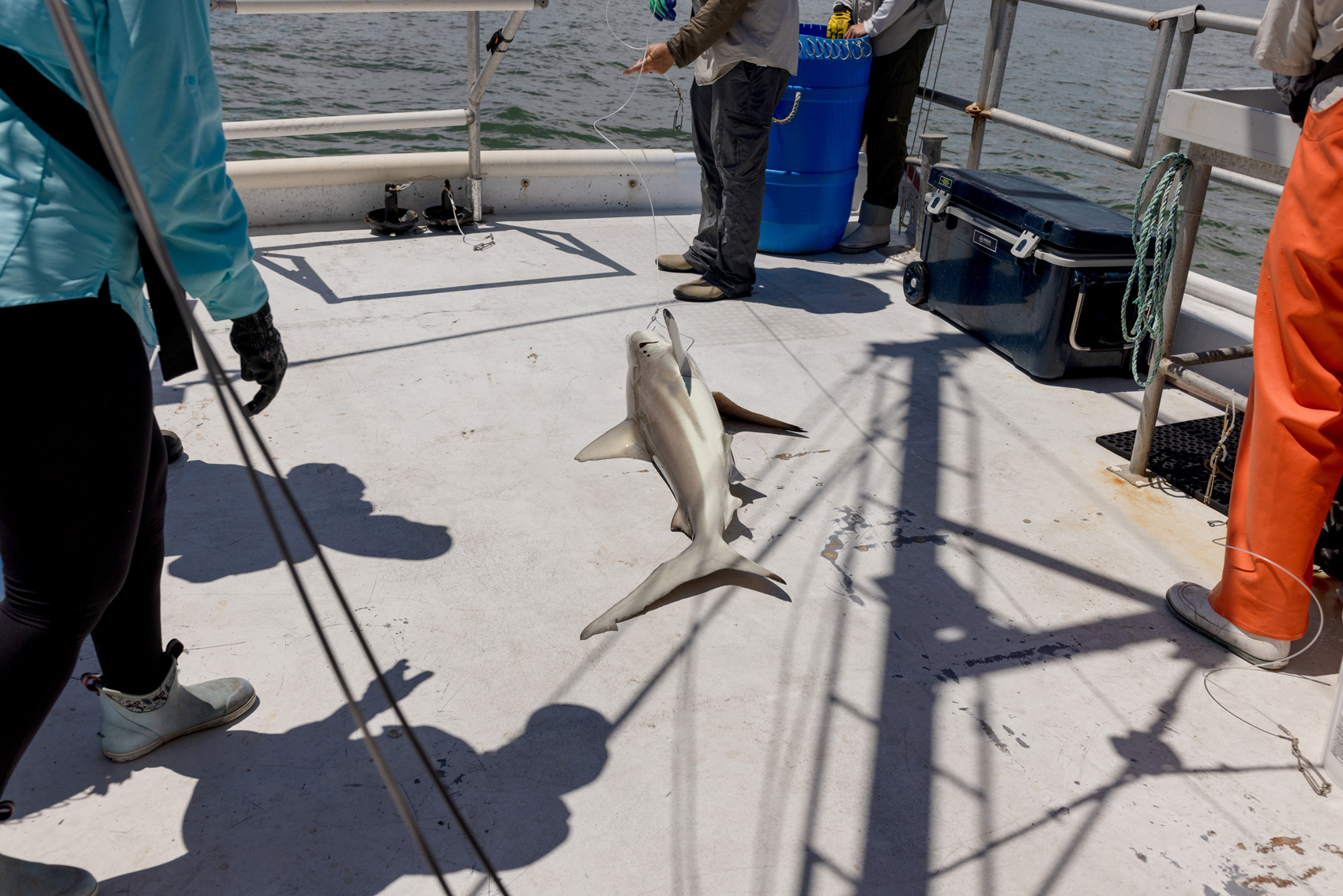

There’s a shark head dangling on the hook. Long gashes are torn through the creature’s thick, sand-papery skin and guts trail behind as the remains are pulled up.
“Just a head,” a crew member calls out as he tosses it on board the RV San Jacinto.
It’s early afternoon on Friday and nine researchers from the Texas Parks and Wildlife Department are floating just off the Gulf Coast in the San Luis Pass, a two-mile stretch of water between Galveston and San Luis Island. An hour before, the team laid a mile-long line with 100 hooks along the floor of the Pass, baited with smelly, oily pieces of Atlantic mackerel.
The goal is to catch and measure Gulf Coast predators, such as sharks, catfish and red drum for a multi-state survey by the Gulf States Marine Fisheries Commission. The survey is intended to track populations of apex species to gauge the health of the Gulf. The results then can be used to determine environmental and fishing regulations in the Gulf.
Under state law, anglers can catch 15 species of shark in Texas waters, but are prohibited from 23 others, including the shortfin mako shark, recently added to the no-fish list by the National Oceanic and Atmospheric Administration due to its declining population.
On the boat, Jason Williams, a Texas Parks and Wildlife technician, is working the hook out of the shark head’s mouth. It’s a finetooth shark, a relatively small species known for its slender body and needle-like teeth. The team is pretty certain a larger shark ate the rest of the finetooth while it was dangling from the hook.
“Now we know, there’s another shark swimming around here,” Williams says, gesturing to the teeth marks at the base of the head. “We don’t know what kind or if we caught it, but there’s definitely something down there.”


Misunderstood creatures
For Rileigh Hawk, sharks are deeply misunderstood creatures. The 29-year-old Texas Parks and Wildlife coastal biologist is partial to the lemon shark. It was the first species she had ever seen in the wild, during a college study-abroad trip to Turks and Caicos.
“They’re just really cool,” she says. “They’re really long and their second dorsal fin is really, really big compared to a lot of other sharks, which have tiny ones.”
Already, the crew has been to several other spots on the Gulf this year to survey shark populations.
Sharks are keystone species in the Gulf, meaning they are vital to their natural habitat and the food chain. Losing sharks could cause a domino effect of changes leading to the destruction of the entire ecosystem.
Tiger sharks, for example, keep turtles from overgrazing seagrass beds. Without sharks preying on them, the turtles would overpopulate, erode the seafloor and harm other marine life in the process.
The predators also work as ocean garbage collectors by feeding on dead animals that have sunk to the seafloor. They help keep the natural cycle of life in motion.
A healthy population of predators is an indicator of a healthy ecosystem.
Humans kill an estimated 100 million sharks every year. In some cases, anglers will catch a shark, cut off its fins and toss it back into the water, where it dies slowly. Shark finning, as the practice is known, is illegal in the United States and the trading of shark fins was banned in Texas in 2015.
“Because sharks are so long-lived and they reproduce very infrequently, they’re very vulnerable to different kinds of issues,” Hawk said. “They can be hurt by overfishing and habitat loss and then it’s hard for the population to bounce back.”
Climate change also can heat up Gulf waters so much that migratory patterns could shift, sending sharks to other parts of the Gulf or the Atlantic Ocean.
That is why keeping a steady and yearly survey is a key to shark population management. The numbers, combined with the results from Louisiana and Florida, can give the commission a better idea of trends and movement.
The surveys, though, can take years to understand, says Christine Jensen, the Parks and Wildlife ecosystem leader, explaining that one year’s numbers are less significant than years of data.
Jensen, who has spent 20 years in ecosystem management, the last 10 with the state Parks and Wildlife Department, is optimistic about finding sharks this time around. Sometimes the boat will go out and not find a single shark. Other times, the crew will pull in a massive tiger shark.
“That’s why it’s so important to collect from several data sites,” she says. “It gives us the bigger picture.”

Mark Krupp, senior technician, sends out the line that will sit in the water to attract sharks in the Gulf of Mexico, Friday, Aug. 16, 2024, in Galveston. (Lexi Parra / Houston Landing) 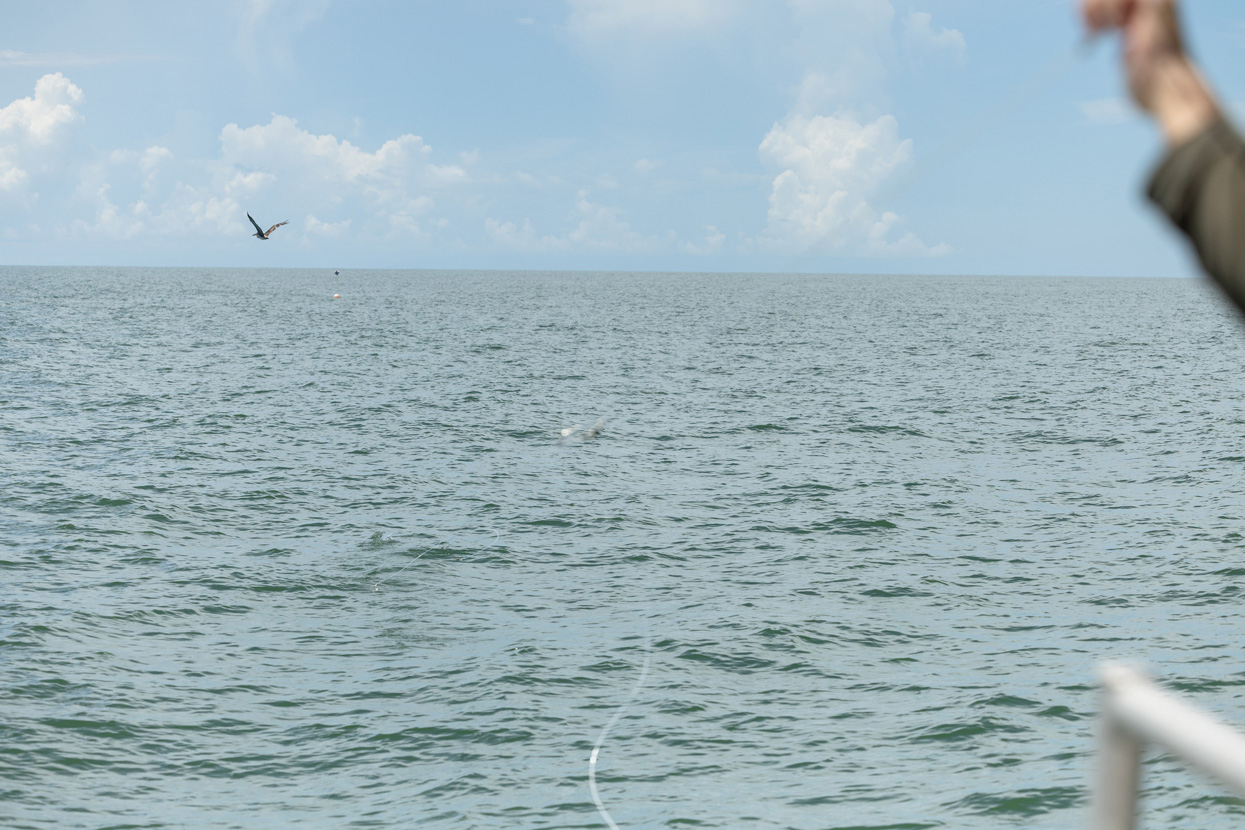
A bird flies above the fishing line on the Gulf of Mexico, Friday, Aug. 16, 2024, in Galveston. (Lexi Parra / Houston Landing) 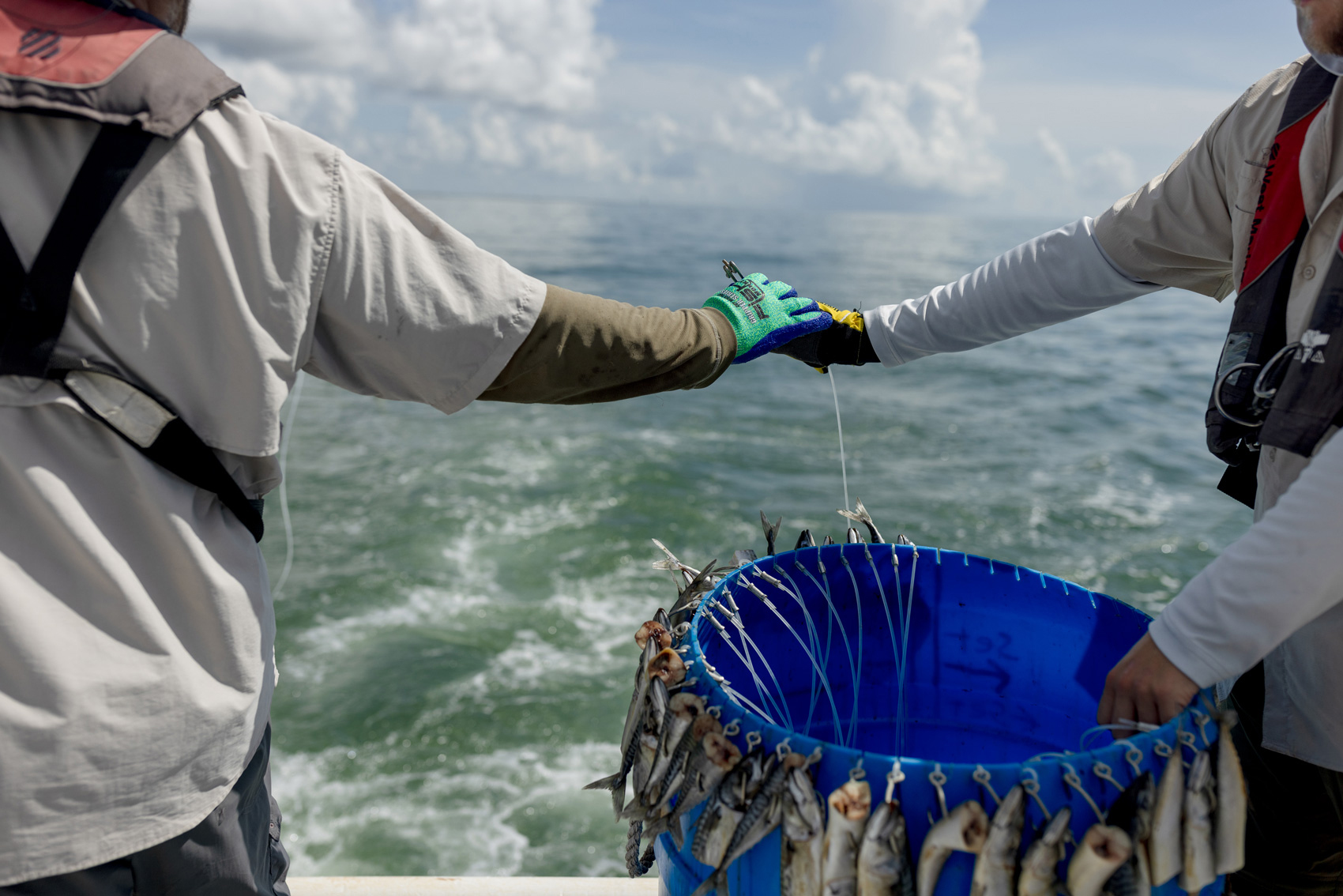
The technicians pass bait to add to the line that will sit in the water to attract sharks in the Gulf of Mexico, Friday, Aug. 16, 2024, in Galveston. (Lexi Parra / Houston Landing) 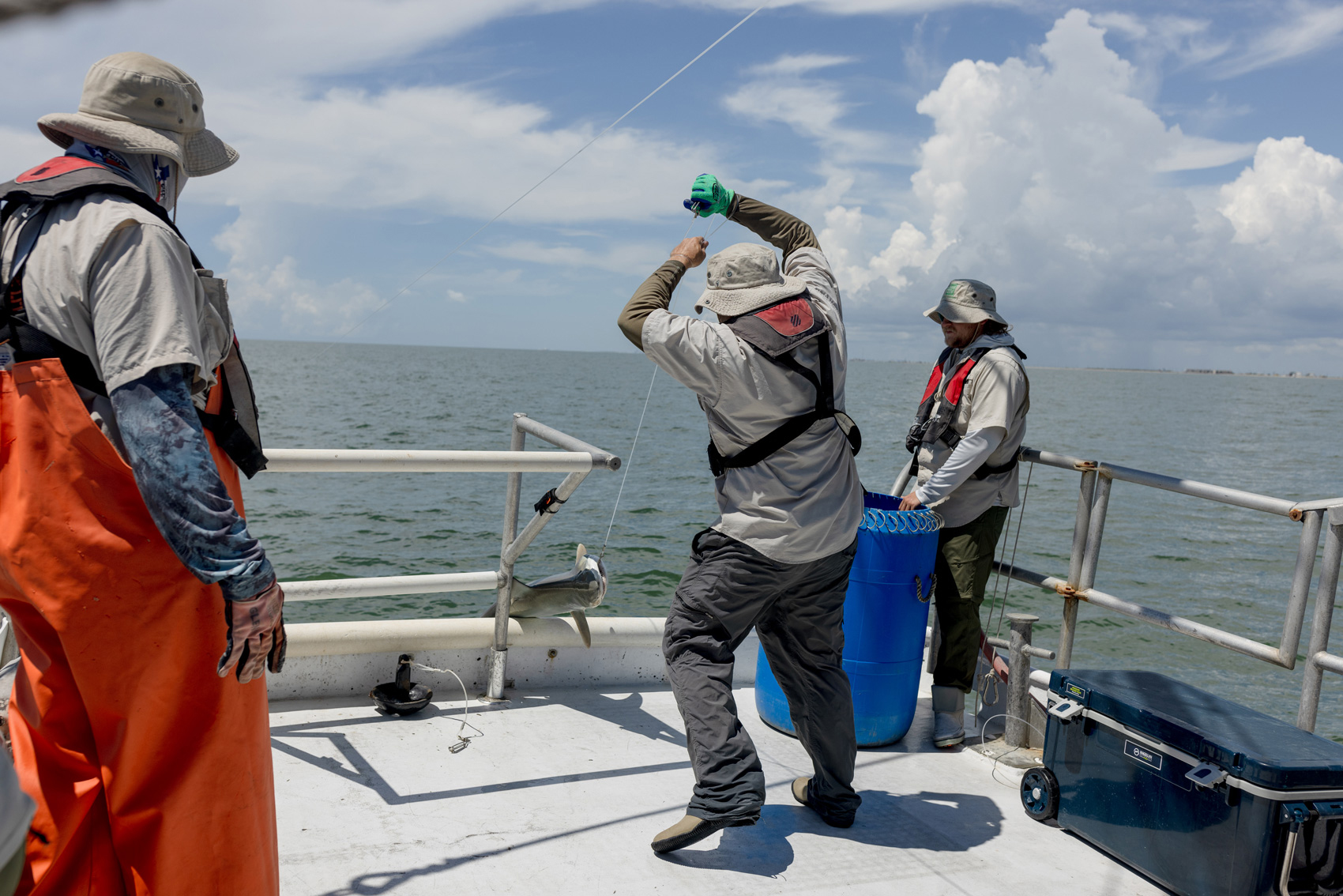
Mark Krupp pulls a shark onto the R-V San Jacinto, Friday, Aug. 16, 2024, in Galveston. (Lexi Parra / Houston Landing) 
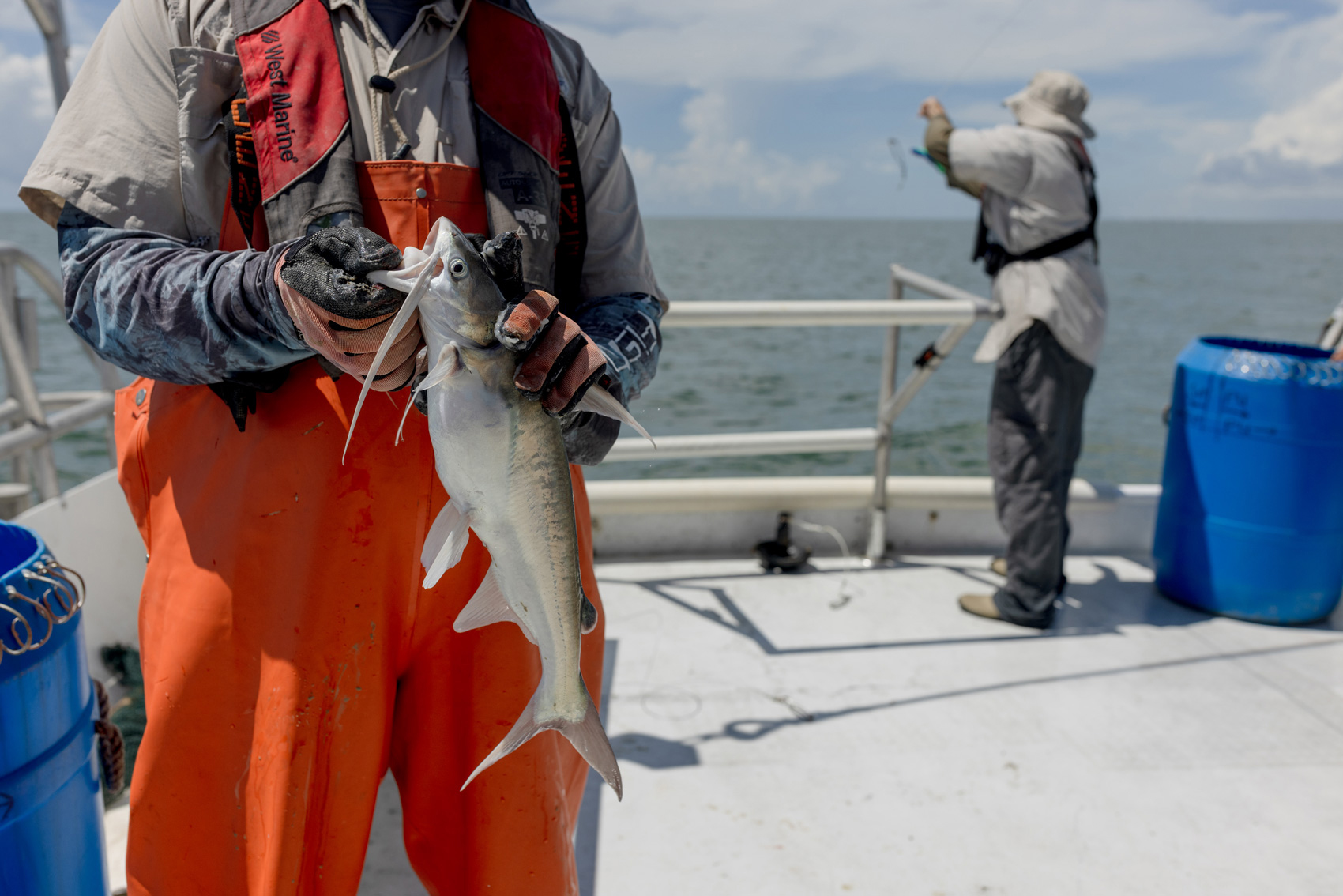
Jason Williams removes the hook from a small shark caught on the line, Friday, Aug. 16, 2024, in Galveston. (Lexi Parra / Houston Landing) 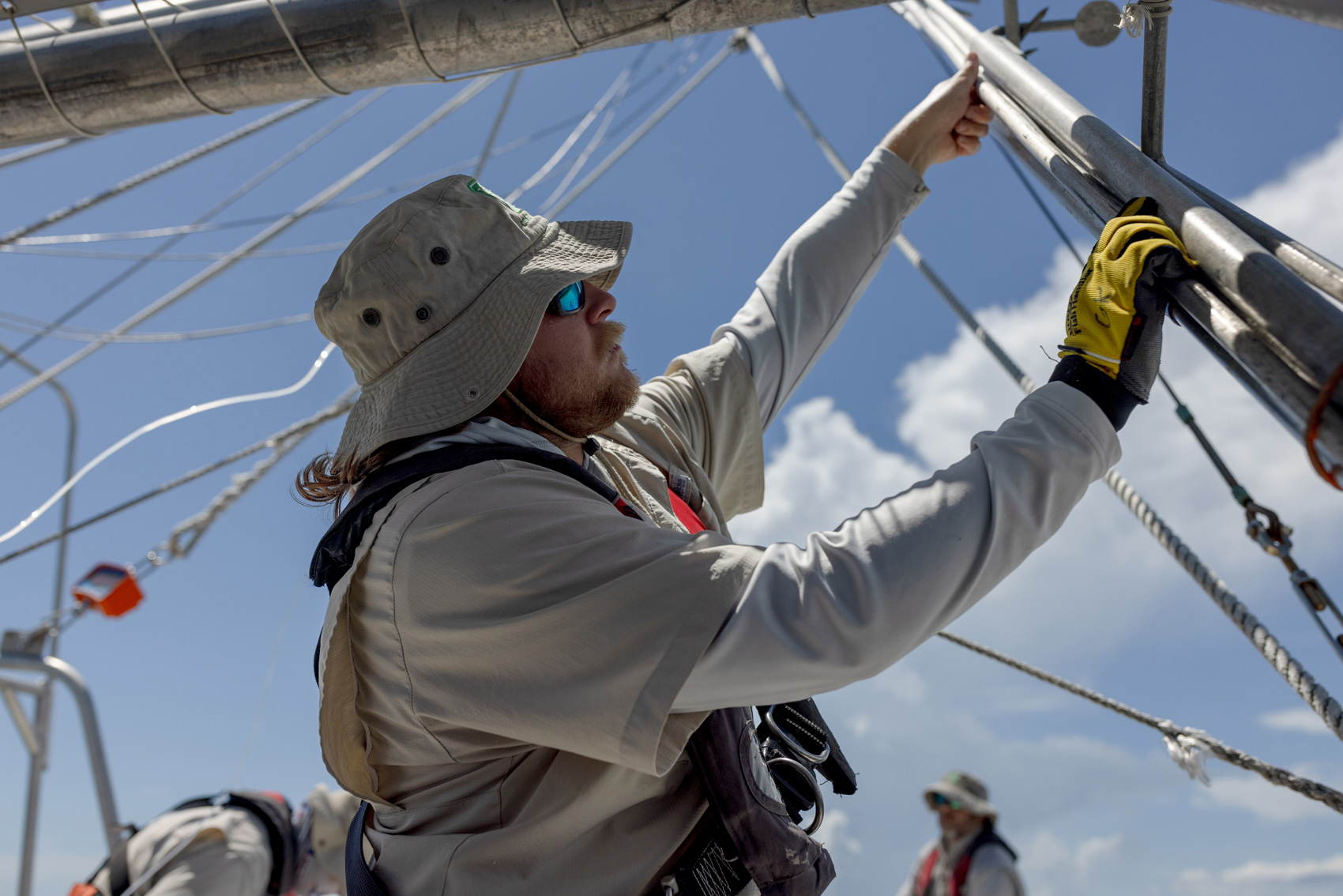
Gunnar Kohl organizes equipment on R-V San Jacinto, Friday, Aug. 16, 2024, in Galveston. (Lexi Parra / Houston Landing) 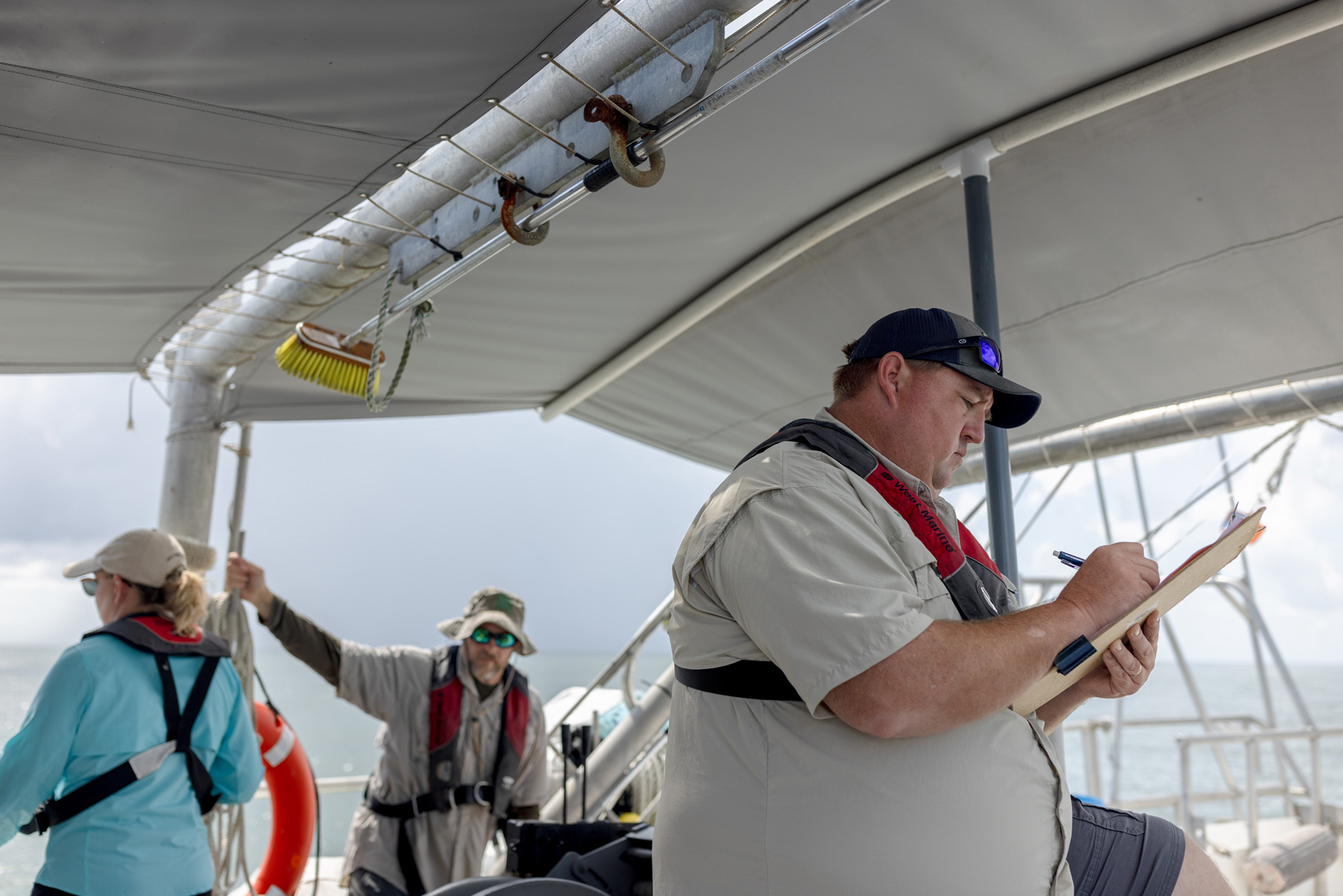
Derek York notes the water temperature during their outing to monitor sharks in the Gulf of Mexico, Friday, Aug. 16, 2024, in Galveston. (Lexi Parra / Houston Landing) 
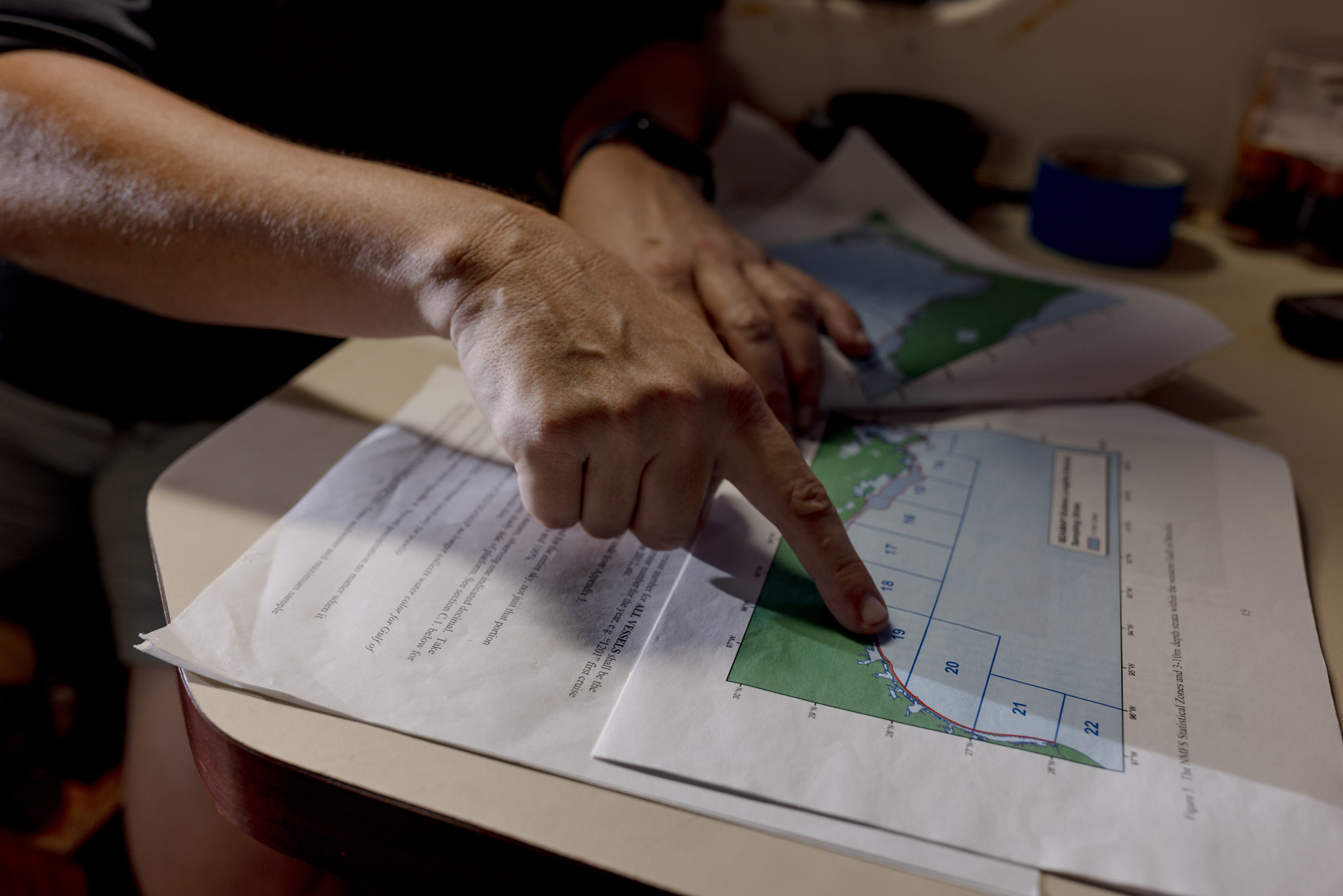
Danny Martínez reviews data inside R-V San Jacinto, Friday, Aug. 16, 2024, in Galveston. (Lexi Parra / Houston Landing)
Two and a half sharks
The team has surveyed six spots across the Gulf this year. After this, it will have two more. One will take the team to the Louisiana border.
This time, the trip consists of two and half hours to San Luis Pass, a couple hours on site and then another two and a half hours back.
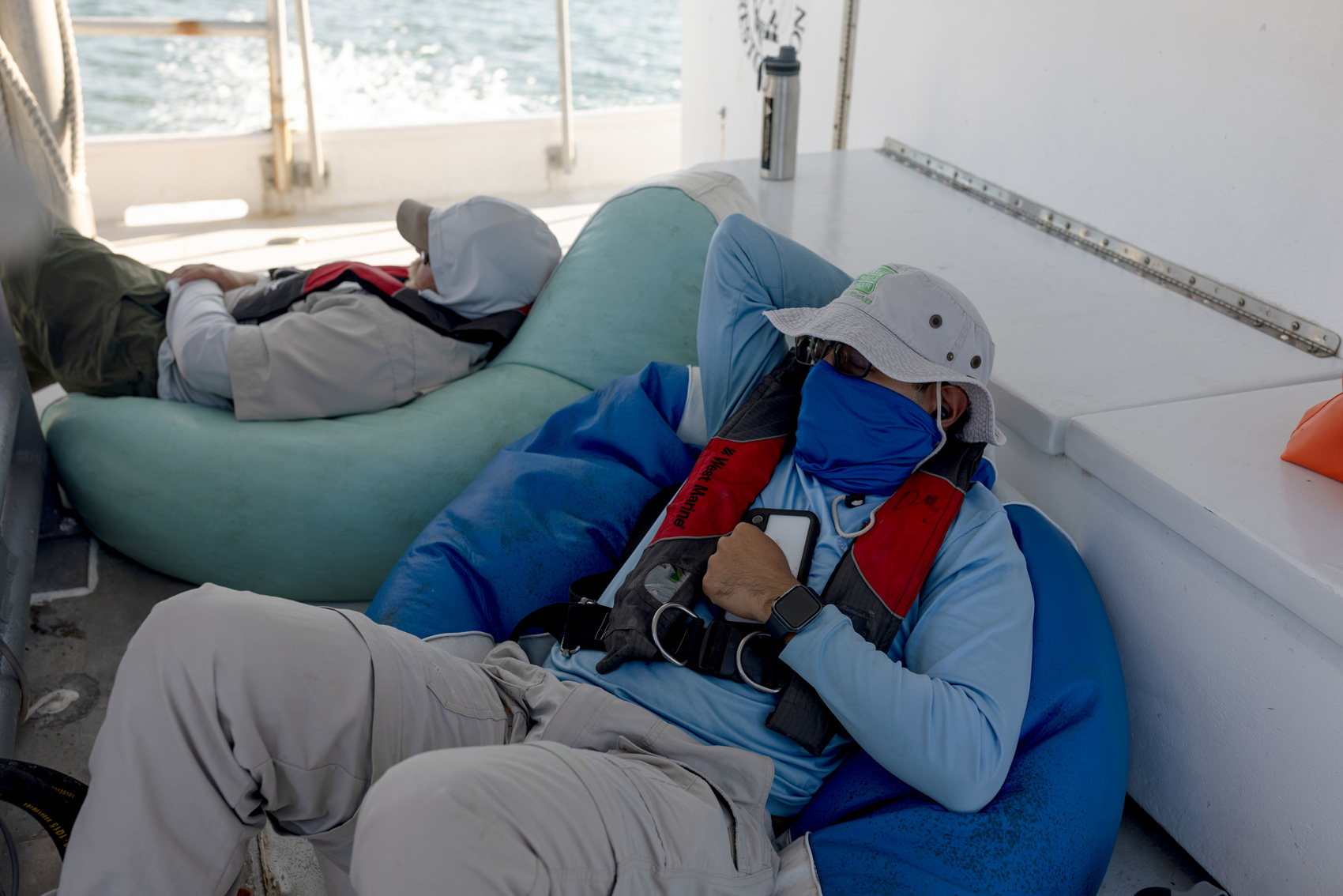
The RV Jacinto has several large bean bags onboard so crewmembers can take it easy on the way out and back. Some take naps, others listen to music. And they trade jokes, having gone out to dinner the night before to celebrate the summer intern’s last days with the team.
When the boat finally gets to the Pass, however, everyone is on alert. The mile of thick fish line with baited hooks is called a bottom longline. It runs along the seafloor anchored by two buoys. Each hook is separated by about 19 meters. An hour after submerging the longline, the boat heads back to the first hook and the team begins pulling up the line.

The researchers also check the water temperature, salinity, dissolved oxygen and clarity. Those help them understand how the conditions could impact the catch. Particularly cloudy water could trick sharks into grabbing the bait without seeing it clearly. In clearer water, they may avoid it altogether and look for larger prey.
As they begin to pull up the longline, team members try to guess how many predators they will pull out. Williams is pessimistic.
“I think it’ll be just two, maybe none,” he says. “The Pass is either a lot or nothing at all.”
Westen Wall, the intern from Texas A&M Galveston, is more optimistic.
“I think seven,” he counters.
In the end, it’s 25 gafftopsail catfish – a saltwater catfish with venomous spines – and two and half sharks.
One shark – another finetooth – dies on the boat, probably due to the stress of the catch. The blacktip shark, however, is very much alive. Hawk straddles the shark as the team members measure and weigh it.

They stick a hose pumping saltwater into its mouth to keep it breathing. It’s imperative to only have the shark on the boat deck for a couple minutes at most. While some species can survive without water longer, others will fade quickly.
The blacktip is about five feet long and weighs 53 lbs. A female.
They throw it back into the water.
Jensen is unsure whether this is the shark that ate the other finetooth. It’s all murky shark waters below the boat and the team will only ever see a piece of it.
On the data sheet, Danny Martinez, a TPWD tech since 2019, writes up every predator they find. For the bodiless shark, he simply writes “just head.”
“Don’t know much more than that,” he says.

