
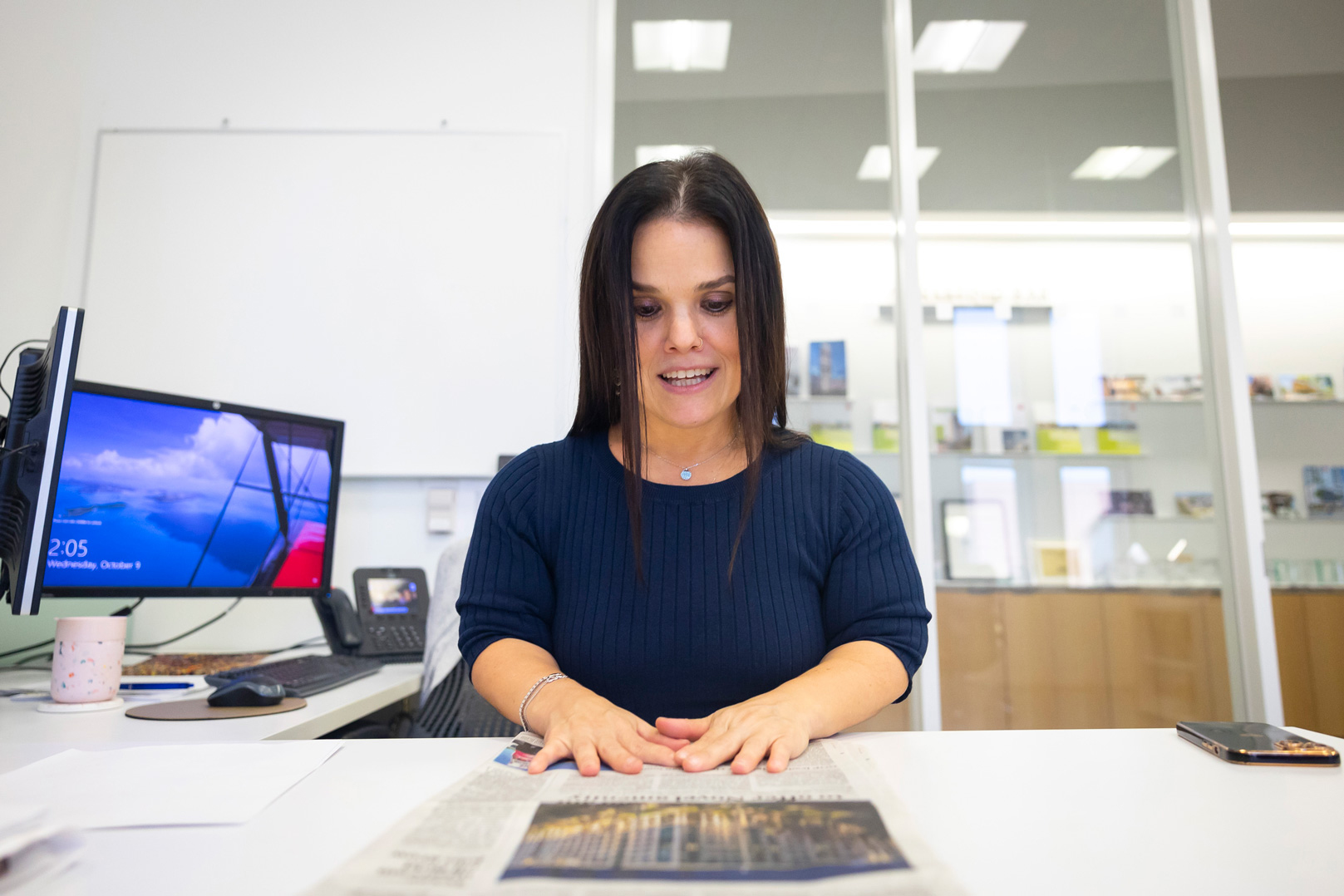

When Diana Codispoti began her career in marketing nearly 20 years ago in Oklahoma, she would never check the box on a job application that asked if she had a disability.
National Disability Employment Awareness month
In honor of October being National Disability Employment Awareness month, the Mayor’s Office for People with Disabilities is collaborating with Workforce Solutions to host a job and community resource fair on Oct. 26, from 10 a.m. to 1 p.m. at the Deputy Darren Almendarez Community Center, 10918 Bentley St., Houston, TX 77093. The fair will host more than 30 employers ranging from banks, to electronic companies, staffing agencies and financial planning organizations. Those who plan to attend can register here.
But when it came time for the interview, she couldn’t hide her short stature, standing at 4 feet, 5 inches tall. Codispoti was born with achondroplasia, the most common form of dwarfism, a genetic disorder that is caused by a rare mutation of the limbs.
Her generalized anxiety disorder and obsessive-compulsive disorder didn’t help either, constantly making her fearful of the unknown.
“A lot of times I was like, ‘If I click that, they’re never going to interview me,’” Codispoti said. “Or if I do click that, is that the only reason they’re interviewing me?”
Things changed when she moved to Houston in 2013, a diverse city where she felt accepted by her employers and colleagues. She learned how to speak up for herself and went from feeling anxious about her disability to empowered. She found an even deeper sense of community when she attended her first ReelAbilities Film Festival in 2018.
“I use my height as my brand,” Codispoti said Wednesday from her desk at Ziegler Cooper Architects. “I can never change this, so why sulk about this?”
By leveraging her disability as a way to get her foot in the door, Codispoti has enjoyed a successful marketing career. Although she considers herself fortunate, she recognizes how intimidating it can still be for others within the disabled community — one that often struggles to secure employment — to feel safe enough to check that box.
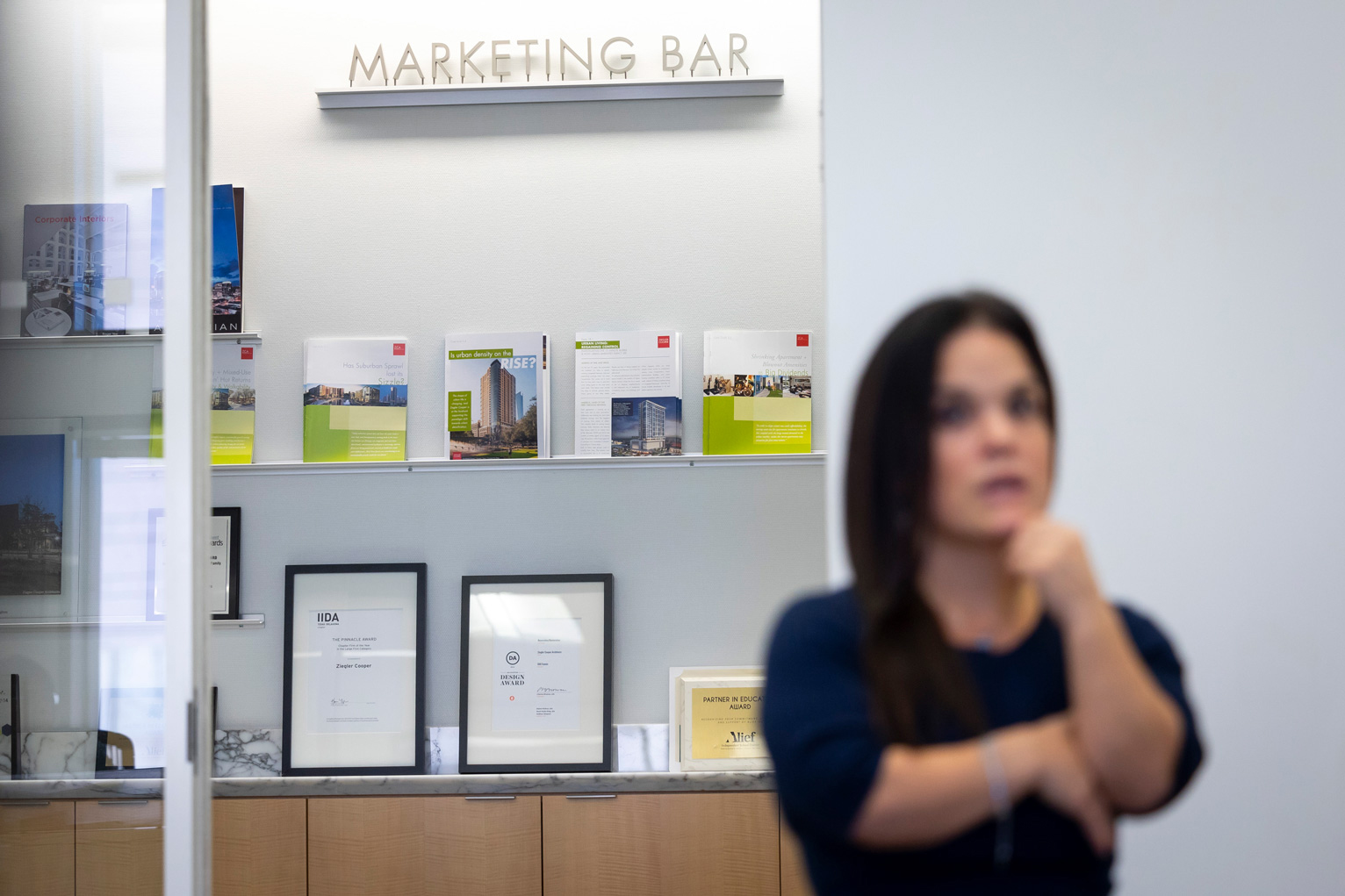
Creating a safe space for workers with disabilities
The Houston metro area and surrounding Gulf Coast counties have the most people with disabilities in the state, with more than 760,000 people with disabilities who account for roughly 32 percent of the labor force, according to a 2024 update from the Texas Workforce Investment Council. Texans with disabilities accounted for approximately 7 percent of the state’s 14.6 million labor force in 2022.
In the city of Houston alone, which has a population of more than 2 million people, an estimated 10 percent of Houstonians live with a disability, and that number is expected to increase as the population continues to age in the coming decades, according to the The Kinder Institute for Urban Research. Just 37 percent of working-age Houstonians, ages 18 to 64, with disabilities are employed, compared to 76 percent of those without disabilities, according to city data from the National Disability Institute and Empowered Cities.
That’s why Codispoti signed on in 2021 as a co-chair of ReelAbilities Houston Film and Arts Festival and gravitated to the festival’s ReelWorkplace program to advocate for disability inclusion in the workplace and help employers eliminate barriers for a growing population of people who are disabled.
“I think we really need to focus on creating an atmosphere that allows people to self identify,” Codispoti said. “And I think that’s the biggest struggle that we have is making … a safe environment where people can click that, ‘Yes I am disabled’ and feel good in clicking that, and know that it’s not going to be a repercussion, but instead it’s going to be, ‘How can we better provide for you?’”
Jewish Family Services’ Houston Alexander Institute for Inclusion produces the festival annually with the Mayor’s Office for People with Disabilities, using the arts as a means to promote inclusion, change perceptions, reduce stigmas and remove barriers for those living with disabilities locally and nationally. It began in 2013, running for roughly two weeks, but has since grown in popularity and now runs for almost a month. Beyond the arts, it also includes seminars in education and workplace training.
This year’s festival runs Feb. 2-23, 2025, and will be focused on neurodiversity.
The first ReelWorkplace forum welcomed 120 attendees to listen to individuals discuss the successes and steps needed within the business community to promote full inclusion in the workplace. Those representatives have typically been those working in human resources, but this year they’re expanding the forum to include a networking session, said Jeffrey Feinstein, chair of the upcoming festival.
“We want (companies) to internalize and really grasp the emotion of what we’re telling them, but also say what are our action steps,” Feinstein said.
‘Don’t speak about the elephant in the room’
A common misconception, he said, is that employers think that people with disabilities need help all the time to do anything. While there may be some fundamental challenges, a way to combat that is to be more flexible and intentional in the construction of the workplace, Feinstein said.
“Constructing that canvas for your company can allow you to dip into a talent pool that you haven’t been (to) yet,” he said.
Feinstein works at a private equity group that invests in oil and gas companies. After he suffered a spinal cord injury in 2018 while diving on vacation in Mexico, he worried about how his employer would adjust to his new lifestyle in a wheelchair and how he’d continue to support his family if it didn’t work out. But his employer immediately asked what he needed. His company installed automatic doors and gave him a button that he carried in his laptop bag to open them, and invested in adaptive technology and software programs.
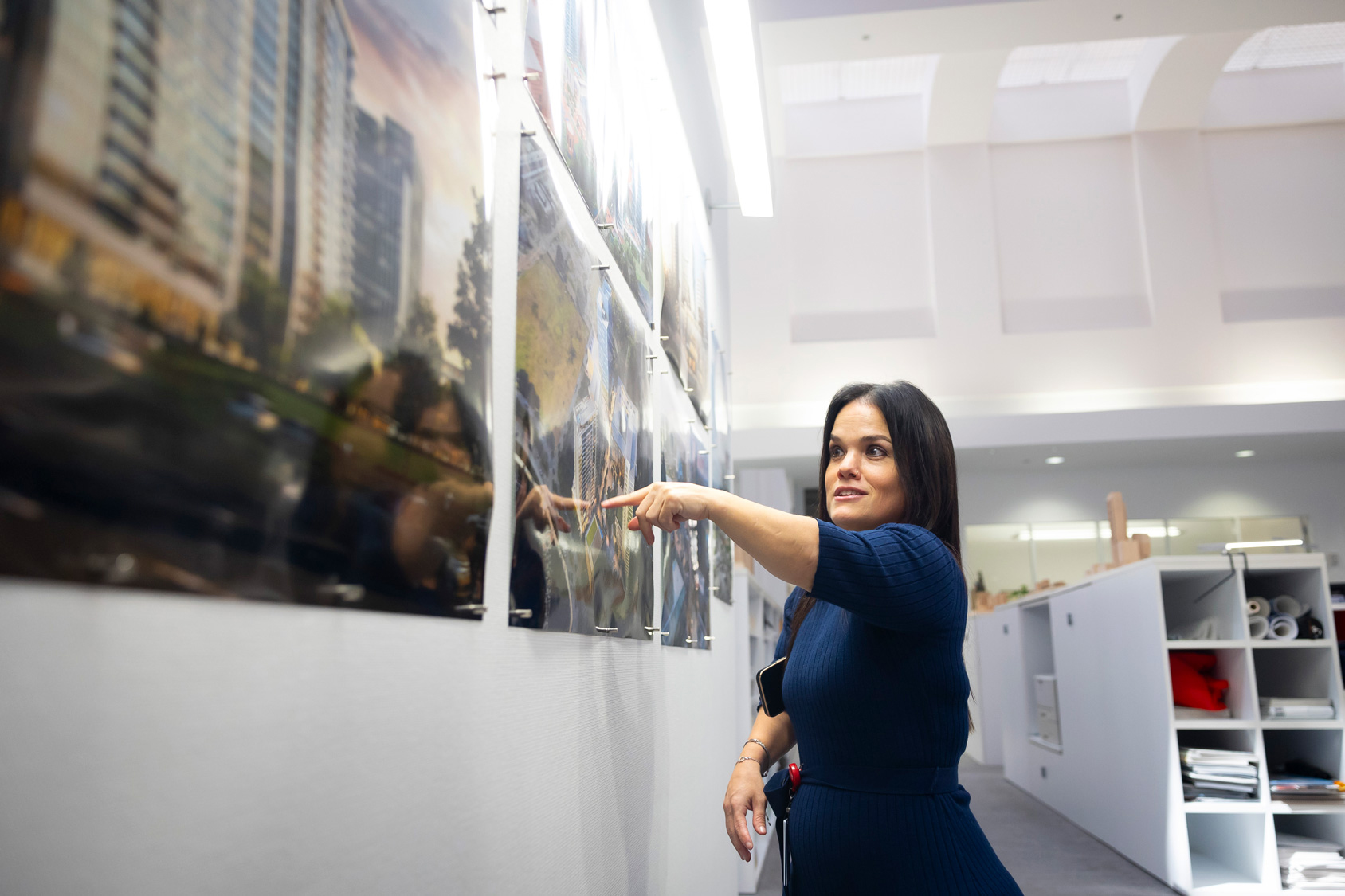
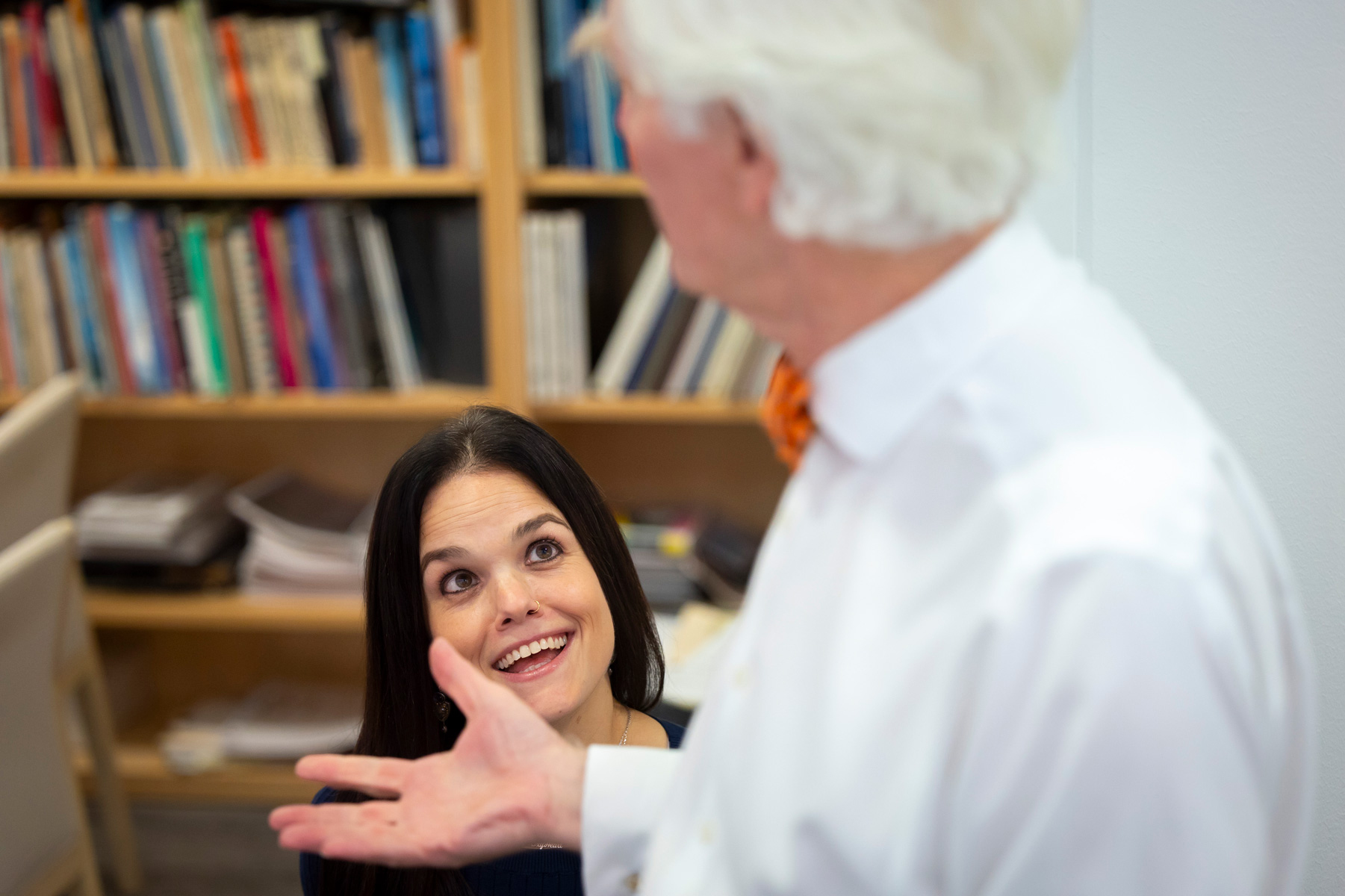
Codispoti said she is also blessed at her job as director of marketing at Ziegler Cooper Architects to have a supportive boss like Scott Ziegler — someone who recognized her skillset and ability to do the job. He was the first employer to take the initiative immediately after she was hired, asking her what accommodations she would need to be successful.
For Codispoti, all she needed was a $12 Rubbermaid stool to rest her feet so they wouldn’t dangle from her desk chair.
“That was the best thing he could have ever said,” Codispoti said.
It was a simple solution for Ziegler, senior principal at Ziegler Cooper Architects, who describes Codispoti as a “ball of fire” who is creative and energetic.
“Leadership should respond favorably to simple requests like Diana’s to make employees feel respected and more productive,” Ziegler said. “The end result is a win-win for the firm and the employee.”
While she considers herself fortunate, Codispoti said she thinks oftentimes employers misstep due to a lack of training and knowledge. Because it can be viewed as a sensitive topic, most employers avoid asking about accommodations or addressing it at all due to a fear of backlash if they get it wrong.
“I think it’s just because for a long time, it’s like, ‘Don’t speak about the elephant in the room because it might be rude,’” she said. “Let’s ask (these questions) so we can learn, so we can fail, but we can get back up, perfect these and do better.”
There’s also a misconception that adjustments to the workplace will be expensive, causing many companies to see accommodations as a financial burden, said Angel Ponce, director of the Mayor’s Office for People with Disabilities. But typically they’re easy fixes, he said, like raising a desk to accommodate a wheelchair so someone doesn’t have to transfer to a chair, or having someone help a person who is blind fill out an application.
“It might not even cost anything and if it does, it’ll be better for that organization,” Ponce said. “It benefits everybody.”

By making inclusive adjustments to the workplace, employers are likely to have higher retention rates, he said.
“It’s common among the disability community that once they gain some type of employment that the potential of them staying longer than the usual candidate is high because they know that it’s hard to get employment. But it shouldn’t be that way,” Ponce said. “So there’s a pro and con to that.”
“If anyone wants to prove you wrong, that person does,” Codispoti said.
Before an applicant is even hired, Ponce said employers should clearly state in a job posting that accommodations will be or can be provided to encourage applicants with disabilities. Including such language in a job description can eliminate that fear of identifying so applicants feel comfortable communicating their needs with human resources.
He said he often hears complaints from people with disabilities who are more than qualified but struggle to obtain “meaningful” employment. They tell his office that they’re not taken seriously in interviews.
“Employers are more focused on the disability than the ability,” Ponce said.
He advises employers to try to avoid focusing on a candidate’s visible or apparent disability during interviews.
“That shifts the actual interview point,” he said. “They’re polite but you can tell that they’re judging.”
When Ponce assumed office in July 2022, he removed the driver’s license requirement for applicants to accommodate those who are blind and may use rideshare services or public transportation. He’s also made several suggestions to the city’s human resources director on how to create opportunities for people with disabilities.
“Does a job position working at a desk really need the ability to lift 20 or 25 pounds? Is that really an essential part of the job description?” he said. “Those kinds of things discourage someone with a disability. I’m a paraplegic. I’m not going to be able to do that.”
Some city departments have adhered to his suggestions and have proactively consulted him for suggestions on how to make their work areas more accessible for people with disabilities. An example is Ted Irving, director of Houston Television, Ponce said, who came to him inquiring about improvements he could make to the HTV studios. The result was newly added push buttons to the space.
Ponce’s mission in 2025 is to continue to push for disability employment with quarterly career fairs. He also wants to collect data to see how many people actually gain employment.
“People with disabilities have a different perspective of working with people and they’re able to see what sometimes people that are nondisabled cannot see,” he said. “That significantly improves the quality of service, not just for the customer or client, but for their colleagues as well.”


