


First Victor’s brother came to join him in Houston. Then came his aunts,uncles and cousins. At least six friends and relatives have migrated from his home country of Venezuela to Houston just this year. All the while, Victor, 44, has watched from afar as Venezuela has plunged further into an economic and humanitarian crisis.
Now, his second brother wants to join him. There’s just one thing keeping him tied to Venezuela. He’s waiting to see the outcome of Sunday’s presidential election.
“He has kids and it’s hard for him to buy them their school supplies,” said Victor, who is being identified by first name only for fear of political persecution against his family in Venezuela. “Having a future in Venezuela is complicated, sadly. Venezuela wasn’t like this before.”
On Sunday, Venezuelans will head to the polls in a decisive election where the opposition has incited a hope in Venezuelans beaten down by years of food shortages, a crumbling health care system, and political repression. Polls show former diplomat Edmundo González likely unseating incumbent Nicolás Maduro, who has overseen an unprecedented economic collapse since taking office after the death of political strongman Hugo Chavez in 2013.
Maduro, who is seeking his third six-year term, maintains that he is the best option for Venezuela and warned of a “bloodbath” if he loses. His control of the military and the state apparatus give him two strengths that could allow him to win – or steal – another term.
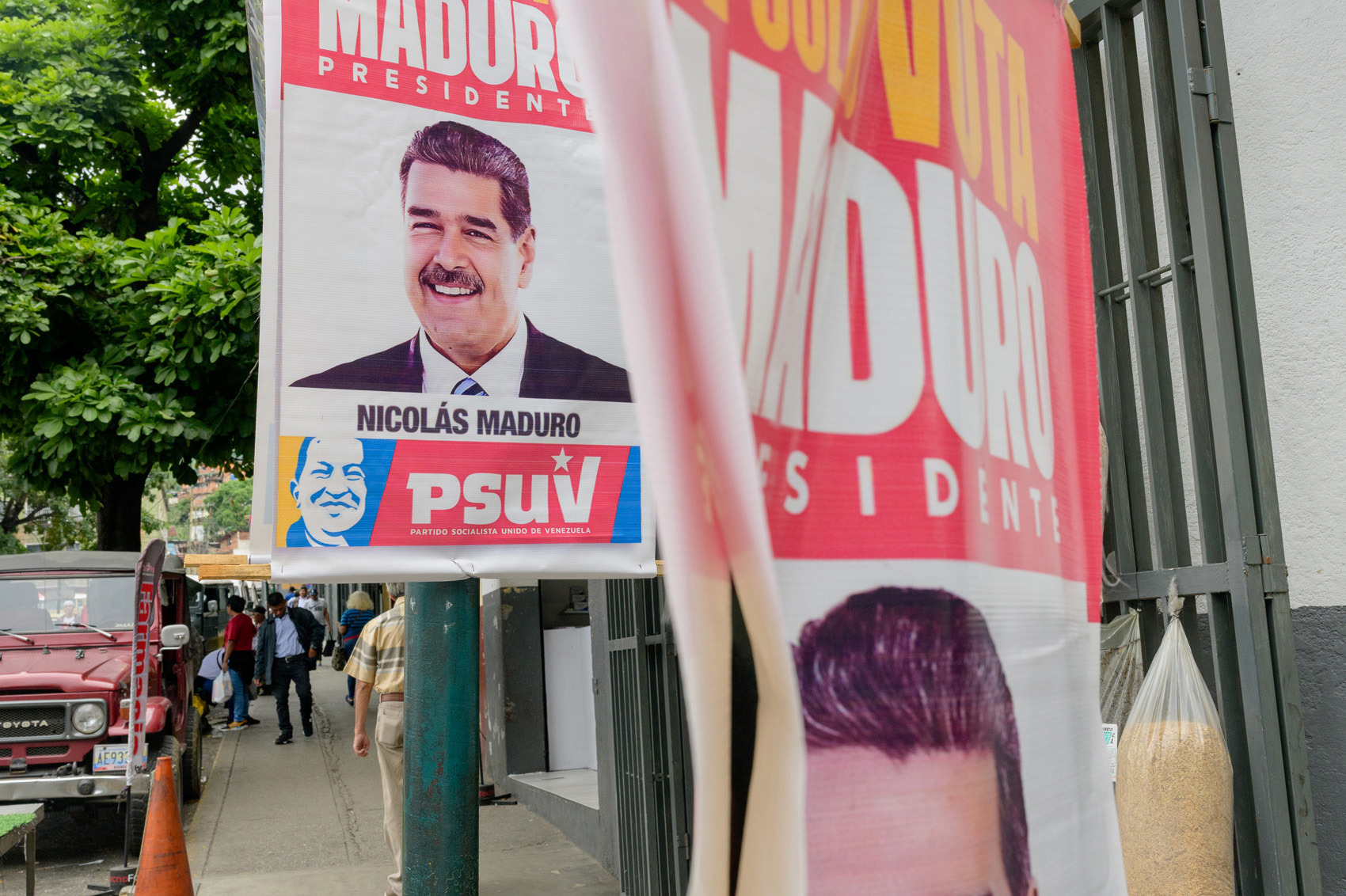
The election has major implications for the estimated 7.7 million Venezuelans who have left the country in recent years. Venezuelans are the fastest growing immigrant population in Houston. When Victor came in 2006 following an uncle who knew a Venezuelan working in the oil industry in Houston, they were among a small group of Venezuelans. Now more than 50,000 Venezuelans call Houston home, a fivefold increase since 2010, according to Migration Policy Institute.
Recent polls show that between 15 percent to 27 percent of Venezuelans are considering leaving the country in the near future.
“Many people have their Plan A and Plan B,” said Beatriz Borges, the Houston-based executive director of the Center for Justice and Peace (Cepaz), a nonprofit promoting democracy and human rights in Venezuela. “They’re waiting to see what happens on July 28, but they have their Plan B activated in case there isn’t a political change.”
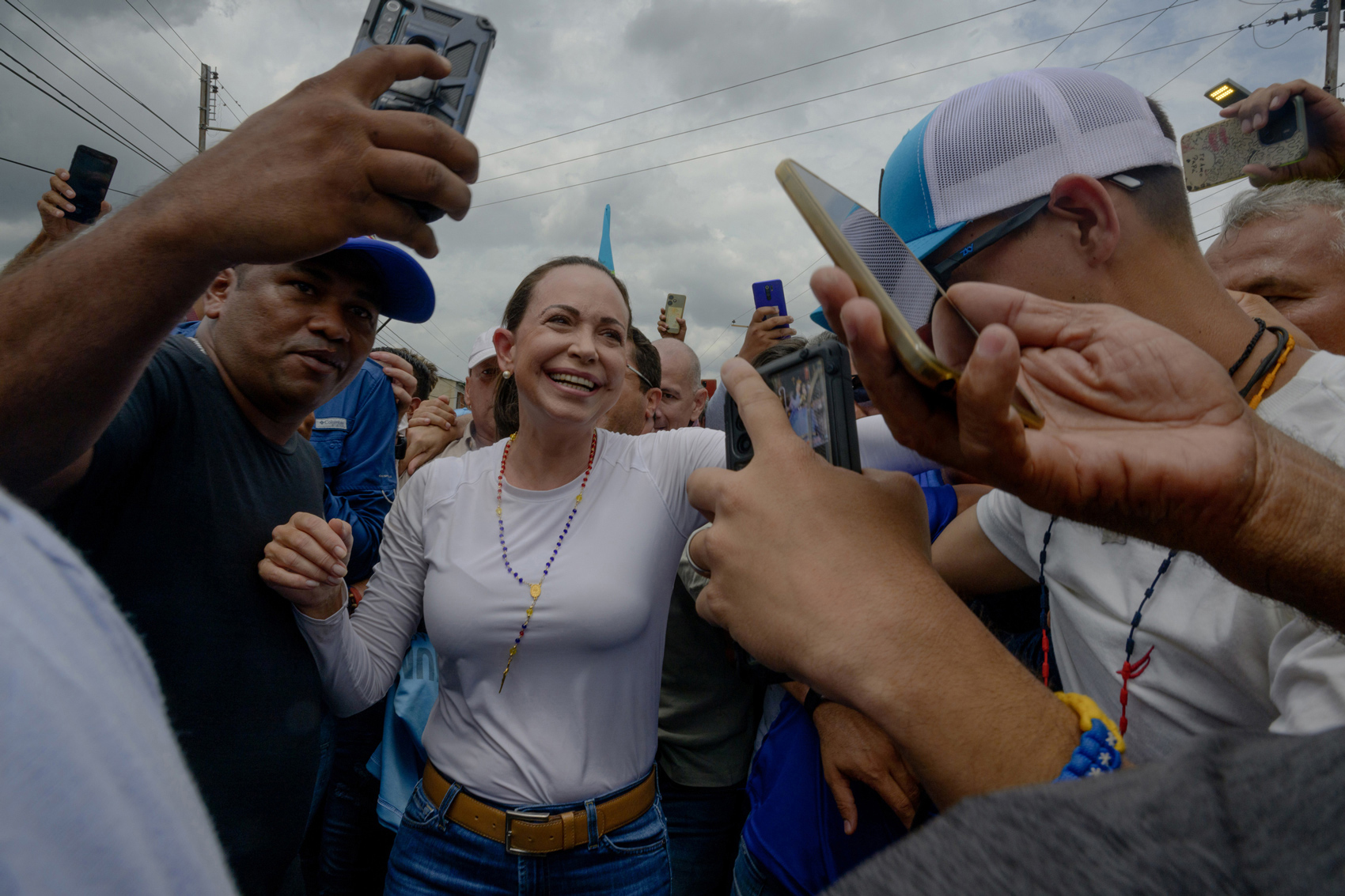
An opposition victory is far from certain after a tense campaign season. María Corina Machado, an industrial engineer and former member of the country’s National Assembly, has been the driver of the movement to oust Maduro through the ballot box. She won an overwhelming 93 percent of votes in an October primary, only to be later barred from running for supporting U.S. sanctions and allegedly being involved in corruption. Banning his opponents has been a common tactic by the Maduro regime to stifle opposition. She then threw her backing behind González.
Since the beginning of the year, Cepaz has documented more than 140 cases of political violence related to elections, including 37 arbitrary arrests.
“There has been a context of high political repression but on the other hand there has been a lot of organizing,” said Borges. “There’s a lot of hope from people who believe in participation as a weapon of transformation even in an authoritarian context.”
Houston diaspora
The Maduro government has stifled foreign voting by placing obstacles for voter registration outside Venezuela. A lack of consular services also complicates the process. In Houston and across the U.S., Venezuelan embassies shuttered after the two countries broke diplomatic relations in 2019. So there is nowhere to vote.
This means there will be no voting for Venezuelans in Houston, including Victor.
Still, Venezuelans in Houston and other parts of the diaspora have been organizing themselves from afar to promote democratic participation in Venezuela, said Jorge Vergara, director of the Houston chapter of Machado’s opposition group Comando Con Venezuela.
“We’ve spread that message that if you can’t exercise your right to vote, get two friends, or three relatives, or three people you know in Venezuela to vote,” Vergara said. “And this has filled a lot of Venezuelans with hope.”
Vergara said the opposition coalition hopes for a “peaceful and orderly” transition of power in Venezuela. Despite the authoritarian context, he still believes Venezuelans can find a way out of the country’s crisis through democratic means.
“Voting is the key to bringing all Venezuelans back,” Vergara said.
Victor is hopeful he will watch from Houston as a new party wins the presidency in Venezuela for the first time since he left 18 years ago.
“Venezuelans are not going to let them commit fraud,” he said.

“Here you can’t live”
Venezuela has seen one of the biggest migrations in recent years outside of an active war zone.
Most live in South America, mainly neighboring Colombia, but also Ecuador, Peru and Brazil. But a record number of Venezuelans made their way to the U.S. last year. Nearly 335,000 Venezuelans were apprehended by U.S. Customs and Border Protection last year, a 77 percent increase from the year before.
Now, another group of Venezuelans may be preparing to leave.
Vergara says his remaining friends and family in Venezuela are all considering leaving after the elections.
“If Maduro clings to power, I’ll have nothing else to do but pack my bags and leave with my family,” they tell him. “To where, I don’t know. But here you can’t live.”
Diego Chaves-González, senior manager for Migration Policy Institute’s Latin America and Caribbean Initiative, said there will likely be an increase in Venezuelan migration in the coming months regardless of the outcome of the election. Some people who plan to migrate may have decided to stay in Venezuela to vote, but will leave no matter what, he said.
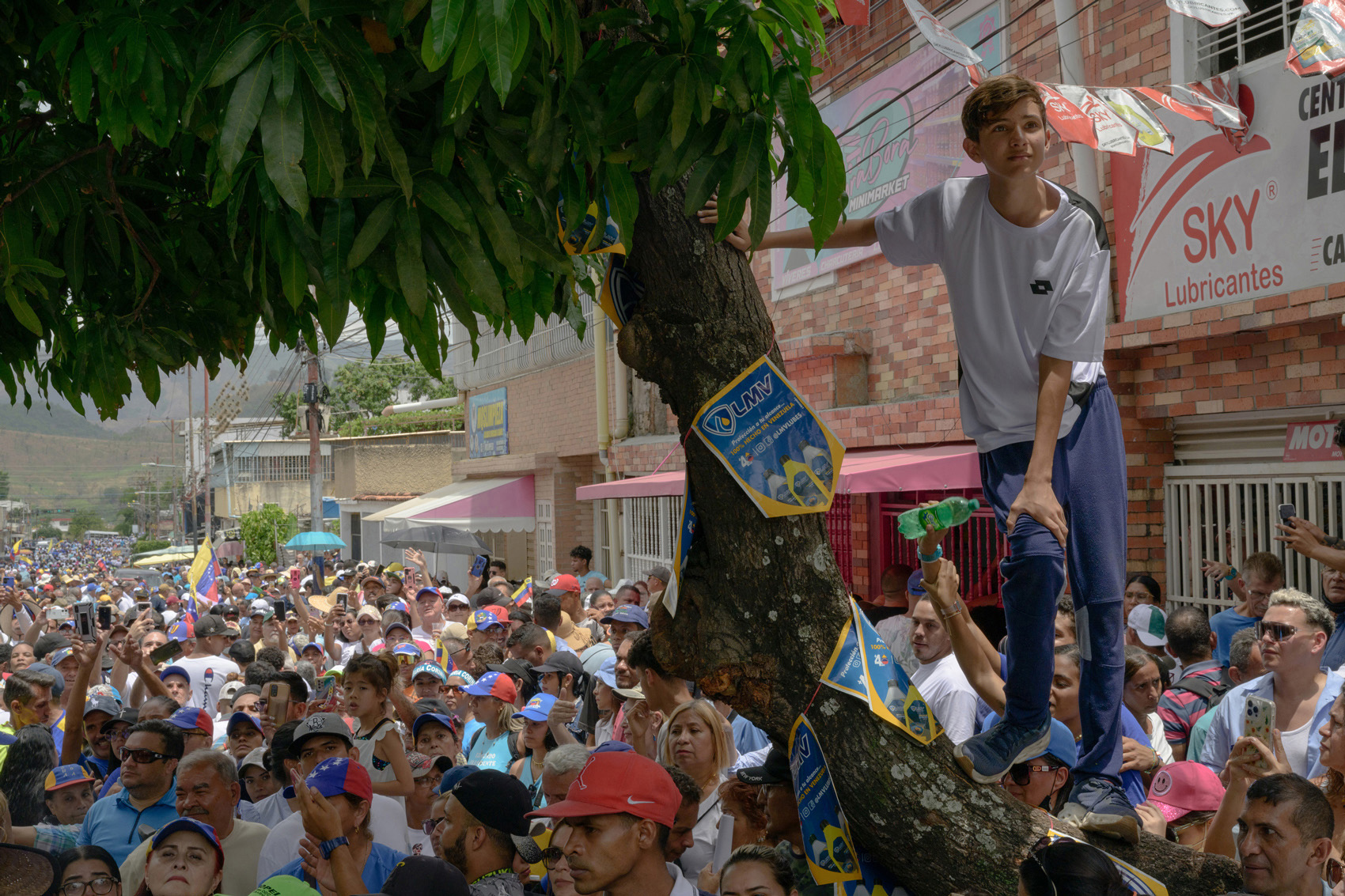

“They’re having problems with accessing health care now. They’re having problems with providing a good education for their children now. They’re having problems with getting a good, sustainable job that is able to feed their families now,” Chaves-González said.
The U.S. electoral panorama may also affect migration, as people try to calculate when they may have a better shot of reaching and crossing the U.S.-Mexico border, Chaves-González added.
However, the Venezuelan diaspora is still largely concentrated in South America, so Chaves-González encouraged U.S. investment in helping South American countries better integrate Venezuelan migrants. This would have a ripple effect at the U.S. southern border if more Venezuelans are able to build lives, find jobs, and get access to healthcare and education in neighboring countries.
No matter the outcome, countries should be prepared for more Venezuelan migration.
“People are desperate,” Chaves-González said. “Despite someone winning an election, Venezuela is not going to fix itself overnight.”

