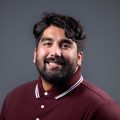

This Q&A is an installment of Houston Landing’s Who are HOU? series that aims to tell stories celebrating the melting pot of communities, cultures and experiences that define this city. From personal histories to challenges to everyday triumphs, each story is told in the words of the person being interviewed to capture their voices and the journeys that shape Houston’s identity.
For Amatullah Contractor, interest in politics started at a young age.
While she wasn’t born in Houston, she’s spent the vast majority of her life in the city, moving when she was just eight years old after spending time in Florida and Dubai.
It was around that time that she found herself glued to the television, following presidential elections and what was happening up and down the ballot.
“It definitely starts with the top of the ticket,” Contractor said. “That’s really where the excitement is and so that’s kind of what draws you to the space in the first place.”
Since then, she’s gotten involved with Emgage Texas, an organization that works on empowering Muslim communities to engage civically and get out to vote.
Contractor recently sat down with the Houston Landing to talk about her work in voter empowerment and the lessons she’s learned throughout her career. The following Q&A was edited for brevity and clarity.
When did you first get the itch to work around voter empowerment and voter mobilization?
What really got me motivated to do this work was in 2018. You get these letters in the mail that tell you your voting history, and I realized that in 2016, my vote didn’t count because I had to cast a provisional ballot. You only had to vote at your assigned polling location in 2016 and I voted at the wrong polling location, and so I had to cast a provisional ballot and so my vote never counted.
I was so enraged because that election mattered to me so much that I wanted to just do something with either my volunteer time or with my work, to just kind of educate people, right? Make sure they know all the steps that they’re supposed to do.
So when you were learning about politics, were you also drawn to local elections and local races as well as those big presidential elections?
I actually got my start with local elections – the first time I really had a chance to interface with candidates, to meet with community members, to share information, was with the Houston mayoral and the city council race. I was helping organize candidate forums, reaching out to folks, and trying to compile a list of FAQs about all the candidates and where they stand… I’ve been glued to it ever since.

What do you think are some of the biggest things that you learned as you started your journey in this voter empowerment and voter mobilization work?
The lower it is on the ballot, the closer it is to your door. I think the biggest thing was just learning how important these local races were to our communities because they literally were determining whether you get funding after a storm, whether this street has their trash picked up versus this street doesn’t, and how accountable they were to constituents. It was so granular, where you know exactly who to reach out to and you know that they probably have a solution for you… That was something that really made a huge difference and made me want to stick to it because there’s a very real impact that you can make.
A lot of times, a lot of community members also feel as though national elections don’t impact them in their day-to-day lives. But there is also something about national elections and the rhetoric that is set by national politicians that kind of trickles down. Those policies, those words actually dictate how local officials on the ground react. That is their call to action. I think that is something that has been really interesting to observe, because whatever it is that they are saying or advocating for, the promises that they’re making are probably going to be carried out by a lot of the people that we see on a daily basis that are easy to reach.
When it comes to that community, what are the challenges with trying to get a Muslim community, a South Asian community to go out and get to the polls?
One of the biggest challenges is treating our community as a monolith. I don’t think there are many other religions that operate entirely as a bloc. We’re never like, hey, every Christian is supposed to belong to one party or one ideological sphere. I think we just have to be mindful that being Muslim is just one part of someone’s identity, because then they could be many different races, different ethnicities, and different backgrounds. Even I didn’t really carefully recognize until I started working in this space just how varied our community is, the different things that people care about. There are things that genuinely glue us together just based on our faith-based identities and values. But really organizing in the community is recognizing that you can’t just expect the entire community to follow one path or one ideology.
Your work takes you all over, all around the city of Houston, all around Harris County. How do you build community when there isn’t a geographical center that unites the people that you’re working with?
One of the things that we can always align on is just building community, to some extent, around faith. When you do tell someone that you’re a Muslim, I think that there are a lot of cultural overlaps. Similar things that we can all share is something like culture and food, and I think those are things that we can build community around… Having Ramadan events is a way to engage people because you know that people are paying attention, that this is their time, that they are seeking community,
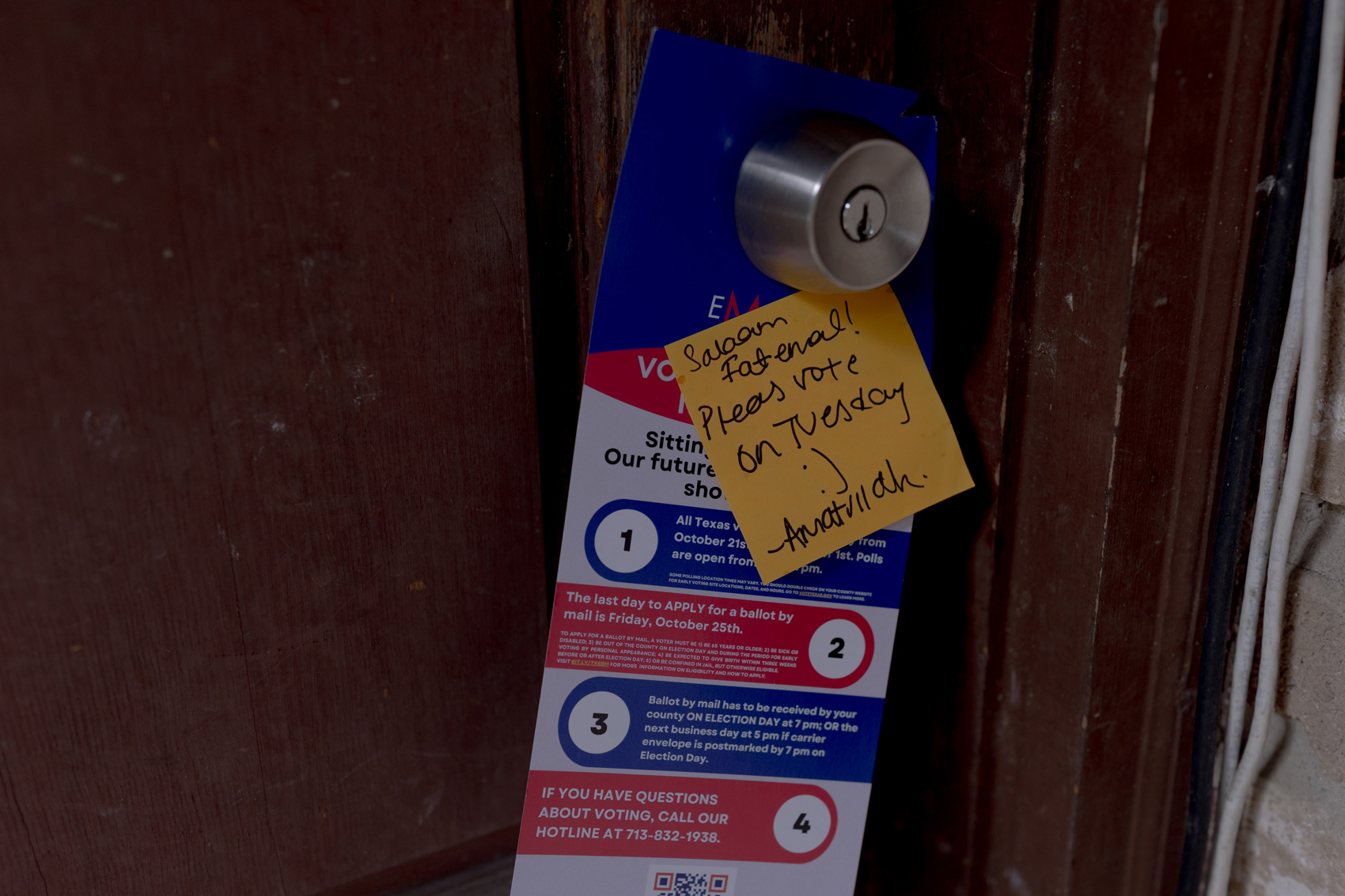
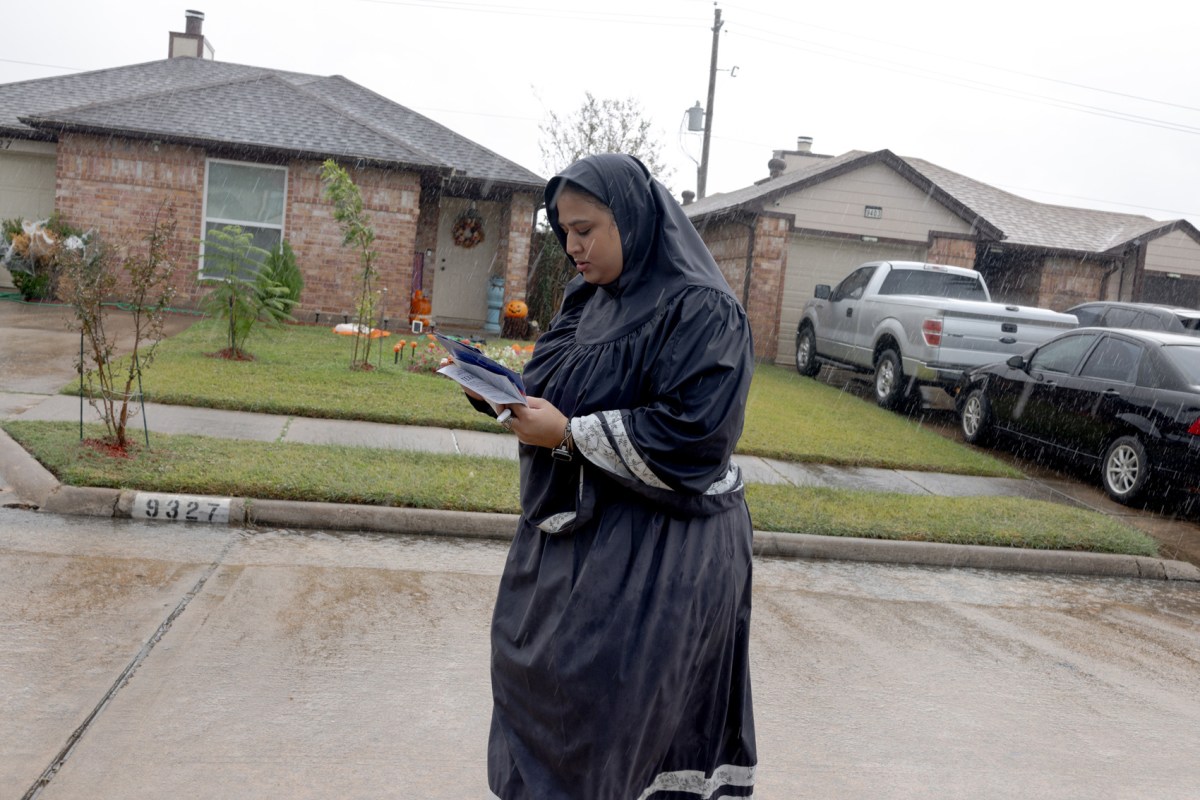
It’s also just about meeting people where they are. Sometimes it means traveling and knocking on doors all across the greater Houston area, just learning about the things that matter to people.
Earlier you mentioned this idea of treating Muslim voters like a monolith. What is something that you wish people understood about your community?
Historically, our community has been written off… It could be maybe we don’t make up as big of a voting bloc, or that historically, a lot of our community members haven’t voted or they are new Americans that people don’t always reach out to. Maybe they feel as though they just can’t cater to what it is that we care about.
It’s really about making sure that people understand that we’re also affected by very similar issues that everyone else is affected by, and we also don’t always need to be talked at, but talked to. It’s not just about, “Hey, I know that the Muslim community exists.” We also care about daily issues, right? We’re also just as impacted by storms and we also need disaster relief or small business assistance.
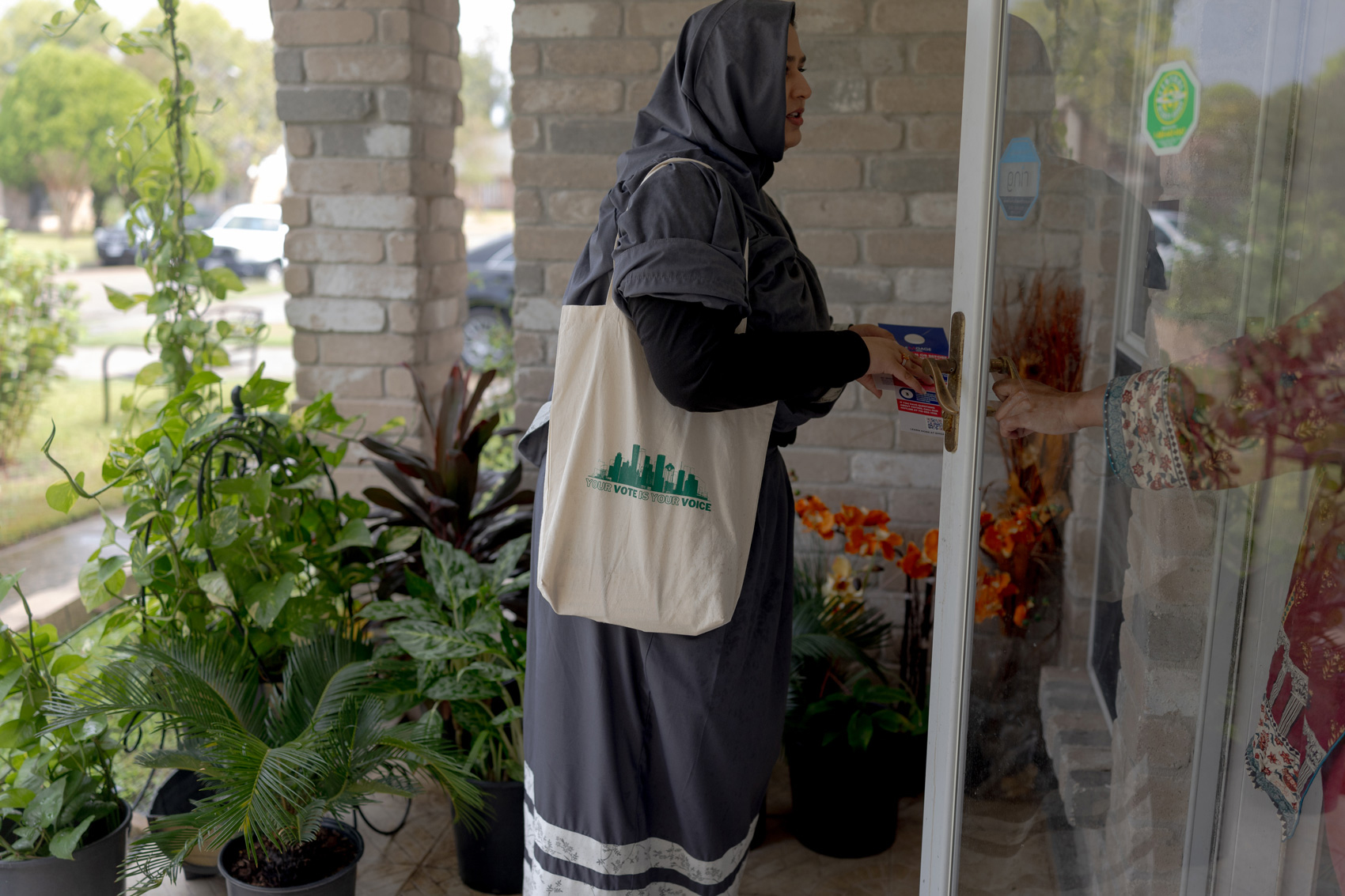
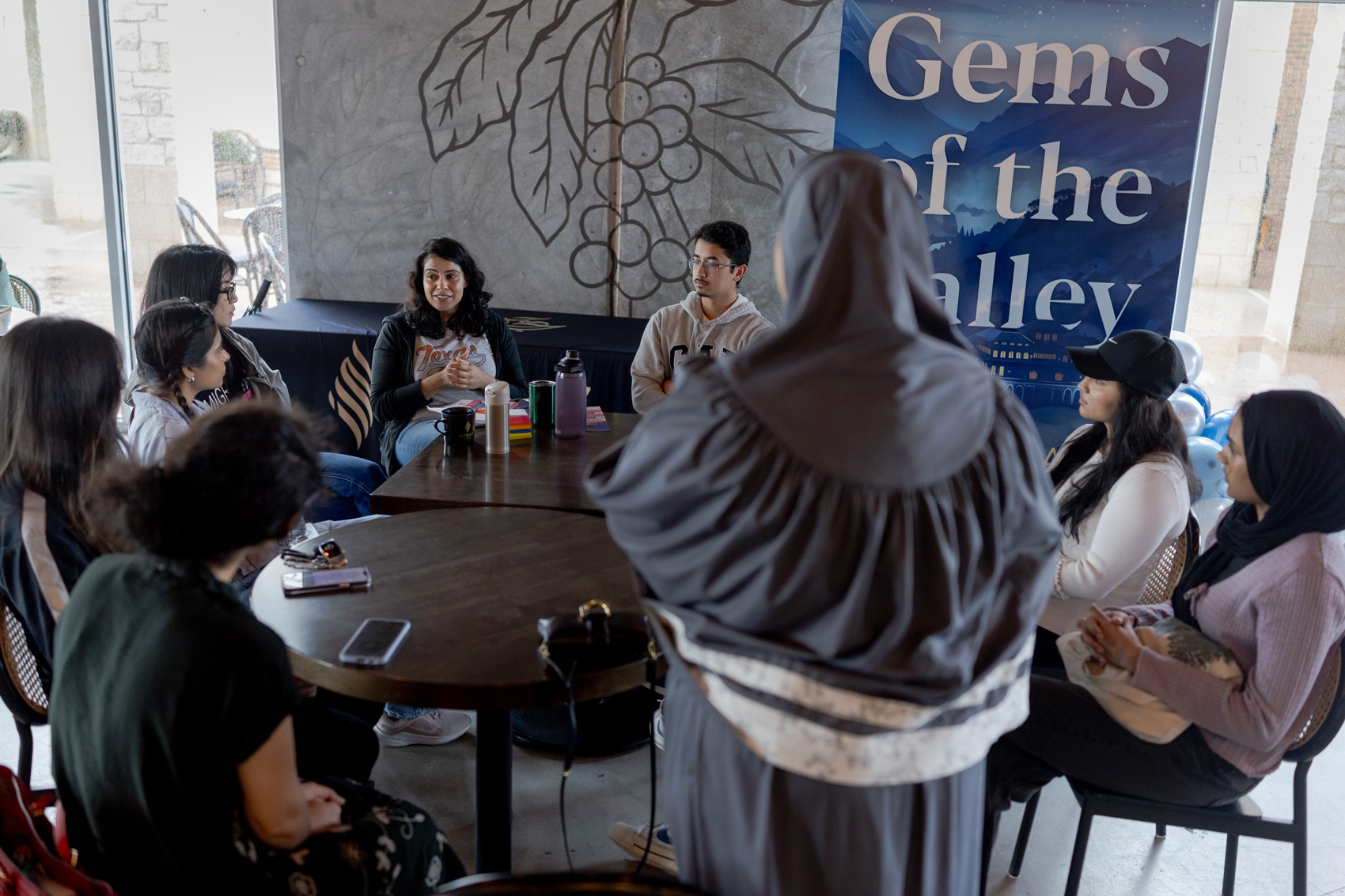
Education is something that’s a priority. Being able to connect with our community members and making them feel like they are part of this very hyper-local community, and everything that they go through on a daily basis matters. A lot of times, there will be instances where people refer to the Muslim community as what is happening abroad, but we’re also here. We are affected by the things that are going on here, even if issues from abroad spill over… It’s not just about making random concessions or saying buzzwords. It’s really about just connecting with us on the things we go through on a daily basis.
You’ve been doing this work going on five years at this point. What have been some big wins for you personally?
One thing that I’m so super super proud of was, after winter storm Uri, I spent a lot of time in Fifth Ward doing food distributions and talking to community members and going really door to door and understanding what people’s needs are.
We just kept going back but being able to organize, like food distribution, in partnership with the Harris County Commissioner Precinct One’s office, with the Houston Mayor’s office, and with my community….it really wasn’t about just distributing food. It was really about mingling and interacting and talking to people. I always look back at that one moment as just a very clear example of the melting pot that Houston is. A lot of times, with our daily schedules, we just end up kind of moving in silos. But being able to actually see all the different kinds of people that encompass the greater Houston area, what makes Houston Houston, and to see them interact, find commonality is something that I’m super proud of.
That kind of shapes a lot of our other victories in our work, right? Being able to really work in coalitions with other organizations, finding common ground, understanding really what it is that brings us together. That common ground is sometimes just like Houston. There’s so much culture and it’s crazy that Hillcroft is also right next to Chinatown or Little Saigon, and to actually turn those geographical neighborhoods into a reality where you have community members come together where we’re working on common issues.
You have a lot of drive and positivity about your work. What engenders that passion within the work and the positivity that comes around it?
I’ve always been very encouraged by my community to keep going, especially like my specific sect. I’m part of the Dawoodi Bohra community, and that was something that we were always raised with, to be involved, to take part. I think that fuels a lot of the confidence and being able to break into this space.
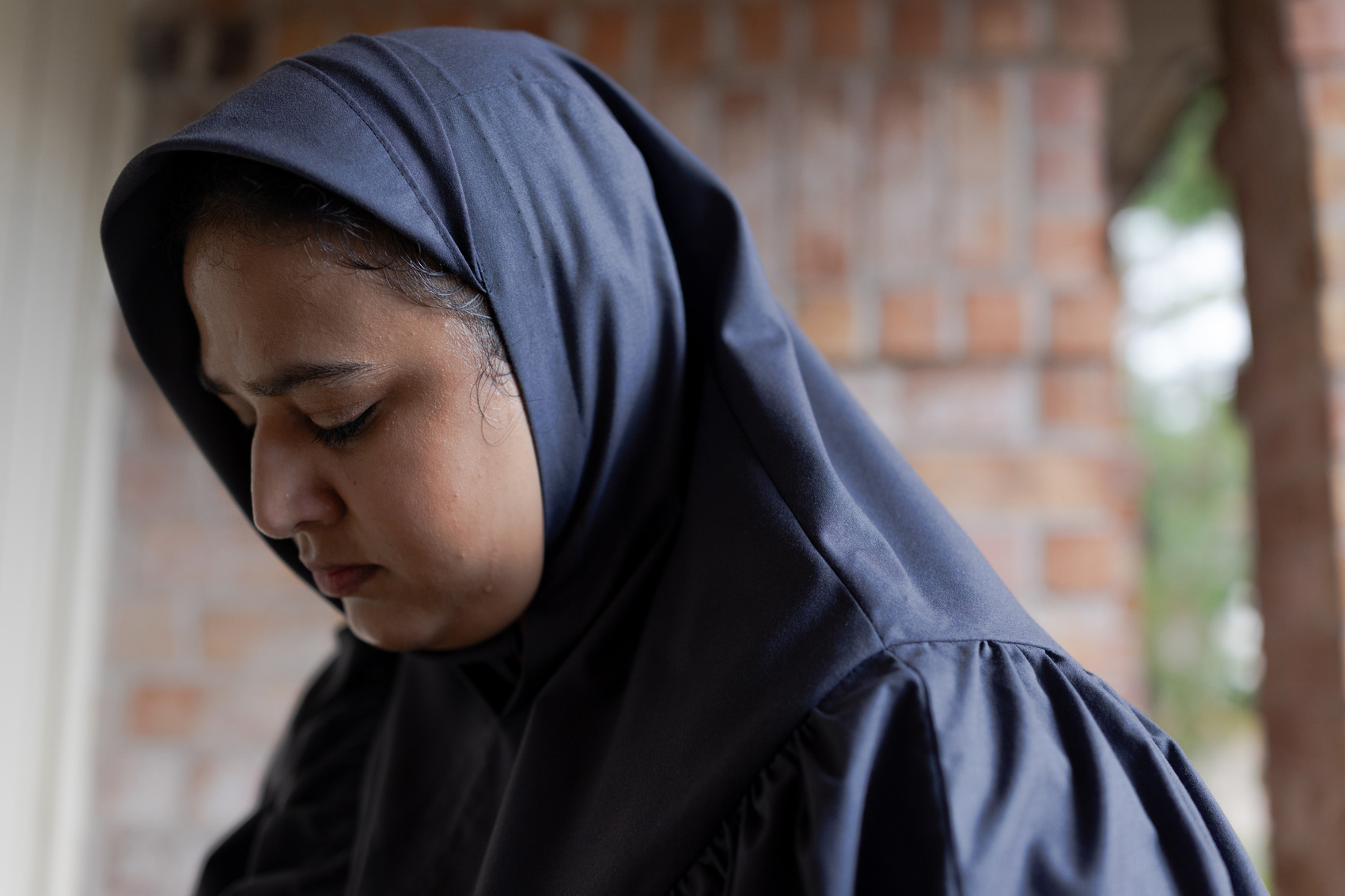
It’s also just the grace the community has shown, like the broader community, by inviting you to the table, by helping you navigate opportunities, by creating them for you. We stand on the shoulders of everyone who came before us… Especially looking around locally. Being able to have historic firsts, like having our first Muslim state representatives, having our first Muslim city council members, just being able to see these people represent not just the Muslim community, but everyone has been really inspiring. I want to keep going.
What is your favorite place in the city of Houston?
My favorite place in Houston is actually my car. I think that because Houston is so big and we have to drive everywhere, I will say that I have found a very safe space in my car… I know this might not be the most sustainable take, but I really enjoyed that it’s so spread apart and you can go from one neighborhood to another and the views look different and you might just be experiencing a whole different world. So I’ll definitely say that my favorite place in Houston is my car, and just being able to go from one part of Houston to the other.
Every story deserves to be told to celebrate what makes Houston such a diverse city. If you are or you know a Houstonian who wants to share their story, please contact us at hou@houstonlanding.org. We look forward to helping tell your stories.