


The Houston Landing is excited to announce the start of a new project called Who are HOU? that aims to tell stories celebrating the melting pot of communities, cultures and experiences that define this city. From personal histories to challenges to everyday triumphs, each story will be told in the words of the person being interviewed — lightly edited for clarity — to capture their voices and the journeys that shape Houston’s identity.
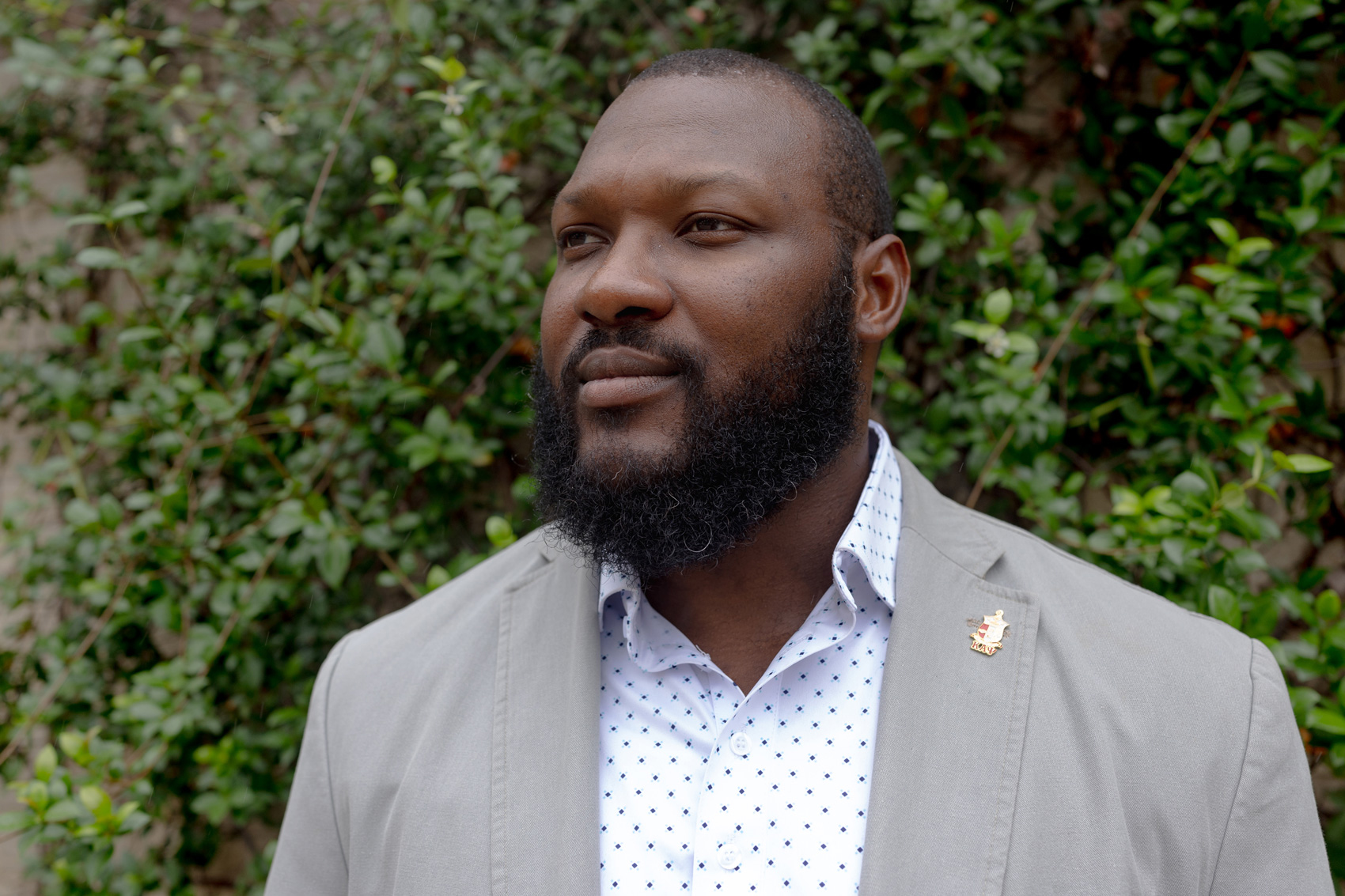
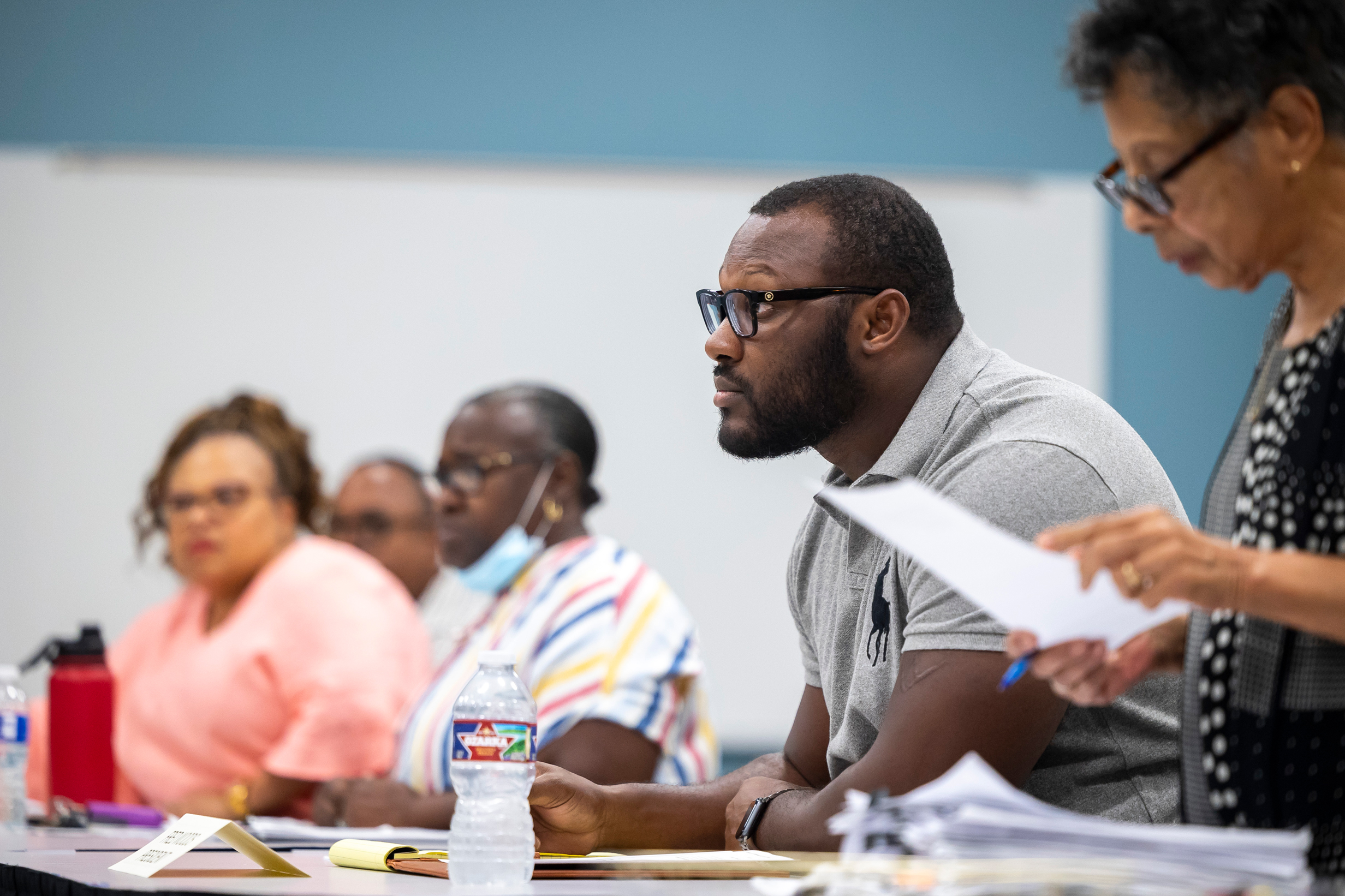
The first interview was conducted at Cavalcade Community Center with Fred Woods, a longtime Houston resident, president of the Northwood Manor Civic Club and community organizer dedicated to speaking up against the neglect that’s befallen northeast Houston and the people who live there.
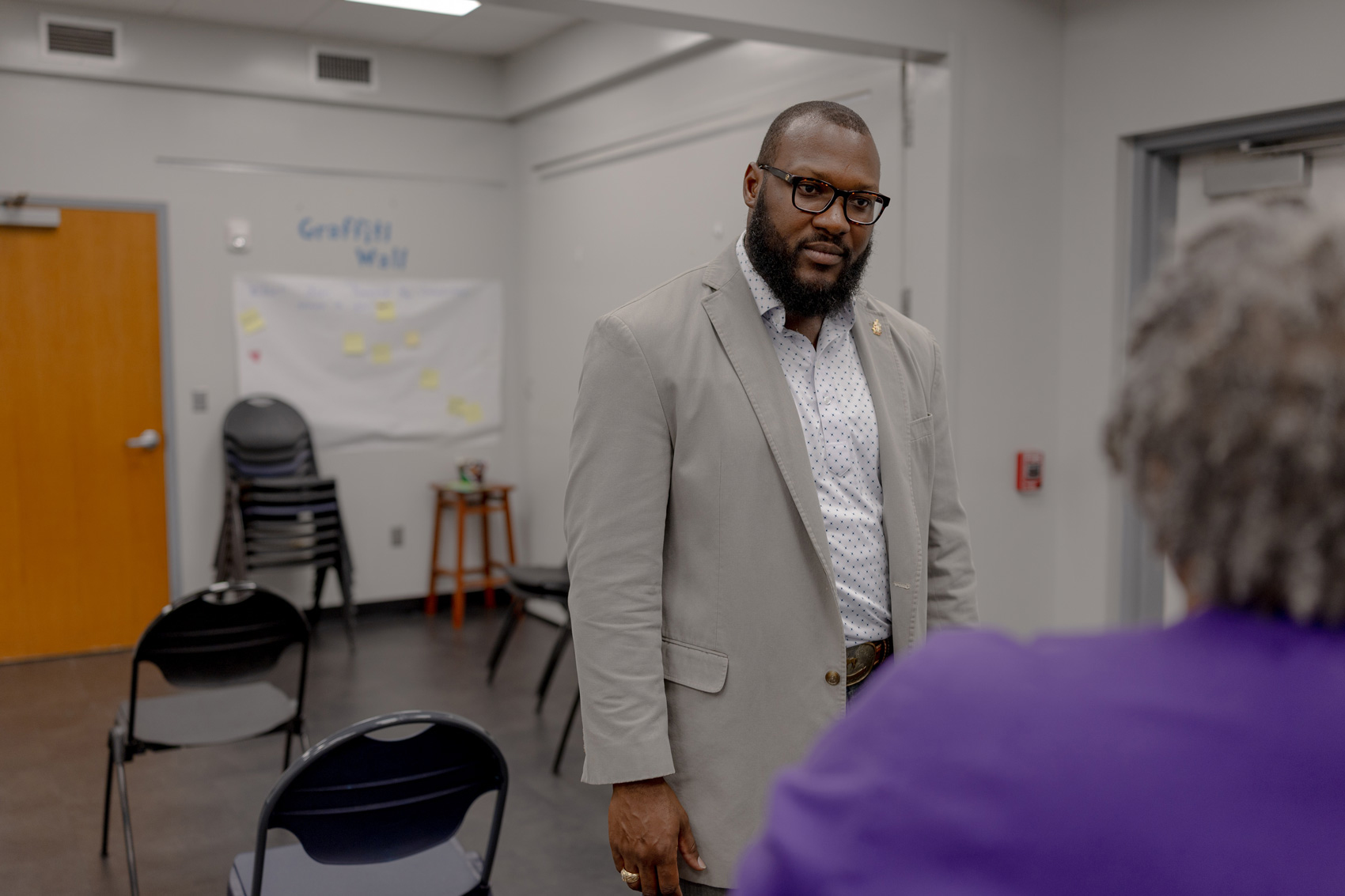
Woods attended the groundbreaking of Cavalcade Community Center as a child with his grandfather. Now, the center serves as a place of fellowship where Woods and his neighbors can organize for better conditions in the neighborhood.
You are a Houston native. Is that right?
No, I’m not. I claim to be. I feel that I am, because I have Houston roots. My parents are both Houstonians. They were both raised in the Fifth Ward area. They met in middle school at EO Smith, went to Wheatley high school class in 1968 but then my father’s journey, both of their journey, took them out of the Texas area for about 25 years. My oldest sibling was born here, and then the next two, me and my other sister, were born along that journey. But I’ve always been a Texan. I’ve always considered myself a Houstonian, and it was one of the greatest experiences in my life for me to come back here and go to school here for middle school and high school.
How old were you when you moved back? And where did you move from?
Somewhere in that tween phase, or age. And let’s see. So, we were in the Midwest initially, and so Nebraska, we moved to the East Coast, Maryland, and then we came back to Texas.
Tell us about the Cavalcade Community Center groundbreaking.
So I would come to Houston for summers, and this particular summer, I stayed with my grandfather. And he woke me up, we walked down the street and this community center was the groundbreaking. He was a very good friend (of) Commissioner El Franco Lee. El Franco Lee went to high school with my parents. And so there was a bond in their relationship, like no other who lived right across the street from them. So for me, my connection takes me back to my childhood, fond memories of coming here in the summer, and also, you know, my grandfather and Commissioner Lee, right. But in my adulthood and being a community leader and community activist, these centers serve as a place for meetings, for organizations. They serve as a place for seniors to go to socialize, to take fitness classes, to go on trips. So, it’s a very important place in any community.
What was Houston like for you back then? What are your memories of Houston, and how has it changed over the past couple decades?
Houston, for me, was about my family, it was a close-knit community. You really stayed in your community or where you, what you knew. You know, Houston may be the fourth largest city, but it’s very small in terms of people knowing each other. So, for me, it’s always been about family, and these communities are like family to me. There’s no one that I meet that I can’t find someone that we know in common.
What led to you becoming a community organizer and activist? What was the motivation behind being a person who is involved in Houston, who helps people in Houston?
No matter where I’ve lived, my parents instilled in me to make it better than I found it and to contribute, you know, to give back and be a good neighbor, be a good citizen. And so with that in mind, and with the history, Black American history, you know, we’ve never had the luxury of being silent, right? We’ve always had to speak up, because where there were issues, concerns, or if there was something wrong, to get it resolved.
What is your first memory of doing that?
My earliest memories were of elementary school, and I was probably the only Black in school at the elementary school I went to. I remember speaking up about history, ‘you know, that’s not correct.’ And my mother was instrumental in providing me books about Black history, and then, you know, we would give books to the teachers so that they could get a better understanding from our perspective of where there was a misalignment. So, I’ve always had to … because I was different, right?. And my culture was different. So, my paternal side is from Louisiana, and my father’s denomination of religion is Catholicism. And so being in the Midwest, you know, my father would share with me when he first walked into Mass, being a Black man in an all-white church, you know, it was like they stopped. They stopped Mass to see if he needed help or what was going on. And then, you know, I went to both Catholic and Baptist churches, and so I felt that too. But there’s never a time where I’ve been comfortable, that I’ve had the luxury to be silent or just to enjoy. There’s always been something that needs to be addressed.
Tell me about your activism within your neighborhood.
So, you know, imagine Northwood Manor would start in 1959 and I live in a home, I’m the fourth generation living in this house, right? My daughter will be the fifth generation. My great grandmother lived there. My great uncle owned it. He was also my father’s godfather, and so knowing that home and that community from a boy, and then having the opportunity to live there and get connected to my history, I wanted the best for it. The conditions just were so hard, especially as compared to more affluent areas and other areas that I’ve lived, not only in Texas, but throughout the country. So, I wanted to make a difference. I wanted to change, and one of the vehicles to address issues and concerns are HOAs. But in Houston, you don’t have those. You typically have civic clubs, and we have a civic club. It just wasn’t, maybe due to the pandemic, or what have you, it was not where it needed to be. And so we reorganized with the blessing of neighbors, right? Because if the neighbors didn’t see the need, they wouldn’t have come along, they wouldn’t have helped out, they wouldn’t have been a part of it. So, we pulled together, and we just continue to make progress. Set goals, achievable goals, and then work towards those goals. Hit those and set some more, and rinse, repeat.
Do you have any organizing wins you reflect fondly on?
You know, I’d have to say, just making the choice. I could live anywhere, but just making the choice to do what others often don’t my age and come to my roots and reinvest. You know, in our communities, we see a lot of people that take from, but they don’t often give back to. And so, living there gave me an awareness for all the wrongs, all the things, all the gaps, all the disparities, and I just wasn’t going to sit there and not help, not find a way to make things better. And so I’m very proud, and that was actually a dream of my parents, to come back to Houston and live in my father’s childhood home in Fifth Ward. And they weren’t able to realize it. So, I just kind of picked up where they left off.
Do you have any disappointments?
My greatest disappointment is that we’re not voting, right? So, from history, and definitely being descendants of slaves and not having the right to be educated in order to vote, the power that came with voting and the change that came with numbers, numbers voting, a number of people voting, I think that’s my biggest disappointment, that the inspiration to continue that legacy is not where it should be.
Low voter turnout, why do you think that is?
Change takes time. It’s not something that happens overnight, and so when you’re not … when you’re used to from your history of government happening to you and not working for you, you’re disenfranchised, there’s some complacency there. But you’re also … you have a disappointment that there’s no change happening over a year, two years or decades. You can’t see it. You can’t touch it, and your life …. your quality if life hasn’t been improved upon. And really, where I live, I call it “the land where time stood still,” because a lot of the businesses have dried up. They’re just … blighted buildings, there’s a lot of empty homes, there’s crime, … it’s a food desert, people are food insecure. You can Google any business, Starbucks, gym, LA, Fitness, whatever. There’s one area of Houston that has none of that, northeast Houston, yeah.
How do you reflect on the wrongs this community you grew up in has suffered throughout history now as an adult striving to improve it?
So, I’m driven, right? It drives me. I’m driven to see a change. I won’t stop. And I say that the neglect that’s been paid to northeast Houston, to areas that are predominantly people of color, is criminal. It is criminal not to be seen, heard, not to have … the inequities right. No equality, no equity and resources. And it drives me to speak up, stand up, speak out, really, to get that change and really collaborate with other like-minded community leaders to push it forward, to make some progress.
Who is in your village of organizers that you work with to advocate for the neighborhood?
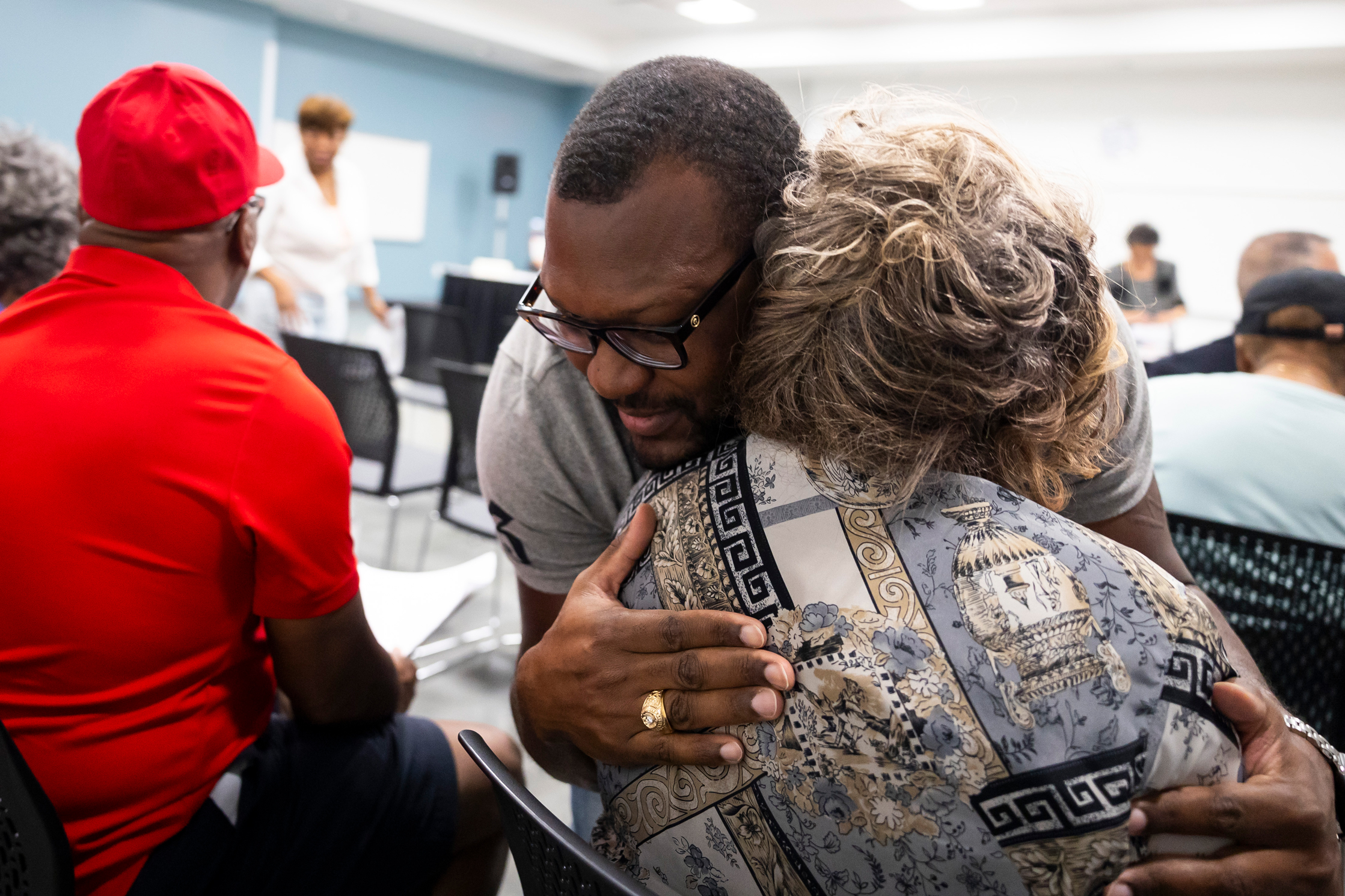
So, I’ve created, in my immediate space, … there are neighbors that are members of the civic club, that are on the executive committee, that help steer the ship, that help give guidance, especially the seniors. Right? If there is anyone that has the history of a community, that really knows where we came from, it’d be the seniors, and I look to them for their guidance, their wisdom, so that we don’t make similar mistakes, you know, and that we that we’re taking the right steps, or at least guided. Ultimately, what I feel, we’ve built … our relationships with other community leaders that are facing some of the same struggles, commonality of issues, we get together and we discuss how they may be addressing things, how we can repeat that in our area, how we can assist them with things we’re doing, our strengths, and how they can assist us with theirs. So, it is truly a collaboration across communities and a partnership. And then those relationships extend to our elected officials. And then, you know, it’s really their task to be, to make that change, put it into policy, make the ordinances, make the laws, and really support the funding to be more equitable and to address the disparities and the gaps.
What do you wish people knew about your neighborhood that they may not know?
I wish people knew that in spite of all the negative, there is a thriving community that has a dogged tenacity to survive. They never really get out of that survival mode, right? If you ask them, they’re always in survival mode, but they are upbeat, they’re positive, a lot of them God-fearing, you know, they’re Christian or of faith, and I just enjoy them. I love my neighborhood. I love my neighbors. I enjoy my community, in spite of having to travel 20 to 30 miles to go to the grocery store or to the gym or, you know, just name it, bookstore, whatever.
Where do you get your drive and positivity from?
History, history, history, right? I mean, you can’t get from being chained and brought over to a country that you don’t know anybody, you don’t speak the language, you’re treated like cattle to the Vice President of the United States of America and first female … presidential candidate of a major party overnight. You know, it just doesn’t happen overnight. And so, you know, my history gives me strength. It gives me hope for (a) brighter future.
What do you love most about Houston?
So, diversity, right? I love that it’s not cookie cutter. I can go in the different communities. The food is great. There’s such an assortment of food. I love, I love our teams. You know, they may not all win, but I support them all. I love the entertainment. I mean, you know, the rap, to hip hop, R&B, country, I mean, we’ve got it. We have it all right here, right? I love the history. You know, even, even though it’s a history of segregation or back to slavery, you know, Juneteenth. The reason for Juneteenth, not necessarily Houston, but Galveston, not too far away. That rich history, right? And being connected to it, it just means a lot to me.
Do you have a favorite place in Houston?
My house – ha ha ha! There is nowhere like home. Yeah, again, I love my community. I love, I love getting with my neighbors. You know, I love fellowshipping with my neighbors. I love fellowshipping with other community leaders. I like going to different churches, I like going to different events. No, there isn’t one thing that’s my favorite. I like everything.
Sounds like it’s wherever the people are.
That’s right, wherever the people are.
Every story deserves to be told to celebrate what makes Houston such a diverse city. If you are or you know a Houstonian who wants to share their story, please contact us at hou@houstonlanding.org. We look forward to helping tell your stories.

